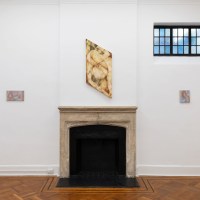
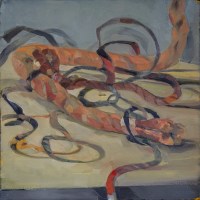
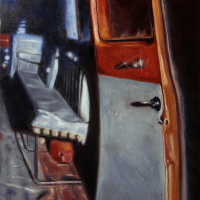
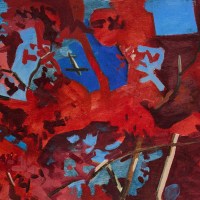
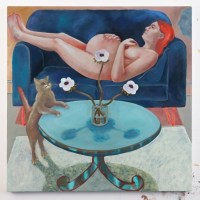
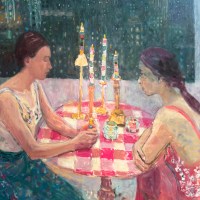
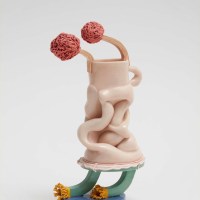
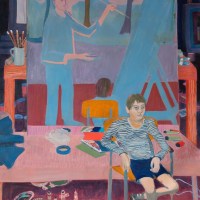
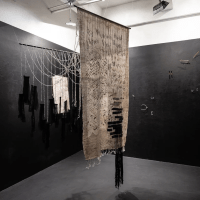
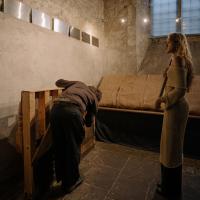
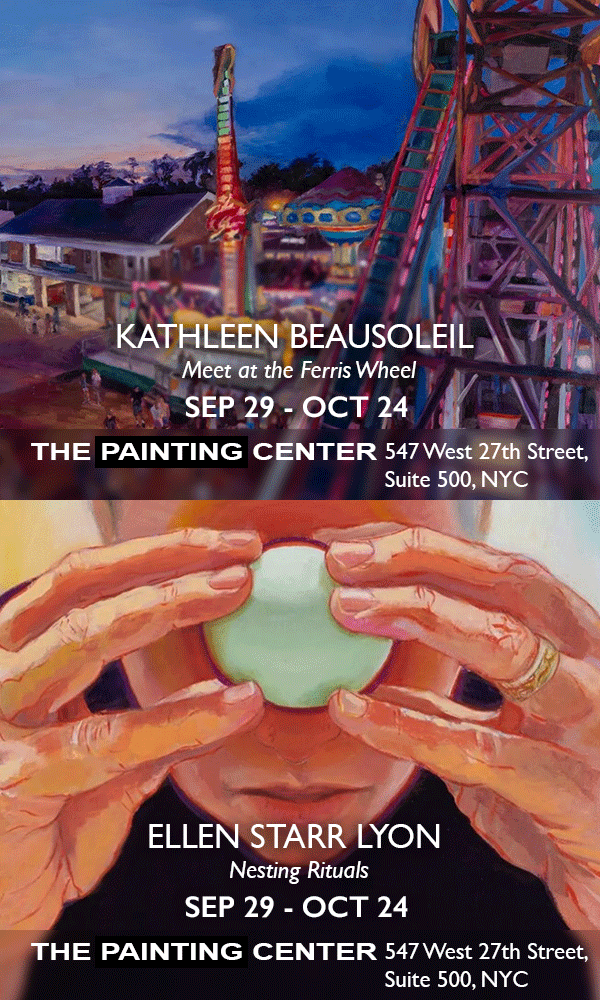
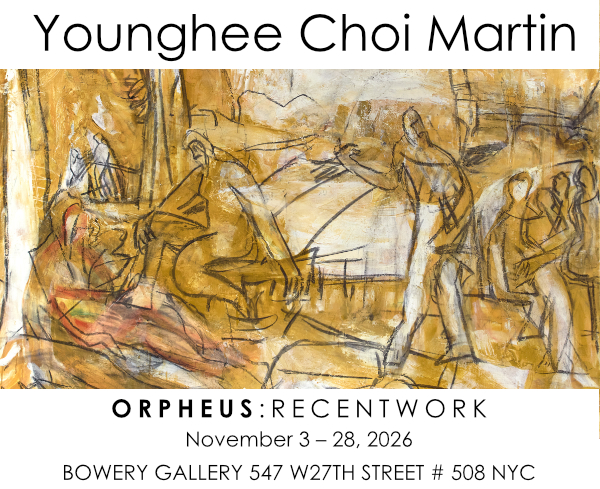
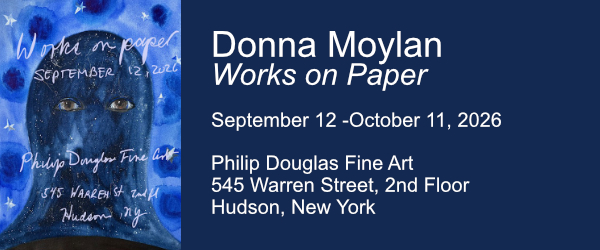
Contributed by Karlyn Benson / November is starting out with a busy weekend of openings all across the region. On November 1, Dogs & Cats opens at SEPTEMBER with over 80 artists participating. 10% of all sales are being donated to the Columbia County Sanctuary Movement, a local organization committed to supporting and resourcing immigrants. Richard Boseman opens on Saturday, November 1 at Headstone, and in the Catskills…
Latest articles
Andrew Shea’s domestic enchantment
Contributed by Jonathan Agin / Andrew Shea’s work in recent years has evolved from geometric, high-contrast scenes of city bustle to impressionistic vignettes of home life where hues interact with considerably more freedom. Steeped in a quiet domesticity, the paintings in “Grocery Slips” at JJ Murphy Gallery seem idealized only at first glance…
Spring Projects’ epic subway series
Contributed by Jonathan Stevenson / Most New Yorkers couldn’t live without the subway. It is their savior if occasionally their oppressor. They love it so much that they hate it when it lets them down, but the opprobrium is often oddly affectionate. Barroom arguments have fulminated and flourished over which subway line is worse – the F or the 7, the 2 or the L. Patronizing the subway can be a point of gritty cosmopolitan pride: real New Yorkers don’t use Uber. And it’s a great social equalizer, as reflected in Ralph Fasanella’s 1950 folk-art painting Subway Riders, now ensconced in the wall of 53rd Street/Fifth Avenue Station and as idealistic as ever. “Subway Riders” the group show is now up at Springs Projects. It keenly captures the subway’s pervasive, multivalent thrum through New York life with work by over 100 artists and a few eager amateurs (one is me).
The enigmatic art market
Contributed by David Carrier / We art critics are utterly dependent on the art market. Without the labors of curators, the well-dressed servants of the collector class, we would have nothing to review. I was trained as an academic philosopher, and in my home discipline money was not much of a concern. But when I made my way into the art world, I became aware of its importance. The first time I was paid for art writing, I hurried to cash the check…
Two Coats of Paint Resident Artist: Joseph Smolinski, November 9–14
Contributed by Sharon Butler / From November 9 to 14, Two Coats of Paint will host Joseph Smolinski, a multidisciplinary artist and educator born and raised in St. Paul, Minnesota, and based in New Haven, Connecticut. Over the past 15 years, his research-based work has explored how communication networks, energy and oil industries, and industrial agriculture infrastructure fundamentally shape both our conception of “the natural environment” and its physical reality.
Kick-off: The Two Coats 2025 Year-end Fundraising Campaign
Dear Two Coats of Paint Readers, This week we launch the 2025 Two Coats of Paint Year-End Fundraising Campaign and, because you are a loyal […]
A lesson in art at Duckworth Gallery
Contributed by Anna Gregor / It is a relief when the curator of a group show doesn’t tell viewers how to understand the work selected […]
Heather Drayzen: Painting as faith
Contributed by Lucas Moran / In times of great political upheaval and unrest, art has held us and guided us towards compassion. Picasso’s Guernica set the most titanic example of this in 1937. As we slide closer to authoritarianism and watch the world grow less familiar, artists continue the noble task of showing us how to live through it. Sasha Gordon set a tone in her recent show at Zwirner, depicting herself sitting on a lawn clipping her nails while the world – seemingly all we know – erupted in a mushroom cloud behind her. Less sardonic but in a similar warp are Alexis Rockman’s melting icecaps and Richard Mosse’s documentation of Amazonian deforestation. “Towards the Sun,” Heather Drayzen’s compelling solo show at My Pet Ram, feels just as urgent. The question she asks, though, isn’t What’s happening to us? but rather, What still matters?
Susannah Phillips: A grave luminosity
Contributed by John Goodrich / The act of painting is enough to befuddle the ordered mind. We can grasp its basic ingredients: the lines that divide a surface, directing the eye and locating forms and details; the tones that lend mysterious weight to light, fleshing out volumes and intervals; the colors that recast tones with a new dimensionality of hues and intensities. But each of these ingredients continuously rejiggers the others. Where to begin? How to finish? The challenge is hardly new. In 1765, addressing the jury of the Académie Française, the great painter Chardin pictured how “a thousand unhappy painters have broken their brushes between their teeth out of despair.” Every artist, of course, ends up finding their own way, favoring one or another of these ingredients. For some, the actions of color are especially crucial, and do more than cast objects in a luminous light; the pressures and intervals of color leverage an overall design, illuminating how objects occupy the world framed by a painting. Judging by the work now on display at Lori Bookstein Projects, Susannah Phillips is one such colorist.
No facts, only interpretations: David Humphrey talks with Gary Gissler
David Humphrey: I’m going to improvise this conversation, but I have a thought to start with that has to do with the title of your show, against interpretation. I want to think about each of those words separately and then spin it into a conversation….
Ben Shahn’s vigilance
Contributed by Margaret McCann / Ben Shahn’s lifelong advocacy against poverty, racism, and fascism is showcased in his solo exhibition “Ben Shahn and Nonconformity,” now up at the Jewish Museum. With engaging documentation, an array of global topics are addressed in printmaking, photography, commercial art, and calligraphy – and some excellent paintings.
Absence: The highest form of presence
Contributed by Paul Behnke / My wife Garner Behnke, who suffered from debilitating illness and took her own life two years ago this December, was a passionate, funny, intelligent, and talented woman whom I love and miss very much. She wrote wonderful poetry and short stories. She loved her dog Gyp beyond measure. She believed in me and my work and never minded if I woke her in the middle of the night to come and see a just-finished painting, which I was almost always unduly excited about.
Libby Braden’s twilight disturbia
Contributed by Patrick Neal / The artist Libby Braden lives and works in an old East Village tenement apartment that recalls the austere bohemian enclaves of James Baldwin’s Another Country or Jonathan Larson’s Rent. Braden, who moved there in the early nineties, has embraced an essentially nocturnal existence. She logs onto the computer to begin her remote position as a financial administrator around midnight, finishing up with enough hours in the day to work on her drawing and painting before going to bed at around 4 PM. She is fully aware of parallels between the conventions of an ordinary office job and her own representational aesthetic. Both are grounded and populated, with ego, id, and superego mingling and overlapping in a circadian rhythm of awareness and unconsciousness.
Art history diagrammed at the Milton Resnick and Pat Passlof Foundation
Contributed by David Carrier / Anyone old enough to remember Claude Levi-Strauss’s books on structural anthropology or Rosalind Krauss’ famed structuralist account of sculpture, all richly suggestive sources of art theory, will likely appreciate “Building Models: The Shape of Painting,” currently up at the The Milton Resnick and Pat Passolf Foundation and curated by Saul Ostrow. The central question he poses is how you construct a painting. In the 1960s and 1970s, when painting was beleaguered and political experimentation was a related concern, tribes of New York artists were consumed with answering that question.
Paul Feeley: When paintings want to be sculptures
Contributed by Sharon Butler / “Paul Feeley: The Shape of Things” is Garth Greenan Gallery’s fourth solo exhibition for the painter, who died in 1966. But it is the first to ask – and answer – what happened when Feeley, known for re-introducing geometry to post-war abstraction, grew tired of his signature style. This show at last gives proper attention to Feeley’s drive to move beyond the flatness of the canvases he had been producing for years.