

Contributed by David Carrier / “Miró and the United States,” now up at The Phillips Collection, offers a useful take on an important, much-discussed issue: the origins of Abstract Expressionism. Joan Miró (1893–1983) taught many Americans how to make a successful abstract painting. Between the First and Second World Wars, when American artists were finding themselves, Miró’s work was a welcome and beneficial influence. The Cubist paintings of Braque and Picasso and Matisse’s works from the early twentieth-century may have been greater. But, like Kandinsky, Miró provided a way of visual thinking which could be more readily emulated or extended. Because he had two shows at MoMA, in 1941 and 1959, and eventually visited America where he socialized with its artists, his inspiration was also accessible. And thanks to his dealer in New York, Pierre Matisse, and supportive American collectors, the US became Miró’s biggest market. He, in turn, acknowledged the impact of American art on his painting. His sculptures, which were more varied, were less influential and play only a minor role in this exhibition.
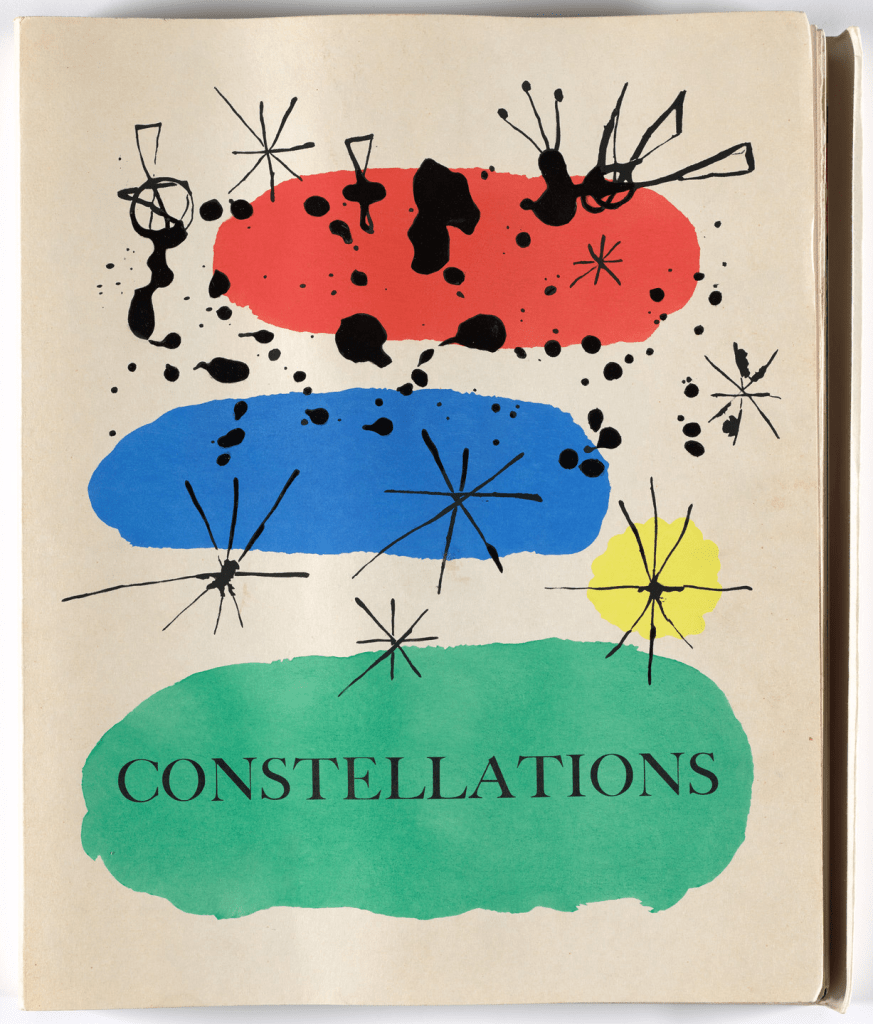
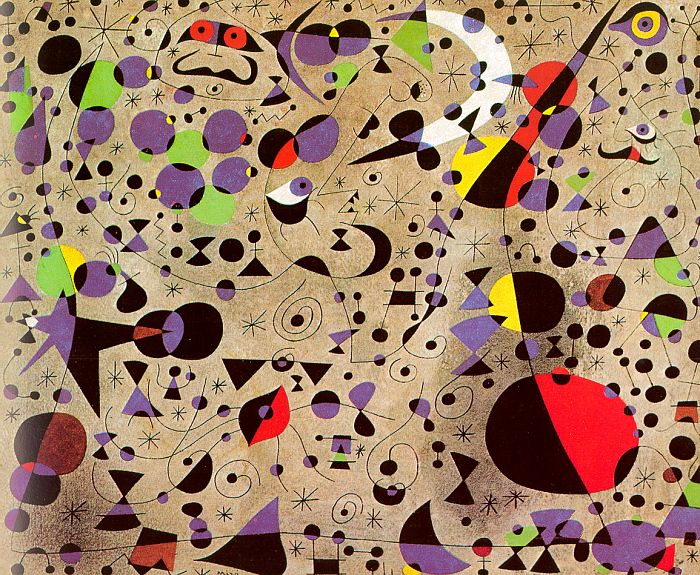

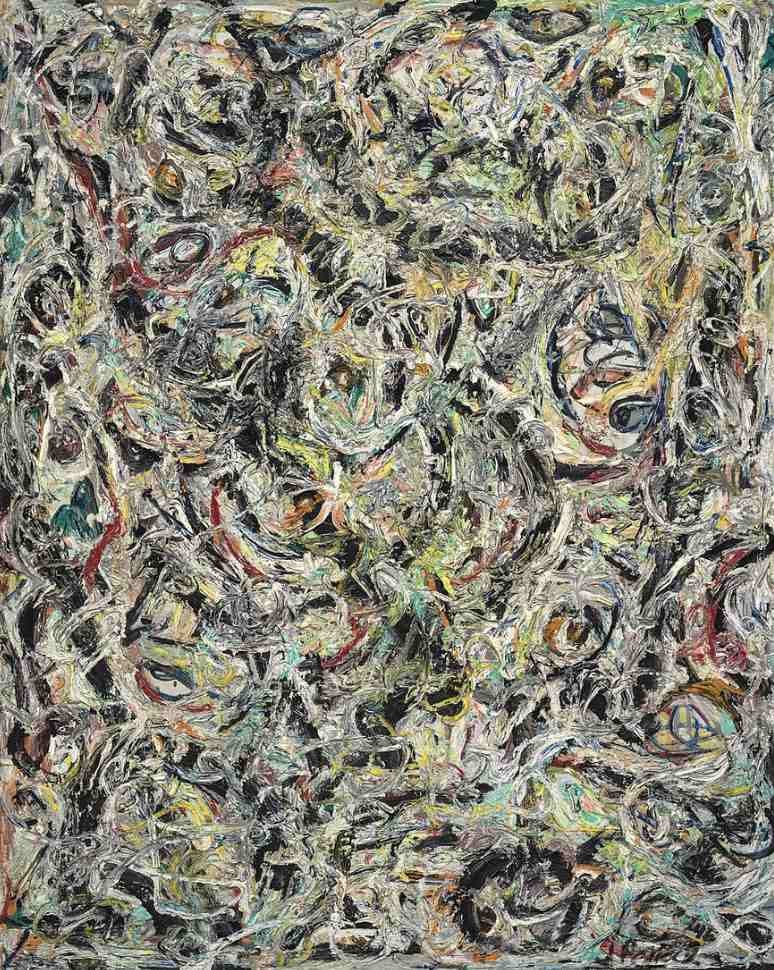
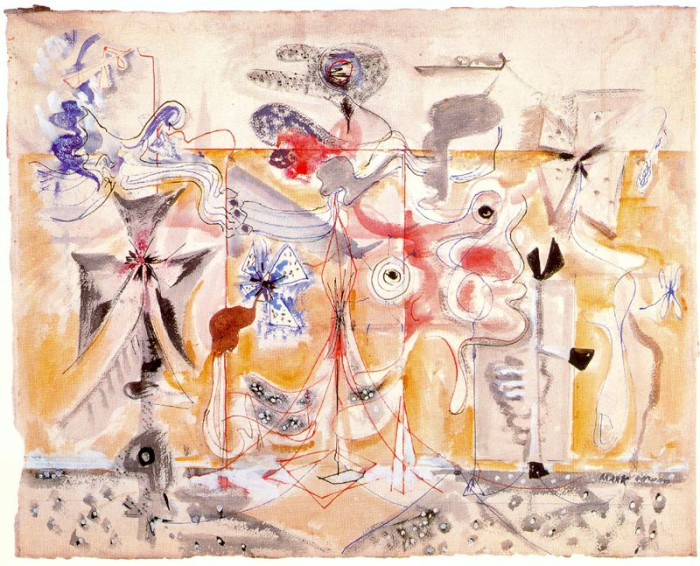
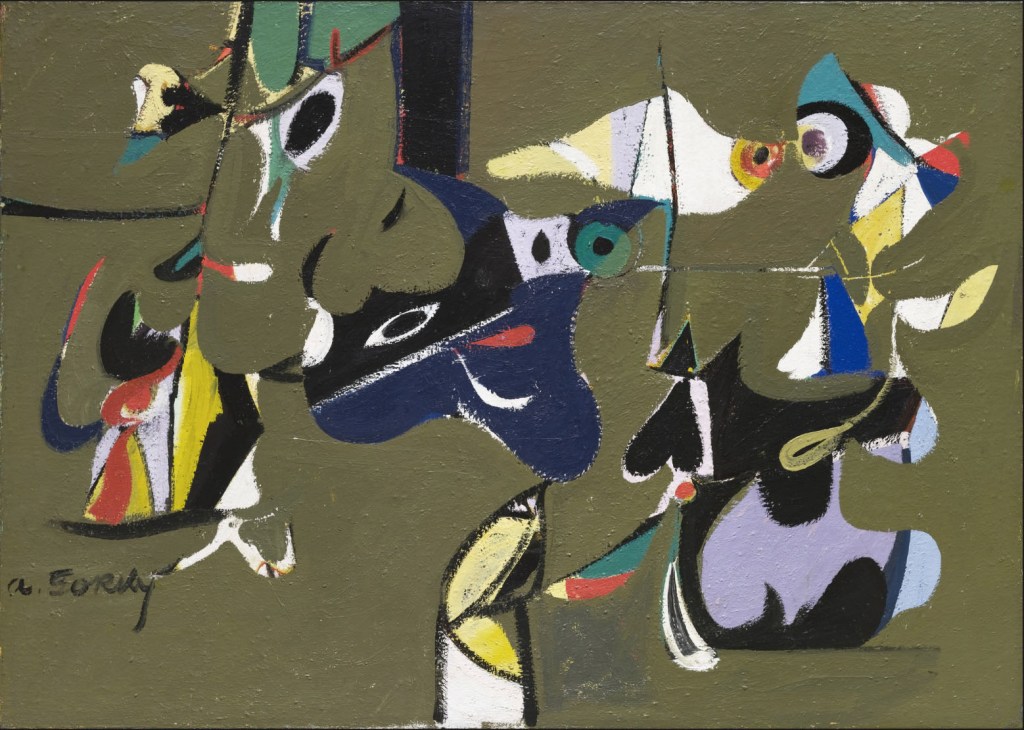
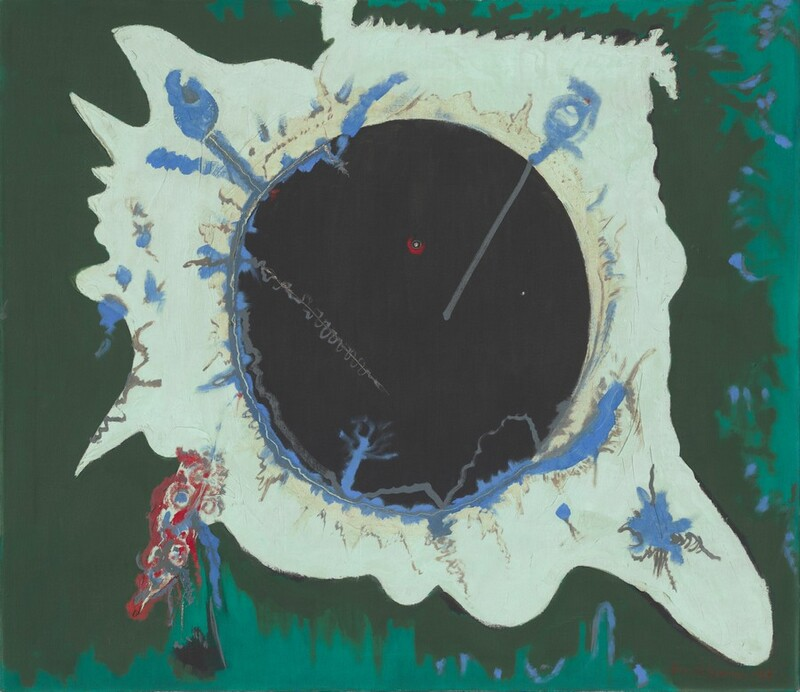
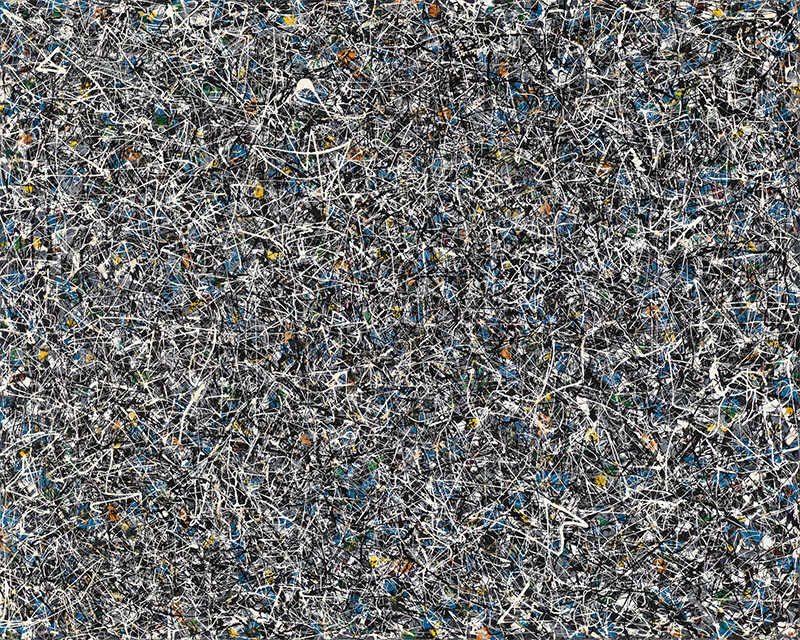
Constellations (1959) reveals Miró’s format and his options. He floated biomorphic shapes, sometimes small but often large. They might discernibly depict birds, fish, or women, but usually they are abstract, linked by heavy black lines set on a field of color. The inherent limitation of this form, not always avoided, is that when too many small shapes are presented, the pictorial structure of the painting tends to be weak. The fact remains that some of the best works in this show consist of others’ variations on Miró’s busy biomorphic theme. Compare Arshile Gorky’s Garden in Sochi (1943) or Mark Rothko’s Untitled (1945) with Miró’s Woman and Birds at Sunrise (1946), and you see how much the two US-based artists owed him. One option Miró opened was that of enlarging suspended forms so that they fill the entire picture plane. In this vein, consider Barnett Newman’s Pagan Void (1946), where one form fills the center of the space, and Jackson Pollock’s Eyes in the Heat (1946), in which lines of paint fill the entire space. Both were radical developments derived from Miró’s floating forms. Likewise, Lee Krasner’s Untitled (Little Image Painting) (1947–48), is an all-over work extending these forms. Alexander Calder’s Black Polygons (1947) develops the same structure, as the forms freely float in a mobile. These, of course, are among the best-known artists in the show, but the same point could be made with reference to less recognizable figures.

Miró essentially composed pregnant art forms, and Constellations is a superb realization of possible variations on this concept. That said, the exhibition is arguably overhung. It might have been thematically stronger had the curators excluded artworks that did not distinctively reflect Miró’s innovations. Indisputably fine works by Grace Hartigan, Elaine de Kooning, Norman Lewis, Joan Mitchell, and Robert Motherwell, for example, don’t appear to have much to do with Miró’s American vocation. Nor do The First Spark of Day II (1966), by Miró himself, and Willem de Kooning’s Ashville (1948). Ironically given the show’s theme, though perhaps not surprisingly insofar as the seamlessness of kinship increases with time, they may be the best paintings on view.
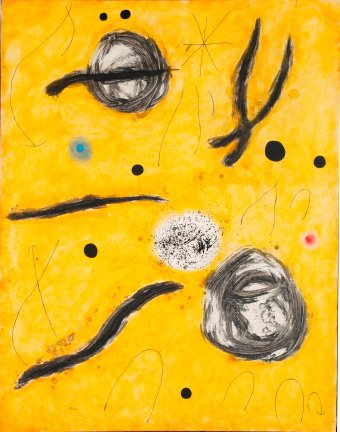
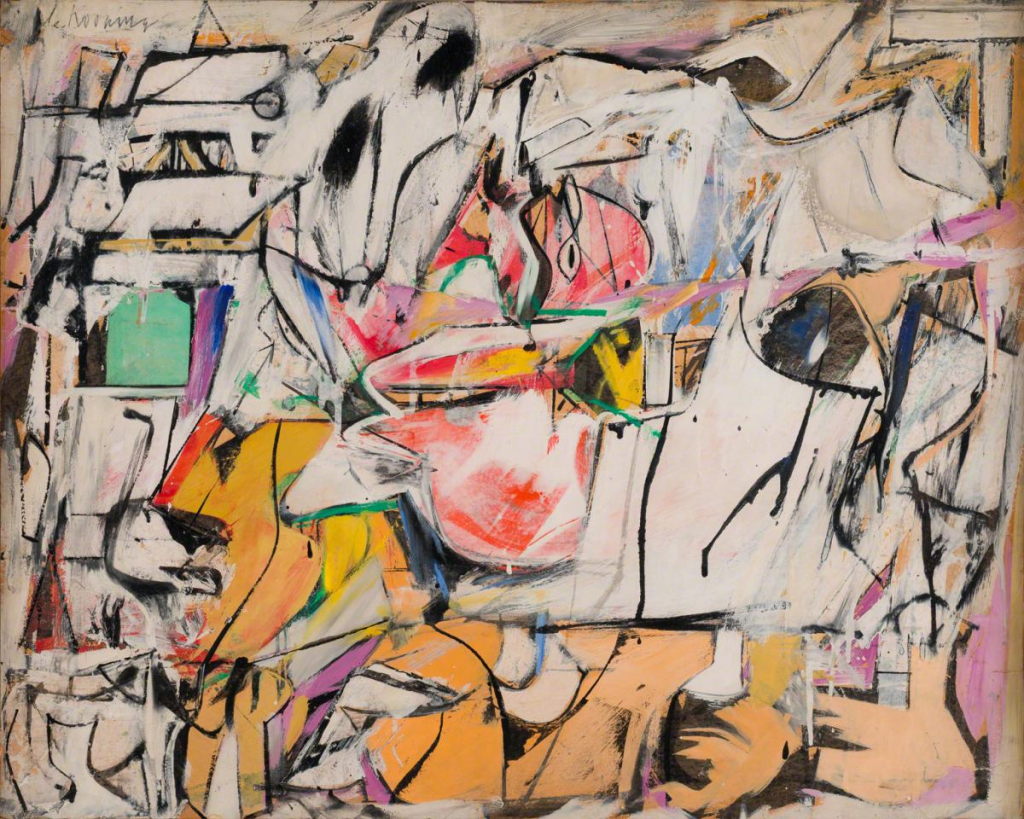
25 9/16 x 31 7/8 inches
“Miró and the United States,” The Phillips Collection, 1600 21st Street, NW, Washington, DC. Through July 5, 2026.
About the author: David Carrier is a former professor at Carnegie Mellon University; Getty Scholar; and Clark Fellow. He has lectured in China, Europe, India, Japan, New Zealand, and North America. He has published catalogue essays for many museums and art criticism for Apollo, artcritical, Artforum, Artus, and Burlington Magazine. He has also been a guest editor for The Brooklyn Rail and is a regular contributor to Two Coats of Paint.






Wow.