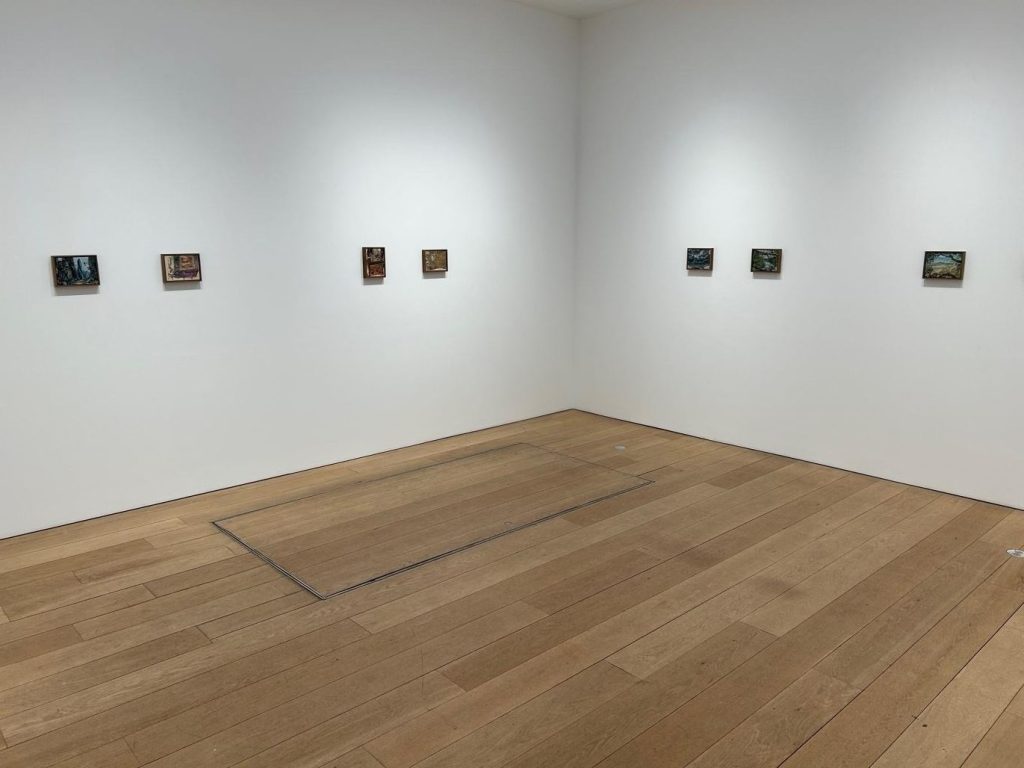
Contributed by Michael Brennan / In blues, there’s a tradition of over-practice, the idea being that the same song played thousands of times, and thus mastered, might yield something new about its nature, revealing a hidden room. My own artistic bias has long been to err on the side of underdevelopment. Ken Resseger, who was a student of mine over 25 years ago, back then overpainted. But, while his work could be labored, it often opened an entirely new world. As an older, seasoned painter, he has become something of a visionary in the very American vein of Martin Johnson Heade – a naturalist who painted exotic, realistic, yet unnatural landscapes.
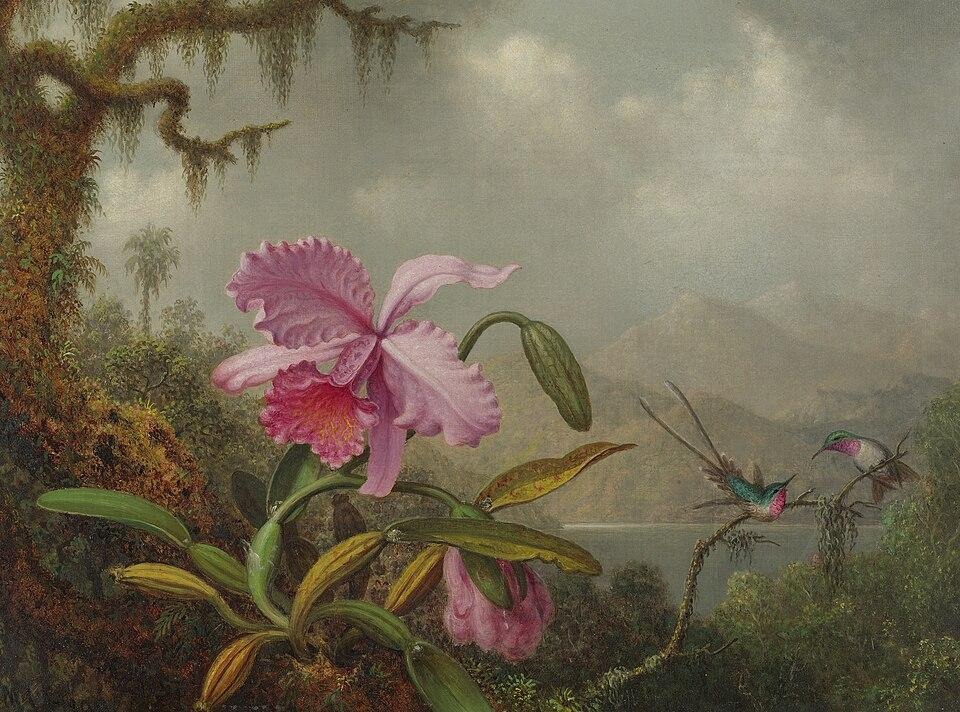
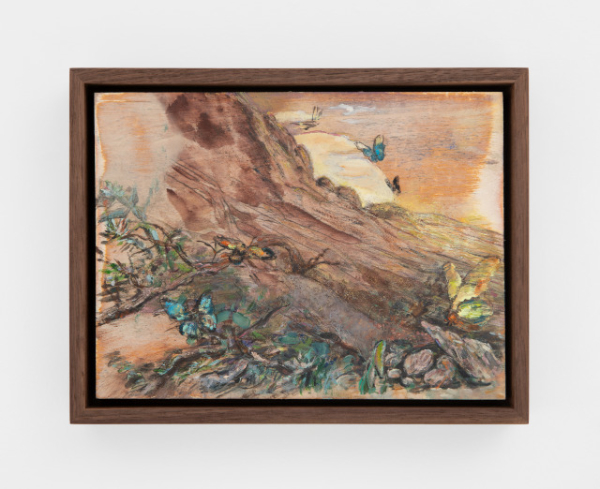
Like Heade, Resseger is known for smaller, extremely intense, paintings. He mostly works on scrap-size cut pieces of plywood – 7 x 9 inches. He needs a sturdy surface for his labor-intensive process of aggressively adding and subtracting paint and typically works on homemade easels en plein air. At times, Resseger’s clotted clouds run closer to Albert Pinkham Ryder’s subdued images than Heade’s glossier ones. There’s a long history of cloud painting in Western art, one that includes Turner and Constable, among others, but Resseger’s studies are distinctly Ryder-esque in their rough tumult, crustiness, and inventiveness – simultaneously natural and unnatural.
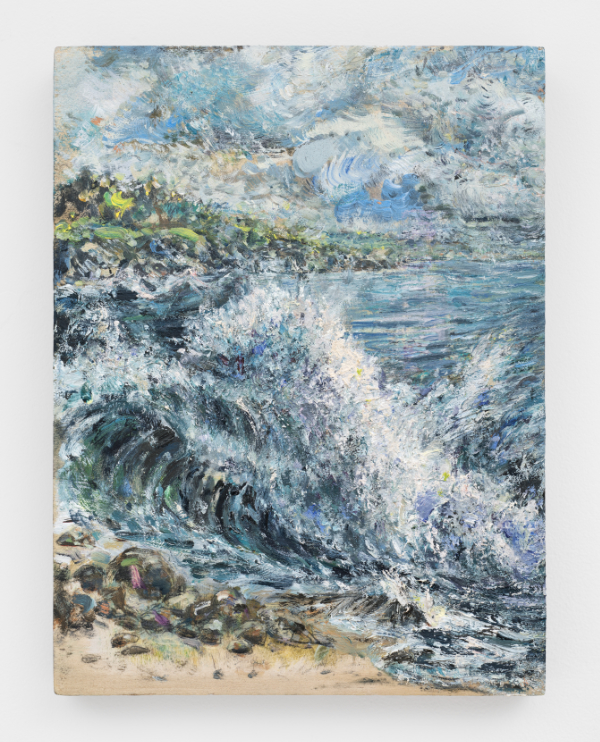
9 x 7 inches

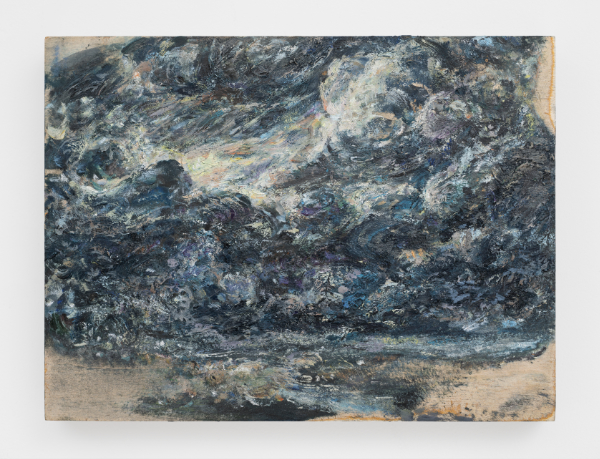
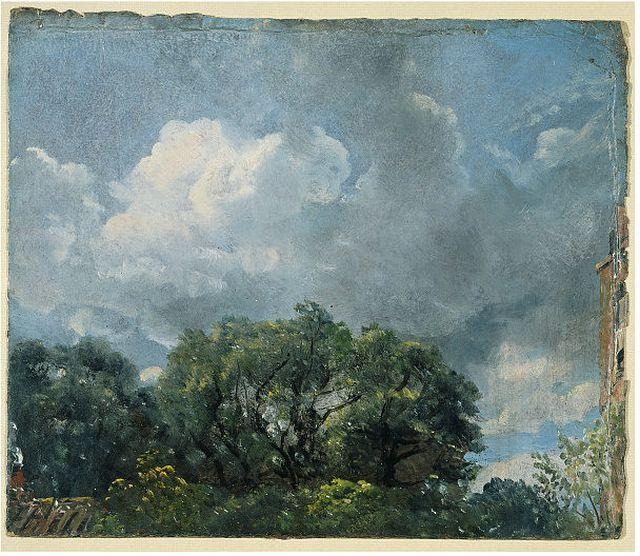
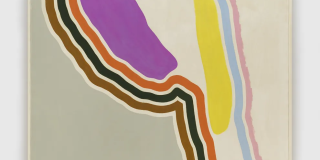
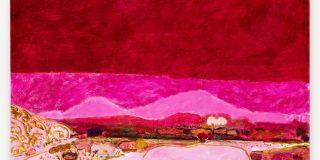
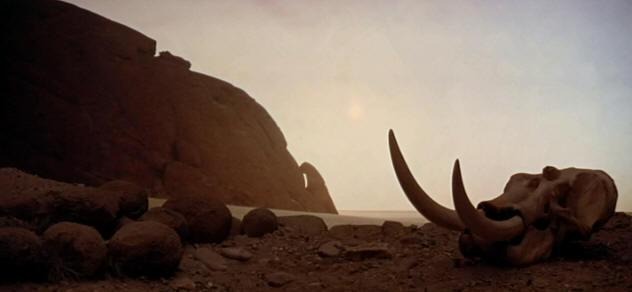
Most of the 16 paintings in this exhibition are fantastical landscapes of one kind or another. They’re all deeply inspired and full of possibilities. The most adventurous are essentially non-referential. An example is Mind Cave #53. Its peacock shimmer, translucent and in technicolor, is otherworldly. A few depict interiors, both traditional and futuristic, like the final furnished chamber in 2001: A Space Odyssey. And when was the last time anyone saw or made a painting that, also like Kubrick, sought to depict Earth when it was closer to creation than to mankind?


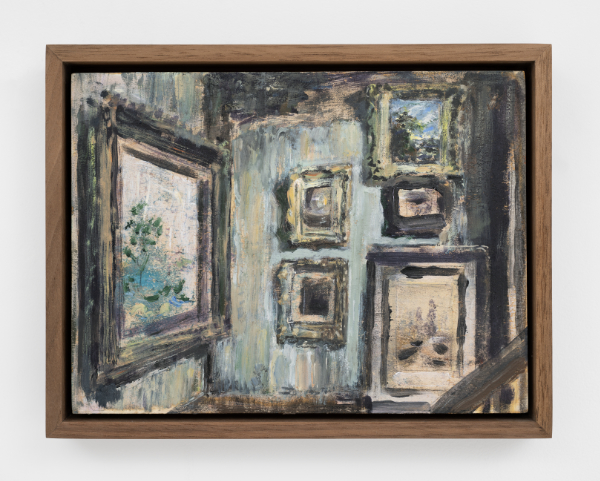
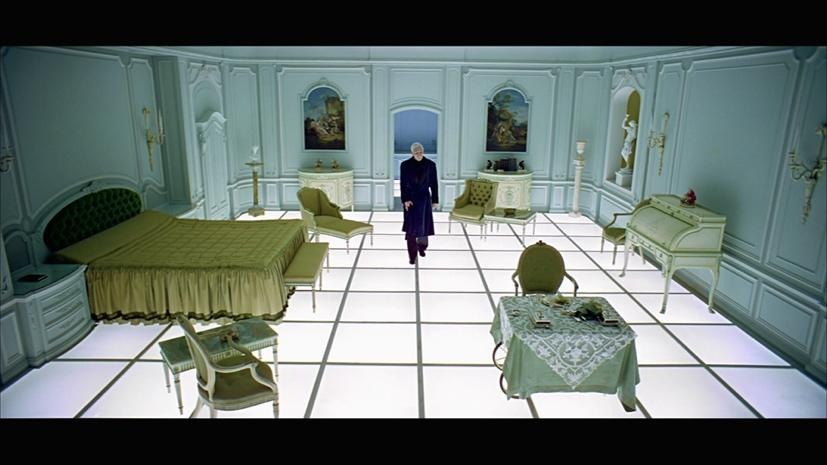
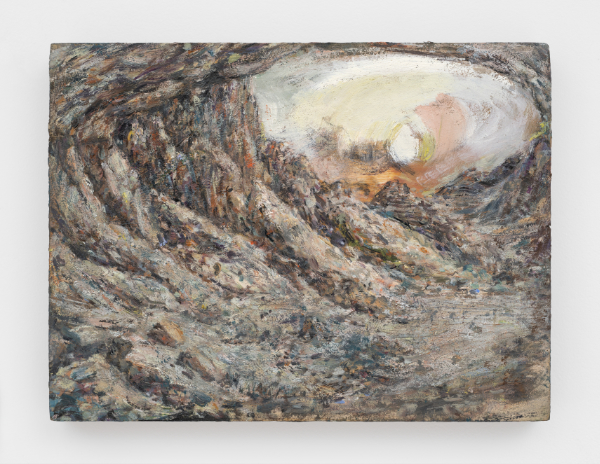

“Ken D. Resseger: Plein Meandering,” Canada, 60 Lispenard Street, Project Room, New York, NY. Through May 9, 2026.
About the author: Michael Brennan is a Brooklyn-based abstract painter who writes on art.