
Contributed by Peter Dudek / I was on my way to ISAW – NYU’s Institute of Studies in the Ancient World – when an email from The New Yorker appeared on my iPhone. They had just published a story entitled “Love is a Mental Hospital.” A terribly precise and painful title for structurally confining relationships; often by one’s own choosing. Have we not all been there? And what about life as an artist? Is that not also an entanglement of rapture, love, hate, and malaise? Believing I understood the situation deeply, I wondered if reading the story was necessary. But could there not be a different take, a new perspective? Why not? I returned to the email and, of course, the title was not “Love is a Mental Hospital” but rather “Love in a Mental Hospital.” A story about two people who fell in love while living in an actual mental hospital.
ISAW is on East 84th Street and the exhibition was “Rodin’s Egypt.” I was entirely unaware of any connection between Rodin and Egypt, so I attended talks on the subject before I saw the show. I always preferred Rodin’s plaster originals and disliked the bronzes, and to my surprise so did many other people in attendance. That was the consensus: the plaster work is better. I had read Other Criteria by Leo Steinberg and knew of Rodin’s studio in Meudon, where a seemingly endless variety of miniature plaster body parts were stored in flat files. This inventory – a language of sorts – was the fount to which Rodin returned, again and again. Using a grafting process, he conjoined the same part, such as an arm or hand, multiple times into one sculpture. Steinberg did not mention that at the same location Rodin had assembled a sizeable collection of Egyptian antiquities, fragments, and chunks, purchased from a dealer with outposts in Paris and New York. Here, the ISAW exhibition presented sculptures in which Rodin affixed his plaster parts to Egyptian relics, forging a dialogue through the ages.
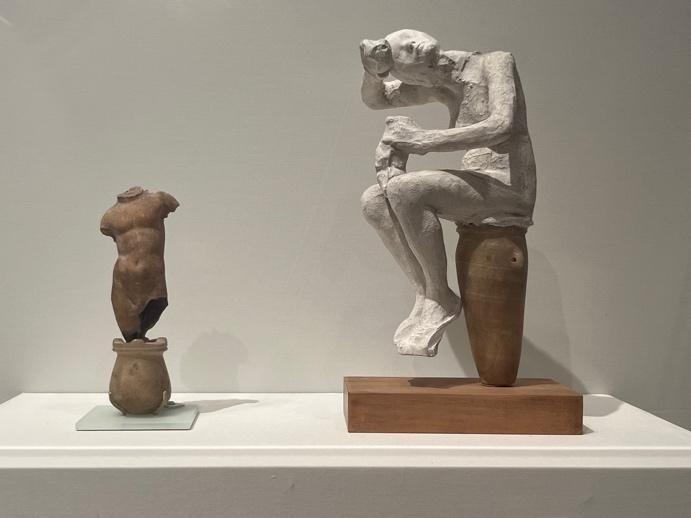
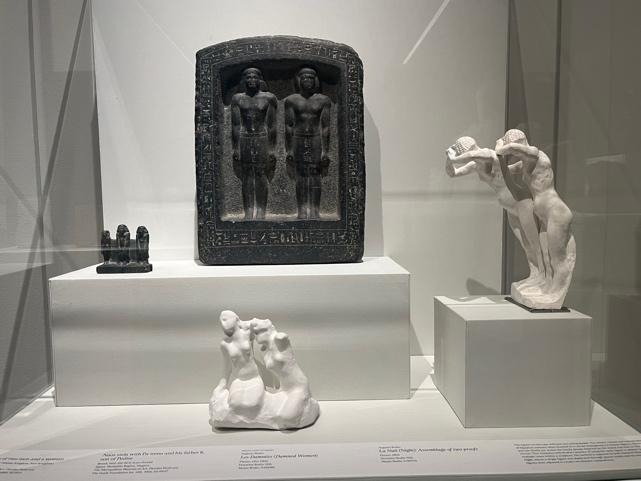
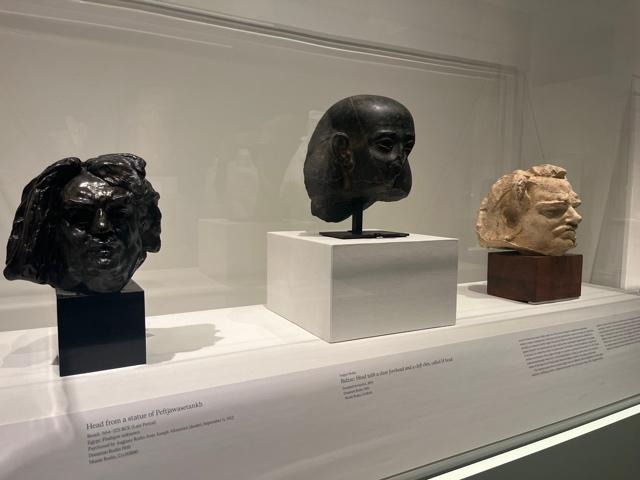
The curator also juxtaposed Rodin’s sculptures side by side with the antiquities he collected, clearly showing the modern/ancient conversation he was engaged in.
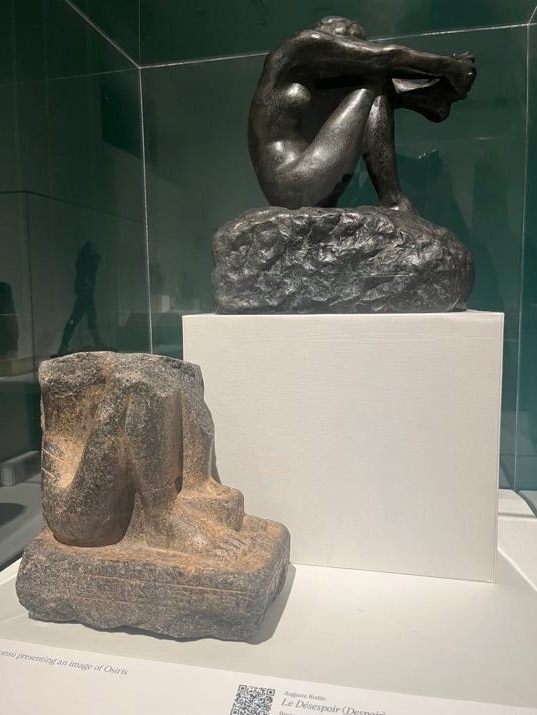
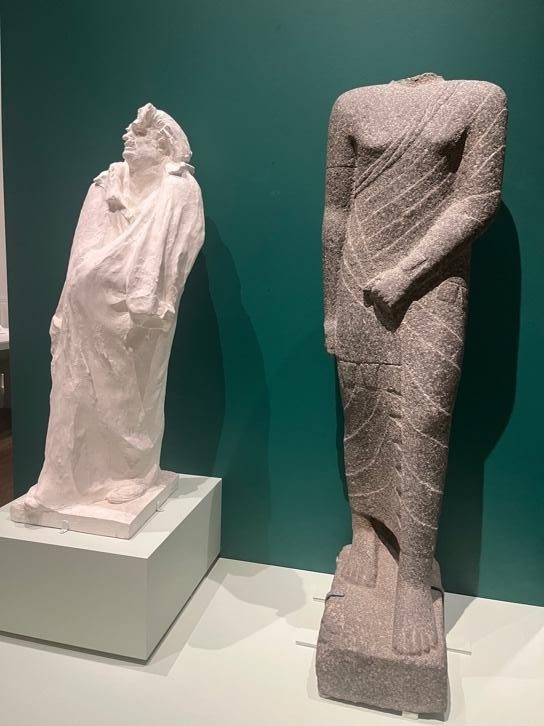
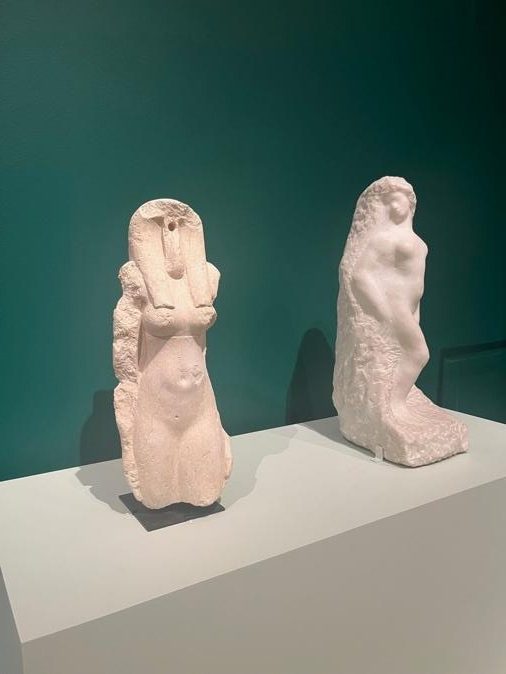
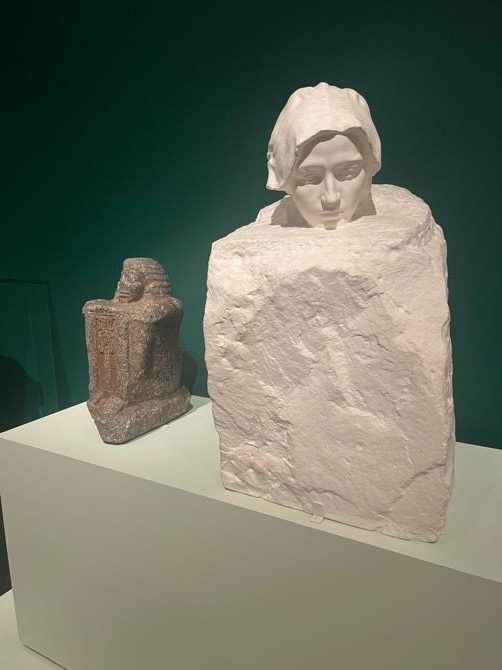
The whole time there I felt as if I was immersed in a discovery – an archeological dig as exhibition. At the same time, I was disappointed in myself. Why had I not gone to Meudon after grad school, I asked? Although the show was held in two modestly sized rooms, it housed an abundance of pieces and deep wonder. The Egyptian antiquities, both fragments and chunks, possessed a profound solidity and formal strength. Rodin’s casts of multiple limbs and raw figurative carvings were especially curious in this context. The show resets one’s understanding of Rodin’s practice. One can easily imagine him, filling his later days, moving about Meudon: his studio, his archive, his museum.
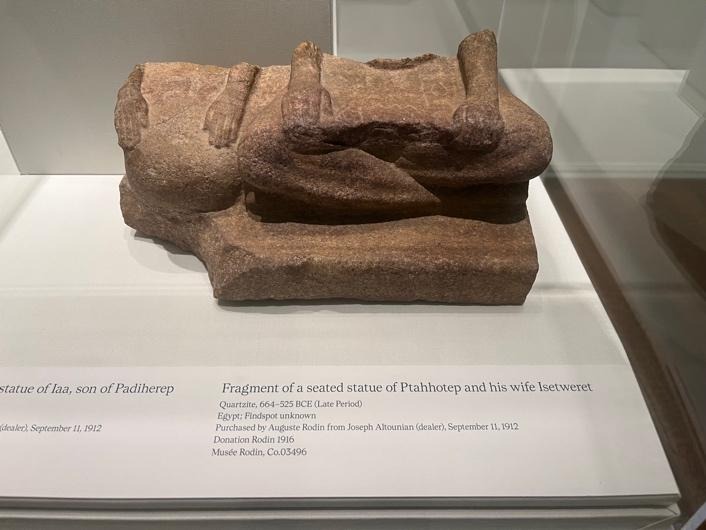
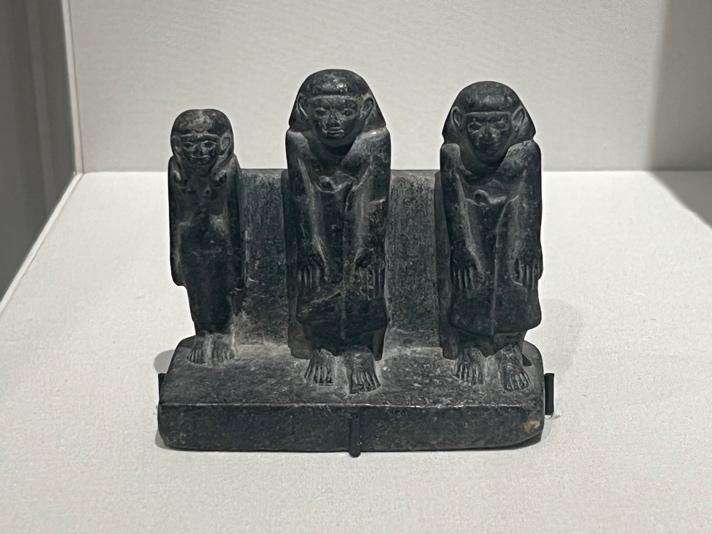
All Egyptian

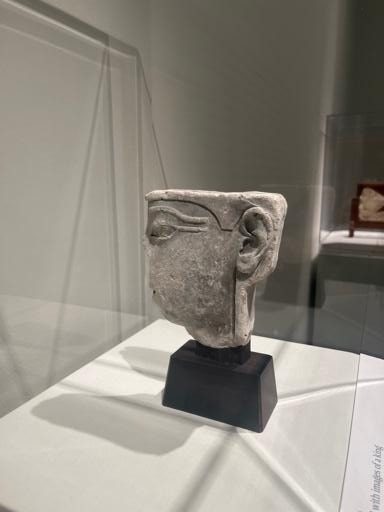

Note: Turns out, this show is a teaser, a warmup, for a larger version coming to the Met.
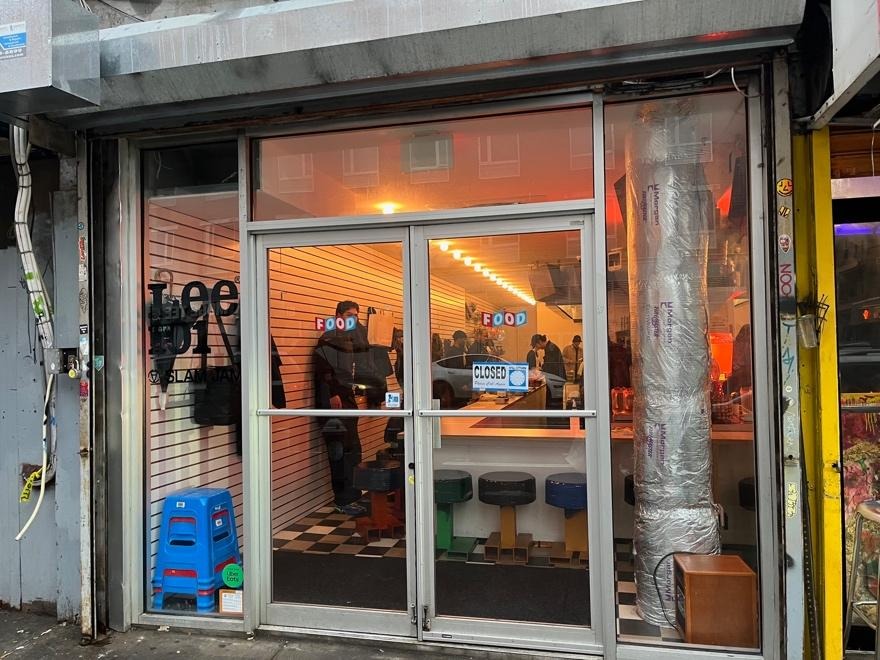
I was now hungry. Classic eateries on the upper eastside, like The Ideal that served simple German fare, disappeared long ago. But word had it that a reincarnation of Food had appeared on Canal Street and was once again feeding artists and other culturally minded folks. Starting in the 70s, Food was a Soho-based, post-hippie, healthy food leaning restaurant started by artists. I found the sandwiches there heavy on sprouts, but the idea of sustenance provided by artists for gallery-hopping folks was exciting. I headed downtown. As I exited the Canal Street station, I overheard someone say, “Most politicians are not trustworthy, the rest are scumbags.” No need to dispute that one. I kept walking. I was hungry.
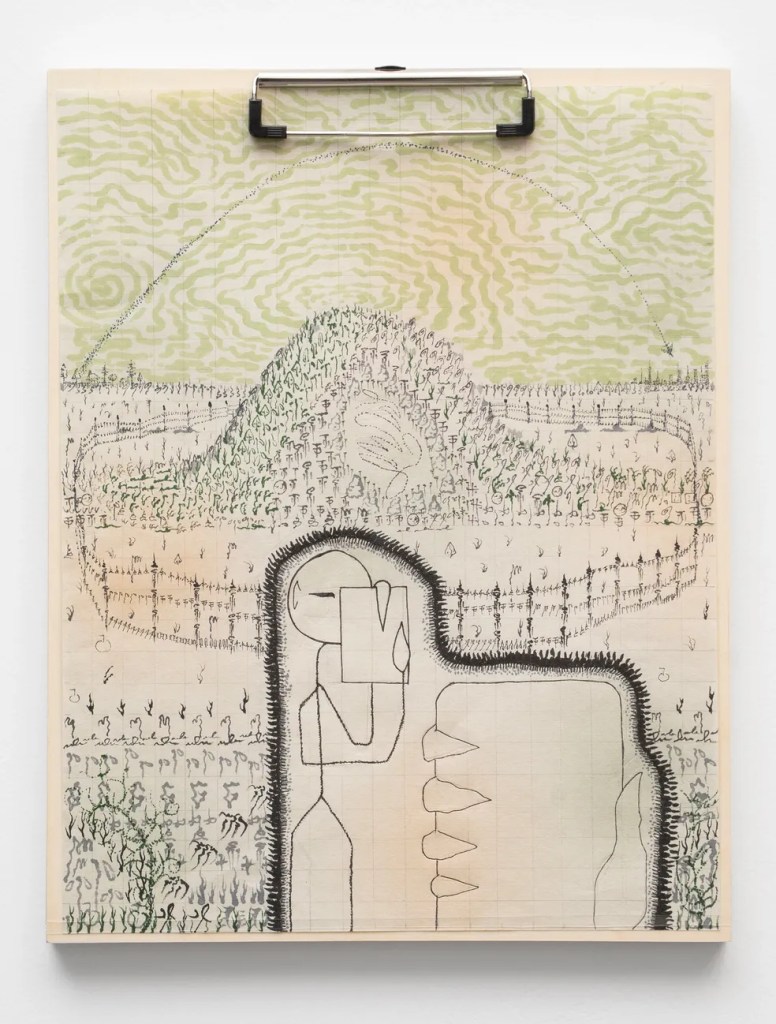
Since I arrived before Food opened for dinner, I decided to stroll around the neighborhood and found Hyacinth, a space vying for the title of the smallest gallery in New York City. With mega galleries putting on so many fantastic exhibitions, it’s difficult to carve out time for just wandering and discovering these smaller, out-of-the-way spaces. Inside Hyacinth was the work of Mitch Patrick. I had previously seen a piece by him at Platform Project Space in Dumbo. It held my attention as I wasn’t sure what exactly I was looking at. Conversing with other artists at the opening we surmised that, though flat, it could be a type of 3D printed mark-making on a semi-clear sheet, or several sheets of material sewn together, with collage elements. High and low tech. The works at Hyacinth were likewise covered with red asemic digital “writing.” In the Platform exhibition, the work was suspended away from the wall so that one could see through to the space behind it. Here, while still visually intriguing to look at, the “drawings” were mounted on wooden clipboards, which made for a disjuncture of sorts, evoking the past/present/future ruptures in the film Brazil by contrasting the allure of current tech with the banality of the almost forgotten clipboard.
Food opened. This new Food is a post-hipster, finer-dining, narrow space with a long L-shaped counter and one booth; a tight and intimate fit. The music is loud enough to muffle nearby conversations, while the close proximity of patrons to one another makes for easy inquiries about your neighbor’s meal. There was a three-person team, a waitress and two chefs, working behind the counter. The cooking is performed right in front of you, just as it used to be at Howard Johnson’s. This being the 21st century, reservations are made online. Forget about calling. Daily à la carte menus are texted to customers ahead of time. I had the cabbage soup – red cabbage in a thin broth with a small bone at the bottom – tasty! I followed it with a thick-cut porkchop with caramelized onions – delicious! The finishing touch was a citrus & whipped ricotta desert. Though they do have a bar, I only drank a Coke. The bill was $65 plus tax & tip. Sorry no photos.
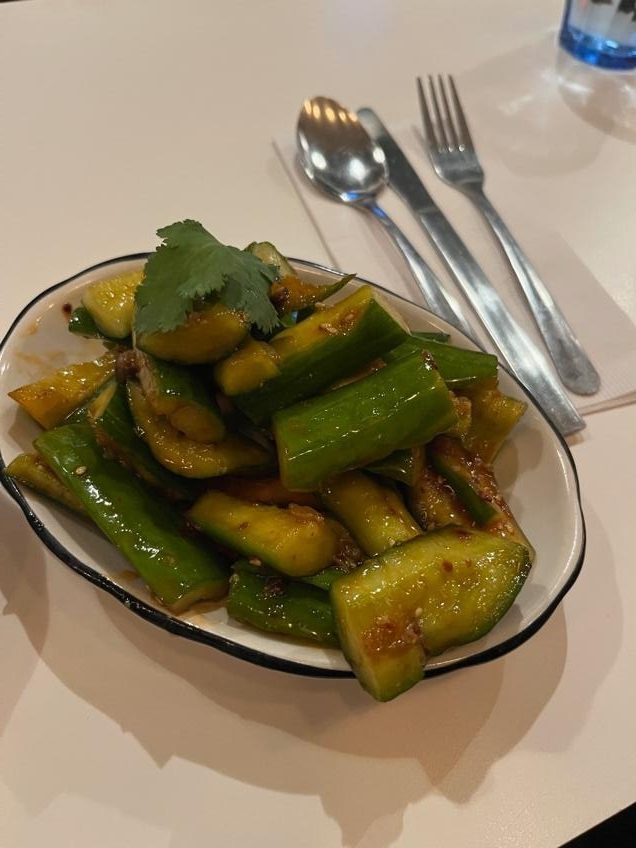
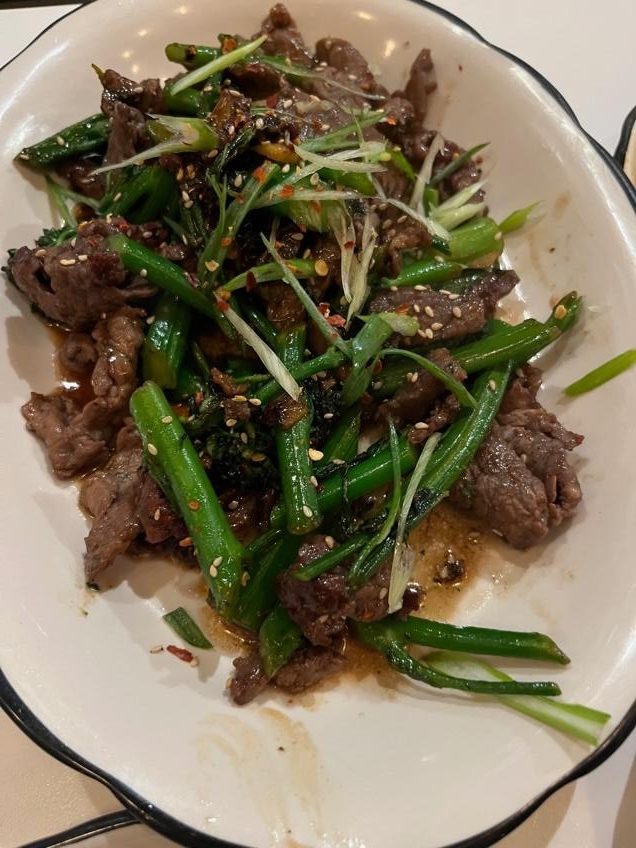
Food Part Two: I went again a week later. I ordered Beef & Broccolini ($28) and Cucumber Salad ($12), all was excellent. Same chefs, different waitress. Photos this time.
Addendum: the recent Dan Flavin exhibit at Zwirner – did they just build another building in Chelsea? – was a prime example of mega-dealing exhibitions. The work was stunning. Zen-like spaces with impeccable concrete floors and pure white walls, pioneered by Ace Gallery over 30 years ago, are not only the standard for contemporary mega-galleries but also perfectly suited to the demands of minimal and light-focused art.
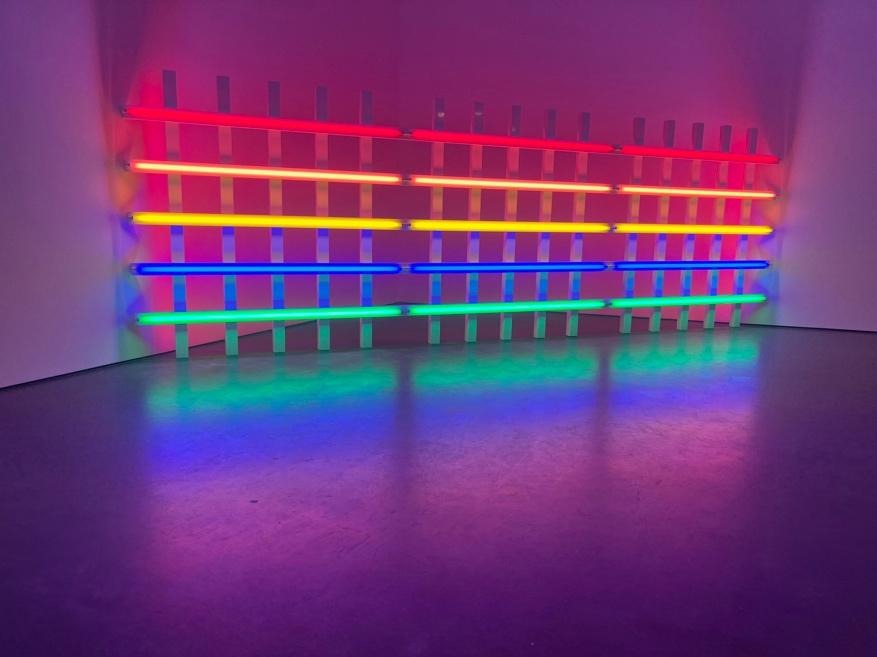
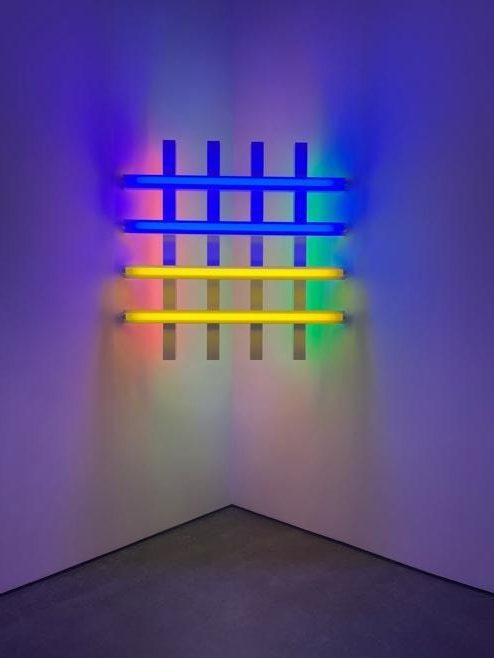
These are not the fluorescent fixtures of Flavin’s early days. The hollow electrical housings rival the craftsmanship Donald Judd’s boxes. They look custom-made, not store bought. All works were sculptural editions dating from the 1970s & 1980s, but clearly recently fabricated. Despite the evolution of light fixtures since the 60s, these fluorescent tube sculptures did not feel dated. Rather, they anchored and critiqued the present, commanding the space around them, making any other nearby electrical fixture look intrusive and absurd. It’s insane how luscious this work looks.
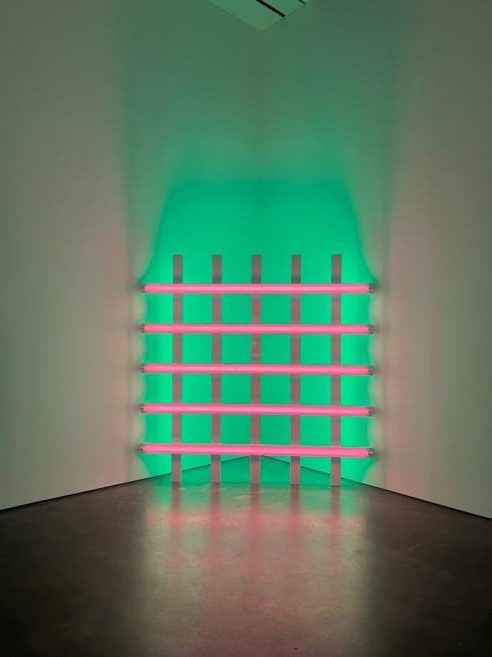
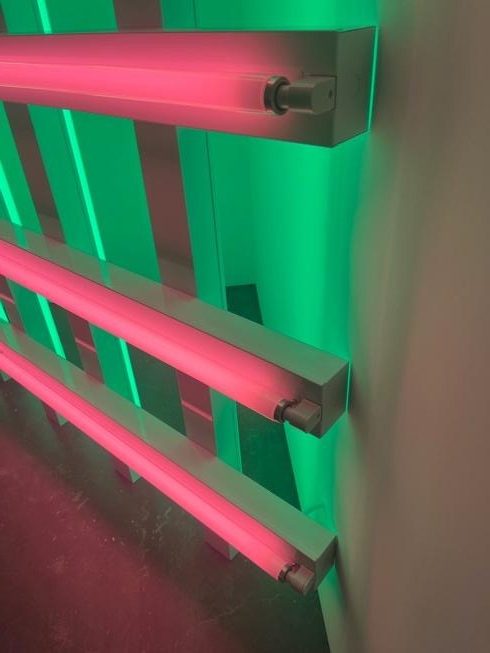
Not the standard-issue, 20th-century tin boxes we remember.
“Rodin’s Egypt,” Institute for the Study of the Ancient World, New York University,15 East 84th Street, New York, NY. November 19, 2025–March 15, 2026. Curated by Bénédicte Garnier.
“Dan Flavin: Grids,” David Zwirner, 537 West 20th Street, New York, NY. January 15–February 21, 2026.
“Mitch Patrick: Etiolated Calligrapher,” Hyacinth Gallery, 56 Eldrich Street, New York, NY. February 13 through March 15, 2026
About the author: Peter Dudek is an artist, a partner and creative director at Bascom Lodge, an Arts-and-Crafts-style lodge at the peak of Mount Greylock in Massachusetts, and a faculty member at SVA and Hunter. He has work on view in “Wooden,” at Project: ARTSpace, New York, NY, through May 29, 2026.








Excellent piece . I only wish I didn’t miss these shows.
Terrific piece by Peter Dudek! Love the range of subject covered and his thoughts on Rodin are terrific.
Ditto the above. Antique/modern comparative critique, lecture notes, travelog, & tasty 3-course meal all in one. Happy to be reminded me of my trip to Meudon.
Quintessential NYC day! On the subway reading (and misreading) a New Yorker article, a discovery of Rodin’s work inspired by his passion for ancient Egyptian art, pangs of hunger and nostalgia for long gone restaurants in one neighborhood, but then the promise of a revived/reinvented 1970s iconic eatery all the way in lower Manhattan. Another ride on the subway. From upper east side to Canal Street. Overheard local vernacular truisms. More art viewing. And finally a delicious meal. Excellent writing! Love it!
I love love, everything about the journey from Egypt to Rodin, Flavin, with meals in between, reminded me of those AIA architecture critics who would create walking tours, commenting on buildings, but including tips on where to get a good bite along the way. Dude K Forever!
Wonderful piece. I wish more art writers would write like this, like someone who’s just casually talking to you. So intimate, so personal. You GO, Peter Dudek !
The incomparable Peter Dudek: a fly on the wall in cargo shorts.
Fantastic! I have to see this Rodin/Egypt Exhibit! I didn’t know about the ISAW.
And thank you for the *glowing* review of the walls and floors at David Zwirner’s Flavin Show. The Raking light shows all.
This is amazing! The food seems so good and I like your reviews for the exhibition!