
Contributed by Bill Arning / The Thomas Cole National Historic Site in Catskill presents a conspicuous curatorial challenge. It no longer owns any of Cole’s major paintings and relies heavily on devoted visitors remembering his masterpieces sufficiently that encountering the rooms where they were conceived will hold interest. Given this, its single-artist focus, and fixed historical narrative, the museum also often invites contemporary artists to enliven the experience it offers. This approach can fail because if the living artist is reduced to little more than an interpretive prompt to appreciating a familiar figure. But Valerie Hegarty, with her devotion to an aesthetic of destruction infused with autobiographical trauma, is a truly provocative foil for the works of Emily Cole, Thomas Cole’s daughter.
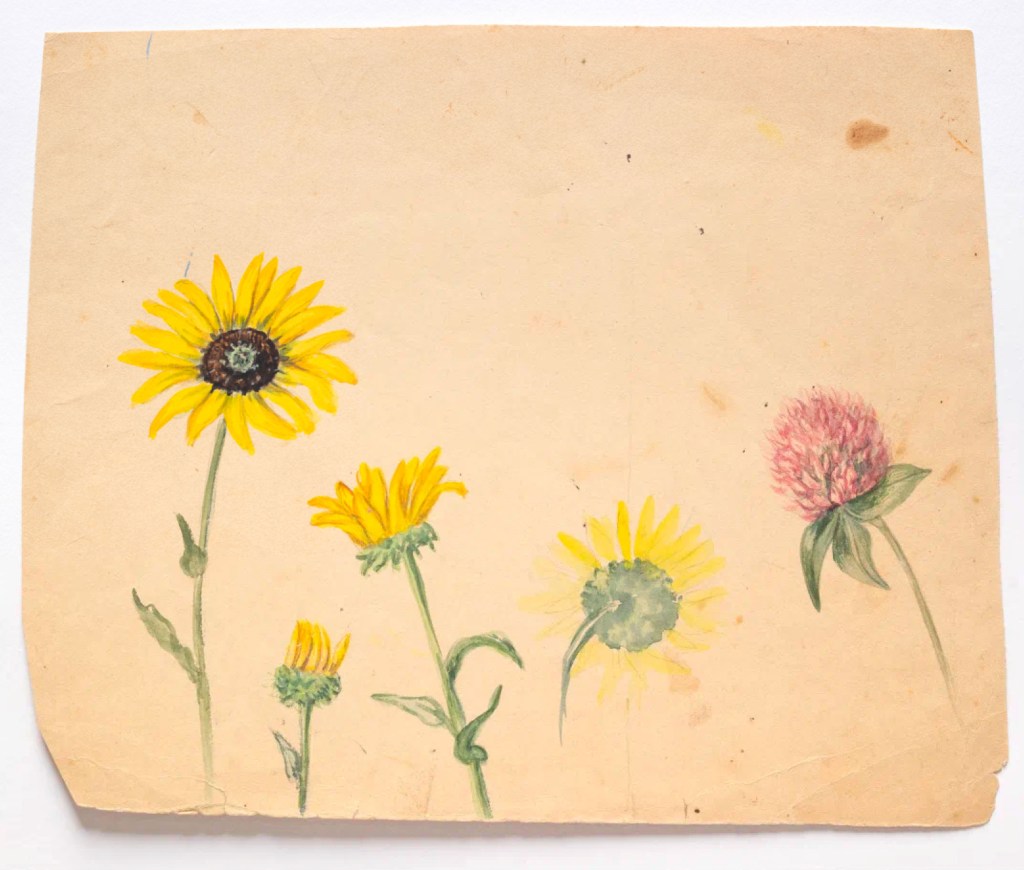
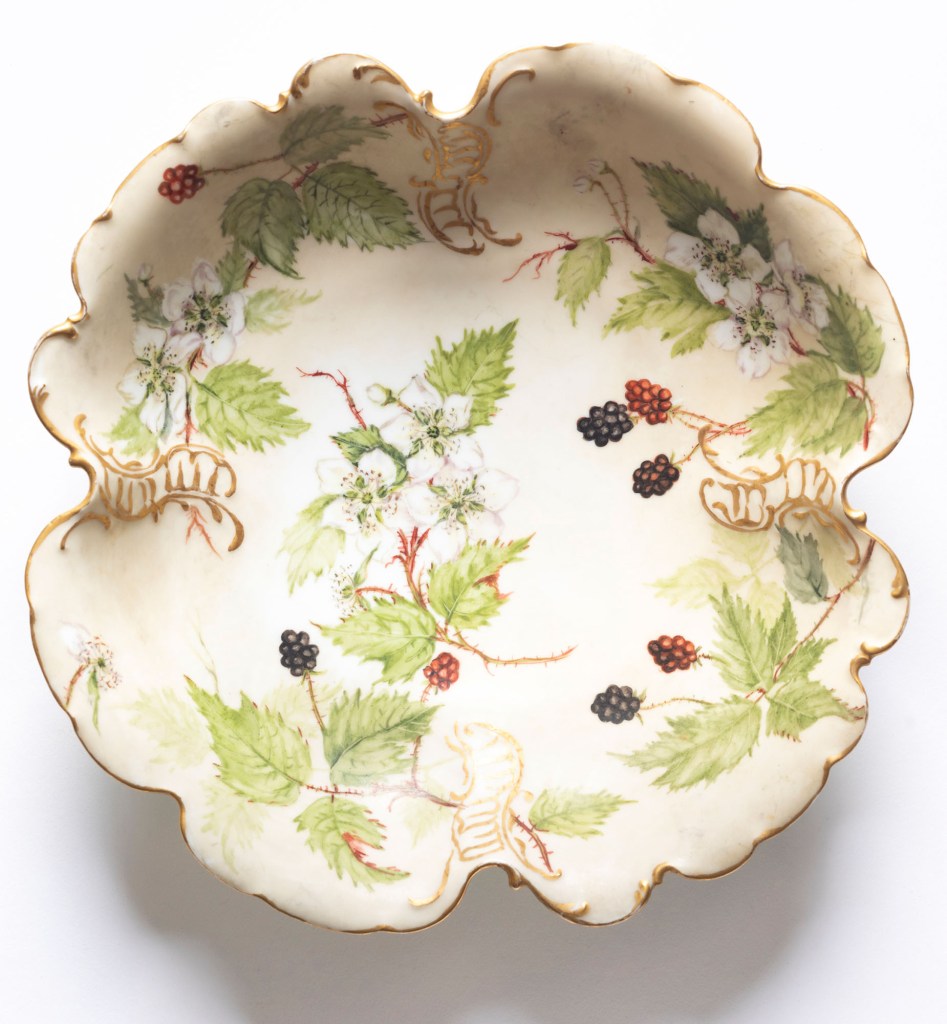
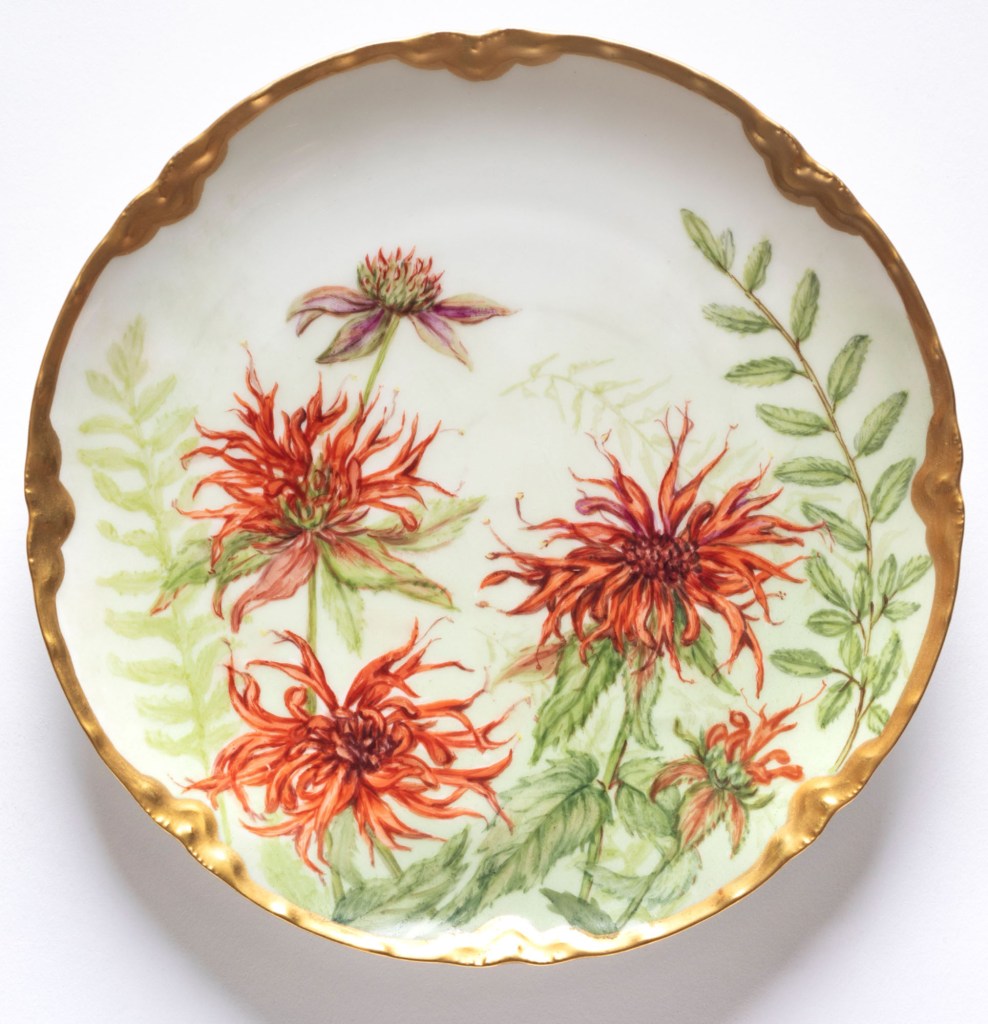
Cole’s daughter Emily was only five when her father died. As a female artist working in the nineteenth century, her possibilities were inevitably circumscribed despite her talent. Still, she achieved as much success as the period allowed, making keenly observed paintings of flowers on commercially produced ceramic plates. Although the works sold well in her lifetime – some still surface in estate sales and antique shops – the museum’s collection today holds more than 100. The watercolors are genuinely beautiful and carefully conserved, but it is hard to imagine them attracting sustained attention without the operatic narrative that Hegarty brings into the room.
To almost any work by Hegarty, the first response is that something really bad has happened here. Her aesthetic revels in flamboyantly destroyed historic interiors – wallpapers, paintings, architectural ornament, even subway mosaics – all rendered as if time, neglect, or catastrophe has violently taken its toll. Her imaginative speculation about the dynamics of the Cole family is announced in her wonderfully excessive, sentence-length title Emily Cole and Her Father, My Mother and Me (Thomas Cole’s View from Mount Holyoke, Northampton), Blackberries, Wildflowers, Robins, Nest and Wallpaper. It references Cole’s canonical painting View from Mount Holyoke, Northampton, Massachusetts, after a Thunderstorm (The Oxbow), now in the Metropolitan Museum of Art’s collection and the answer to a familiar identification question on undergraduate art history exams.
Hegarty recreates the massive landscape at a scale that barely fits into Emily Cole’s childhood bedroom. After passing through rooms of restrained historic decor, encountering it here is shockingly exhilarating. Yet Hegarty’s approach is sly rather than bombastic – less grand historical tableau than the quiet suspense of a slasher film before the mayhem begins. Soon enough, she indulges her signature gleeful destruction. In Hegarty’s version, Thomas Cole’s meticulously composed landscape appears to be disintegrating. Emily’s beloved local flowers begin to eat away at the painted surface. A tree trunk grows through the canvas and seems to take root in the bedroom floor. Flowers erupt from the painting, suggesting a world in which civilization has ended and plants have reclaimed the museum walls. Nearby, a paper-mâché robin feeds its babies in a nest – a small scene of familial care offering a flicker of post-human hope.
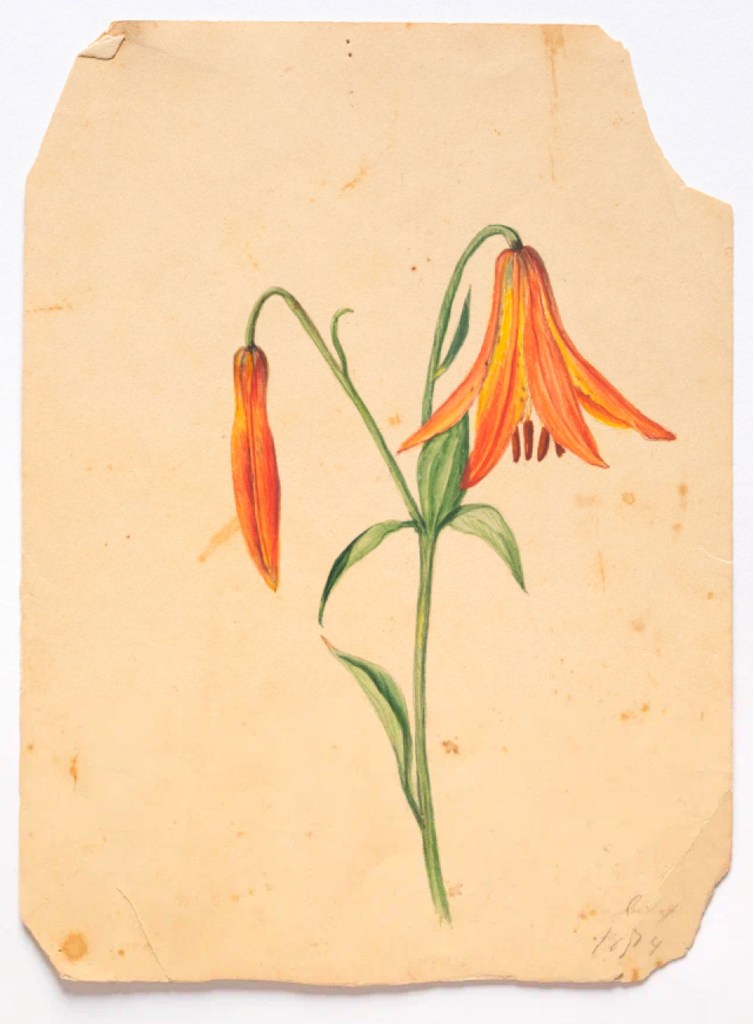

Hegarty’s strategy is to excavate. Peeling back layers of Cole’s painting, she reveals first the wallpaper of the Cole family room adjacent to the gallery, and, beneath that, Hegarty’s own childhood bedroom in pink. The identification between artist and historical subject – Hegarty and Emily Cole – becomes explicit. Our experience of Emily Cole’s art, as the long-deceased participant in this curatorial game, inevitably shifts under Hegarty’s influence. It is fair to wonder whether Emily’s floral plates would seem so visually adventurous in a more neutral and sedate context. In her era, decorating ceramic wares was the most viable professional path for thousands of female artists. The museum, however, asks us to accept that Emily Cole’s work was more experimental than most – depicting flowers at the end of their life cycles, emphasizing transience, fecundity, and decay, often from unusual angles. Against the psychedelic abundance of Hegarty’s overgrown flowers, Emily’s compositions do begin to look unexpectedly edgy.
This exhibition clearly aims to reposition Emily Cole as a significant artist in her own right. This art-historical rehabilitation is only partially convincing. But since its ambition has produced an installation of work as wildly engaging as Hegarty’s, the show must be counted a success.
“Emily Cole and Valerie Hegarty: Life Cycles,” Thomas Cole National Historic Site, 218 Spring Street, Catskill, NY. Through December 2026.
About the author: Bill Arning is a curator, critic, advisor, writer, and itinerant maker of pop-up shows based in Old Chatham, New York.





Nice insightful review, putting this on my list to go see.