

Courtesy of Imago Galleries.
Contributed by Patrick Neal / During the late 1980s and ‘90s, the painter Jennifer Bartlett produced four major series examining the classical elements of fire, air, earth, and water. The first three bodies of work, Fire Paintings, Air: 24 Hours, and Earth Paintings and Drawings, were exhibited at Paula Cooper’s Soho gallery, and Water, the last, at Gagosian in Los Angeles in 1997. In perusing images, it’s easy to find straightforward examples of fire, air, and water, but earth proves more elusive. What emerge instead are compositions of domestic scenes with strange people centered around homes, vacations, and holidays suggesting an underlying storyline. In Bartlett’s work, human presence is usually manifested through symbolic motifs or psychological traces, which makes the figures and narratives in the Earth paintings all the more intriguing.
Please click here to contribute to the Two Coats of Paint year-end fund drive

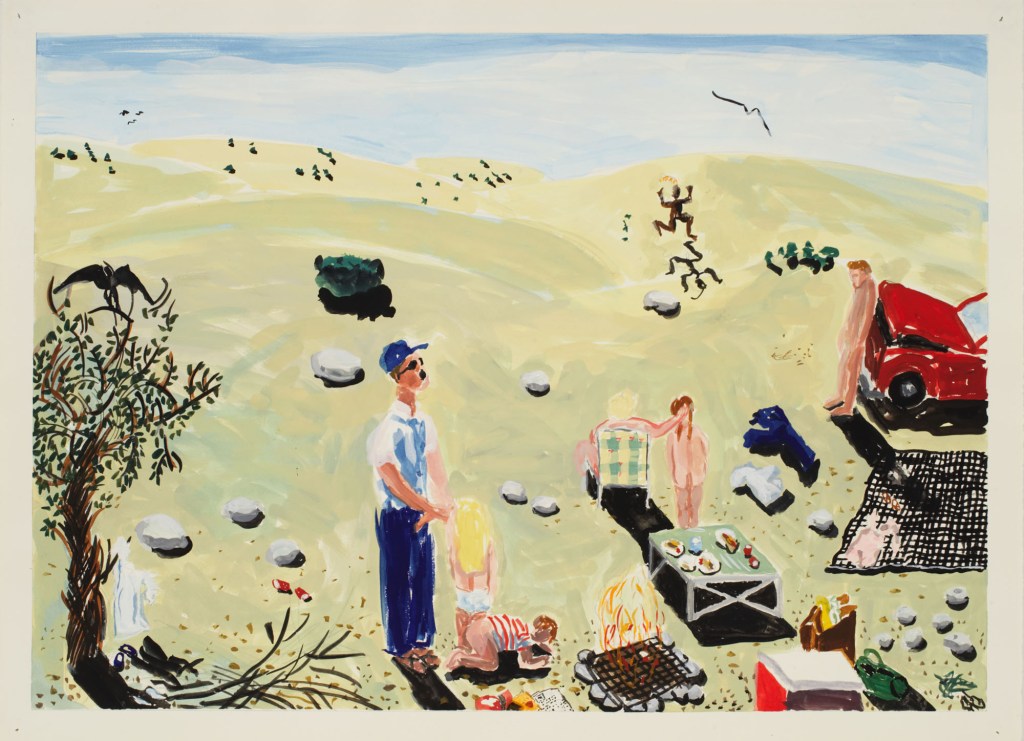
Courtesy of Imago Galleries.
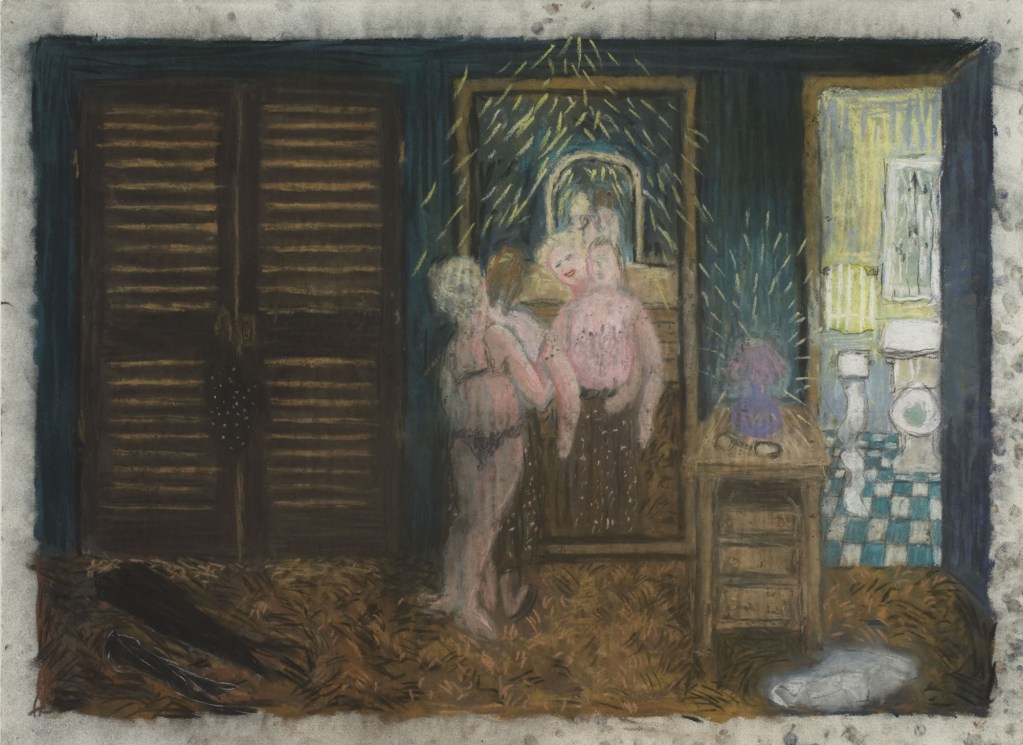
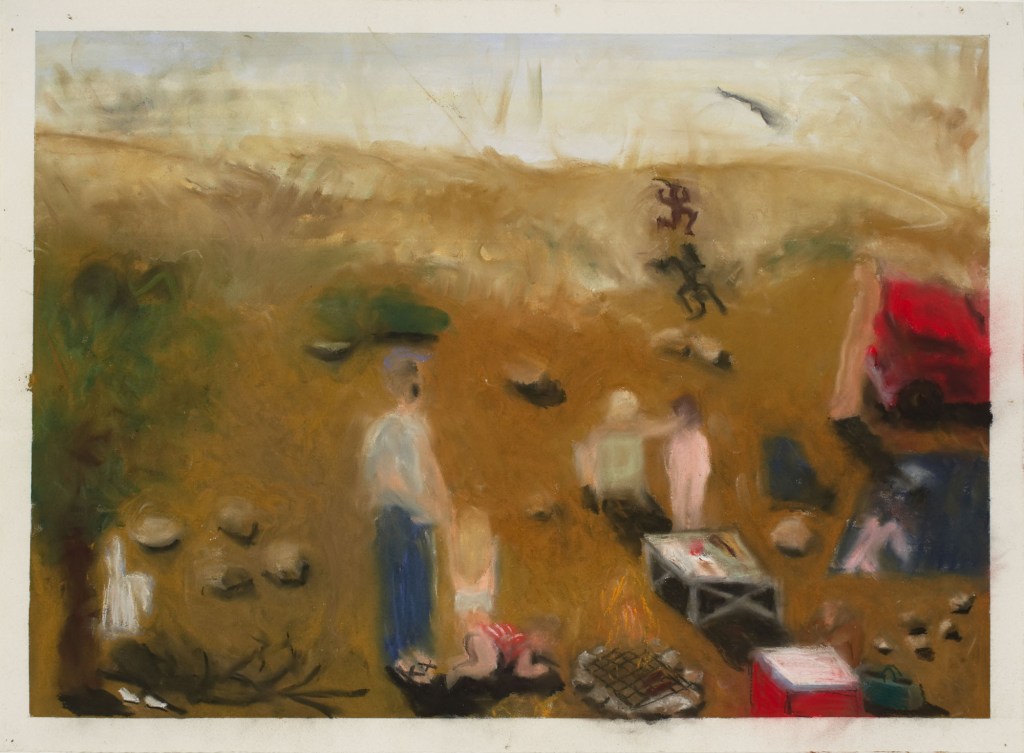
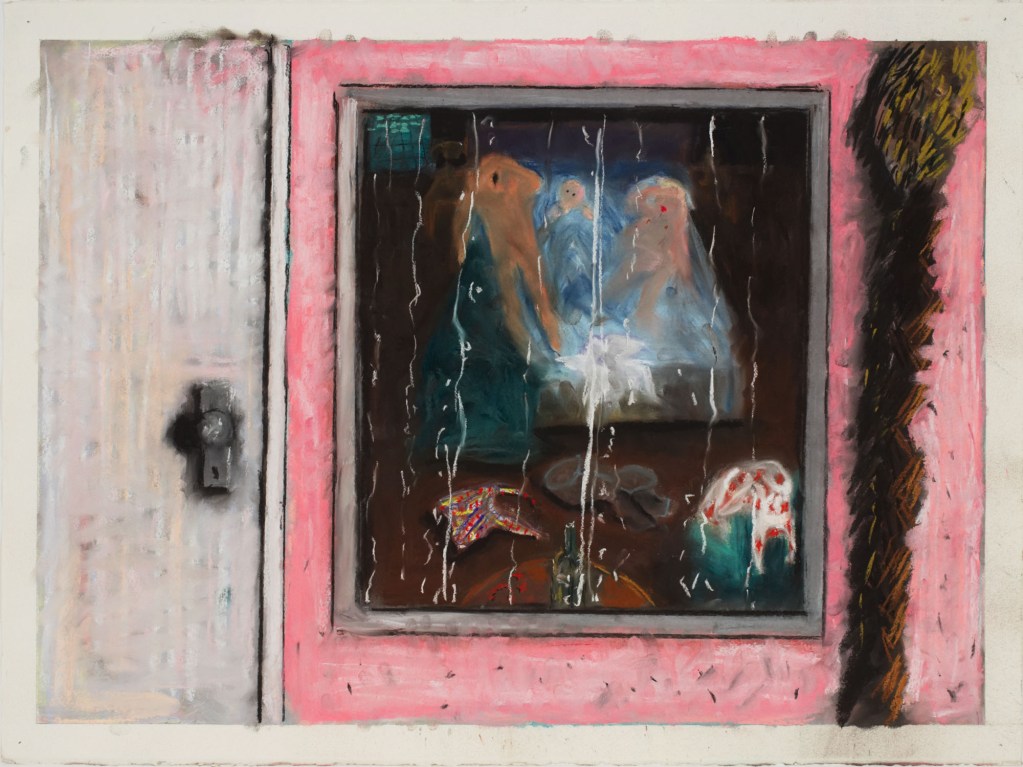
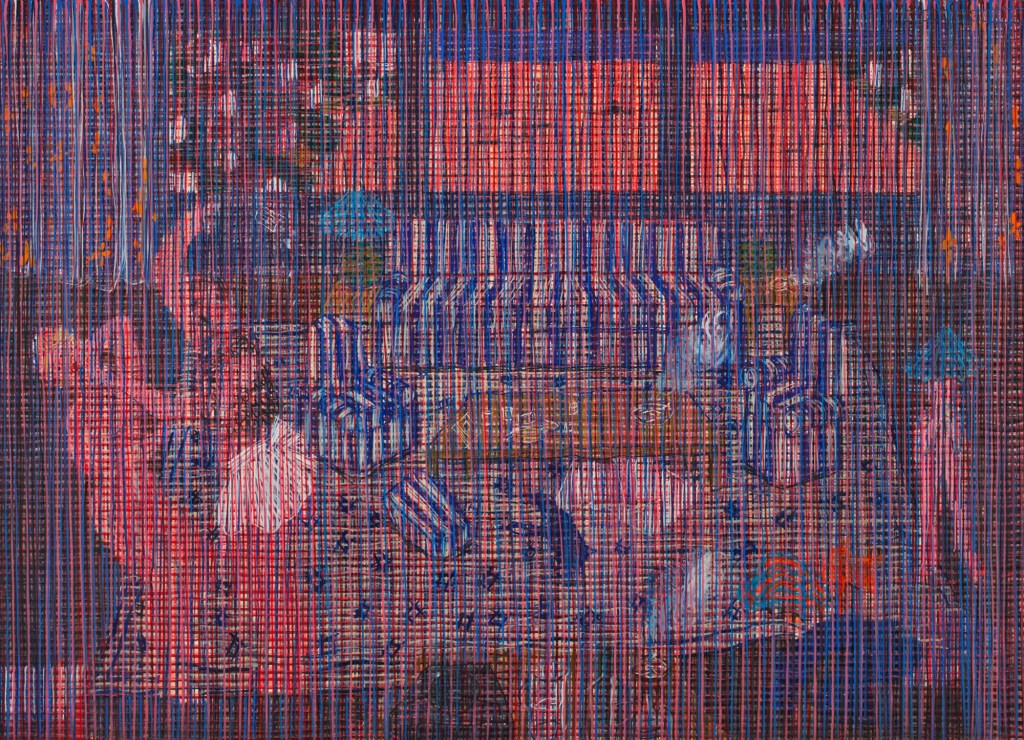
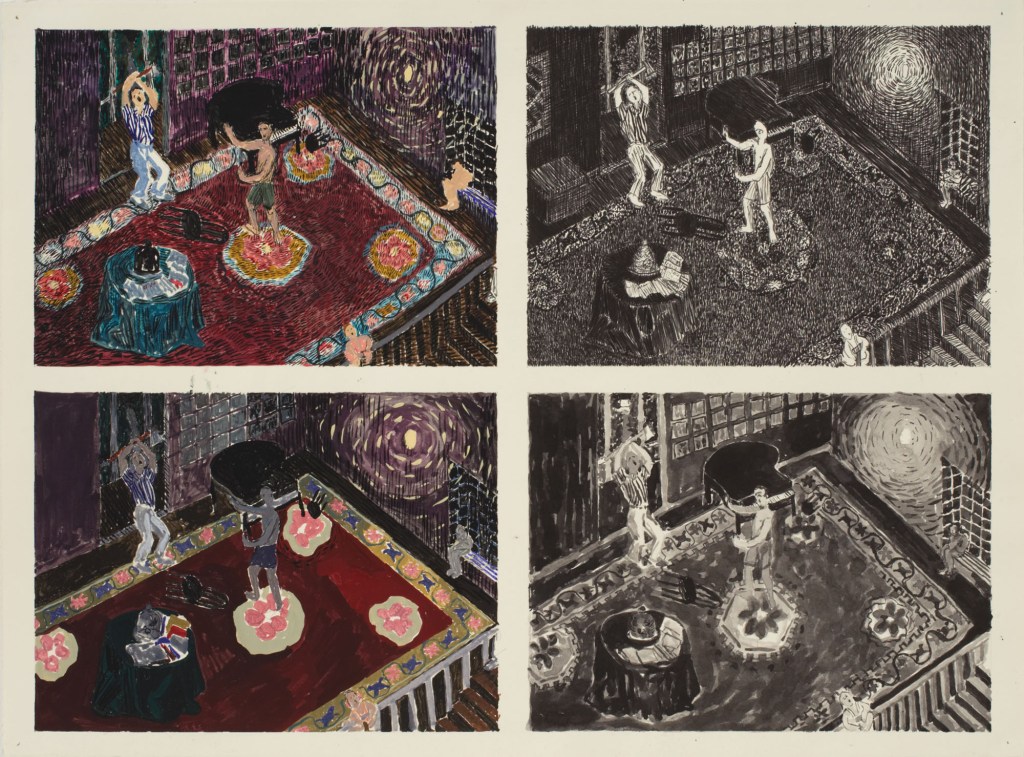
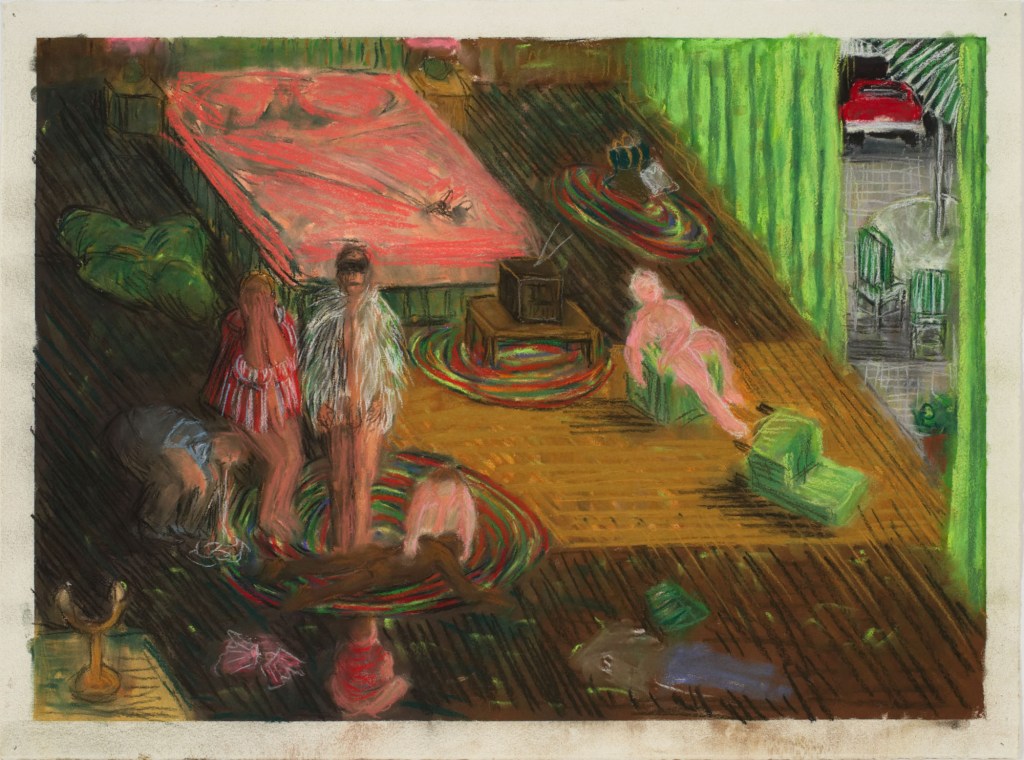
The catalogue for Imago Galleries’ 2006 exhibition of Bartlett’s Earth paintings shows how she channeled the subject into the subthemes of Picnic, Motel, Weekend, Party, Bridge, Accident, Night, Fireworks, After School, Closet, Boat, Christmas Tree, House, and Bedtime. Bartlett develops many variations, working medium-size in ink, gouache, charcoal, and pastel on paper, or large-scale in oil on canvas. Although the figures are crudely rendered and landscapes and interiors are schematized in an almost childlike manner, one can make out bacchanalian-type scenes of ritual, violence, and dishevelment. In a foreword, Imago Galleries owner Leisa Austin notes that “many of the images in Earth focus on locations and events which take place within settings most would describe as homey, such as a family outing on the 4th of July, time spent at home after school, a cozy living room decorated for Christmas, and bedtime … Bartlett is capable of capturing a rather banal situation and taking it to an unsettling level.” Postcard-like landscapes and interiors quickly shed their innocence and become horrific, like stills from Vacancy, Dr. Sleep, or The Last House on the Left. Austin later mentions John Carpenter’s Halloween, “with its safe, leafy suburbs riddled with terror,” as an inspiration.
Courtesy of Imago Galleries.
Courtesy of Imago Galleries.
Courtesy of Imago Galleries.
In an earlier interview with Deborah Eisenberg, Bartlett discusses techniques and ideas relating to paintings in the Air series that each cover an hour in a day. When the painting 9am, depicting goldfish swimming in bubbling water over a black, fathomless ground, comes up, the conversation suddenly turns dark. Bartlett mentions a suppressed childhood memory of being drugged, assaulted, kidnapped, and driven out to sea, where the adult perpetrator pushed her head under water and she vomited over the side of a boat. Earth: Boat appears to bring the violent incident to life. The entire suite of Earth paintings and drawings has a visceral physicality that complements Bartlett’s awkward stylizations. It’s as if a child were attempting to render the monster she saw in the closet with crayons and magic markers.

Courtesy of Imago Galleries.
As she moves from smudgy pastel and charcoal to the graphic finesse of brush and ink, the different mediums evoke blurry nightmares and clear shocks of awareness. Taboo images of child abuse, orgies, and assault are framed through the four seasons, resting on carpets, seen through windows, slats and door frames, or bathed in sunlight and gloom. Simple cubes, houses, boats, and patterns harbor spectral figures looming in the shadows. Outings involving pedophilia captured in Earth: Picnic and Earth: Motel exude casual slovenliness, whereas the interiors in Earth: House and Earth: Weekend are rendered with crisp, drawing-room elegance only to be erupted by hurling fists and weaponry. The warm, festive trappings of Earth: Bedtime, Christmas Tree and After School belie a sense of impending dread and doom like fairytales gone horribly wrong.
Courtesy of Imago Galleries
Courtesy of Imago Galleries.
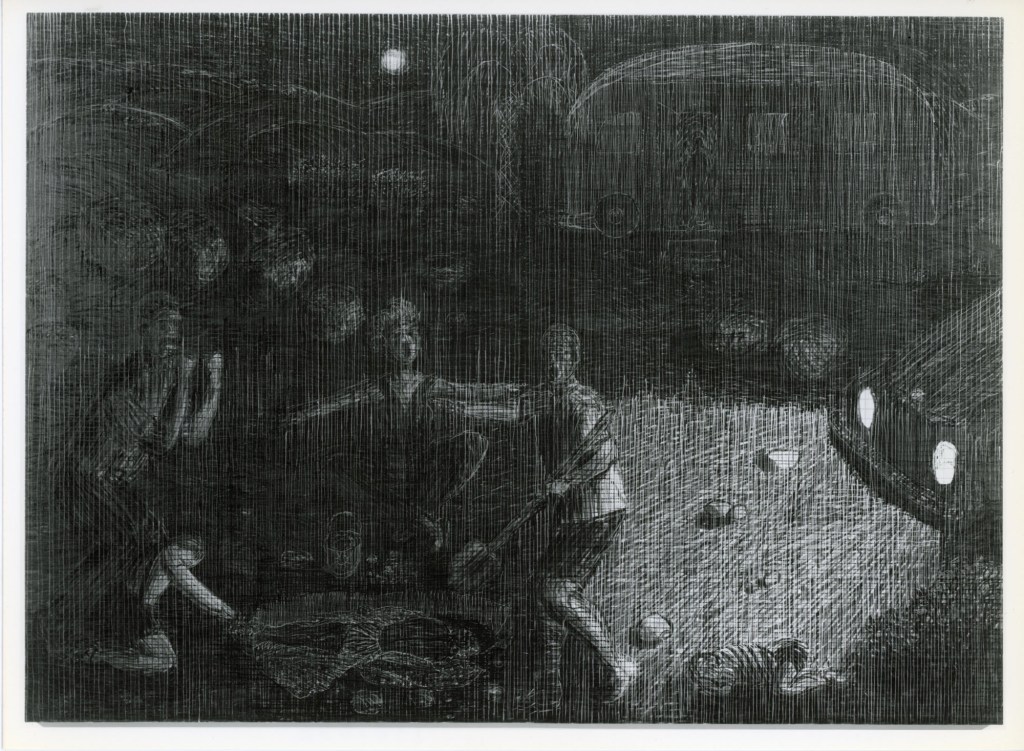
What provoked all this lurid imagery? Bartlett passed away in 2022 and a year later her daughter Alice Carrière published a memoir detailing her tumultuous life with two artistic parents, including her father, the German actor Mathieu Carrière. The book provides some clarity. Bartlett had started undergoing psychotherapy and hypnosis sessions around 1990, and through treatment was encouraged to unearth repressed memories of trauma and abuse. These included fever dreams of rape and murder committed by a neighborhood couple who were friends of the Bartlett family when Jennifer was a child. She believed this pair, who abducted other children, had ensnared her and her younger siblings in a sex cult. In one chilling recollection, apparently the subject of Earth: Accident and Earth: Night, Bartlett recalls the erotic asphyxiation of a child nicknamed “Monkey Boy,” and her forced participation in his burial on the beach at night.

Courtesy of Imago Galleries.
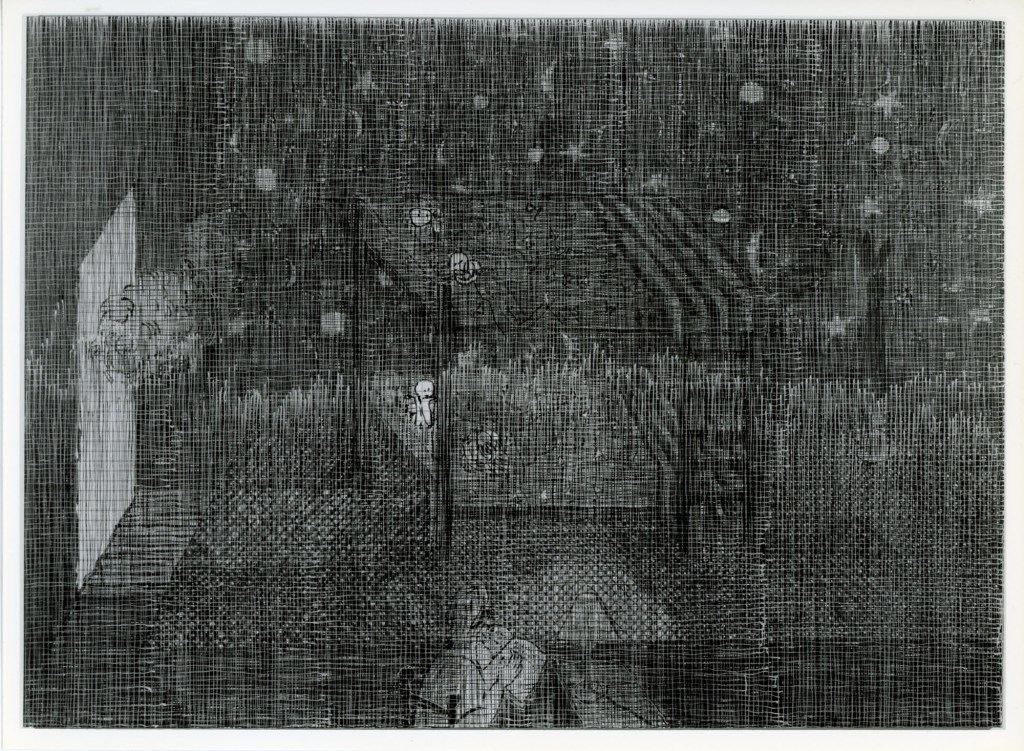
Carrière concludes, “my mother was most likely a victim of the Satanic Panic, a moral hysteria that swept the nation in the 80’s and 90’s,” and that she had utilized the debunked science of recovered memory therapy. Some experience left Bartlett rattled, shook up family relationships, and for a time introduced bizarre imagery into her oeuvre. Bartlett found a way to face her demons through art. It’s interesting to revisit these works during a time of political tumult in America, marked by personality cults and mass delusion, and consider the fine line that separates reality from magical thinking.
About the author: Patrick Neal will be an artist-in-residence at The Webb School, Knoxville, TN, during the winter of 2026. Recent exhibitions include In Bloom at 532 Gallery Thomas Jaeckel, Basel, Switzerland, and Pushing Boundaries at Garvey Simon Gallery, New York, NY. Neal is a co-founder of Show&Tell, a lecture series at the New York Irish Center in Queens.
Please click here to contribute to the Two Coats of Paint year-end fund drive









I remember her first exhibition at Paula Cooper. It was front page news in the NYT. Thanks, Patrick, for showing us her later work.