Latest articles

Catalogue Essays

Interview: Kathleen Kucka and Janis Stemmermann’s ongoing conversation

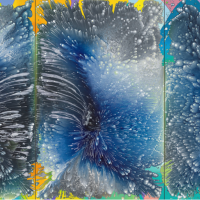
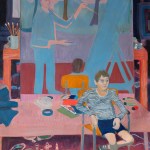
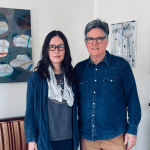
Contributed by Laurie Fendrich / Kathleen Kucka and Janis Stemmermann have been friends for nearly four decades — since they first met as young artists in the 1980s in New York City. “Our life was all about art — figuring out how to get by, make work, see work, and hang out so we could talk about it. In many ways,” Janis told me, “that really hasn’t changed.” This month, on the occasion of “Continuum,” their two-person show at Re Institute in Millerton, NY, we talked about the conversation they’ve been having for the past forty years.

Solo Shows

Pol Morton’s invitation to empathize

Contributed by Jacob Patrick Brooks / I often want to touch paintings when I go to galleries, but I rarely do. I know I can get away with it, but it doesn’t usually seem worth the risk. What new phenomena could I possibly discover after years of making art? It’s a depressing thought, but one I’m mercifully relieved of when I see a Pol Morton piece. “Get Well,” their solo show at Olympia, is a trove of stuff you want to lay hands on and dig through. I could write a novel going through all the materials. In the interest of brevity, I’ll stick to how it feels to look. 

Group Shows

Resolute painters at Equity

Contributed by Zach Seeger / One day, the polyglot, not-quite-formed figurative painter Alfred Jensen was sitting at his desk in his studio mulling over what to do next. A world traveler, he had a bounty of books, cutouts, and sketches of glyphs, logograms, symbols and signifiers nesting in his studio. But he was stuck. Then Mark Rothko knocked on the door for a studio visit. After a few long drags from his cigarette, Rothko gestured to the byzantine bric-a-brac on Jensen’s wall and said, “You know, Alfred, that’s your work. Paint that.” From that point forward, Jensen changed how and what he painted. Via sticker-book color and flourish, “Gritty Rituals,” a thoughtfully energizing group show at Equity Gallery, recalls the schematic proto-pop that Jensen teamed with imagist distortion and tantric and somatic references. 

Art Fairs

Scene + liked: Spring/Break Art Show NYC, 2024

Contributed by Sharon Butler / Andrew Gori and Ambre Kelly pulled together another Spring Break Art Fair, this one on a floor at 75 Varick Street in Soho. The theme, INT./EXT. (or, as I like to say, interior/exterior) was pretty expansive, but they provided interesting reading lists and films to inspire applicants. The press release kicks it off by calling for a “PB & J of tactility and intangibleness, a plea for Landscapes, Streetscapes, or works of Anatomy…

Solo Shows

Adam Simon: Jostle, flux, and instability

Contributed by Jonathan Stevenson / Brooklyn-based conceptual painter Adam Simon is known for his cagey synthesis of the graphic symbols and tropes of commerce and civic life into elegant visual statements about the zeitgeist and, more grandly, the world as a whole. He can use text to penetrating effect, as in the small paintings he made a few years ago superimposing the edict “STEAL THIS ART” on the vintage silhouette of a policeman. In one not-quite-Hoffman-esque line and an evocative image, he captured the ambivalence and limbo of the art world between the establishment and the counterculture, having himself cultivated a live community in that space by organizing, with several other artists, the collaborative “Four Walls” events in Hoboken in the 1980s and Williamsburg in the 1990s. In “Great Figures,” his solo show now up at Osmos, he has continued in a searchingly ironic vein, now with a bemused fretfulness that affords it epochal resonance.

Museum Exhibitions

Dike Blair: The humanity of light

Contributed by David Whelan / The idea for the exhibition “Dike Blair: Matinee,” now at the Edward Hopper House, came from a discussion the artist had with curator Helen Molesworth in front of Edward Hopper’s 1938 painting New York, Movie. The picture is split in two: on the left a black-and-white film plays on a movie screen, and on the right a stairway leads away from the film, perhaps outside. In front of the stairway is a female usher, leaning languidly at the threshold, bathed in ambient light. The usher, the viewer, and possibly even Hopper himself stand at the boundary, resonating an ambivalence towards a life mediated by technology.

Solo Shows

Mark Dagley’s little god

Contributed by Michael Brennan / As a boy, the sculptor Tony Smith – a canonically important and under-appreciated American sculptor who connects AbEx and Minimalism, equally at home with Pollock and Serra – suffered from tuberculosis so severe that his father built him a small shed in the backyard of their South Orange, New Jersey, home, with fiberglass curtains to minimize dust and a small black stove. Smith lived in the spartan outbuilding for several years. Imaging him there might elicit the melancholy that Van Morrison conveys in his aching ballad “T.B. Sheets.” As an adult, however, Smith noted an upside, at least for an artist: “If one spends a long time in a room with only one object, that object becomes a little god.” I grasped the significance of this observation acutely when I encountered Mark Dagley’s sloop-like sculpture Vāyu-Vāta, which, pointed away from a black radiator and darkly mullioned window, dominates the Abaton Project Room in the Financial District.
Museum Exhibitions

Paula Modersohn-Becker’s modern women

Contributed by Evangeline Riddiford Graham / It sounds suspiciously like Earth Mother art: big nudes, babies, and quite a lot of purple, all underpinned by the conviction that God is female and that the final, necessary stage in becoming a woman is to bear children. But something is off. The nudes are emotionally distant. Preoccupied by breastmilk, the babies show no sign of higher thought. The purple arrives as shadows that renders flesh regal and strange – the purple of 1906, not 1960. And the paintings are extremely good. “Ich Bin Ich / I Am Me,” now up at the Neue Galerie, is the first major US museum show of the paintings of Paula Modersohn-Becker (1876–1907).

Studio Visit

Walter Robinson’s big question: What do they want?

Contributed by Sharon Butler / What happened to all the conceptual painters? I’m thinking of artists, like On Kawara, who were more interested in ideas and process than in developing traditional painterly chops, for whom painting was about more than basic human emotion and formalist exploration of color, line, and shape. By the 1990s, many of the painting-thinkers had stopped painting and moved into other disciplines – relational aesthetics, video, digital, and installation projects. For the relatively few who continued to paint, the starting point remained a proposition rather than a vague if compelling exploration of the subconscious. Walter Robinson, though disguised as a figurative painter, is one.
Screens

Mark Fingerhut and the sneaky internet

Contributed by Jonathan Stevenson / Burgeoning technological innovation over generations has brought out the millennial optimist in many, but, especially outside the bubble of the tendentious capitalists eager to cash in on their investments, it may have unloosed the Luddite paranoiac in more. “Goings On,” a pastiche of Mark Fingerhut’s cheerfully invasive videos deftly curated by Lonesome Dove and recently screened at Springs Projects in Dumbo, speaks to both – the one in knowing condescension, the other in sardonic affirmation. Blasts of images that rankle sometimes owing to their content, sometimes because of their staccato presentation and creepily fluid mutability, make a case for the digital matrix’s weird agency and, beyond that, its insidious seductiveness.

Gallery Guides NYC Gallery Guide

NYC Selected Gallery Guide: September 2024

Word is we’re heading into a supercharged hurricane season that could yield six to ten storms driving up the coast, but nothing can stop artists from returning to the city to mount fresh exhibitions. Among forthcoming shows, I’m especially looking forward to Mike Cloud at Thomas Erben, Gabby Collins-Fernandez at Rachel Uffner, Rico Gatson at Miles McEnery, Suzanne Jackson at Ortuzar Projects, Dennis Kardon at Lubov, Michael Krebber at Greene Naftali, Adam Simon…

Gallery Guides Hudson Valley & Vicinity Gallery Guide

Hudson Valley (+vicinity) Selected Gallery Guide: September 2024

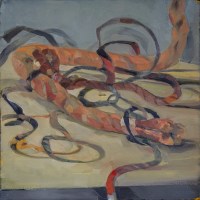
Contributed by Karlyn Benson / September shows no sign of slowing down in the Hudson Valley, with numerous noteworthy exhibitions opening this month. IMAGE AFTER, a solo show of photo-based projects, sculpture, and drawing by Susan Magnus opens September 21 at the Garrison Art Center. On September 28, Susan Wides: Voice of Silence, opens at Private Public Gallery in Hudson. I’m looking forward to Understory: Snakes, Snails, and the Forest Floor at Pamela Salisbury…

Museum Exhibitions

New Spain’s inventive painters

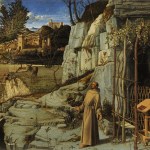
Contributed by David Carrier / When the Metropolitan Museum of Art recently rehung its permanent European collection, the galleries devoted to Spanish art included an abundant selection of work from “New Spain,” as the vast Spanish empire was known during the colonial period. From 1521 to 1821, its territory included, among much more, what is now Mexico, Central America, and the US Southwest. Much of the art consisted of sacred baroque painting – arguably the first truly international art style. “Saints & Santos: Picturing the Holy in New Spain,” on view at the New Mexico Museum of Art, does it justice.

Gallery shows

Elias Wessel: Exposing social media 

Contributed by Chunbum Park / At Picture Theory in Chelsea, Elias Wessel has assembled provocative installations titled “It’s Complicated” and, with composer and musician Natalia Kiёs, “Systems at Play.“ In “It’s Complicated,” busy photographs that document surfing and scrolling behavior stand on pedestals. Holstered at their sides are headphones piping cacophonic sounds and words – styled “Is Possibly Art” – that AI-based text-recognition software has distilled from the long-exposure images.

Solo Shows

Jay Stern’s psychological realism

Contributed by Mark Wethli / Jay Stern’s paintings of domestic interiors and landscapes, now on view in his solo exhibition at Grant Wahlquist Gallery in Portland, Maine, invite us into familiar worlds but take us there in unexpected ways. The first time I saw his work – a series of paintings of a wooden drying rack – I admired how he transformed this humble, intimate household object into something iconic and worthy of attention. On a formal level, I was impressed by how the diamond pattern of the rack’s design served as a strong compositional framework, not unlike a trellis for an array of color patches whose abstract shapes, painterly shorthand, and understated yet luminous tonalities amplify our sense of the paintings’ warmth, intimacy, and human connection.