Contributed by Jonah James Romm / How does one acquire language? How do words shape identity and meaning? These questions might strike you upon entering Mira Schor’s exhibition “Figures of Speech” at Lyles & King. Bringing together a previously unseen body of the artist’s work from the 1980s and paintings from the last two years, the exhibition traces the compelling self-referential progression of Schor’s work over the last four decades.
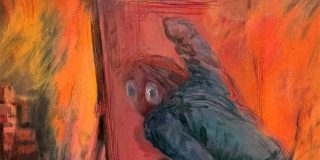
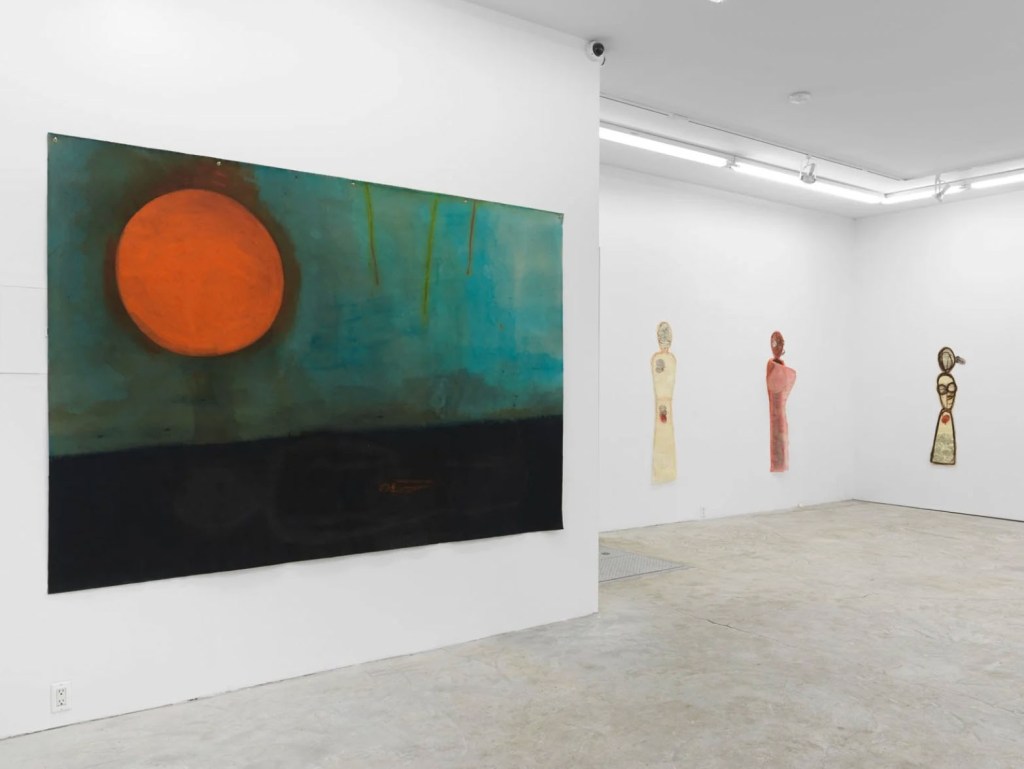
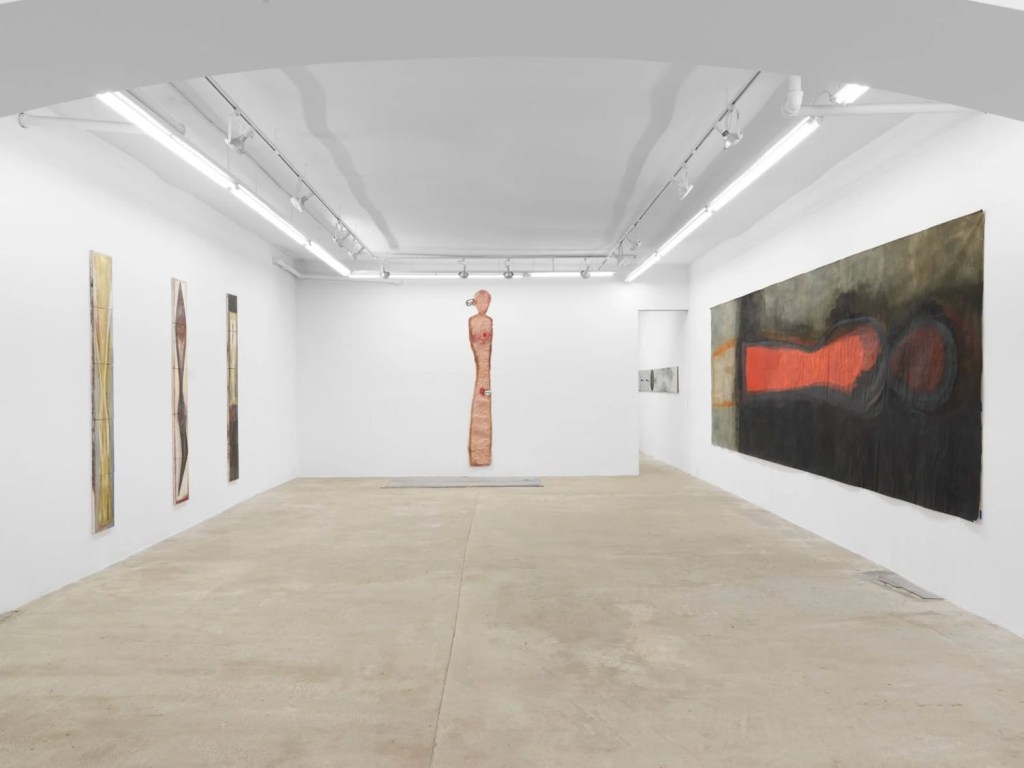
The haunting Shipwrecked (la Naufrageé), completed this year, greets the viewer in the entryway. Painted with acrylic on unstretched canvas, the surface is light and watery, composed of translucent layers built up with broad brushstrokes. The black foreground at first appears to contain only a horizontal silhouette dabbled in fiery orange, but, upon closer inspection, a larger grey figure envelops the smaller one. The ship yields to a figure, and the shipwreck becomes an internal state of being.
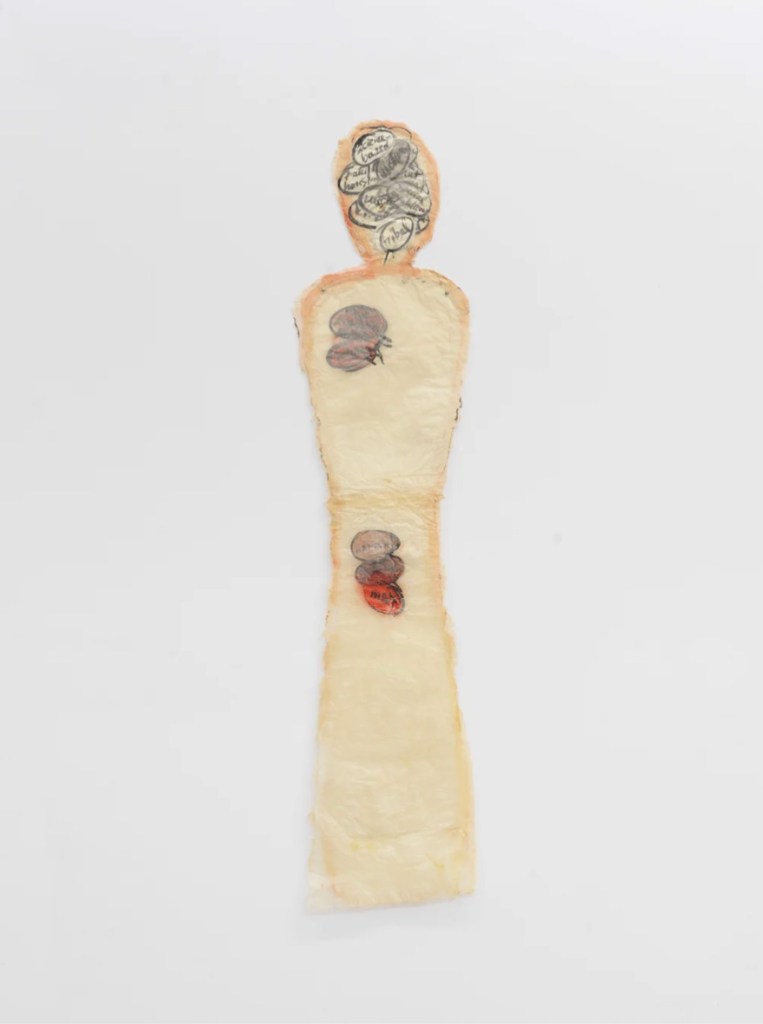
“Figures of Speech” includes a suite of Schor’s recent paper silhouette works, which she often makes by tracing her own body. Ink and acrylic paint bleed through and soak different layers of delicate Gampi paper, forming a fragile cocoon. Text bubbles are collaged throughout, sandwiched between layers, ebbing legibility. The words – such as privilege, equality, gay, trauma, woman, and justice – are from PEN America’s list of banned terms, deemed too sensitive by the current administration to be used in official government communications. The very act of omission gives them power that Schor harnesses.
In Woman, from 2025, the pale yellow silhouette’s head is filled with overlapping words. They cluster near her heart and belly as well, forming organs and blood vessels. The layered paper obscures the words save for a few like “tribal” and “science-based.” They call to mind French psychoanalyst Jacques Lacan’s notion that the unconscious is structured like a language. Schor, for her part, eloquently asserts that language can be used to limit what people can or cannot be.
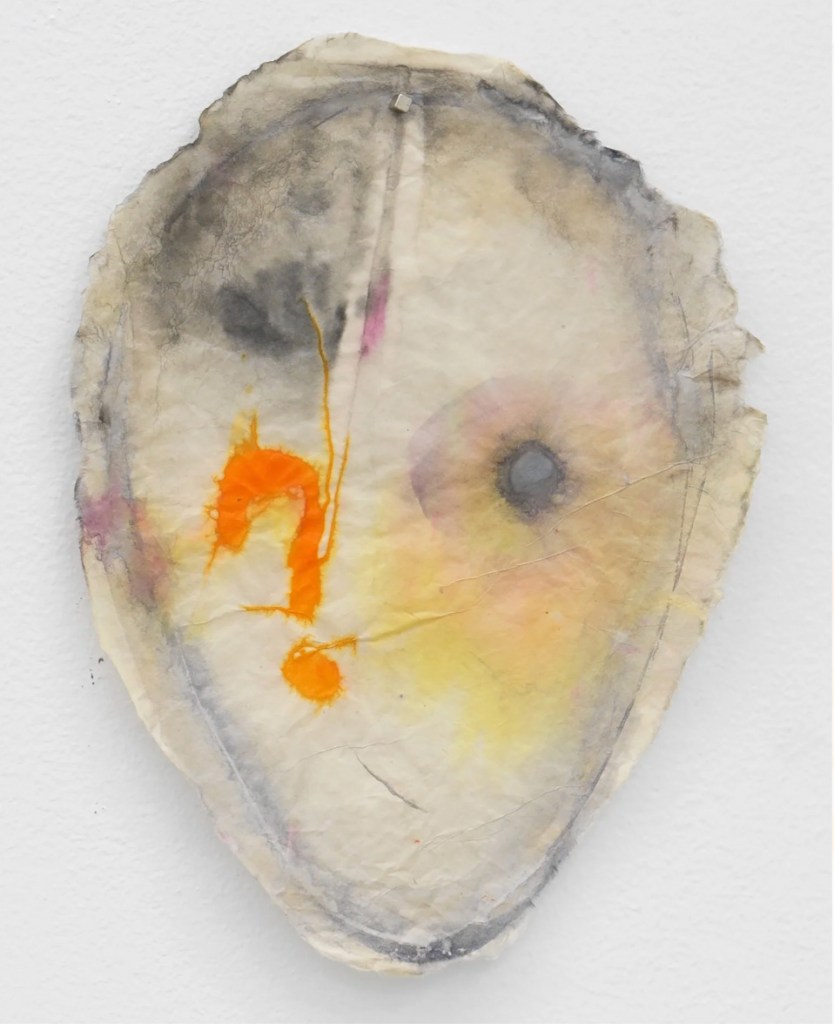
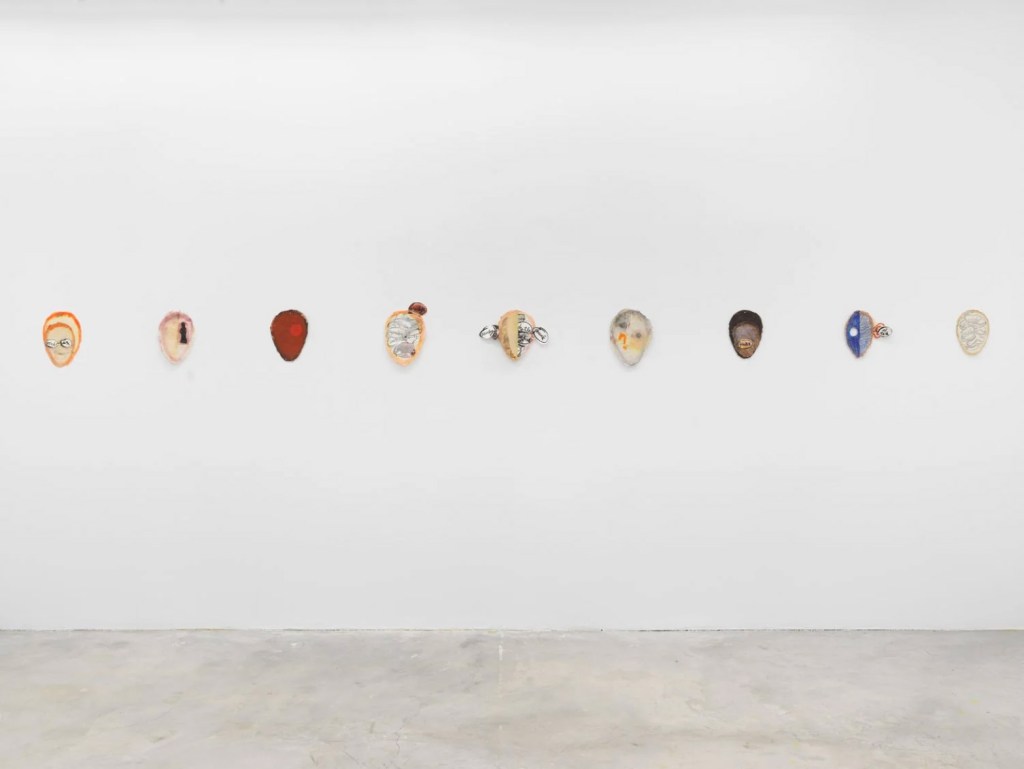
An adjacent room presents a series of Masks, from 2025, made with the same ink-on-paper technique used for the silhouettes. The masks give form to disguise or obstruction, suggesting that we’re seeing through identities blurred or distorted by language. This series reprises masks that Schor made in the 1970s, untouched for years until they resurfaced during a studio visit and ignited a spark. We recognize political strife from both eras, repeated and transformed.
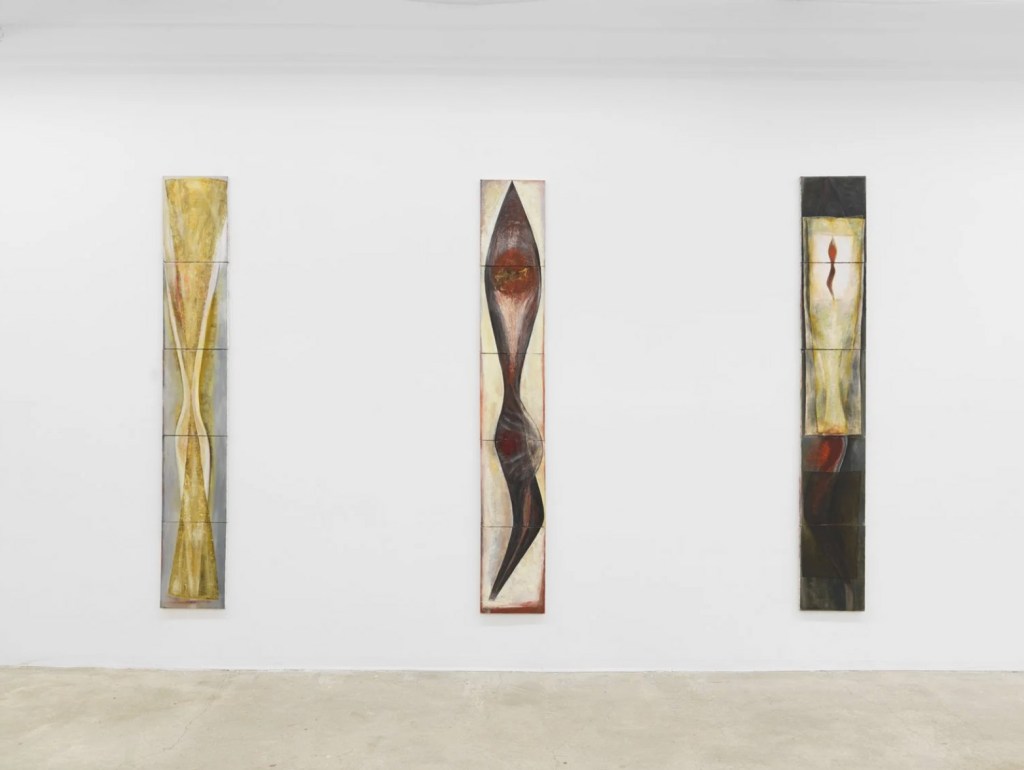
In the rear gallery are narrow, vertical paintings from the 1980s – unshown until now – and a large-scale, washy, unstretched canvas titled She Doesn’t Have a Name made in 2026. Each of the earlier works, such as Palimpsest and Caul of Self, consists of five linen canvases arranged edge-to-edge on top of one another. The older works depict an internal system of bodily mechanisms, while the newer work expands the figure into something larger, with fiery red insides against a dark and ashy landscape. The brushstrokes boldly strike the surface, sculpting the figure into an enveloping portal.
This show affords us access to a range of Schor’s methods through different timeframes, demonstrating how language, from diaristic quotes to censored words, has played a consistent but evolving role in her work.
“Mira Schor: Figures of Speech,” Lyles & King, 19 Henry Street, New York, NY. Through March 28, 2026.
About the author: Jonah James Romm is a multidisciplinary artist, writer, and independent curator based in Ridgewood, Queens.