
Contributed by Sharon Butler / The Whitney Biennial 2026 has a knack for knocking the human project, wistfully and ruefully examining the past, and planting dread about the future. Curators Marcela Guerrero and Drew Sawyer, with Beatriz Cifuentes and Carina Martinez, made 300 studio visits, ultimately winnowing the roster down to 56 artists, duos, and collectives. The curators’ definition of what is “American” is expansive; the artists’ birthplaces span the globe, and many have settled in the US after fleeing wars and other forms of political turmoil. Appropriately enough, given the AI challenges humanity is facing right now, the exhibition opens with a dark installation arranged around a pulsating orb. Zach Blas’s CULTUS, the second part of a series called “Silicon Traces,” looks like a set designer’s futuristic mash-up of The Wizard of Oz and Star Trek, keyed by blinking lights, booming sound, and audio created by generative AI that rubs a kitschy vision of a grifty tech-bro religion in our faces.
Loss and trauma of various kinds course through the show. On the sixth floor, there is nothing ironic about New Yorker Agosto Machado‘s shrines – intricate assemblages built from objects belonging to friends who died of AIDS in the 1980s and ’90s. His work reminds us that grief, unlike contemporary art, doesn’t have a trend cycle. Nearby, Cooper Jacoby takes a more clinical route to the same existential territory. Each clock in his “Mutual Life” series functions as a portrait of a different individual based on biological data gathered through health insurance tests. They run faster or slower than the standard rate of life, calibrated to the subject’s particular body.

Aziz Hazara, born in 1992 in Wardak, Afghanistan, and currently living in Berlin, contributes a handsome installation of elegant framed images derived from the data found in night-vision googles from conflict zones. Abandoned military gear is full of surveillance technology, and Hazara is interested in how it migrates from place to place. Other photography projects include Mao Ishikawa‘s black-and-white images from Okinawa in the 1970s, originally developed in an analog dark room 50 years ago and documenting women in bars with Black American soldiers. They are small, intimate, and – in their suggestion of shared exclusion – heartbreaking. A few rooms away, Mo Costello’s small-scale, black-and-white photographs record sites of past political and community activism. The sometimes harrowing images are arranged alongside a vitrine full of assembled informational workbooks that the artist hands out in public places like gas stations and drug stores.
Ash Arder, who’s from Michigan. shows a tiny glass-front refrigerator with three Cadillac hood ornaments crafted out of butter and other perishable materials inside. The fridge is attached to a solar panel on the roof that keeps the objects from melting. Didn’t Brian Belott do something like that in a previous biennial? Emilie Louise Gossiaux presents New Yorker-cartoon-style drawings of her deceased guide dog London, and an installation of colorful sculptures of his favorite chew-toy: the love is real, the absence painful.
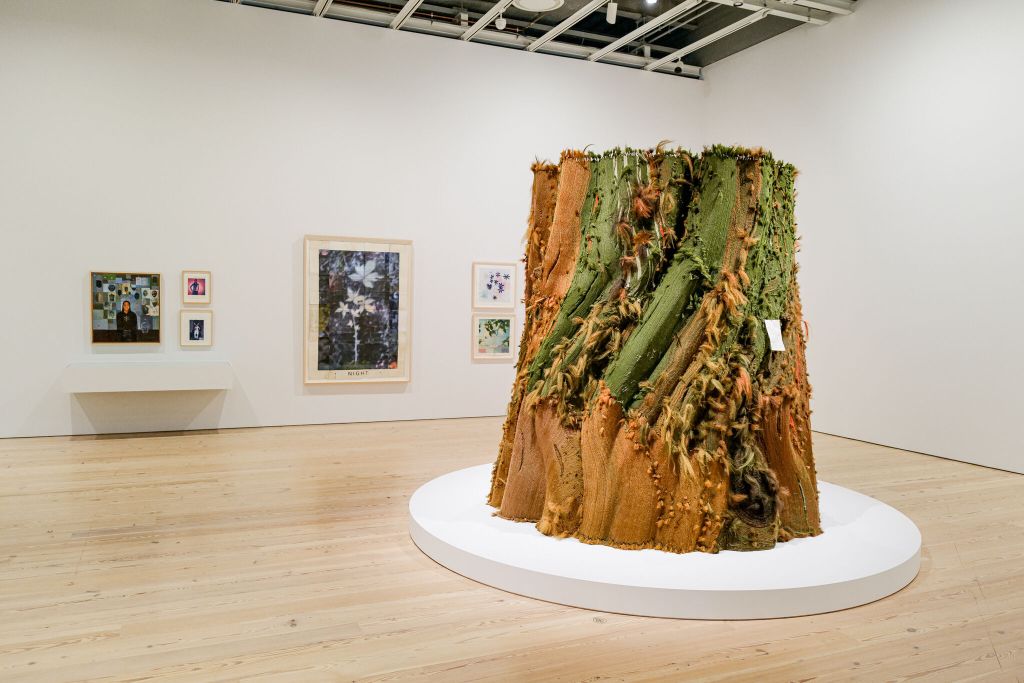
The show has a strong sculptural component, including Malcolm Peacock’s towering interpretation of a coastal redwood covered in 3,500 hand-braided strands, made over ten months and duly imparting time. You want to touch it, and you know you shouldn’t. Sula Bermudez-Silverman takes rusty found objects and blows pink-tinted glass through them until they become bulbous, vaguely human forms trapped by the old tools. Sarah Rodriguez casts natural objects in aluminum using sand molds and assembles them at a scale that feels bodily; she also works as an animal trainer, and the exhibition notes suggest that her compositions are informed by patterns of animal and human behavior, though they remain firmly abstract. Kainoa Gruspe uses materials such as plants, rocks, and wood that are often “extracted” from the Hawaiian landscape by commercial landowners and turns them into doorstops. The objects are placed in conversation on a low, wall-hugging platform, with three transparent “paintings” propped up by some of them.
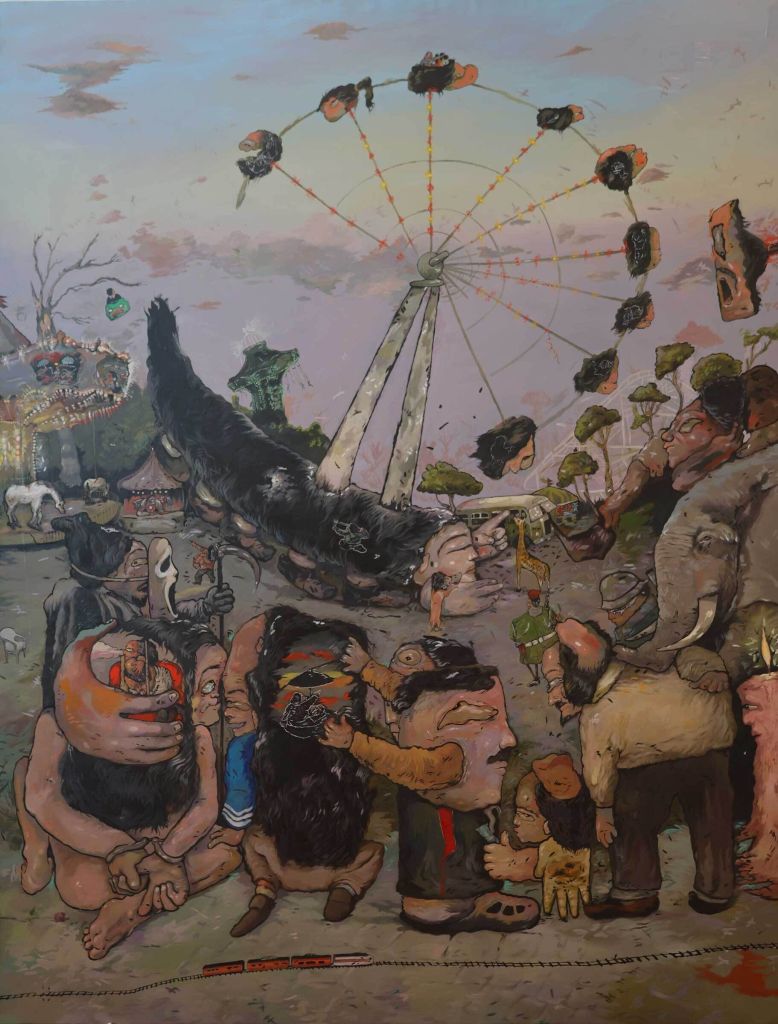
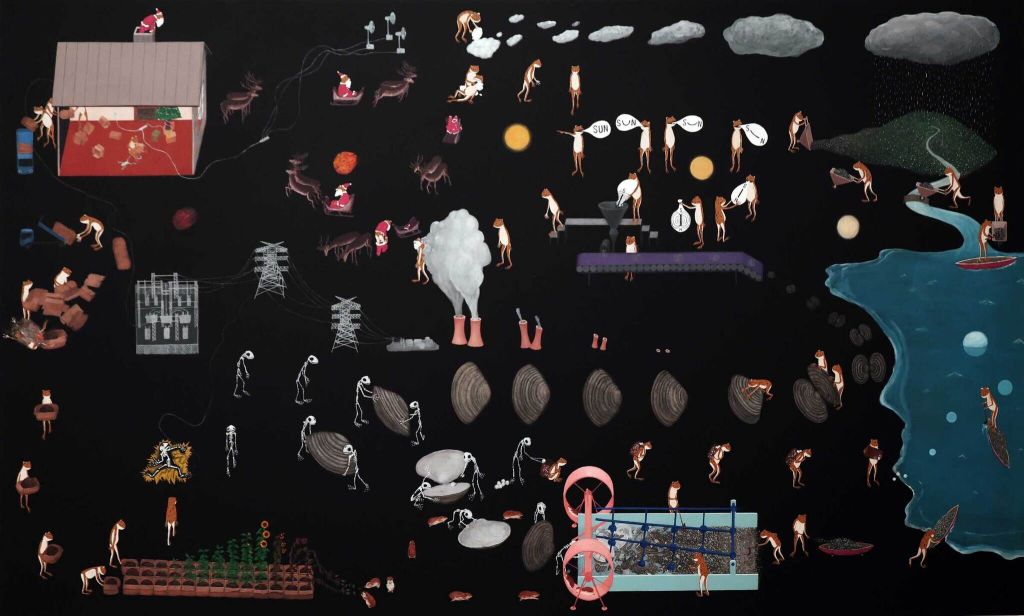
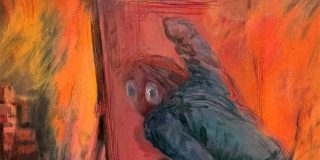
Painting is lightly represented this time around. Ali Eyal, born in Baghdad in 1994 and currently living in Los Angeles, composed Look Where I Took You from a memory of a carnival he and his sisters visited before the United States invaded Iraq in 2003. The painting stirs viewers with brilliantly controlled surrealism. For me, this piece and the accompanying drawings earn best in show.
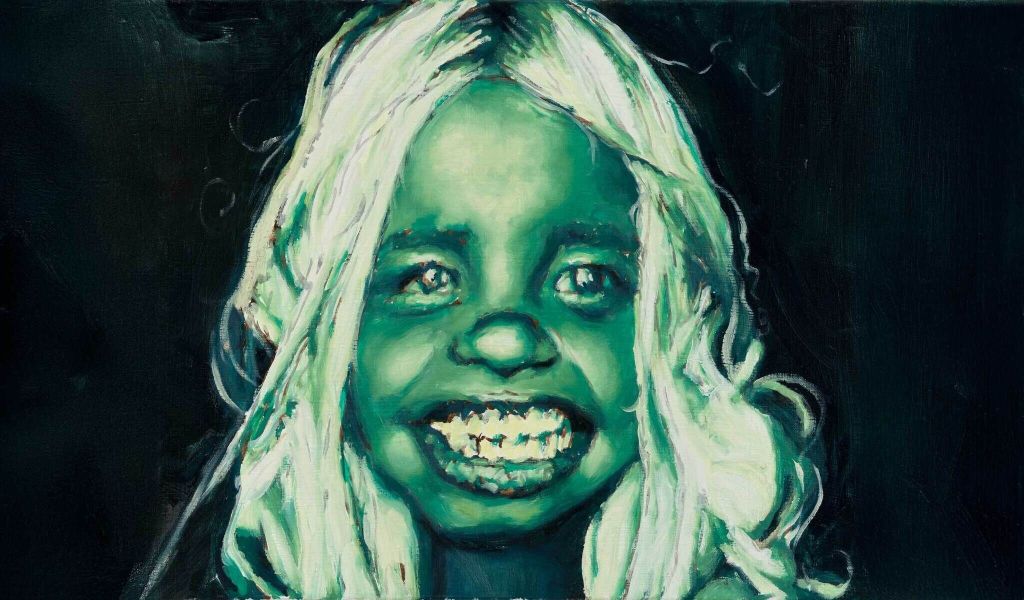
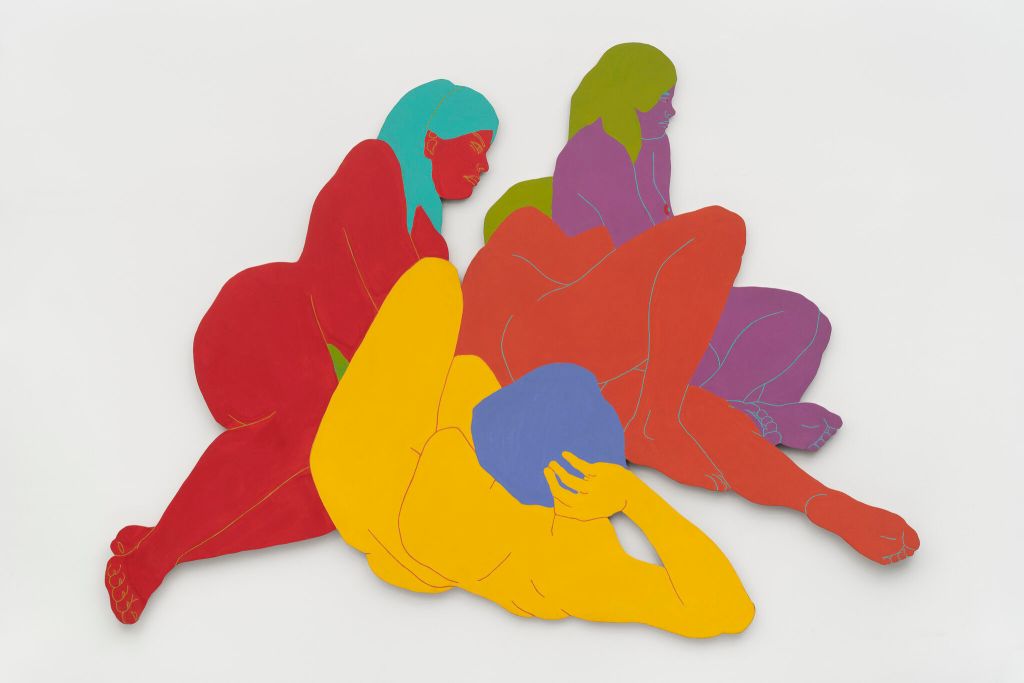
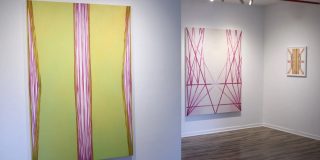
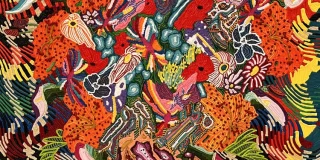
Kamrooz Aram, born in Iran and living in New York, draws inspiration from art forms that he feels Western art historians have frequently dismissed as purely ornamental. I’m not sure that’s entirely true, as the traditions of Eastern textiles, ceramics, and architecture have been integral to much Modernist art. Still, Aram’s work is beautifully rendered with a palette that summons a sense of longing and nostalgia. Taína H. Cruz, who just got her MFA from Yale, grew up looking at her phone, and her figure paintings, one of which is posted on a billboard outside the museum, reflect an obsessive preoccupation with contemporary screen-based life. The Pop-ish shaped canvases of 92-year old Carmen de Monteflores, painted in the 1960s, are endearingly retro now, but the fact that she found no opportunity to show them back in the day lends them weight, as do her daughter Andrea Fraser’s five wax sculptures of oversized babies – the children De Monteflores raised while not painting – at rest in crib-sized museum vitrines. They constitute ruthless criticism of the art world but also loving acknowledgement of her mother’s disappointment and sacrifice.

Alongside a certain melancholy, cleverness abounds. Maia Chao offers text-based rules performed by visitors, while David Johnson has filled a gallery with found signs bearing rules of conduct – civic language made strange in a new context. A culture and politics YouTube podcast hosted by Joshua Citarella will be recorded live during the exhibition. Unexpectedly in sync with Citarella, I guess, I went through the show recording impressions on a dictation app rather than taking pictures, which ultimately made sense given that the explanations were often more compelling than the visual manifestation for much of the work. Art that seems wanting becomes far more interesting if there’s a moving story attached. Walking through the show and reading the sobering narratives was like spending a couple of hours on the couch doomscrolling. You know it will make you feel like shit, but you can’t look away. This year’s Whitney Biennial works by making the world’s inadequacies painfully visible.
“Whitney Biennial 2026,” Whitney Museum of American Art, 99 Gansevoort Street, New York, NY. Through August 23, 2026.
About the author: Sharon Butler is a painter and the publisher of Two Coats of Paint.









Given my advancing age and lousy health, I may never see another Whitney biennial, so thanks, Sharon, for pointing out some of the highlights. Speaking of age, and chocolate, I can still remember Janine Antoni’s pre-chewed chocolate sculptures for the 1993 biennial. Yikes!
Thanks Sharon, its nice to know there is some paint in the exhibit, and given the state of the world no surprise to hear of your doomsday description. Once Again well written and an interesting read.