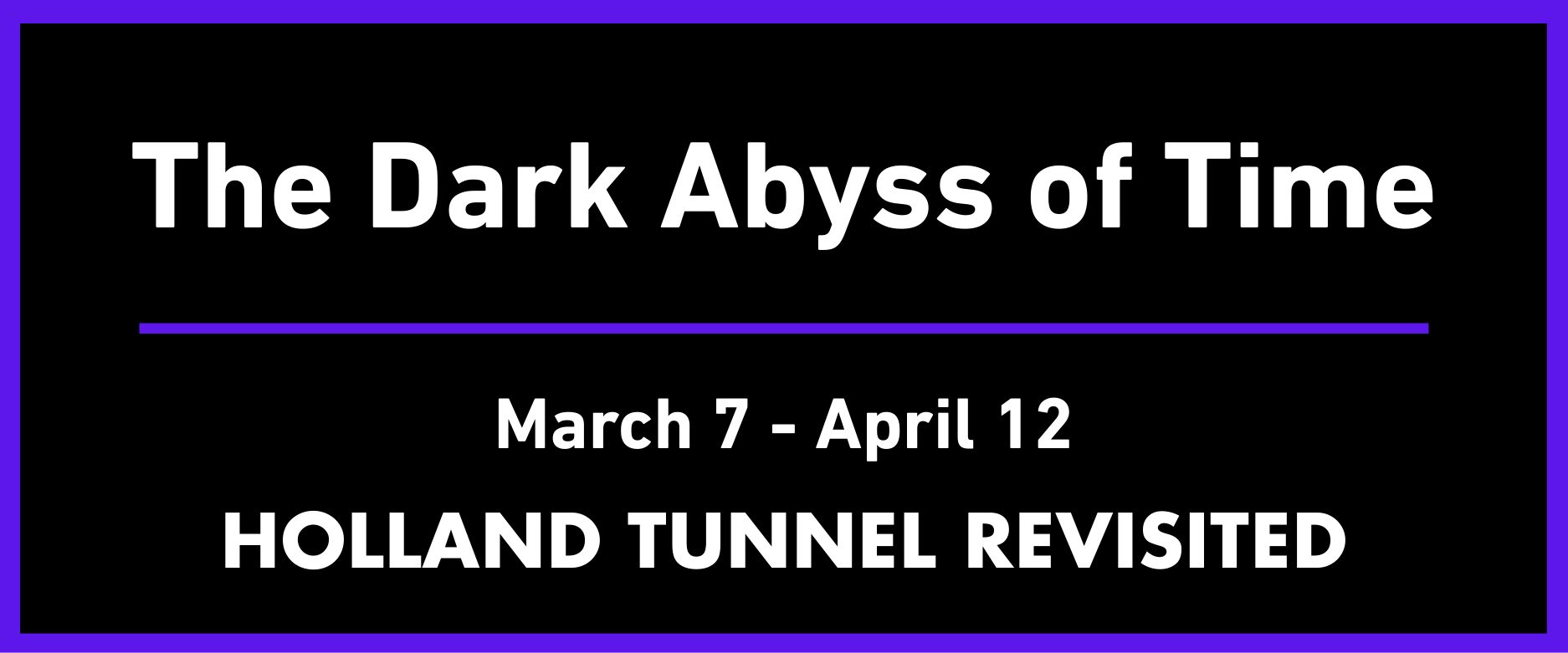
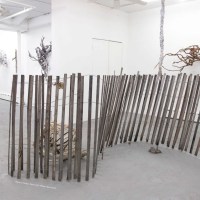
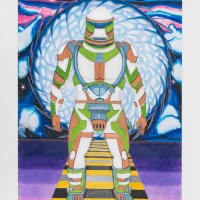
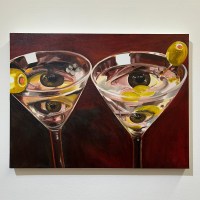
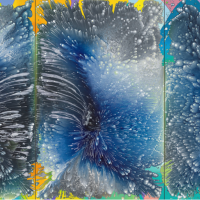
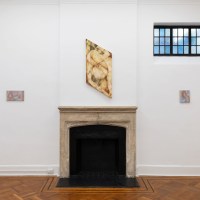
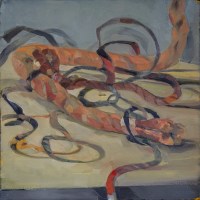
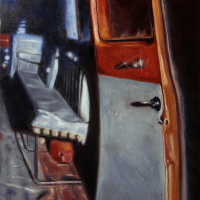
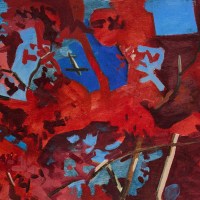
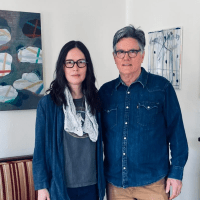
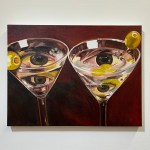
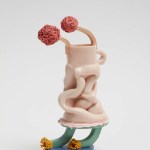
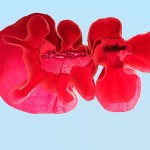
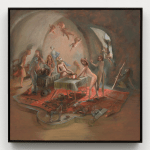
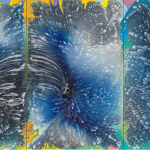
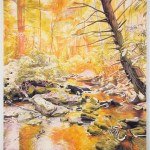
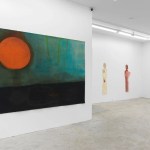
Contributed by Sharon Butler / During “Apophanies,” Gabbi Grill and Orli Swergold’s two-person show at Stephen Street Gallery, an artists’ collective and exhibition space in Ridgewood, Queens, funded by NYFA, I invited the artists to tell me about their work and art practices.
Latest articles
Deborah Buck: Funniest girl in the class
Contributed by Leslie Wayne / Deborah Buck’s energy is preternatural and her generosity of spirit seems to flow from the same deep well. We met at a wedding several years ago, and as I got to know, I learned that her path to becoming a full-time artist was not the usual one, largely because her creative drive was broad, democratic, and highly entrepreneurial. I sat down with Deborah during the run of her show, “Witches Bridge” at Jennifer Baahng Gallery.
Fists or knives? Jeff Nichols and the irrepressible biker myth
Contributed by Jonathan Stevenson / To add up, any contemporary movie about a motorcycle club needs to be deconstructive as well as elegiac. Jeff Nichols […]
Hudson Valley (+vicinity) Selected Gallery Guide: July 2024
Contributed by Karlyn Benson / July is the height of the summer art season, with cultural events and festivals of all kinds as well as […]
NYC Selected Gallery Guide: July 2024
As I publish the guide, most of the journalists and pundits I follow are poring over the flagrantly partisan SCOTUS ruling on presidential immunity, which has for a minute displaced last Thursday’s devastating presidential debate above the fold. The good news is that Deborah Fisher, a smart artist-turned-astrologer…
The enduring elasticity of painting
Contributed by Sharon Butler / After a lengthy stretch during which emerging painters have leaned into commercial preferences for the traditional, many seem to be breaking free from the market’s emphasis on imagery and narrative. Painters with a penchant for experimental, near three-dimensional approaches have bounced back into the conversation they commanded in the early 2010s. Three current exhibitions, all curated by artists, reflect various aspects of this phenomenon.
Kim Uchiyama: Life in space
Contributed by Jonathan Stevenson / A great asset of abstract art is its capacity to accommodate in a single picture phenomena that don’t readily fit together in real life and make some kind of sense out of them. There are as many ways to exploit that capacity as there are artists. In her solo show “Loggia” now on view at Helm Contemporary, comprising three large pieces and several smaller ones, Kim Uchiyama distills visual tropes of nature – water, shoreline, forest, desert, and more – into configurations of color that project an idealized but grounded spatial relationship between outside and inside, broadly construed. It’s a quietly ambitious agenda, and she is successful in no small part because her brand of geometric abstraction is so egalitarian: no single element seems more or less important than another.
Catherine Haggarty and Dan Gunn: Cerebrally humble and vice-versa
Contributed by Jonathan Stevenson / The direct and unpretentious title of Brooklyn artist Catherine Haggarty’s solo show “Just Drawing,” now up at Geary in Millerton, NY, conveys modest intent: to record on paper the inertial power of everyday life without much prior conceptual mediation. Just draw it. Cats by turns prowling a pyramid and emulating sphynxes on a starry night feature in a couple of drawings, which are meticulous without being fussy, and two others unobtrusively reference Haggarty’s art practice. Together these works and others essay a day in a life grounded by a comforting pet, reveries of icons, an enduring vocation, a familiar room, and scrappy clothing – nothing inherently grand, perhaps, but nothing remotely dismissible, either.
Early narratives: Nessebar, Bulgaria / Portrait of an icon painter
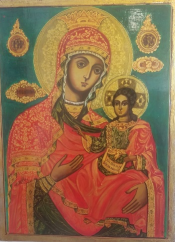
Contributed by Joya Stevenson / Like an icon, which shines forth the divine presence, so the village of Nessebar provides a window into a lost and magical world. Here, in southern Bulgaria on the Black Sea, not far from Istanbul (once Constantinople), Nessebar housed a cluster of some 40 churches dating from the 5th century to the 16th century CE, of which 15 have now been reconstituted from their archaeological remains. Some churches look like mini-fortresses with towers, decorated by concave arches and four-leafed flowers; others are plain, like rectangular houses. Inside, they are teeming with art. On the walls are frescoes illustrating gospel scenes. At the main apse in front of the altar, the Mother of God (theotokos), rather than Christ, is commonly found.
Melissa Meyer: Style is the answer
Contributed by Mary Shah / Time is an artist’s friend, muse, and collaborator. An artist’s style develops gradually, and the way to appreciate her work is to look at it over time. Bukowski’s words, which live rent-free in my mind, hypnotically echoed as I took in Melissa Meyer’s absorbing exhibition “Throughlines,” currently on view at Olympia. Comprising ten paintings and an artist book, the show covers the last twenty years and provides a considered, if abridged, look at the evolution of Meyer’s distinctive style up to the present day.
The ringing in Leslie Wayne’s head
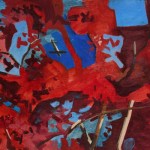
Contributed by Jonathan Stevenson / Despite the still breathtaking majesty of the physical world, human machinations are undermining its habitability. The United States is more starkly and toxically divided than it has been since the Civil War, and some Americans claim, contra Woody Guthrie, that “This Land” – the title of Leslie Wayne’s cogent new exhibition at Jack Shainman Gallery – was made only for them and not for other Americans. This existential double-whammy leaves artists with something of a conundrum: how to honor and present beauty robustly without seeming cluelessly disengaged. Wayne finds the sweet spot.
Dan Dowd and the folds of memory
Contributed by Mark Wethli / As I viewed Dan Dowd’s intimate and poetic work, now at Magenta Plains, I considered our inclination to cathect feelings and memories onto objects. Clothing in particular echoes the shapes of our bodies; touches them; connotes gender, time, and economic status; and absorbs everything from our scent to our DNA. Dowd creates small, iconic assemblages out of found materials, including fragments of inner tubes, clothing, rags, and home décor.
Hung Liu’s timeless twentieth century
Contributed by Rosetta Marantz Cohen / Rare among contemporary artists, Hung Liu, who died in 2021, chronicled the trauma experienced by the Chinese diaspora in the aftermath of the Cultural Revolution. Her paintings, currently on view at Ryan Lee, vividly depict a female artist’s efforts to reconcile the terror of China’s recent past and the “otherness” she experienced after her emigration to the United States. The exhibit seems especially poignant now as questions about homeland, memory, and trauma resonate with such immediacy.
Larry Greenberg’s circular path
Contributed by Adam Simon / With a solo show at Rosebud Contemporary, work on view at Slag, and an upcoming two-person show at 490 Atlantic, Larry Greenberg is having a moment. After stepping away from the art world to raise a family, now, at the age of 73, he’s back. We talked about why, after a decades-long hiatus, he returned.
Andrea Sulzer and the art of intuition
Contributed by Mark Wethli / In an artist’s statement about her works on paper, Andrea Sulzer once wrote: “Instead of helping you find your way, these pages will help you get lost.” This notion not only sets aside a common assumption about what some viewers look for in a work of art, but also, in her choice of the word “pages,” connotes a different kind of art object altogether — something we’re meant to decipher, like a book or an atlas. She invites the viewer into a contemplative experience, grounded in uncertainty, that doesn’t purport to have the last word but presents a labyrinth of potential meanings that the artist welcomes us to explore. Like our first inkling of inspiration–what Emerson called our “gleams of light”–Sulzer’s art presents us with visual puzzles that resist logical interpretation but reward us instead with a quickening sense of our own creative intuition. Sulzer’s latest exhibition, “see through simple,” now on view at Sarah Bouchard Gallery in Woolwich, Maine, is a welcome opportunity to explore the work of this important mid-career artist.