Tag: Kenneth Noland

Group Shows

Art history diagrammed at the Milton Resnick and Pat Passlof Foundation

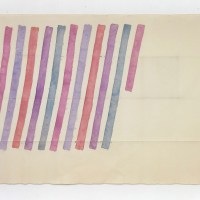
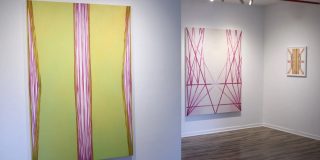
Contributed by David Carrier / Anyone old enough to remember Claude Levi-Strauss’s books on structural anthropology or Rosalind Krauss’ famed structuralist account of sculpture, all richly suggestive sources of art theory, will likely appreciate “Building Models: The Shape of Painting,” currently up at the The Milton Resnick and Pat Passolf Foundation and curated by Saul Ostrow. The central question he poses is how you construct a painting. In the 1960s and 1970s, when painting was beleaguered and political experimentation was a related concern, tribes of New York artists were consumed with answering that question.

Museum Exhibitions

Call it Orphism

Contributed by Adam Simon / At a Four Walls event in Brooklyn in the early 1990s, Erik Oppenheim, at that time a young artist, stood up and said, “I’m starting an art movement. Anyone who wants to join, meet me in the back after the show.” It was a hilarious and audacious gesture, in part because no one joins an art movement on a whim, like a list-serve or an exercise class, but also because there hadn’t been any artist-initiated movements for a very long time. They proliferated in the late nineteenth and early twentieth century with the advent of Impressionism, Surrealism, Futurism, and Dada, and enjoyed something of a resurgence in the 1960s with Fluxus in the United States, Supports/Surfaces and Zero in Europe, and the Gutai Group in Japan. Most of what we consider movements were proclaimed by an outside observer, usually a critic or curator, looking to group artists who had similar concerns and made work that fit the designation. For the artists themselves to rally around a specific cause, even an aesthetic one, was not required. 

Solo Shows

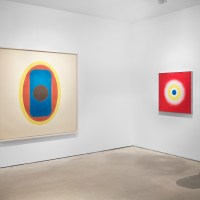
Jill Nathanson: Beyond Color Field painting

Contributed by A.V. Ryan / Jill Nathanson’s solo show “Chord Field” opened in late June at Berry Campbell Gallery. It is her fourth at the gallery but her first in its spacious, skylit new space. It seemed a fine opportunity to talk to her about her work, new and old.

Opinion

Canceling abstract art in Santa Barbara

Contributed by Laurie Fendrich / While there have always been easily discreditable philistines who dismiss abstract art as a fraud, many leaders in today’s art world marginalize it for other reasons. They see it as anachronistic, irrelevant, boring, or, most unforgivably of all, shackled to its white European origins. It’s not far-fetched to think that th