
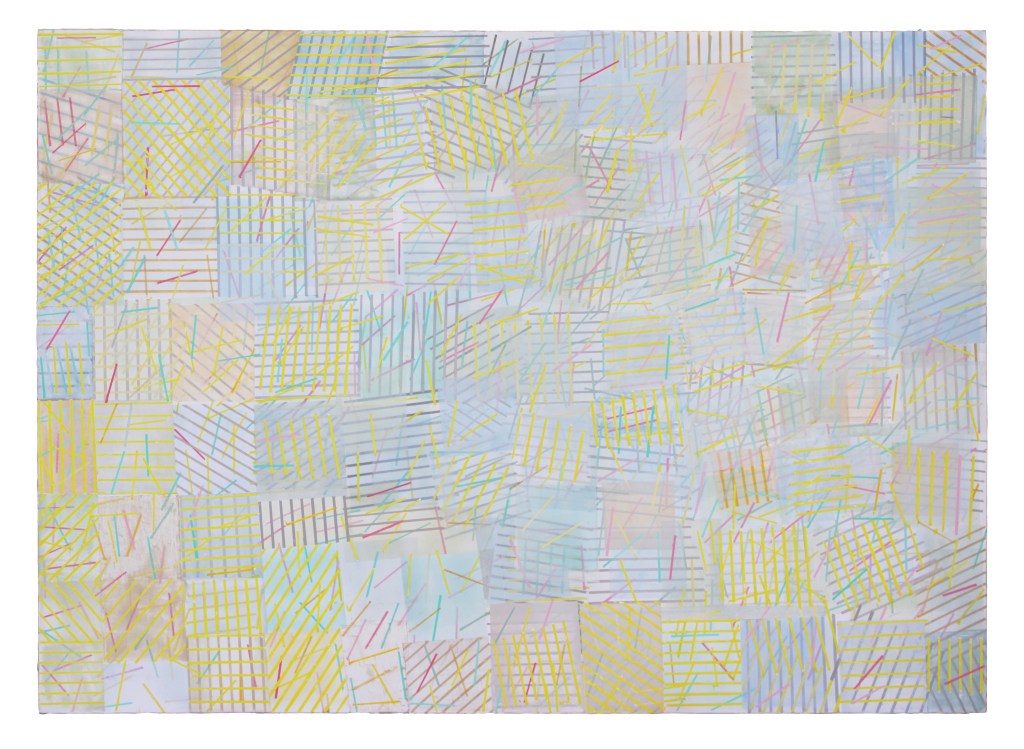
Contributed by Becky Brown / Living through a changing zeitgeist is a trip. Now into my forties, I see that conditions, styles and ideas that loomed as colossal in one moment can fade into obscurity in the next. My parents are octogenarians in the art world, and they’ve told me artistic and theoretical trends are always cycling; now I’m seeing it happen. When the essays on “Provisional Painting,” “New Casualism,” and “Zombie Formalism” emerged, I was in the throes and early aftermath of a graduate degree in painting from Hunter College. Like many, I thought they articulated something I was seeing and feeling but hadn’t yet named. I did not imagine that within a few years, abstraction would be on the margins of contemporary painting, with figuration taking center stage. Was this backlash related to those critiques or just part of a natural cycle?
In the past few weeks, I’ve borne close witness to a longer generational span in creating an inventory of my 86-year old father’s paintings. Paul Brown got his MFA at Yale in the 1960s. He studied with Al Held and Alex Katz, two painters who make the distinction between abstraction and figuration feel less stark: not about shapes versus people or color versus landscape but rather about the logic of a painting, which could include all four. My dad could have said that. As he prepares to vacate the Williamsburg studio he’s had my entire life, we are unrolling 9 x 12-foot canvases. I’ve never been so intimate with a painting this big, as no one I know makes them. This may be most directly related to the tired subject of real estate, but I think there is more to it – namely, a compression of physical space alongside the expansion of virtual space. Scale doesn’t matter like it used to.

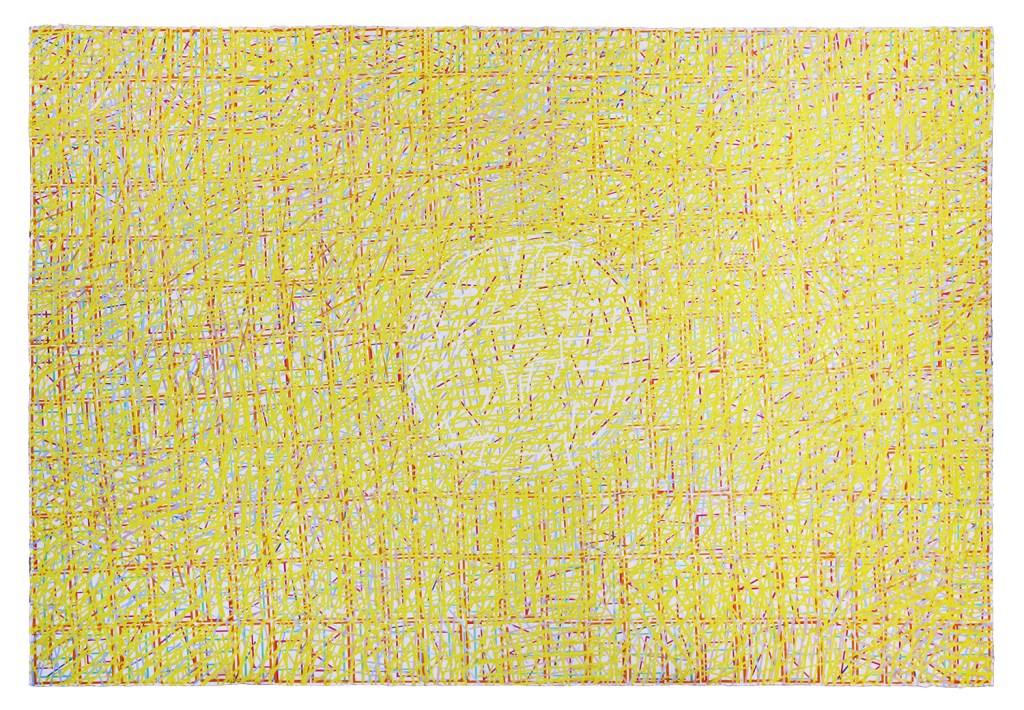
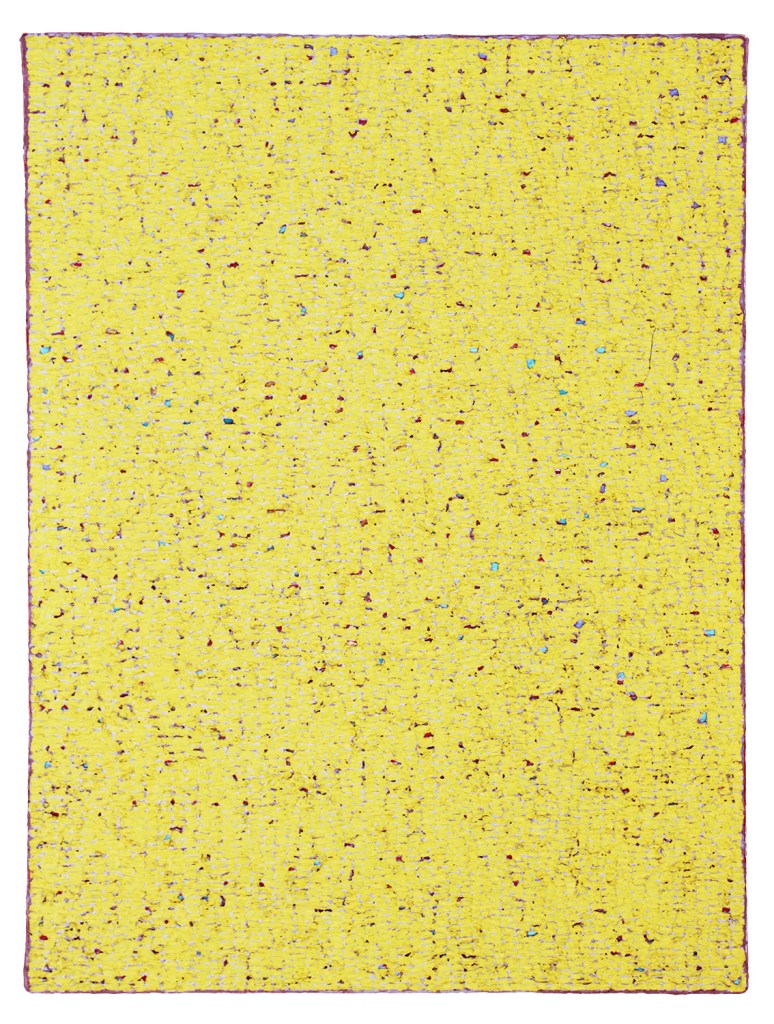
My dad made a lot of work, mostly painting and mostly abstract, but also sculptures early on, plus a smattering of people, including a series of figures collaged from newspapers into painted squares – arguably foreseeing our tiny screens today. Most artists, of course, explore many styles alongside the one they end up associated with, as we see in the surprising first and last rooms of retrospectives. One throughline is Minimalism, seen in his dreamy, brushy color fields and monolith shapes of the 1970s, the geologic monochromes of the early 2000s, and the buzzing geometry of the 2010s and 2020s.
Most of the work identified by Walter Robinson and Jerry Saltz is minimal – they use the word “reductive” – featuring sparse content and shallow surfaces. I took the core Zombie Formalist critique to be that a distortion or exaggeration of Minimalism’s mandate to reduce had drained abstraction of meaning. The accusation was redirected a few years later to “Zombie Figuration,” which reflected, again, a glut of a single style leading to paintings as empty shells. The issue is less about abstraction versus figuration and more about bursting bubbles.
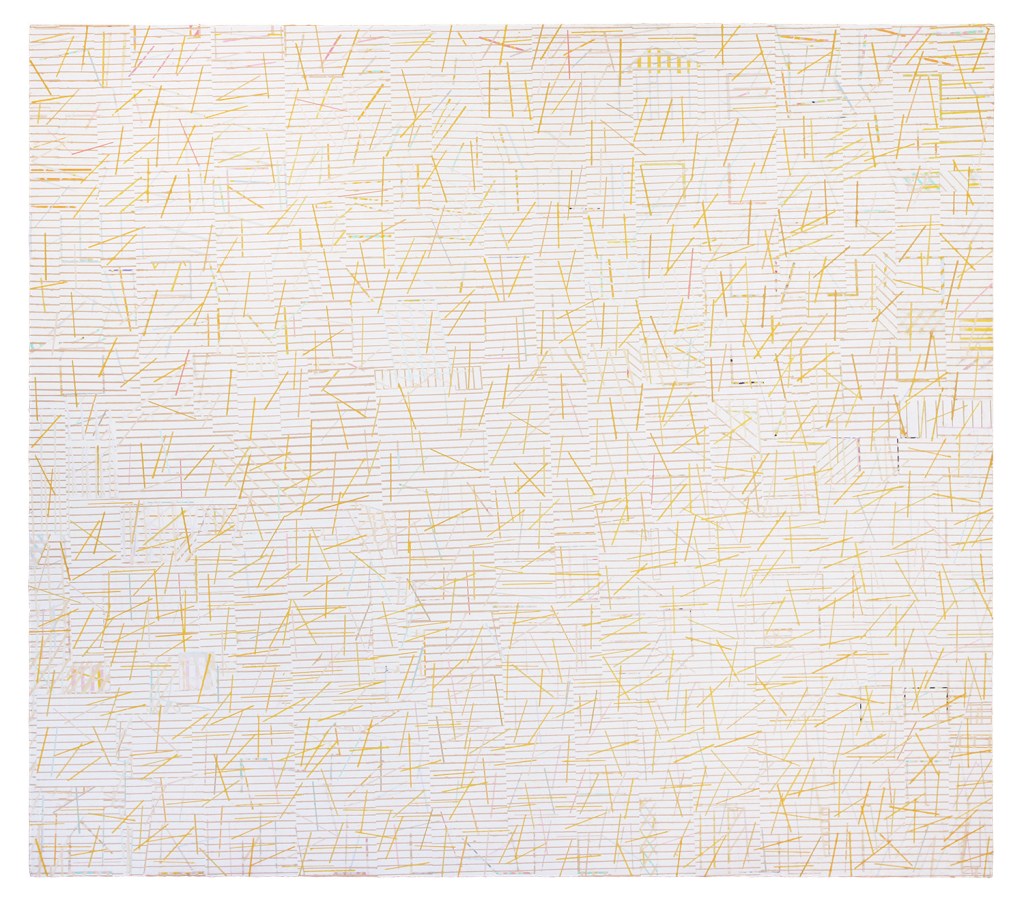
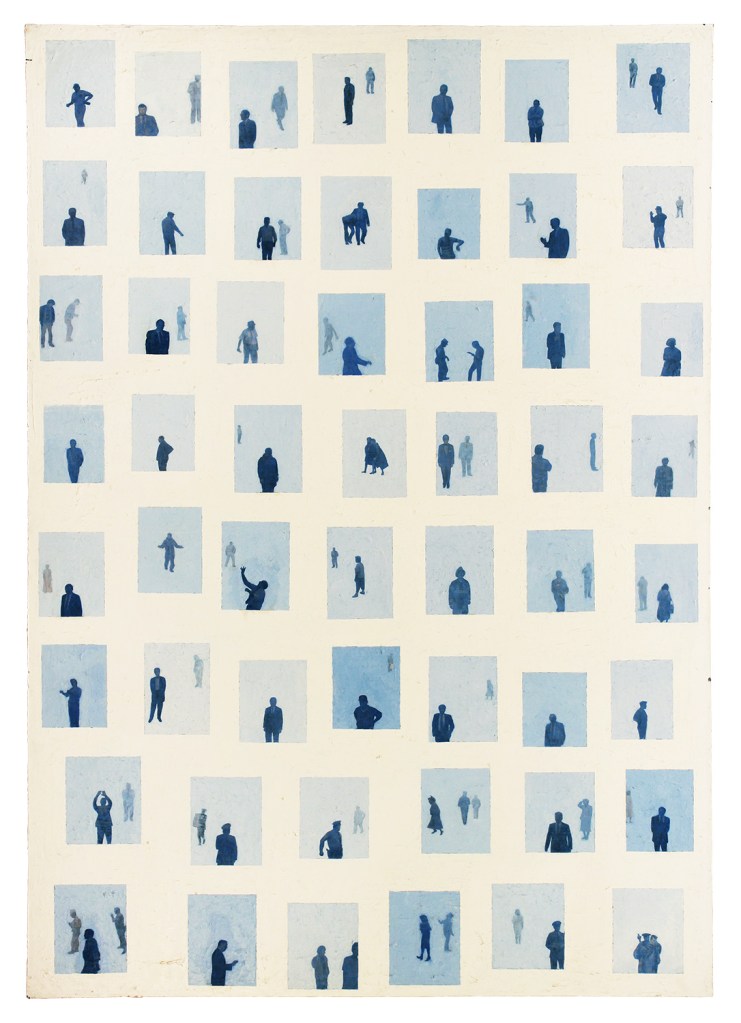
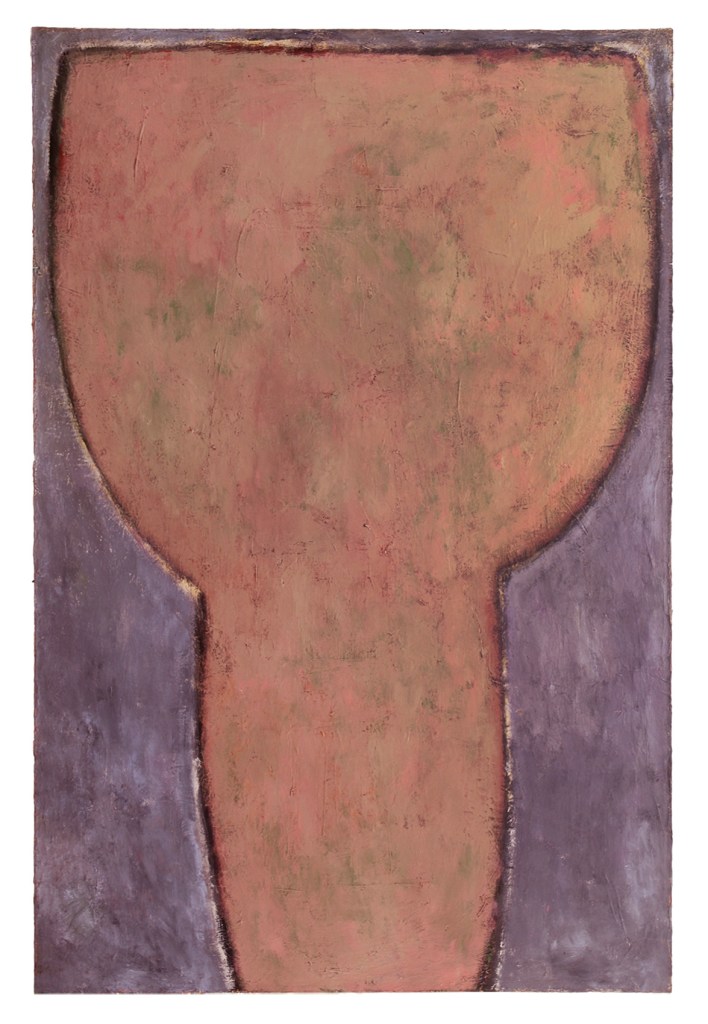

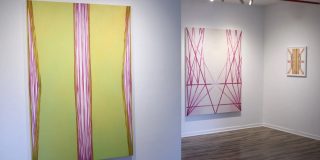
My dad’s work, though, is only ostensibly minimal. He is concerned with how much content might fit into a monochrome and how surfaces can contain infinite depth. That’s why some of his paintings are hard to reproduce, unlike those of both Zombie Formalism and Zombie Figuration, which were born for the screen. Paintings like Ted and Untitled (PLB77) change with every step you take towards or around them. They appear at first glance, or at a distance, as expanses of yellow or beige, but, as you approach, you discover swarms of interconnected lines on multiple planes. They might appear horizontal or vertical, but they actually move in all directions – a grid distorted to the brink of recognition, Agnes Martin exploding into a dizzying vortex, a crumbling skyscraper blasted beyond gravitational pull into space junk.
These paintings also make me think of cyberspace, the equally infinite and incomprehensible virtual world of the twenty-first century. My dad doesn’t use a computer, but these paintings were made in the years everyone else started using them for everything and our televisions, phones, banks accounts, and emergency rooms came to depend on them. To me, these networks of broken, layered, pulsating lines conjure encrypted fragments of information, scrambled pixels, or another kind of World Wide Web – indecipherable, yet connecting us all.
My dad’s misalignments remind me of Wade Guyton’s inkjet paintings – cited by Jerry Saltz as Zombie Formalism forbears – which outsource composition to ghosts in the machine. Paul Brown’s labor-intensive process is the opposite, with each line and layer applied by hand, over months or years, and each painting taking shape not according to pre-conceived plans but through interactive steps and intuitions, an infinitely elastic and unpredictable human system. The recent survey Electric Op, at the Buffalo AKG Art Museum, explored such connections between technology and abstraction, with artists from the 1960s to the present. Curator Tina Rivers Ryan asks: “Could it be more than coincidental that the curves of Op art resemble electronic video signals, or that its grids suggest pixilated digital pictures?” And vice versa: my friends LoVid – who had early work in the show – translate digital information into kaleidoscopic abstractions on canvas.
These technological associations were not in Paul Brown’s conscious mind while he was making these paintings, but maybe a world in the grip of existential change can be most vividly described by someone just outside its reach. This is art’s superpower: to channel ideas beyond its makers’ intentions, which keep evolving with the culture around them. Jeanette Winterson wrote in her 2000 essay What Is Art For?: “We don’t look at Caravaggios now because we want to return to the life of simple piety envisaged by the cardinal who commissioned them. We look at them because that wild, strange dark and light still moves us, still makes us puzzle over what it means to be human.”
Robinson said formalist abstraction was a “walking corpse.” Saltz said: “You see and get it fast, and then it doesn’t change. There are no complex structural presences to assimilate, few surprises, and no unique visual iconographies or incongruities to come to terms with.” He compared it to Muzak, lacking “visual or material resistance.” Based on my experience teaching undergraduate and graduate art over the last ten years, I believe such harsh words may have stifled some impulses towards abstraction in the generation of artists that came of age in their wake. Paul Brown’s work, however, provides a meaningful counterpoint. It keeps changing the more you look. It is rife with surprises, complex structure, and visual and material resistance. So I hope young painters will continue to see the potential in abstraction to teach us about the world and show us new worlds. In a video interview I often share with students, contemporary artist Tomashi Jackson says abstraction can “hold narrative in such a way that it is felt, not told.”
I am reading Emily Watlington’s hot-off-the-press essay in Art in America declaring a new artistic trend for our moment: systems art, reimagined from its origins in 1960s Minimalism. She describes “vast, abstract, and often invisible systems” and attention focused on “how the world works at imperceptible scales from the cosmic to the quantum.” While she doesn’t discuss abstract painting, I see it as a vital tool, indeed a living system, for addressing our “polycrisis” of entangled technological, environmental, economic and geopolitical threats. The zeitgeist is in flux, and there is always a new generation of artists and critics emerging to ward off the zombies and keep us alert.
About the author: Becky Brown is a painter and an assistant professor of art at SUNY University at Buffalo.
NOTE: Paul Brown’s work can be seen in a studio exhibition opening June 1 in Williamsburg, and open by appointment through June 20. Contact becky.brwn@gmail.com for address and details.









great work, regardless…