
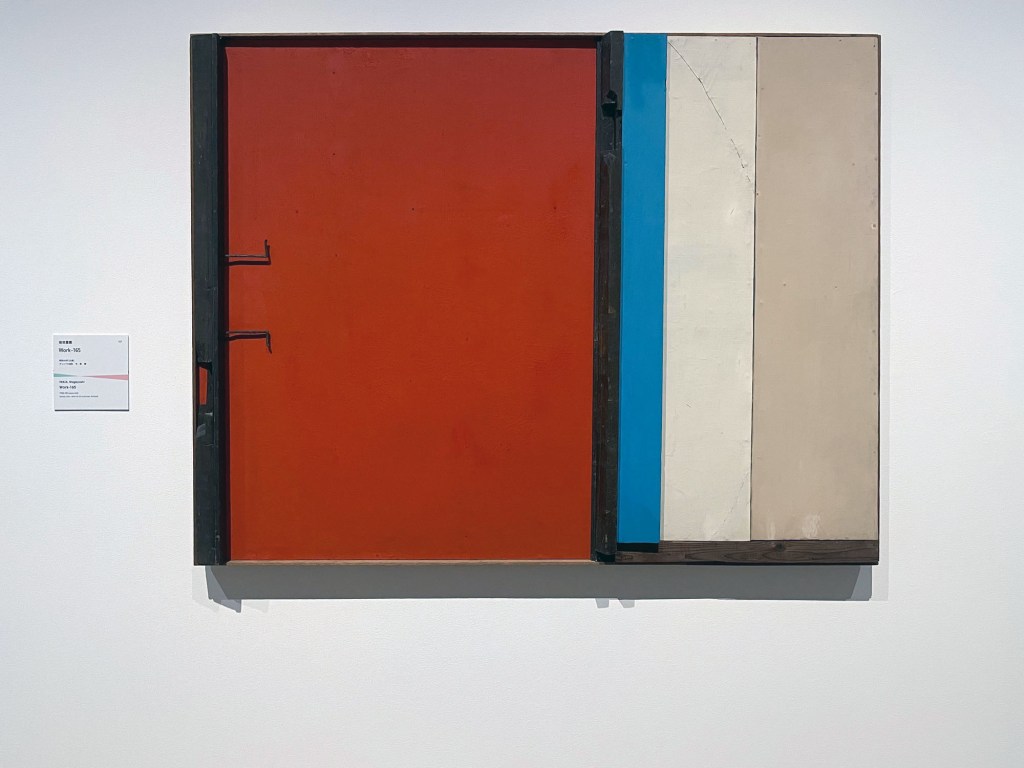
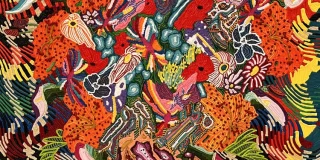
69.8 x 54.2 inches
Contributed by Kenneth Greiner / On a recent trip to Japan, I visited Kyoto City KYOCERA Museum of Art. Behind the museum’s massive burnt orange Torii gate, in the Higashiyama Cube, is its special exhibition, “Nihonga Avant-Garde: Kyoto 1948–1970” which, in the cube’s labyrinthine interior, encompasses three of Kyoto’s significant 20th-century avant-garde art movements (Pan Real, Cella Art Association, and the Sozo Bijutsu), propelled by a disaffection with traditional Nihonga painting.
During the Meiji period, under pressure to open trade between Japan, the United States, and Europe, Nihonga painting emerged to protect the aesthetics of Japanese classical art while adopting a measure of Western realism (Yōga). Some of the artists, having been formally trained to paint Nihonga, pivoted away from its nationalistic overtones towards the avant-garde schools in New York and Paris, penning transgressive manifestos denouncing the cherished tranquility of the Nihonga style in favor of flattened horizons and primordial compositions. Unsurprisingly, the most dramatic movements away from representation occurred after the war, in the 1950s and 1960s, as Surrealism and Abstract Expressionism gained prominence.


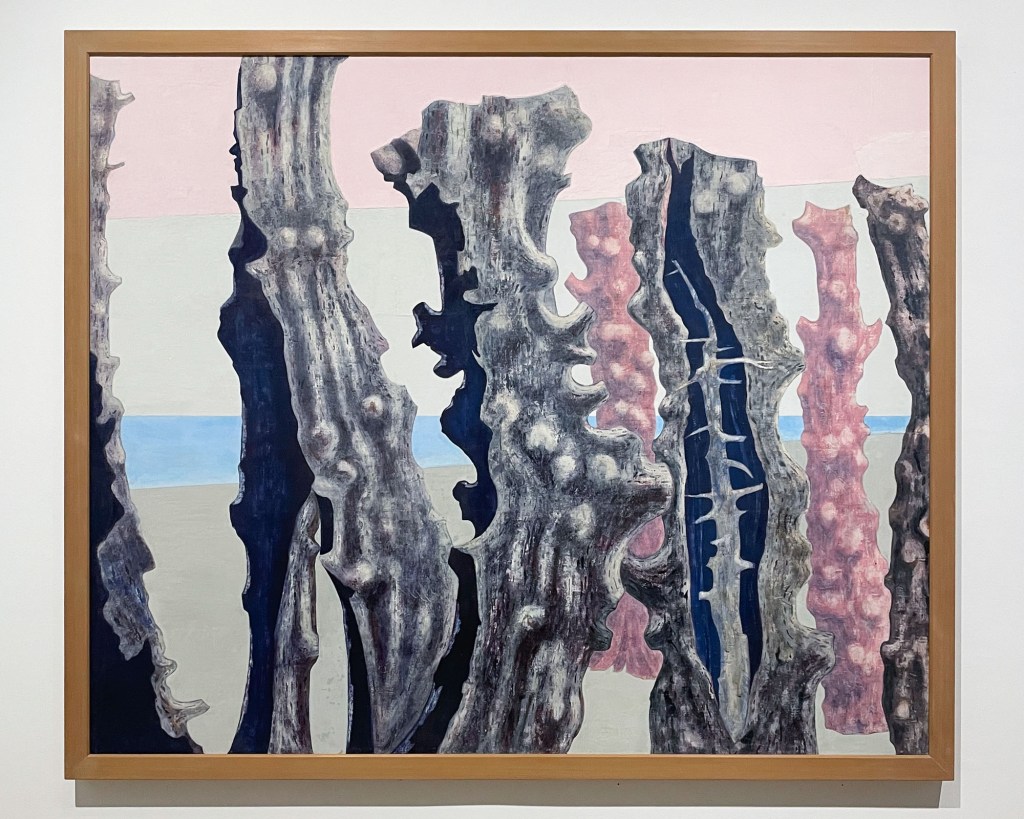
In an intuitive way, I found myself linking a series of paintings that mapped a familiar story of alchemical transformation beginning with form and figuration, through distortion and aberration, before decomposition and distillation. Sawa Kojin’s work, especially Coastal Erosion, seems to capture Sozo Bijutsu’s point of departure, resembling the supernatural landscapes of Max Ernst, where for the German artist, East Asia and the Indigenous Arts were a sustained fascination, prompting him to collect works from around the region and non-European worlds. Yamazaki Takashii’s Seashore explores similar territory, where barnacled columns on a mysterious oceanic shoreline invite investigation. What might normally be seen through the lens of fantasy or magical realism, in this case, appears more like a romantic presentation of an ancient gaze when considering Shinto and Japan’s animistic views. If Ernst suggested that there was life hidden in the landscape, were Yamazaki and others painting its renewal?
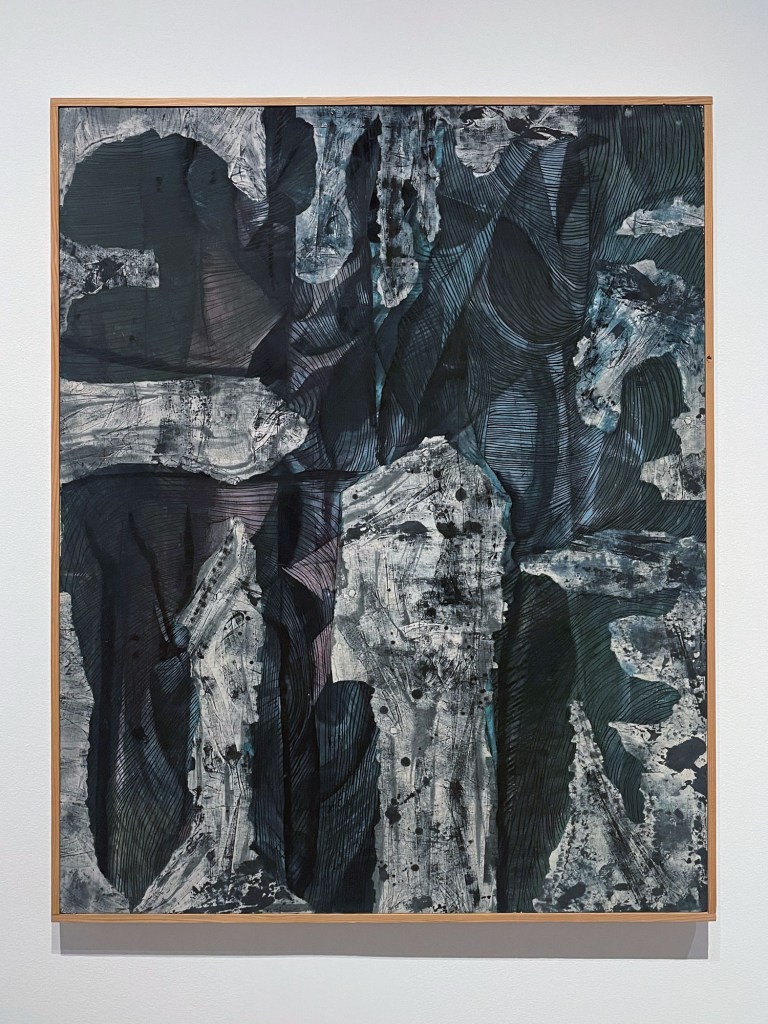
color and fabric on board, 59.8 x 47.8 inches
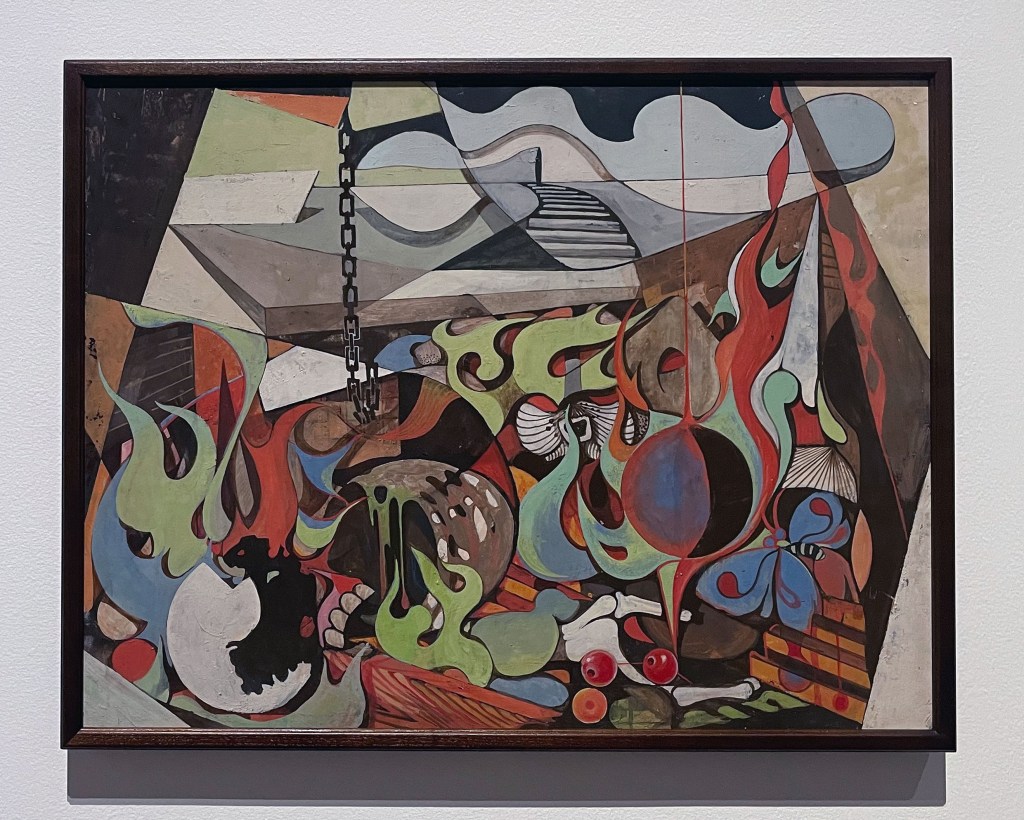

61 x 48 inches
Nomura Ko’s Memory of Memories compresses perspective in its cavernous view of “all things lost” to the void, or perhaps, cast directly into the subconscious. Later, in near total darkness, the subdued organic geometry of Mikami Makoto’s Symbol of Reincarnation evoke the closed-eye hallucinations of LSD, à la Miró’s and Kandinsky’s abstractions. Still, Mikami holds onto the shibui-beige color palette derived from tea ceremony. Leaning in, I can’t help but associate the imperfect bullseye embedded towards the top with Kenneth Noland’s iconic Birth. Ono Hidetaka’s Circle, advances the rounded motif with stillness and empty white space (yohaku) that appears celestial and atomic, smoother than but similar in feel to Jay DeFeo’s The Rose and in turn Franz Kline’s Mahoning. Sakaki Ken’s Opus.63-4, featuring glossy, raked-gravel minimalism, is another standout.
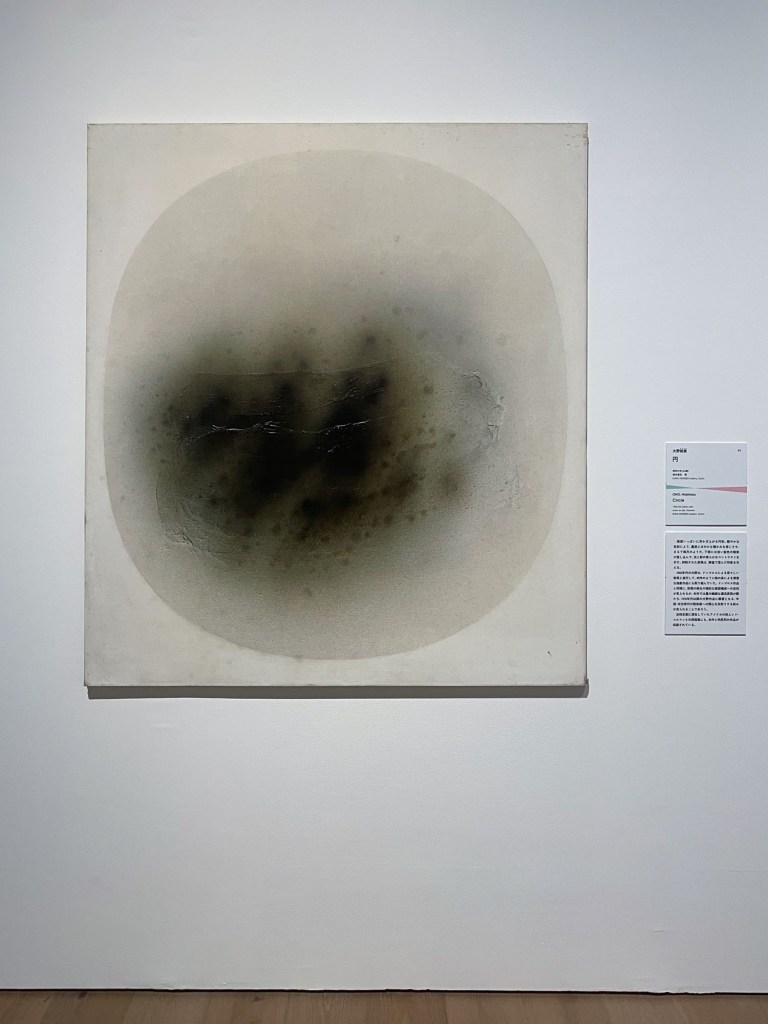
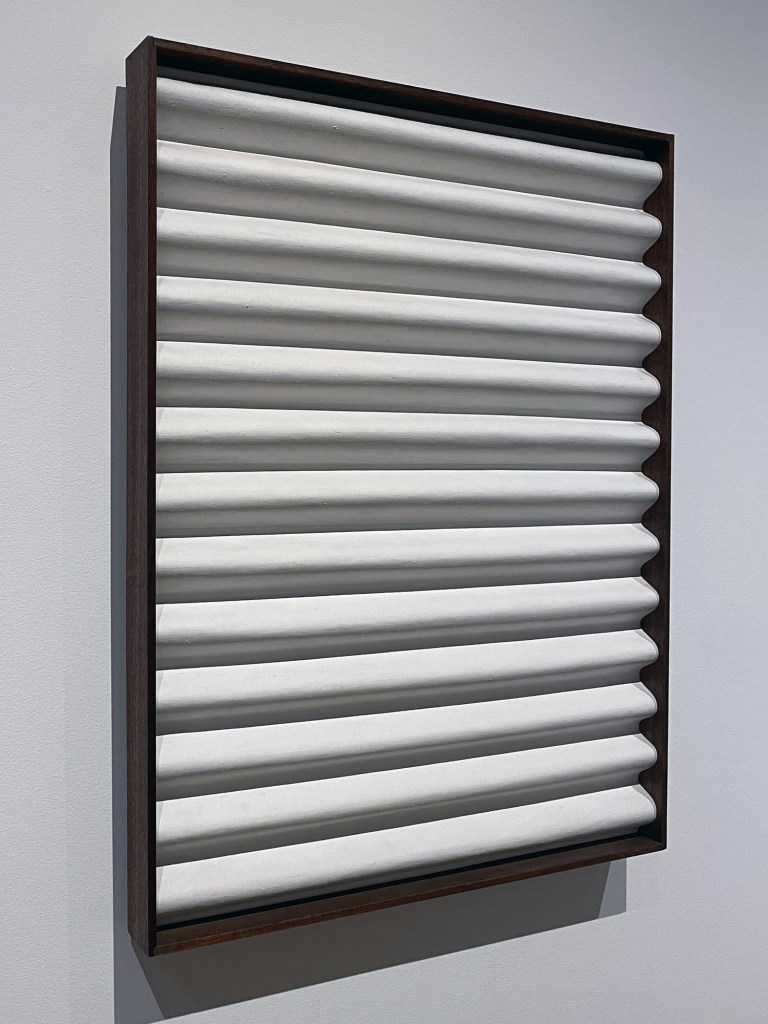
45.2 x 34.6 inches
Given that many New York poets and artists of the period – including John Cage, Allen Ginsberg, and Agnes Martin – were inspired by Zen, it seems clear that Western and Japanese artists shared a desire to mix together and reflect on the other’s philosophies. Underneath its clean surface rhythm, “Nihonga Avant-Garde: Kyoto 1948–1970” can be interpreted as a peacemaking gesture highlighting the notion that regardless of cultural barriers, at times, we are all seeking similar things.
“Nihonga Avant-Garde: Kyoto 1948–1970”, Kyoto City KYOCERA Museum of Art, Higashiyama Cube, 124 Okazaki Enshojicho, Sakyo Ward, Kyoto, 606-8344, Japan. Through May 6, 2026.
About the author: Kenneth Greiner is an American artist based in London. He holds an MA in Sculpture from the Royal College of Art and has participated in residency programs at Hands-On Projects, St. Briavels Castle, and the University of East London, exhibiting work at Purist Gallery, Roha Gallery, and The Factory (LIC), among other venues.








Makoto’s work grabbed me. Thanks