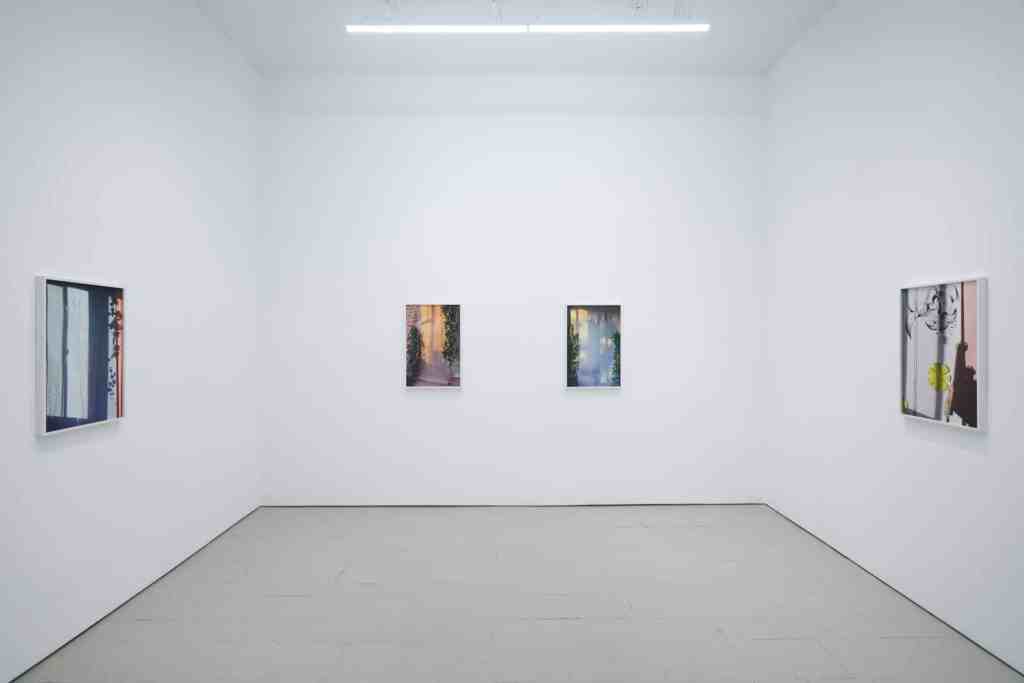
Contributed by Bill Arning / With the photographs of Los Angeles–based artist David Gilbert, whose show “Stationery” is now up at Klaus von Nichtssagend Gallery, one repeatedly asks: where exactly is the art occurring? He has found a way to destabilize the exact moment when ordinary objects shift into Fine Art with a capital A. At first glance, these works can appear almost incidental – serene accounts of light falling across a studio wall, with scraps of paper, drawings, and pinned objects casually arranged. They masquerade as found images, random moments merely “noticed” by a wandering photographer with a point-and-shoot camera. The spaces are shallow and flat; the compositions initially seem haphazard.
Yet within that modesty Gilbert creates moments of lyrical magic. The beauty arrives almost as an ambush, all the more memorable because of its uncanny quiet. We know these framed photographs will circulate in the world as art objects, hung on pristine gallery walls, but their true subject is the fleeting instant when cut paper, graphite lines, ivy, and moving daylight coalesced in the artist’s studio. Photography renders those transient effects permanent.
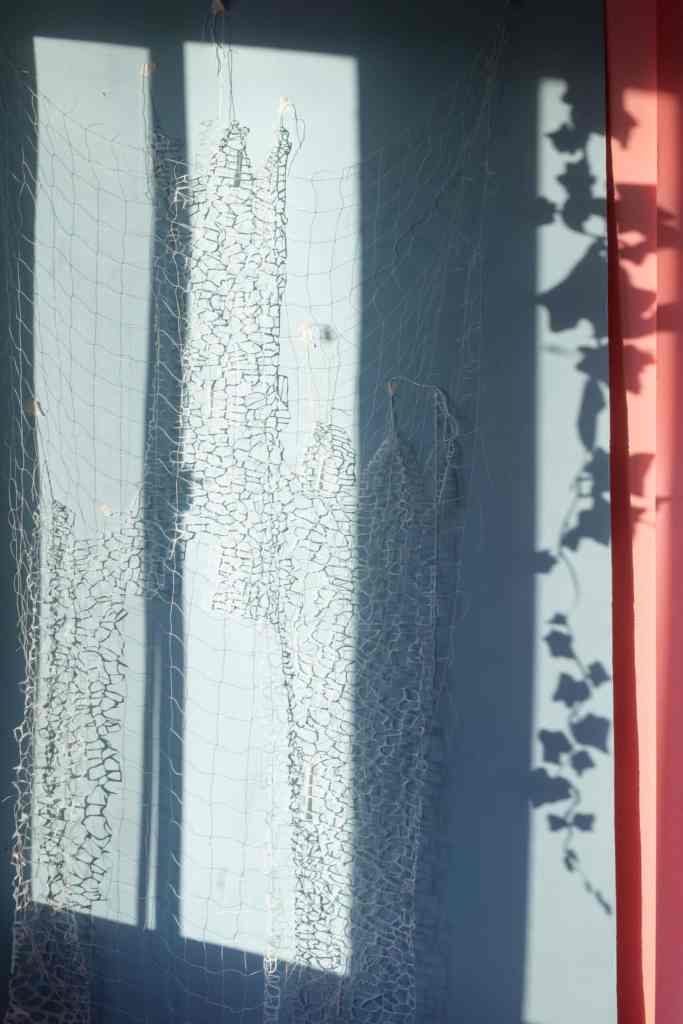
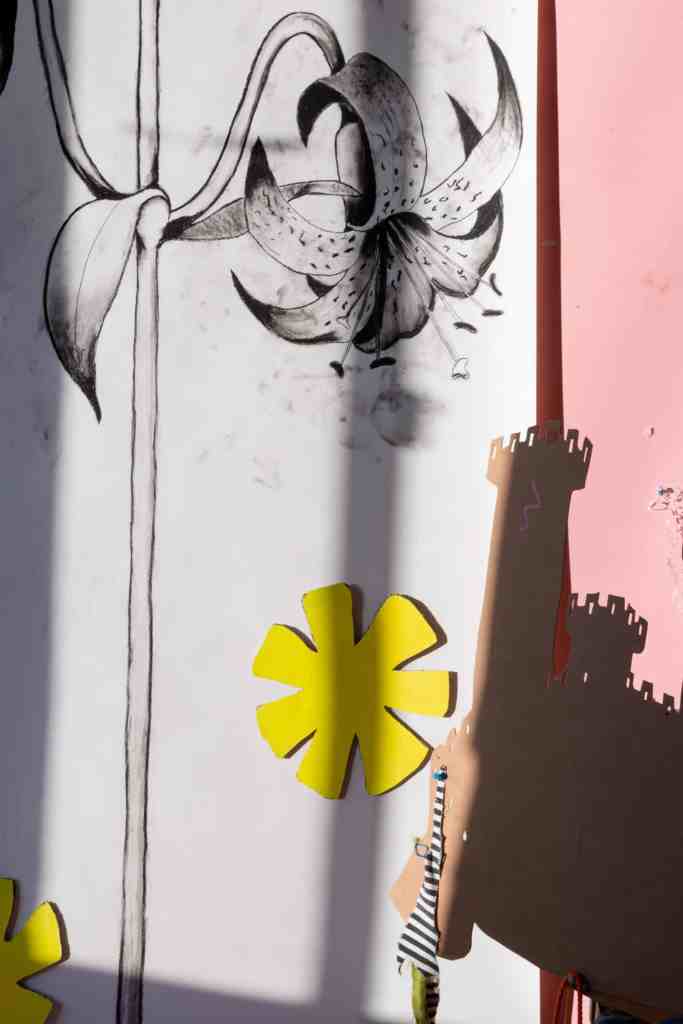
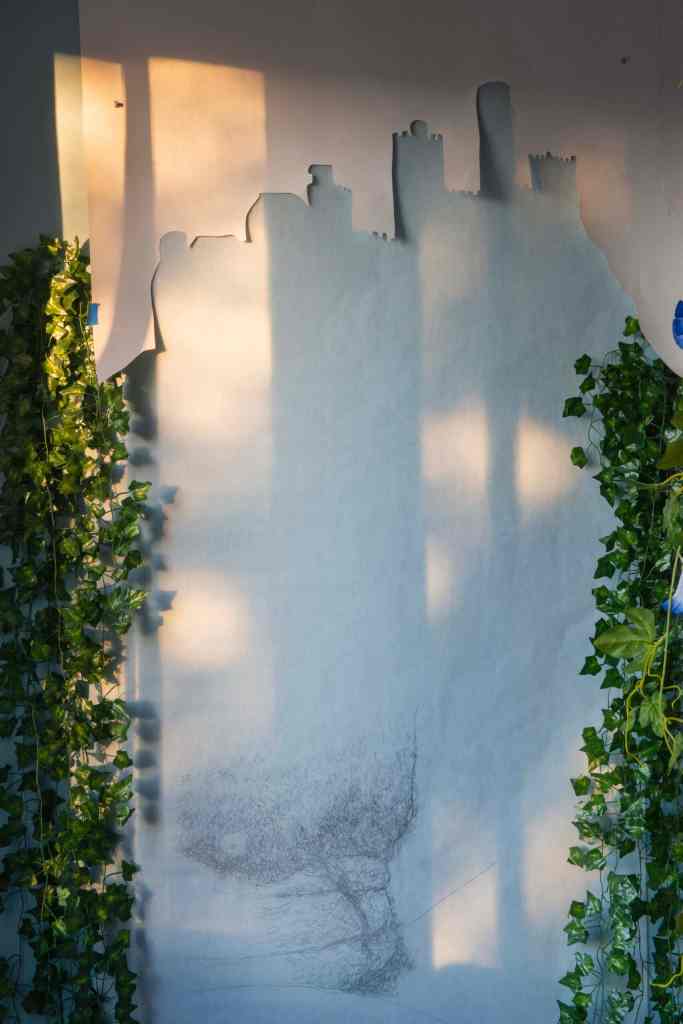
Gilbert’s labor is subtle but, once recognized, considerable. In Up in the Air, a storybook castle rendered from delicately cut paper seems to flutter against the wall. Its white-on-white construction leans toward invisibility. The image is defined less by the castle than by the geometric shape cast from an unseen window, inducing an unconscious search along the gallery wall for the actual light source. There is something deeply touching about the obsessive patience required to construct a childlike fantasy castle through such painstaking means, which characterizes Gilbert’s entire studio practice.
Gilbert’s aesthetic is one of humility. He does not shout or demand attention but simply shares moments of sustained calm, as though walking through the woods with a beloved friend noticing the miraculous effect of morning light. Unlike much contemporary culture, there is nothing boastful or self-aggrandizing about these works. But a long lineage of modernist photography is devoted to discovering precisely such fugitive miracles, and Gilbert’s photographs feel like that tradition’s shy younger sibling, whispering sotto voce.
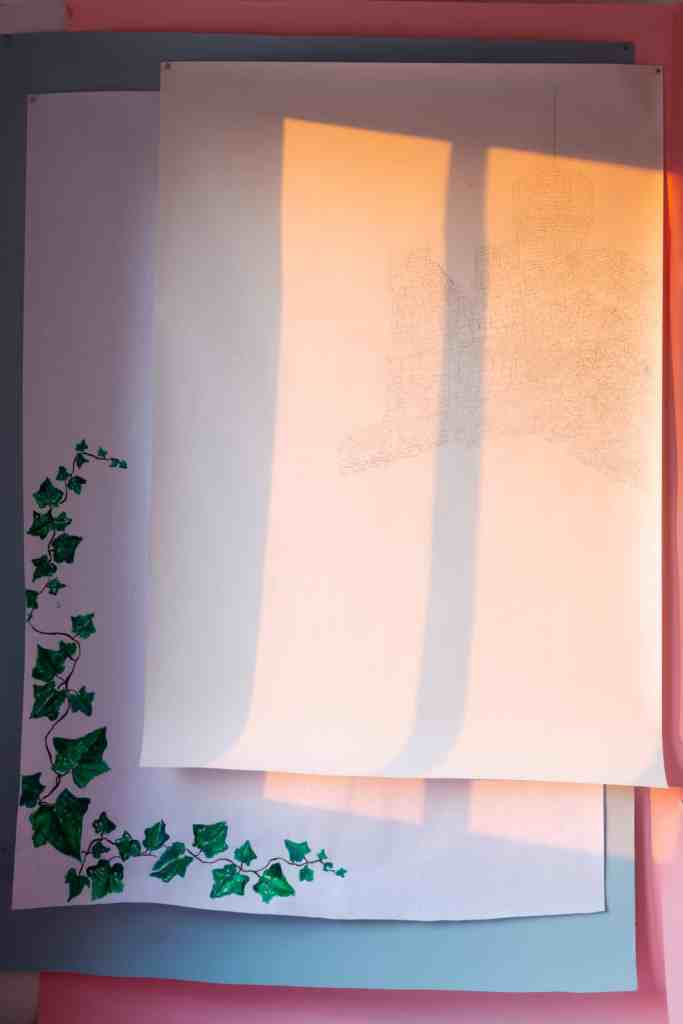

At times, he introduces drawn imagery directly onto walls or suspended sheets of paper – a furry torso in Built Up, an elegant bloom in Sun Lily. Even these more descriptive elements retain an anti-monumental allure. At roughly 30 by 20 inches, the prints are no larger than necessary to reveal the remarkable density of detail they embed. Pinpricks, shadows between layered papers, tape marks, and tiny adjustments all remain visible. Each image reveals the artist’s hand and his decisions about what to omit.
Earlier this year, Rebecca Camacho Gallery mounted a much-discussed group exhibition titled “Assistants” that was a meditation on creative lineage and the tradition of artists learning by working for other artists. Gilbert was employed by the late Tony Feher, whose own sculptures often initially appeared to be “nothing” – rows of empty soda bottles topped by marbles, jars filled with colored water, or nearly invisible accumulations of humble materials. While their work diverged radically, both artists understood that making viewers work to locate the art can ultimately deepen the experience.
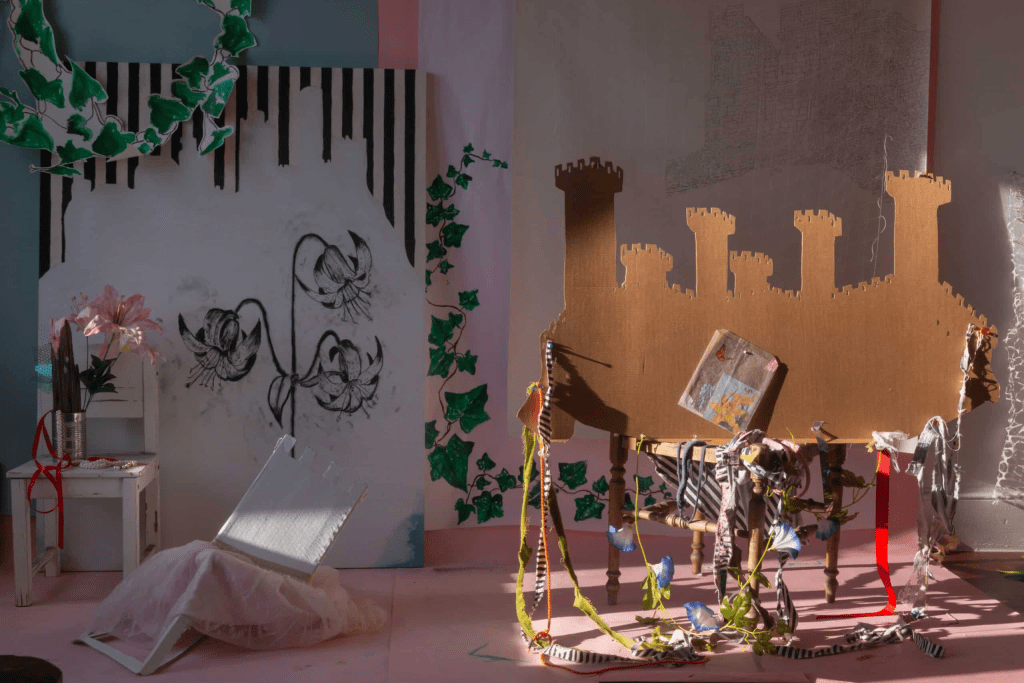
Feher and Gilbert also share a profound belief that artwork is always a collaboration with moving light. The largest work greeting viewers in Gilbert’s current exhibition is titled Stationery, like the show itself. The title’s pun operates visually and verbally. The photograph depicts a sheet of writing paper – stationery with an E – recreated by the artist, bordered with curling ivy and overlaid with a nearly invisible castle drawing. Two enormous windows dominate the composition. Daylight is never stationary until it is photographed.
Here Gilbert returns us to one of photography’s foundational paradoxes. The medium freezes an unrepeatable moment: this exact light striking a singular arrangement for only a few seconds before disappearing forever. The monograph Lilies on the gallery’s front desk surveys the past decade of Gilbert’s experiments. Given the severe limitations he imposes upon himself, the range of emotional and formal effects is astonishing. The longer one remains with these photographs, the more expansive they become – philosophically, spiritually, even emotionally. By pausing the flow of time, they preserve the tender evidence of a beautiful instant.
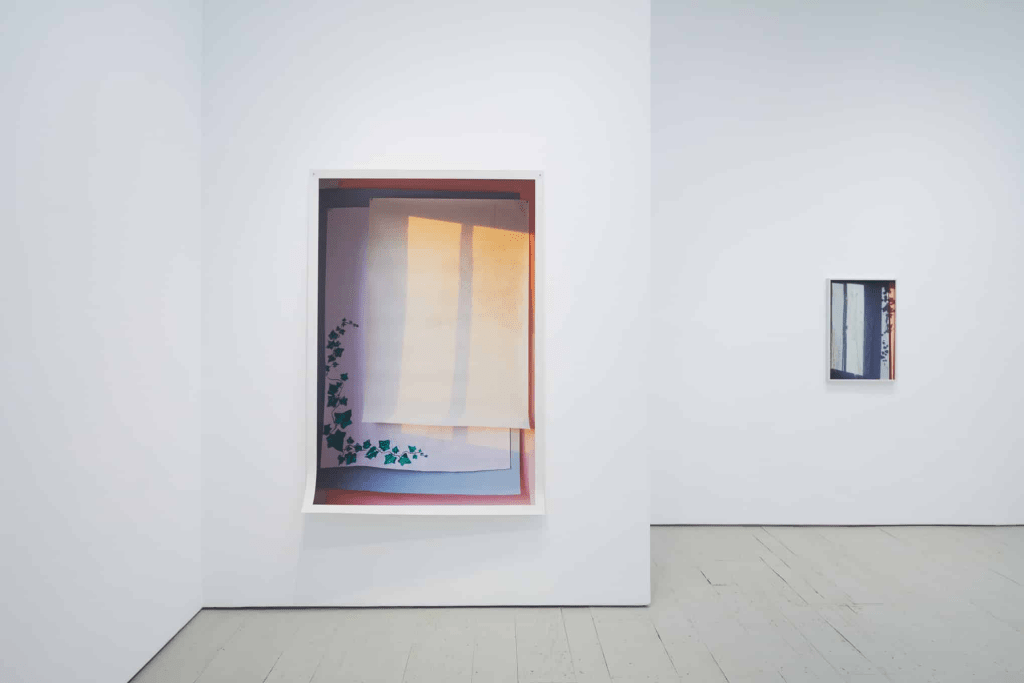
“David Gilbert: Stationery,” Klaus von Nichtssagend Gallery, 87 Franklin Street, Ground Floor, New York, NY. Through June 20, 2026.
About the author: Bill Arning is a curator, critic, advisor, writer, and itinerant maker of pop-up shows based in Old Chatham, New York.