
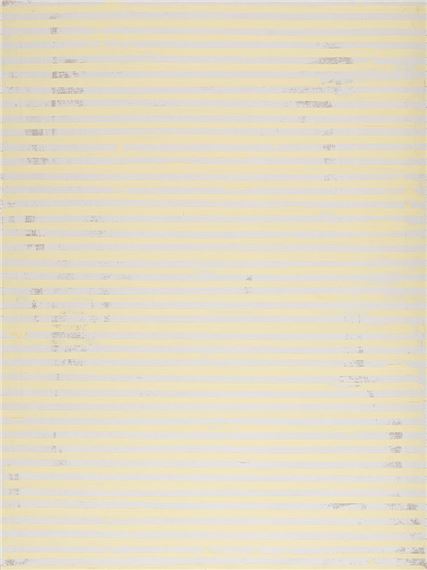
Note: This piece is based on my notes for a panel discussion about abstract painting that took place on May 9, 2026, at Art Cake. The panel was held on the occasion of “Abstract by Definition: An Index,” the 90th anniversary show of the American Abstract Artists organization at Art Cake. Panelists were Saul Ostrow and myself, with Tom McGlynn as moderator. The show is on view through May 30.
Contributed by Sharon Butler / In 2014, a single phrase reshaped the trajectory of contemporary abstract painting. When the late Walter Robinson – painter, critic, and veteran of the Pictures Generation – coined the derogatory term “zombie formalism” in an essay for Artspace, he set off a chain reaction that would stigmatize a generation of young abstract artists and cast a long shadow over abstraction in general. More than a decade later, the story of zombie formalism reads as a pungent example of aesthetic cynicism and jadedness – a case study in how criticism, commerce, and cultural anxiety can converge to distort and ultimately damage an entire movement.
The groundwork had been laid five years before Robinson held forth. In 2009, critic Raphael Rubinstein published an article in Art in America introducing the concept of “provisional painting.” In 2011, I followed up with a piece in The Brooklyn Rail about the “new casualism.” The phenomena we observed were modes of anti-heroic abstraction in which artists cultivated deliberate underachievement, making what Rubinstein called “minor paintings” that paradoxically arrived as major ones. My piece focused on the freedom that painters felt after painting was declared dead. There was a punk undercurrent to it: a rejection of grandeur in a world that had grown to love – and fawn over – art spectacle.
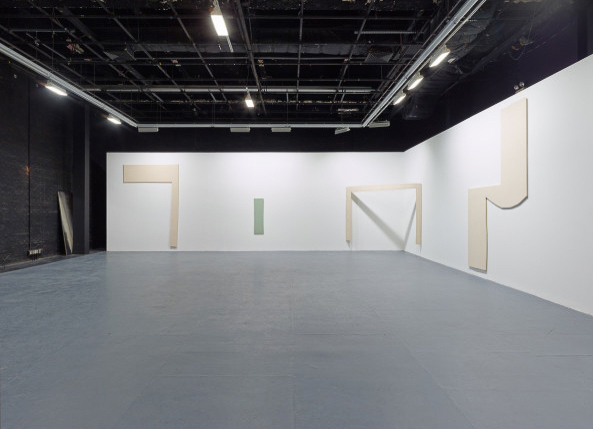
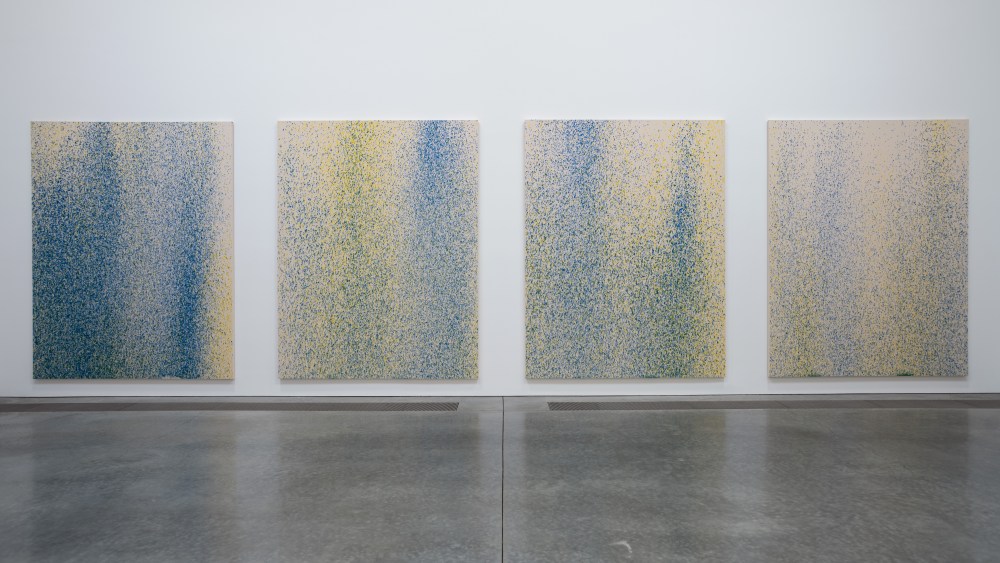
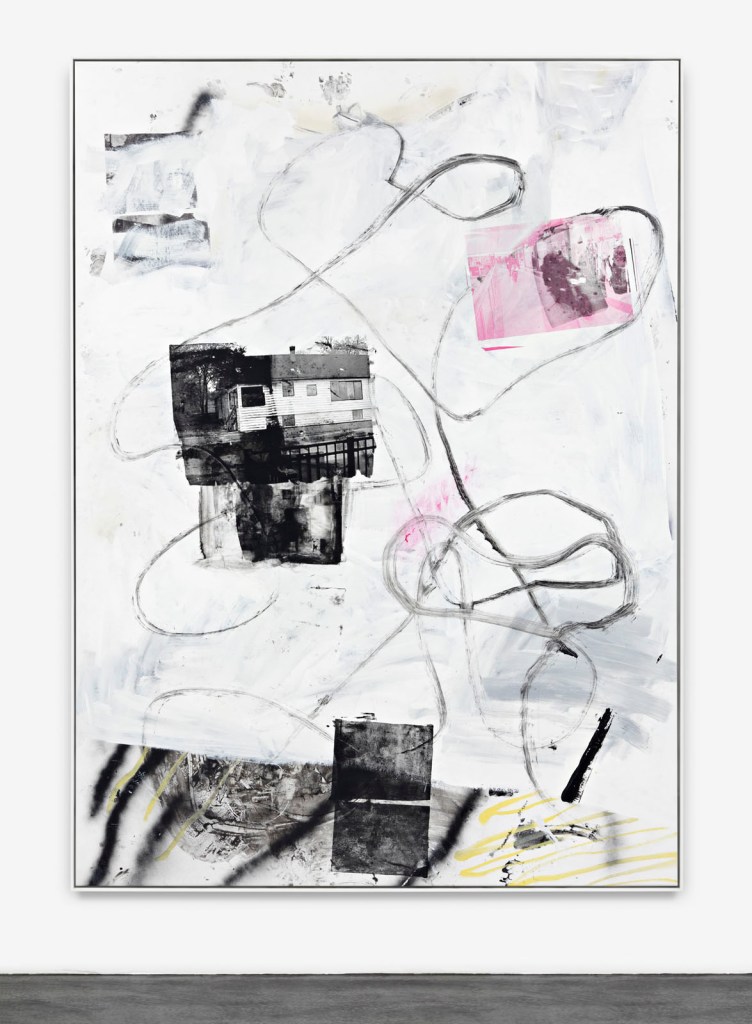
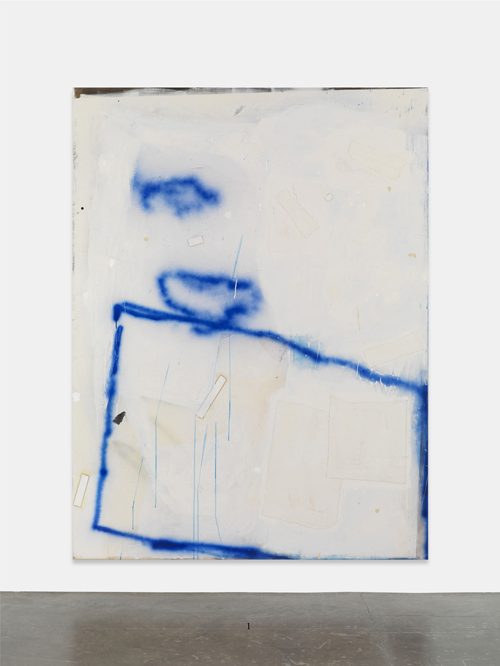
Some young painters read about provisional painting and casualism in school and, exaggerating the degree of license either concept supported, threw out the Bauhaus rules. They embraced an offhand aesthetic, an apparent indifference to traditional mastery, and a willingness to embrace cliché. What they didn’t anticipate was the market’s response. Collectors began buying these process-oriented, barely-finished abstractions – works made by artists just out of school – and then flipped them at auctions for staggering profits. Like the dog that caught the car, the painters had set out to make something so slight that it probably wouldn’t be taken seriously. Then, astonishingly, it was.
It was not the artists’ unseriousness itself but rather the market’s clueless absorption of it without recognizing it as such that Robinson found so annoying. The market had been duped, he thought, by the purported revival of Clement Greenberg’s discarded aesthetic (there’s the zombie) in the service of a straightforwardly reductive way of making a visually innocuous painting (and the formalism). As painter and critic Tom McGlynn pointed out in a recent panel discussion I participated in at Art Cake, Robinson’s own work was appropriative, nostalgic, and rooted in the imagery of desire: hamburgers, drugs, pin-up girls. It was itself a kind of zombie figuration, as critics have since noted sardonically. But he had long been interested in the relationship between desire and monetary value; in social media, he famously paired commentary on artists’ work with their prices. When Walter turned that cold analytical eye to the abstract painting boom, “zombie formalism” stuck because the term was so vivid, so unflattering, so amusing, so easy to repeat. Jerry Saltz amplified the idea – noting that not all the work was bad without saying what he admired – and it went viral.
Yet the artists themselves, as those who knew them have observed, were not necessarily making abjectly cynical work. Saul Ostrow, the other panelist, suggested that through their teachers and the broader critical discourse on postmodern abstraction, they had gleaned that abstract art, by consensus, was exhausted. They did not invent fatigue but rather inherited it. They intuited that the only acceptable stance, at least for the time being, was an ironic one. And they did not themselves use the label “zombie” on their own work. It was a critical imposition, then a market phenomenon, then a verdict.
The pox on abstract painting has been durable. Some painters dubbed zombie formalists have flourished – Joe Bradley, Jacob Kassay, and Josh Smith come to mind – but the market for many has collapsed under the weight of the label and the glut of work produced during the boom. At any given moment, dozens of their canvases sit unsold on the secondary market, reminders of the speculative frenzy. Collectors who bought them at exorbitant auction prices are left holding work that critics ridiculed and declared overvalued. The conversation around experimental abstract painting that might have grown from the artists’ provisional and casualist impulses – which Rubenstein and I considered transitional as opposed to terminal – was cut short. Collectors moved on to figurative work, discouraging or altogether squelching many young artists who might have begun to work in an abstract mode.
“Zombie formalism” has become critical shorthand for abstraction that riffs on styles from earlier art-historical periods. But its legacy is more complicated than this dismissiveness suggests. Zombie formalism should be understood not as evidence of abstraction’s exhaustion but as a symptom of a culture in which irony is front-and-center and prices become content. It is worth asking where abstract painting might be today if so many critics hadn’t sided against provisional painting and casualism – though some did not – and instead had embraced them as evolutionary signals and food for further thought. Young artists who were seeking commercial success had little choice but to work in more popular representational modes.
About the author: Sharon Butler is a painter and the publisher of Two Coats of Paint.




Thanks so much for this lucid and concise survey of a relatively recent – albeit somehow seemingly distant – period in art, art criticism, and art transactions that was and remains in equal parts deeply intriguing and disturbing. It was also, especially with hindsight, just fundamentally awkward. Hindsight additionally allows one to look back on such periods and think, ‘Well, maybe it was all somehow necessary or useful.’ So, well, maybe. I’m just a ponderer, so I’ll keep pondering. I reckon the panel discussion was a rich one and wish I could’ve been there. Thanks again for this piece!
Glad to read this, an accurate glimpse of the history and issue. Hopefully enough young artists are looking at the art-world in depth, the same way many are looking at the greater political and cultural distortion caused by the reliance on money as an indicator of value.
Excellent writing, though, Joe Bradley is anything but a louche abstraction painter. Christopher Wool, maybe considered zombie abstraction but his heart stopping mural in the lobby at 31 and 9Ave. Is something to behold. His palette is infinitely nuanced and gorgeous. Wayne Guyton is zombie but his experimental printing is highly collectible. Zombie formalism can be positive. What about John Cage?
The article doesn’t say that Joe Bradley is a “louche” abstraction painter, which would suggest he somehow invests his work with disreputable content, but states that some labeled him a zombie formalist in 2014, which indeed they did. Nor does the piece claim that none of the so-called zombie formalist, provisional, or casualist painters have been professionally successful. The thrust of the piece is rather that some of the many painters whose careers the “zombie formalist” label has compromised, or whose ambitions it has frustrated, may not have deserved to be disparaged. If anything, the sustained critical and commercial validation that Bradley, Wade Guyton, and Christopher Wool have enjoyed supports this proposition. The label affected young artists today who are turning away from abstract painting.
Artists following their own path are not “squelched” by anyone else’s opinions. There are several very accomplished artists working in the manner of lyrical abstraction developing wonderful work that have continued working since that time. The denigration of the so called lyric work in France stopped no one. As artists we are very conscious of the imperative to “make it new.” I think this was the real issue with abstract painting at that time. It had a generic feel to it. Art is not a product. It is a spiritual practice.
I remember when I first saw the glut of the Zombie Formalism, I thought it was one very prolific artist producing this work. I was bored.
Interesting take and it is definitely worth it to revisit that moment. But since when did a bad moniker stop artists from doing what they wanted to do? It didn’t stop the Impressionists or the Cubists. Actually these days even a bad moniker is good publicity. If so many young artists stopped being interested in abstraction it is more likely because they were chasing other goals, such as instant recognition and commercial success.
“Zombie Formalism” describes an aesthetic language assembled from discarded material and unified afterward through some intervention of formal logic or design — coherence imposed retrospectively. A practicality. A unity after the fact,
Perhaps Walter Robinson was justified in calling it ‘Zombie Formalism’, since this mode of abstraction — a curated mess, a kind of studio-floor readymade — can appear mindless, like a zombie walking Yet if we look at Robinson’s own paintings, are his appropriated images from vintage movie posters any less automatic?
To understand the work associated with the Zombie Formalist generation, it may help to reconsider Robert Rauschenberg’s readymades, themselves indebted to Duchamp’s presentation of manufactured objects as art. Art always emerges from prior art, whether through continuation or reaction. In this sense, artistic practices are rarely revolutionary; they are evolutionary, developing from what already exists — from order, disorder, or the remains of both.
https://artcritical.com/2014/10/31/noah-dillon-on-zombie-formalism/ https://www.artnews.com/art-in-america/features/theory-and-matter-63030/ Rubinstein and Dillon mention me as the first to use it
https://martinmugar.blogspot.com/2024/09/conceptual-handles-on-zombie-formalism.html An Italian art joural also mentions me as the originator as did you at MECA at at lecture where you introduced me as the orginator
https://www.artnews.com/art-in-america/features/theory-and-matter-63030/ The art gossip said that Robinson was angry at Rubinstein for not giving him precedece. Hraj Vartanian agreed as it was where I first wrote about it.
https://www.artnews.com/art-in-america/features/theory-and-matter-63030/ Rubinstein and Mugar comment
https://www.amazon.com/Representing-Interpreting-Abstraction-Visual-Culture/dp/B0DCS9NX96/ref=sr_1_1?crid=KXT0FOIH1HOH&dib=eyJ2IjoiMSJ9.NGRBYkRYEGzloyLrwYvYDg.L7hCylpHPvHjy8kOuv3febymFBc9DYAmAd-zzjfJc7E&dib_tag=se&keywords=alessandro+ferraro+mugar&qid=1725749679&s=books&sprefix=allesandro+ferraro+mugar%2Cstripbooks%2C90&sr=1-1 this is the publication where my ideas are published I dont need to say more.IT was part of a thesis in Genoa Italy.
Those minimalistic zombie formalism really put an edge on some artist. including me.
the art just fly themselves into the heart of the people and artists such
kiana novembriella