

Contributed by David Carrier / Anyone old enough to remember Claude Levi-Strauss’s books on structural anthropology or Rosalind Krauss’ famed structuralist account of sculpture, all richly suggestive sources of art theory, will likely appreciate “Building Models: The Shape of Painting,” currently up at the The Milton Resnick and Pat Passolf Foundation and curated by Saul Ostrow. The central question he poses is how you construct a painting. In the 1960s and 1970s, when painting was beleaguered and political experimentation was a related concern, tribes of New York artists were consumed with answering that question. Indeed, Joseph Masheck devoted a series of renowned Artforum essays to cataloguing some of the options. This exhibition presents ten structural ones.
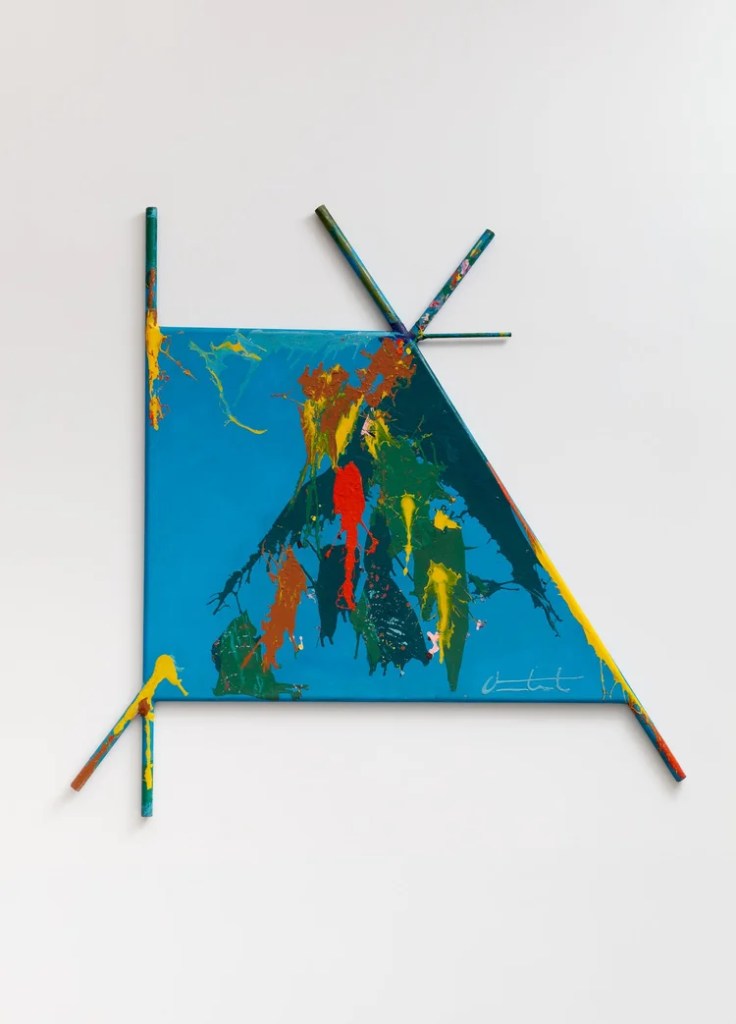
Estate of Joe Overstreet / Artist Rights Society (ARS) New York; Couresty of Eric Firestone Gallery

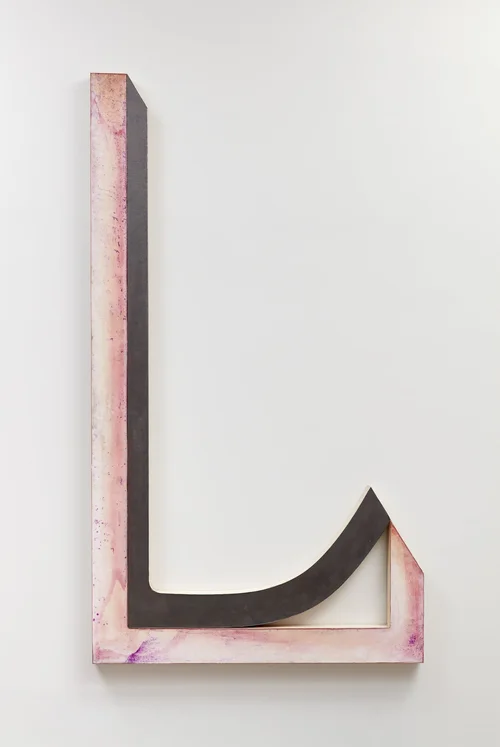
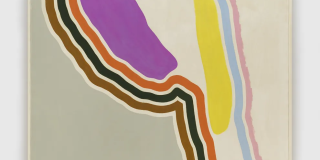
Ruth Root, Untitled, 2025, fabric, Plexiglas, enamel paint, spray paint, 99 x 52 ½ inches

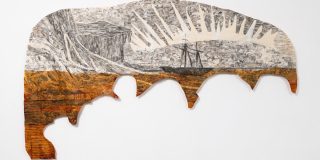
You could construct a non-rectangular frame. Joe Overstreet’s untitled painting from 1982 does just that with a four-sided but irregularly shaped stretcher. David Row’s Phantom (2022), which looks like version of some of Kenneth Noland’s early works, shows how to use six sides to create an attractive if ungainly structure. Alternatively, you could display just a fragment of a complete stretcher, as Harvey Quaytman does in Paleologue (1969). Or why not make a narrow, horizontal work with a massive frame, with an eye to hanging it close to the floor? Ted Stamm’s 5ZYV-001 (Zephyr), from 1982, is one result of that strategy. Just as Levi-Strauss revealed the potential structures for human tribal societies, so these bold artists discovered – or invented – myriad ways to support a pigment-coated surface on a wall.


Ostrow invites us to compare and contrast the ten works. To my eye, the most comprehensively convincing work here is Ron Gorchov’s Spice of Life II, made in 2017, which is one of his patented saddle constructions. This painting establishes a thorough and convincing integration between support and painted surface. The other artists, at least in the works presented here, though certainly enterprising and inventive in seeking to meet that criterion, are less successful in doing so. That may explain why some of them did not pursue the artistic course indicated. Quaytman, in particular, mainly used structures very unlike that of Paleologue. The lesson, I think, is about evolved efficacy. Even for abstract artists, the regular rectangle canvas has generally proven the most useful format (pace Ellsworth Kelly and Elizabeth Murray, among others). The problem, perhaps, is that eccentric substitutes call attention to themselves primarily because they are unfamiliar, which usually does not, by itself, enhance their aesthetic value.
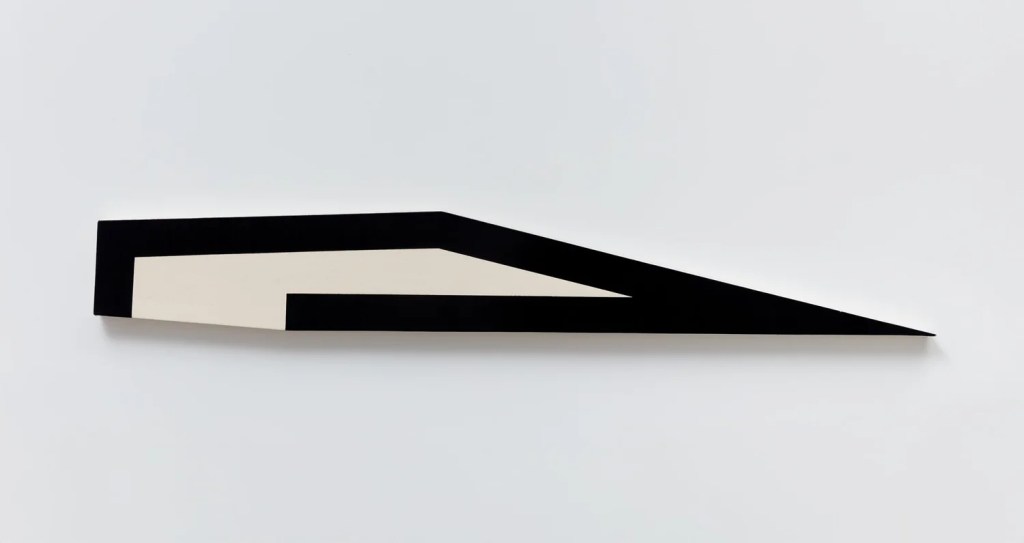
Collection of Svetlana Zueva
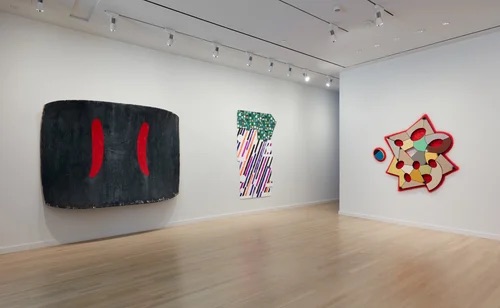
Aesthetic experience, in a very general sense, involves focus on individual artifacts. This is an old idea. The difficulty with “Building Models” is that it presents each painting as a part of a diagram, interesting in itself but not quite adding up to a satisfying whole. The result, I think, is less a group show than a somewhat pedagogical set of illustrations that inform a structuralist analysis of painting. By the same token, I hasten to add, this is a bracingly challenging exhibition as well as an astute survey of recent New York art history. Its qualified success is more edifying than the smaller satisfactions of any number of more circumscribed shows.
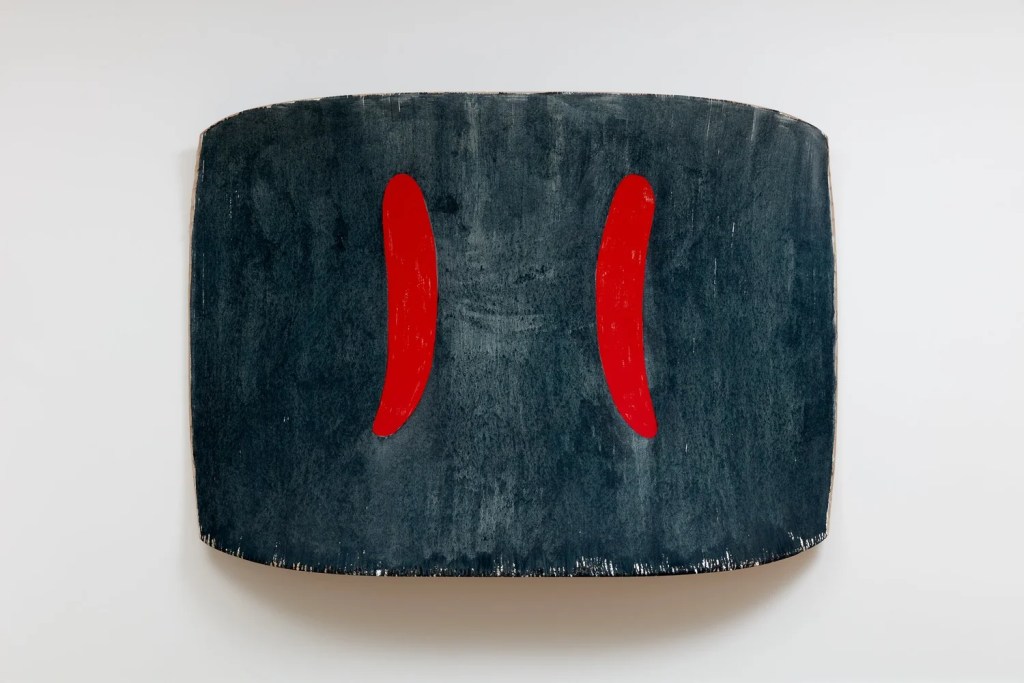
Estate of Ron Gorchov / Artists Rights Society (ARS) New York, Couresty of Vito Schnabel Gallery
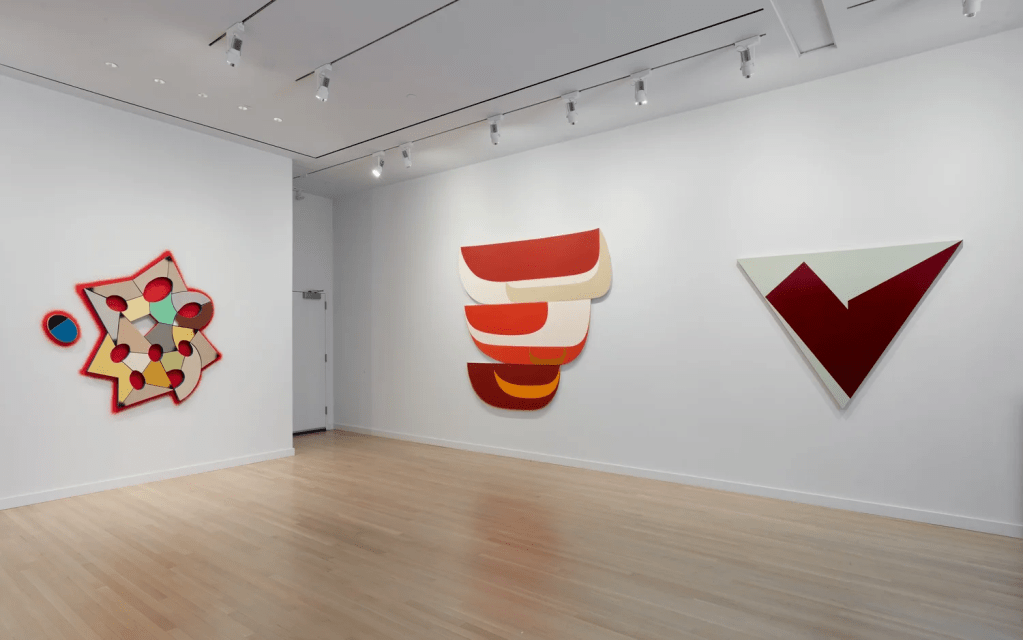
“Building Models: The Shape of Painting,” curated by Saul Ostrow. Artists include Ron Gorchov, Gwenaël Kerlidou, Russell Maltz, Joe Overstreet, Joanna Pousette-Dart, Harvey Quaytman, Ruth Root, David Row, Ted Stamm, and Li Trincere. The Milson Resnick and Pat Passolf Foundation, 87 Eldridge Street, New York, NY. Through January 17, 2026.
About the author: David Carrier is a former Carnegie Mellon University professor, Getty Scholar, and Clark Fellow. He has published art criticism in Apollo, artcritical, Artforum, Artus, and Burlington Magazine, and has been a guest editor for The Brooklyn Rail. He is a regular contributor to Two Coats of Paint.





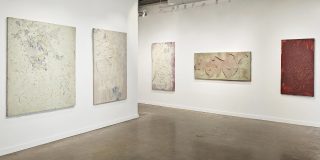
They all cling closely to the wall, and most remain flat: not the most adventurous group.
I don’t think “how you construct a painting” is the central question posed by Ostrow in this exhibition. More like, how stepping away from the orthodoxy of the rectangle opened a world of possibilities for ten significant artists and for those willing to look. Carrier’s faint praise doesn’t do justice to the degree of invention on display in this beautifully curated exhibition.
P C – say more about how not clinging to the wall and not being flat makes for more adventuresome abstract paintings – I’m curious about your criteria