DEADLINE to send a letter of interest for a 2026 residency is October 30, 2025. / Over the years, intimate, artist-run residency programs have helped move artists’ work forward in unexpected ways….

 An award-winning NYC blogazine, primarily about painting
Friday, April 24, 2026
An award-winning NYC blogazine, primarily about painting
Friday, April 24, 2026
DEADLINE to send a letter of interest for a 2026 residency is October 30, 2025. / Over the years, intimate, artist-run residency programs have helped move artists’ work forward in unexpected ways….
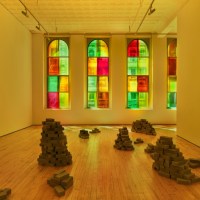
Contributed by David Carrier / Spencer Finch is fascinated by Japan, which he first visited some 50 years ago, when he was a teenager. “One Hundred Famous Views of New York City (After Hiroshige),” his current exhibition at James Cohan Gallery, includes four installations grounded in that experience. Fourteen Stones, inspired by a Japanese Zen garden and made with ordinary concrete bricks, encompasses simulacra of fifteenth-century garden stones. Even these banal objects, Finch suggests, warrant contemplation. For Moonlight (Reflected in a Pond), he has installed stained glass to evoke Japanese moon-viewing. Four LED sculptures present images that recast traditional Japanese haikus through lit color schemes. And Finch’s 42 watercolors reference Utagawa Hiroshige’s renowned One Hundred Famous Views of Edo, made in 1856–58, through present-day New York.
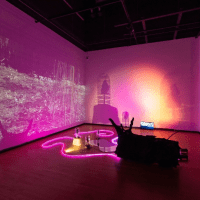
Contributed by Sharon Butler / On October 12, Two Coats of Paint welcomes Alice Pixley Young. She hails from Cincinnati, Ohio, where the Rust Belt and ancient fossil beds meet nuclear contamination sites. She creates installations that tease out ideas about the complex archaeology of the industrial landscape, uncovering stories of displacement, exploitation, and environmental degradation that have come to characterize twenty-first-century America.

Contributed by Jacob Patrick Brooks / I saw my favorite piece of Cady Noland ephemera before I ever saw one of her sculptures. On Instagram, a gallery posted a photo of a tee-shirt. It’s well loved and sun-faded, advertising the opening of Noland’s solo show at American Fine Arts on Wooster Street. The date of the opening is September 11, 2001. Opening the same day, across Canal Street on Broadway, was a show by Gelatin (Gelitin since 2005) at Leo Koenig’s gallery. The year before, the group had gone up to the 91st floor of the South Tower of the World Trade Center and hung out a window. Josh Harris, founding Silicon Alley millionaire/internet pioneer/legendary liar, took photos from a helicopter. The Gelatin show was sparsely attended. I don’t know if anyone made it to Cady’s.

Contributed by Jason Andrew / Susan Rothenberg’s exhibition “The Weather,” now up at Hauser & Wirth, is a rare chance to experience the breadth and intensity of one of most vital influences in American painting. The exhibition gathers fourteen works from across her career – horses, fragmented bodies, and spectral forms – some rarely or never before exhibited. Rothenberg told the LA Times in 1983 that she liked to think of the subjects in her paintings as being “swept along in unconfined space by forces of weather” – rendered in thermal swirls and blizzardy brush marks – and the exhibition is structured around this idea.

Contributed by Mary Jones / Exuberance is a word frequently used in describing the work of JoAnne Carson, and, in “Cosmic Chatter,” her first solo show at DC Moore, it’s in hyperdrive. Twelve large, colorful paintings share the main gallery space with one eight-by-six-foot monochromatic sculpture of an intricately crafted white flowering tree. Placed near the entrance, the sculpture serves as a three-dimensional model and introduction to the paintings. The fragile delicacy of this surprising and marvelous object resembles an encounter with a conjured specimen preserved in ice, a fact among fiction.

Contributed by Jonathan Stevenson / If On Kawara’s monumentally quotidian work was about the objective significance of the simple passage of time, Robert Yoder’s may be, in turn, about the subjective importance of each passing moment however uneventful. “I Was the Other Conversation,” his solo exhibition of untitled paintings (and one beguiling wooden carving) now up at Frosch & Co., continues his discerning visual exploration of how, psychically, people live.

Contributed by Leslie Wayne / For as long as I’ve known Suzanne Joelson – over 40 years now – she has pushed the limits of painting, much as I have tried to do. In what is now an abundantly expanded field, though, I have wondered whether we have much to push against anymore, which makes the endeavor all the more challenging.

Contributed by Doug Milford / Good art can have multiple sources of meaning – material, color, scale, intention, chance, change, process, metaphor, ontology, epistemology, philosophy, biography, zeitgeist, history, and more. These may or may not be apparent or even deliberate, but they make up the work’s internal structure and shape its style. Ideally though certainly not always, these influences operate in concert while remaining distinct. The nine works in Claudia Parducci’s exhibition “Blue”, at Ochi Gallery in Los Angeles in February and March, achieve this balance, both as individual pieces and as an ensemble. The six years that had passed since her previous show included a three-year hiatus from painting after the death of her husband, the artist Peter Alexander, in 2020. This body of work was a response to his passing.

Remember Hurricane Sandy? It was a devastating superstorm that struck the northeastern United States on October 29, 2012, and turned into one of the most […]
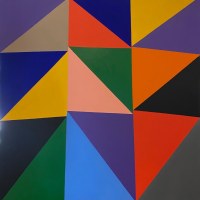
Contributed by Sharon Butler / Make today a day you, like me, refrain from doomscrolling in despair or listening to pundits vainly in search of packaged optimism. Cued by this guide, you might instead opt for art feeds on Instagram and ultimately the shows themselves because nothing is more hopeful than art in the fall in New York. We kick off the first week with the art fairs and then turn our attention to gallery exhibitions, hopping from neighborhood to neighborhood, absorbing new work by artists we’ve known for years and others we’ve never met. For a good time, this is the place to scroll.
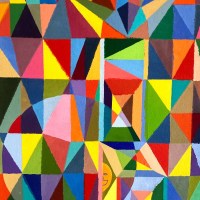
Contributed by Karlyn Benson / The summer heat has given way to mild and sunny weekends, making it the perfect time to explore the Hudson Valley. There are notable exhibitions opening throughout the month, starting on September 6 with What’s That Sound Everybody Look What’s Going Down, a group show at Private Public in Hudson including work by Richard Artschwager, Ross Bleckner, Sharon Butler, Michael David, James Esber, Ellen Kozak, Stephen Maine, Donna Moylan, Michael Rodriguez, and more….
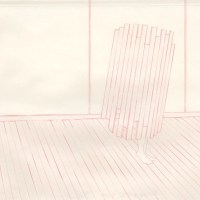
Contributed by Mark Wethli / Technical drawing – the kind we see in plans, elevations, and orthogonal perspectives – is not the obvious choice to explore feelings of isolation, sadness, or loss. For over a century, the painterly gesture has been the primary signifier of these emotions, while drafting has been the province of the designer and the engineer. Given this disparity, Tom Butler’s choice of this medium, in his show “I Became a Room” at Sarah Bouchard Gallery in Woolwich, Maine, is a surprising one; not for its own sake but the result of a creative process that transforms the art of technical drawing in unexpected and meaningful ways.

Contributed by Sharon Butler / In September, Two Coats of Paint welcomes Chicago-area painter Anne Hayden Stevens. Her primary endeavor is to examine how we navigate and relate to physical and psychological spaces. How do we claim territory, seek refuge, and forge paths, literally and metaphorically? Her deft brushwork captures the psychological nuance of this exploration, creating surfaces that from a remove present as bold but reveal their fragility up close. Images of shadowed groves seem to offer sanctuary, and tiny, meandering figures speak to one’s often precarious search for a place in the world.

Contributed by Jacob Patrick Brooks / In “The Art Critics Who Don’t Want Good Art,” Anna Gregor describes a cultural hospice. The caretakers are a set of bad actors. They’re online critics who have replaced the labor of criticism with the catharsis of complaint, trading in “likes and clicks” for a smooth, sugary candy that requires only passivity and attention from its audience while it rots their teeth. This feedback loop, she argues, drowns true engagement and criticism in a “deluge of mediocre art.” It is a compelling diagnosis, but one delivered from the one place a critic cannot afford to be: behind a veil. Gregor deals exclusively in archetypes and generalizations while allowing the reader to “fill in the picture.” The playboi, the intellectualist, the yelper, and so on. She’s built a perfect haunted house and populated it with ghosts of her own making.



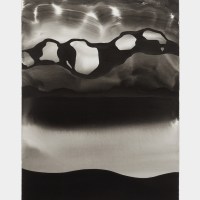 Eric Wolf: Into the fog
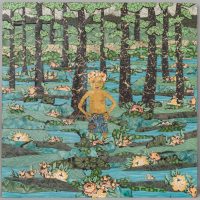 Folk Art’s faux-ish innocence
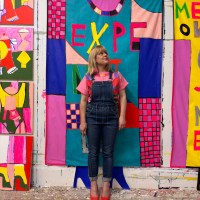 Two Coats Resident Artist Gyan Shrosbree, May 5 – 10
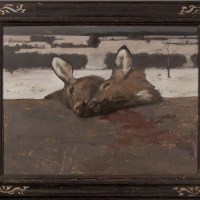 E.M. Saniga: Country life vigorously observed
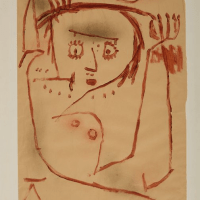 Paul Klee, degenerate for the ages
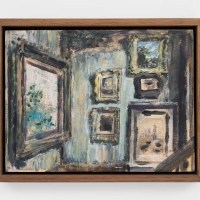 Ken D. Resseger: Closer to creation
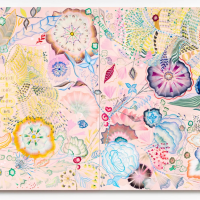 Ruby Palmer: Flowers are forever
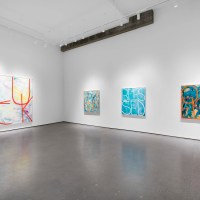 Sam Jablon’s delicious confusion
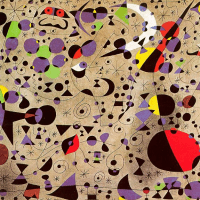 Miró’s far-reaching tutelage
 Elisa Jensen’s expansive interiors
 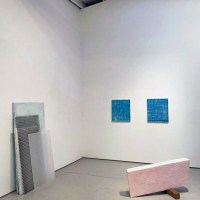 Stuart Fineman and Alan Greenberg: Meaningfully minimal
 Grandma Moses’s simple world