
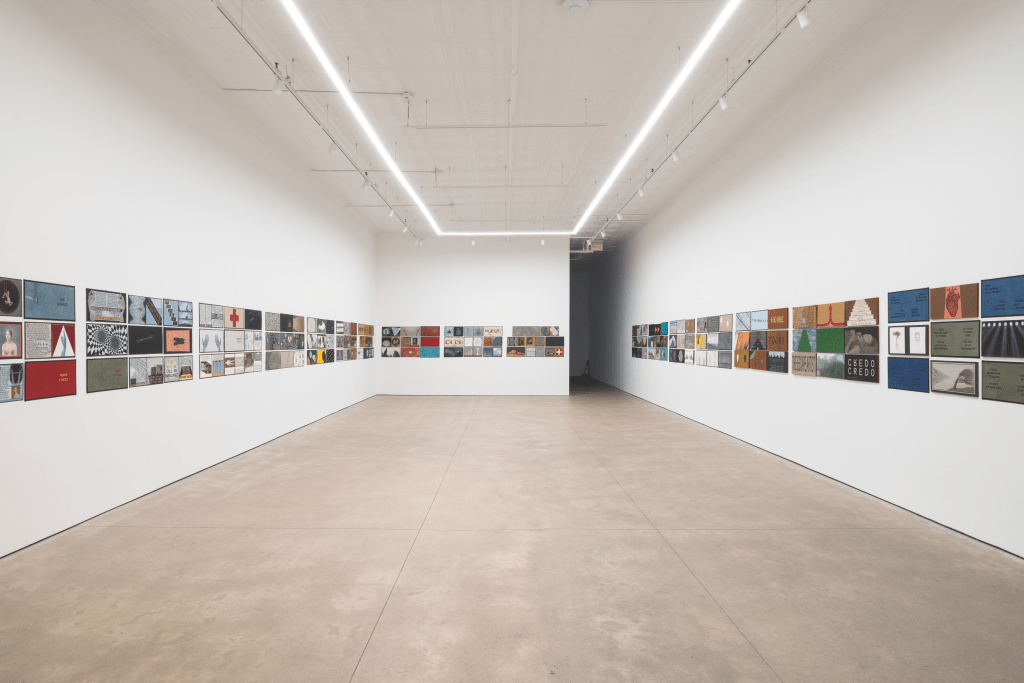
Contributed by Bill Arning / In the mid-1980s, great art experiences of every conceivable stripe seemed to bloom prodigiously and organically from a single club on Avenue A called the Pyramid. Out of this dark, sticky-floored dive came a motley congregation of artists, musicians, drag queens, filmmakers, and poets who launched shockingly original cultural provocations that still reverberate globally, even though relatively few people witnessed them at the time. Bands like Deee-Lite and Fischerspooner, performers such as Klaus Nomi, Jack Smith, the Lady Bunny, and Ethyl Eichelberger all passed through its doors. Even Madonna and Nirvana played there early on. Many of these figures were lost far too young – to AIDS, to drugs – but one of the Pyramid’s seminal presences has flourished and maintained a steady, fearless output. John Kelly, inimitable then and now, is having a major exhibition at P·P·O·W Gallery: his magisterial autobiographical opus “A Friend Gave Me a Book.”
Like Smith and Eichelberger, Kelly has always treated the larger world of art and culture as a personal playground – something to be inhabited, subverted, and remade. Moving fluidly between real and imagined selves, he has performed as historical figures like Egon Schiele or Joni Mitchell, as well as semi-fictional creations such as his Teutonic alter-ego Dagmar Onassis. With his soaring countertenor and statuesque, often unclothed presence, Kelly could hold a room of drunken revelers in rapt attention, turning nightlife into something closer to ritual. While gallery objects have never been central to his practice, they have been a constant companion over the decades. Walls of self-portraits in his various guises as well as the heartbreaking drawing series Sideways into the Shadows – 54 small, lovingly rendered portraits of artists famous and obscure, friends and lovers, whose lives and practices were brutally cut short by AIDS.

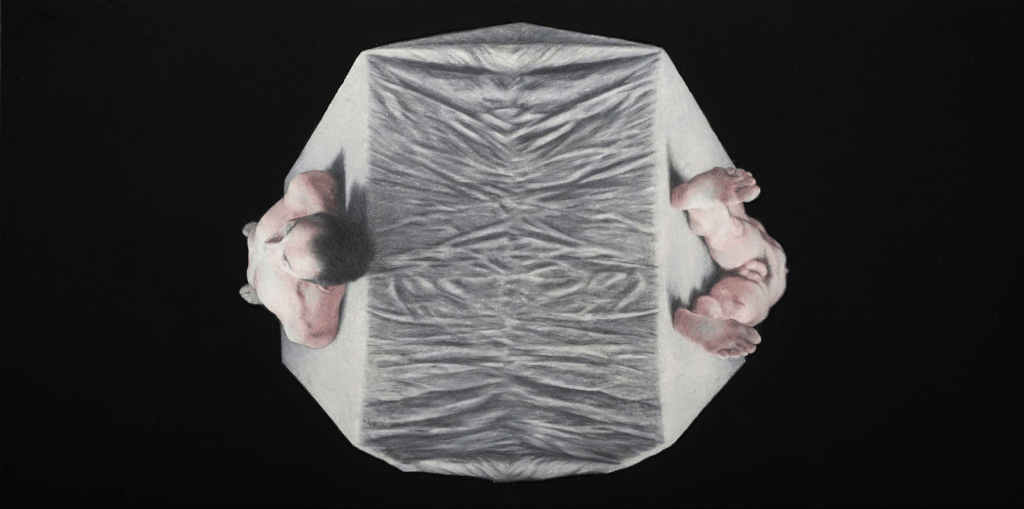
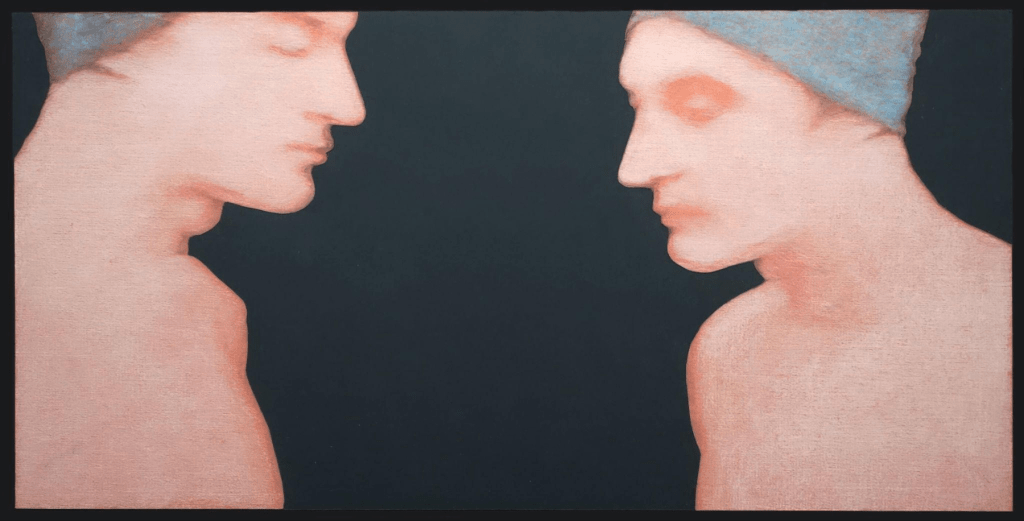

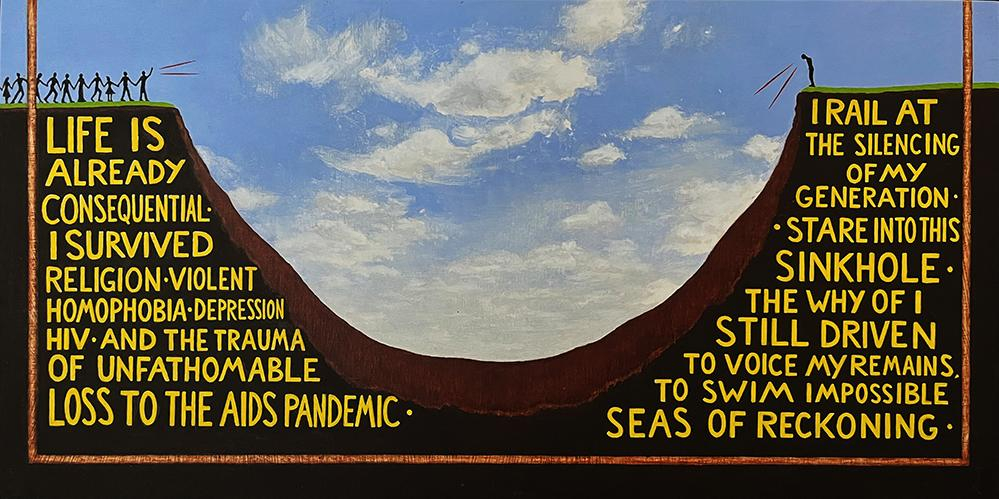
Kelly’s visual vocabulary is largely drawn from his performance work and his cultural obsessions. “A Friend Gave Me a Book” takes the form of wall-mounted book pages, with hand-painted images and illuminated letters, telling the raw, poetic, and often uncomfortable story of his 2014 performance Escape Artist Redux. One of its most harrowing threads recounts a performance in which Kelly was channeling Caravaggio and fell from a trapeze, breaking his neck. Unsure whether he would ever walk again, he lay frozen, unable to move, obsessing over the small technical mistakes that led to the accident – foot placement, balance, timing. In the text and images here, and in a beautifully edited video montage drawn from the performance, that dread is palpable. His immobilized body, animated only by alert, searching eyes, asks us to imagine what it means not to know whether your physical autonomy has ended. The works derived from this moment retain that tension, even at a remove.
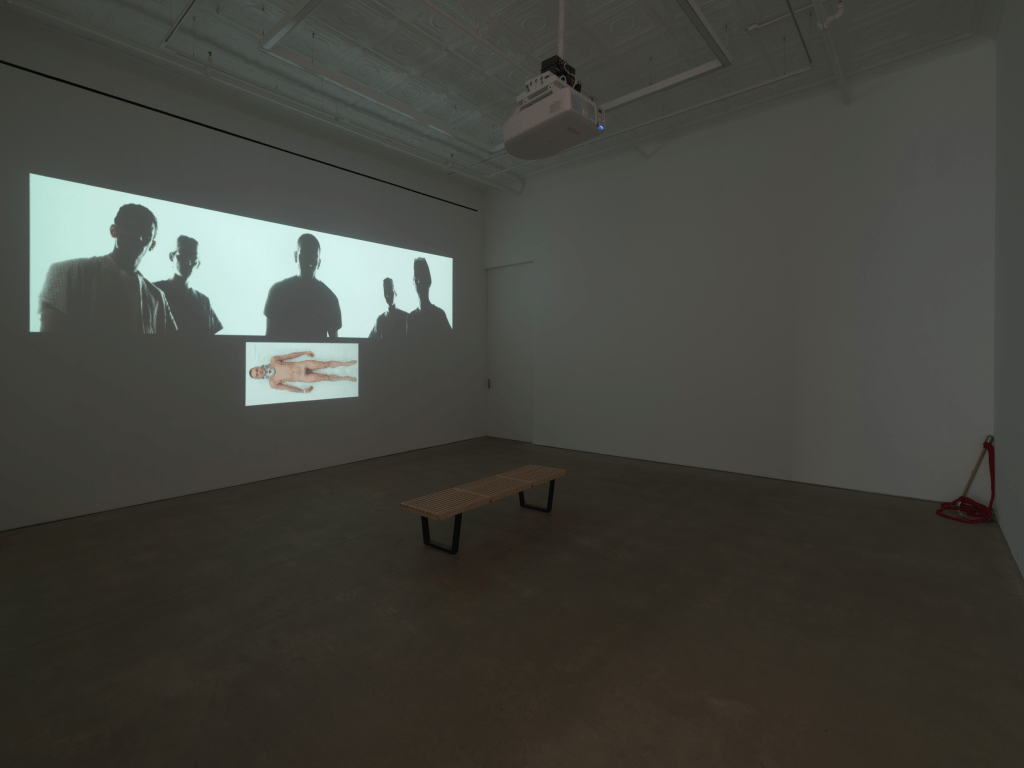
The sheer labor involved here is almost numbing. The amount of text and imagery on offer can feel overwhelming at first encounter. Viewers may find themselves stepping back, unsure how to proceed. That’s okay. It’s edifying enough to graze – to read a little, look a lot, read some more, and move on. The experience still lands. Trained originally as a visual artist, Kelly paints with a modernist, precisionist edge that evokes mid-century queer figures like Paul Cadmus, Jared French, and George Tooker – artists who feel less like influences than chosen ancestors.
Living through the AIDS crisis permanently altered a generation’s relationship to the body. Caring for dying friends, monitoring one’s own T-cell counts – these experiences made corporeality unavoidable. Kelly’s work understands this deeply. The body is never abstract here; it is fragile, stubborn, fallible, and astonishingly resilient. The exhibition benefits enormously from the involvement of P·P·O·W’s Isaac Alpert, whose work with artists’ estates makes him an ideal collaborator for someone with Kelly’s scale of ambition. And ambition there is. Despite decades in the global performance spotlight, the number of new theater projects Kelly has on the horizon is startling. Yes, the demands of long-form video and a wall-length graphic narrative will test some viewers’ patience. But for those willing to meet the work even halfway, the rewards are profound.
“John Kelly: A Friend Gave Me a Book,” P·P·O·W Gallery, 392 Broadway, 2nd Floor, New York, NY. Through February 21, 2026.
About the author: Bill Arning is a curator, critic, advisor, writer, and itinerant maker of pop-up shows based in Old Chatham, New York.







Thank you for this wonderful written review of John Kelly’s work. I will definitely visit the gallery soon. I think back thru the 80’s aids era and value life. It was most difficult to sit by a friend who has made such an impact on your life and others, to allow his partner a bit of fresh air. Your review brought me back there. You have given a thoughtful review of this work, made from real and imagined life. Well described images that allows a path to some sort of truth, a very interesting word for these times.