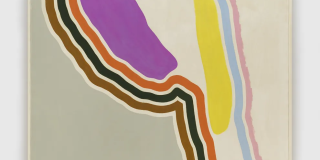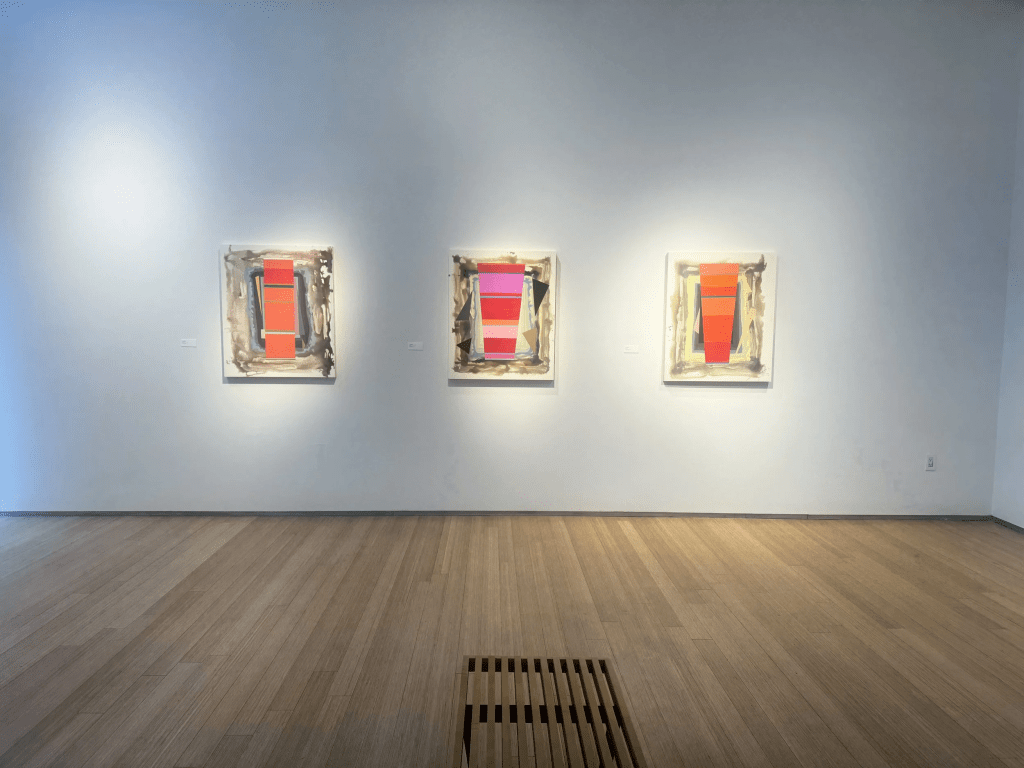
Contributed by Jonathan Stevenson / At Nancy Hoffman Gallery, Peter Plagens’ bracing new abstract paintings don’t so much as invite you in as dare you not to enter. Each canvas consists of three basic components: a painted frame of washy gray or brown; a pristinely rendered hard-edge shape, assertively opaque, centrally positioned, vertically symmetrical, and horizontally striated; and scattered, seemingly directional slashes. The second feature propels the paintings, but the other two steer them. The distinctly dilute vagueness of the frames might impart risk, the pesky shards impulse, and the vivid, intuitively color-coded ramps expansive fate – humble versions of Jacob’s Ladder, vouchsafing a future that need not be feared, at least distantly echoing one of Dave Hickey’s blithely peremptory and eminently arguable mantras: “Beauty is and always will be blue skies and open highway.”
Snappily evocative titles array the possibilities. You can read them as fey comments on the contingencies of a summer vacation or as more weighty contemplations of life and the hereafter. Either way, they are about getting on with it and keeping trepidation to a minimum. The gentler tropes – Slow Diver, Carnival in Pittsburgh, Hot Streak, Ice Cream, the presumably sardonic Lady Macbeth in a good mood – suggest portals voluntarily entered. The more forbidding ones – The Ice Age Returns, Winter Dusk, Cheer and Gloom, Fifth Column, Getting Colder, Liberation, most ominously Night Must Fall – intimate inescapable vortexes. The one construct is gentle, the other insistent. Both grab you. The play here is secularly casual and untragic. Plagens is angling not for existential dread or religious portent but rather for embracing life as it comes.

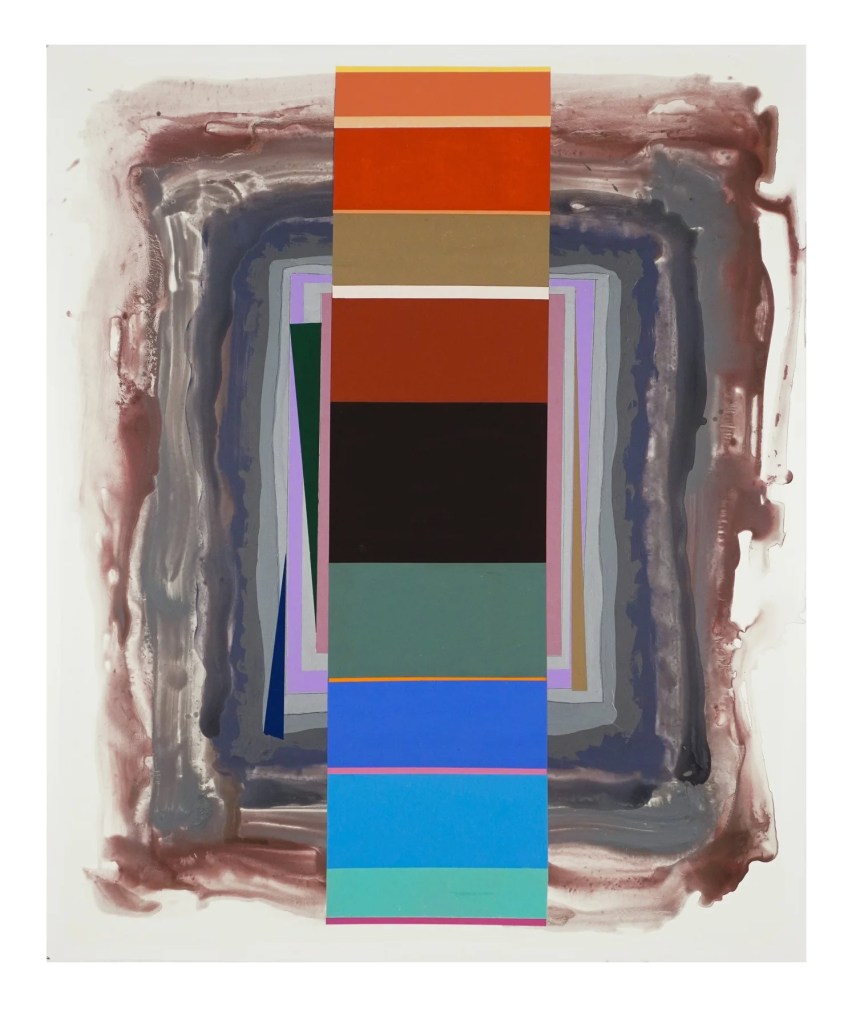
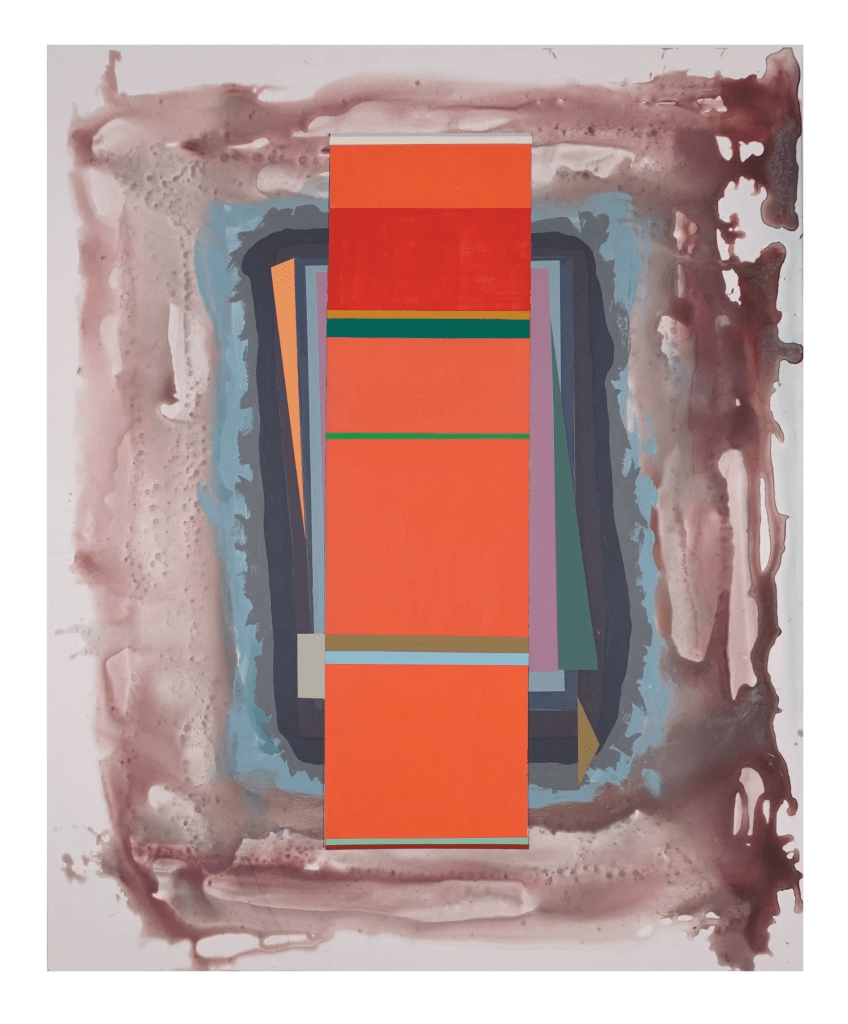
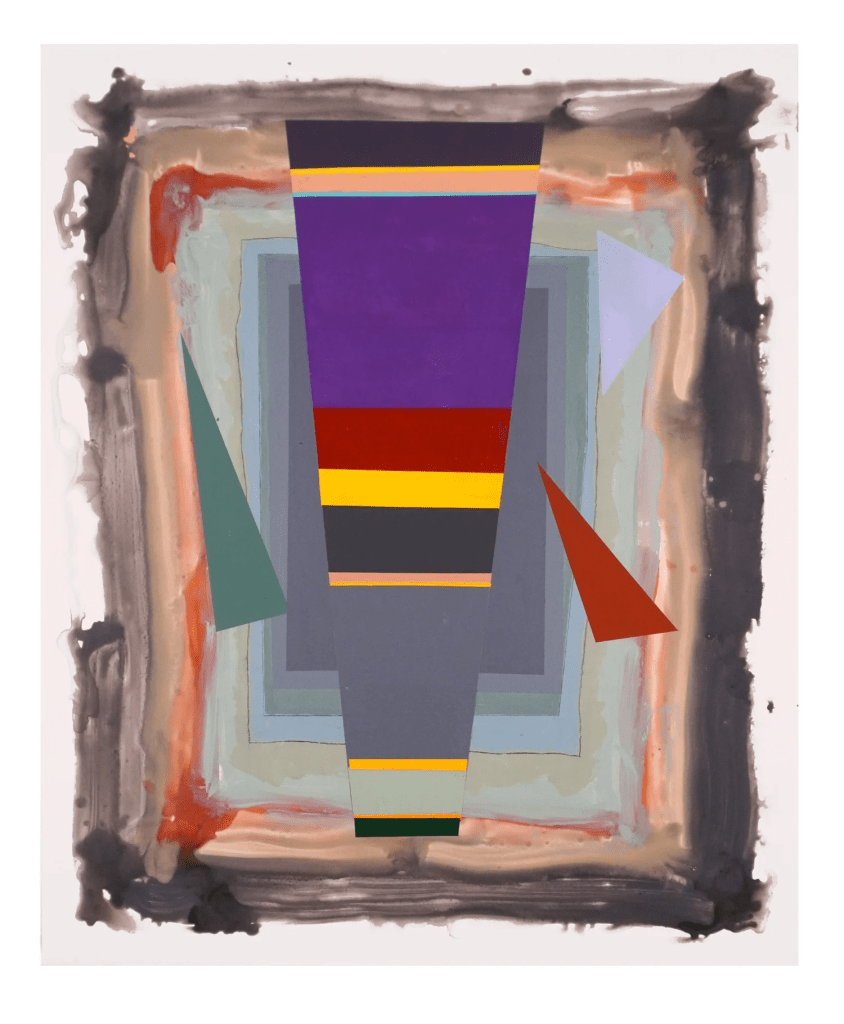
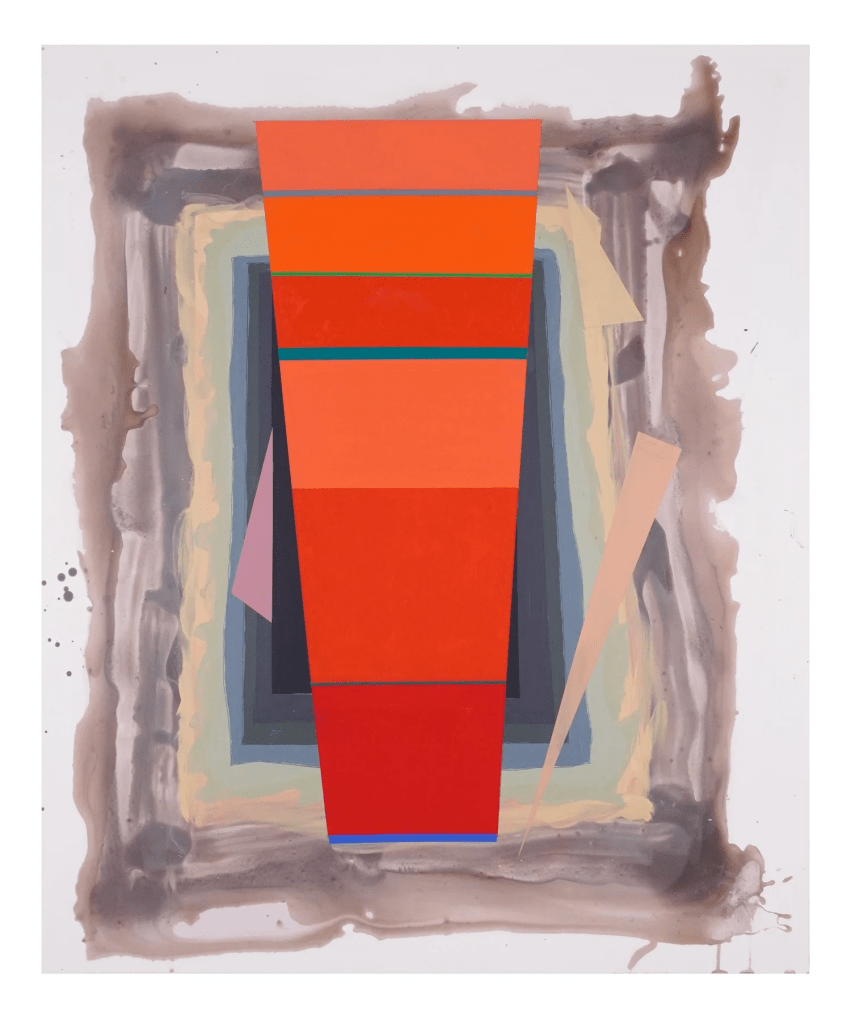
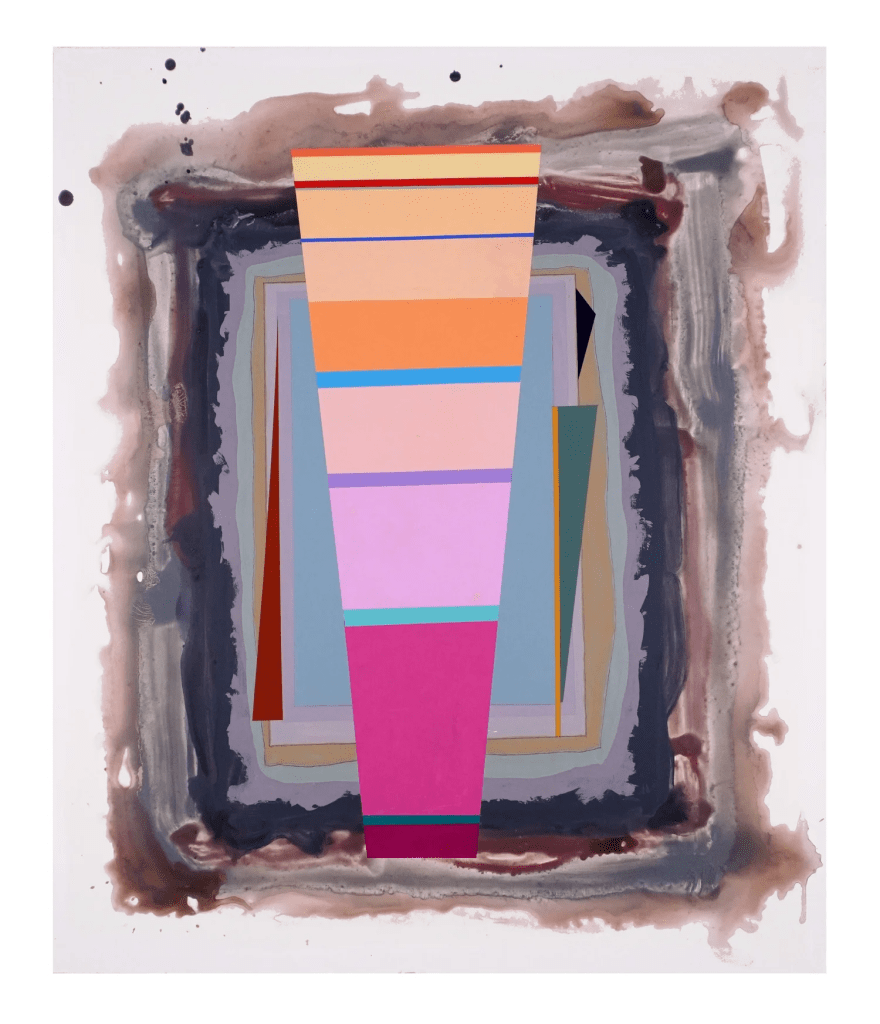
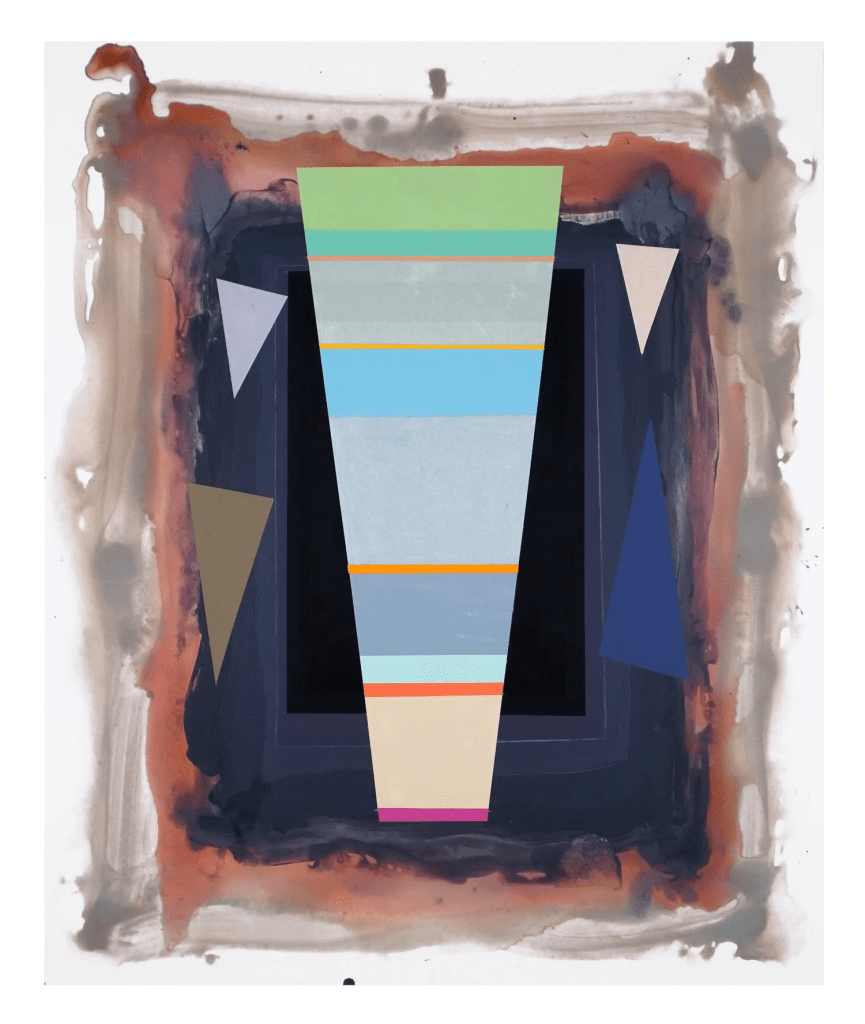
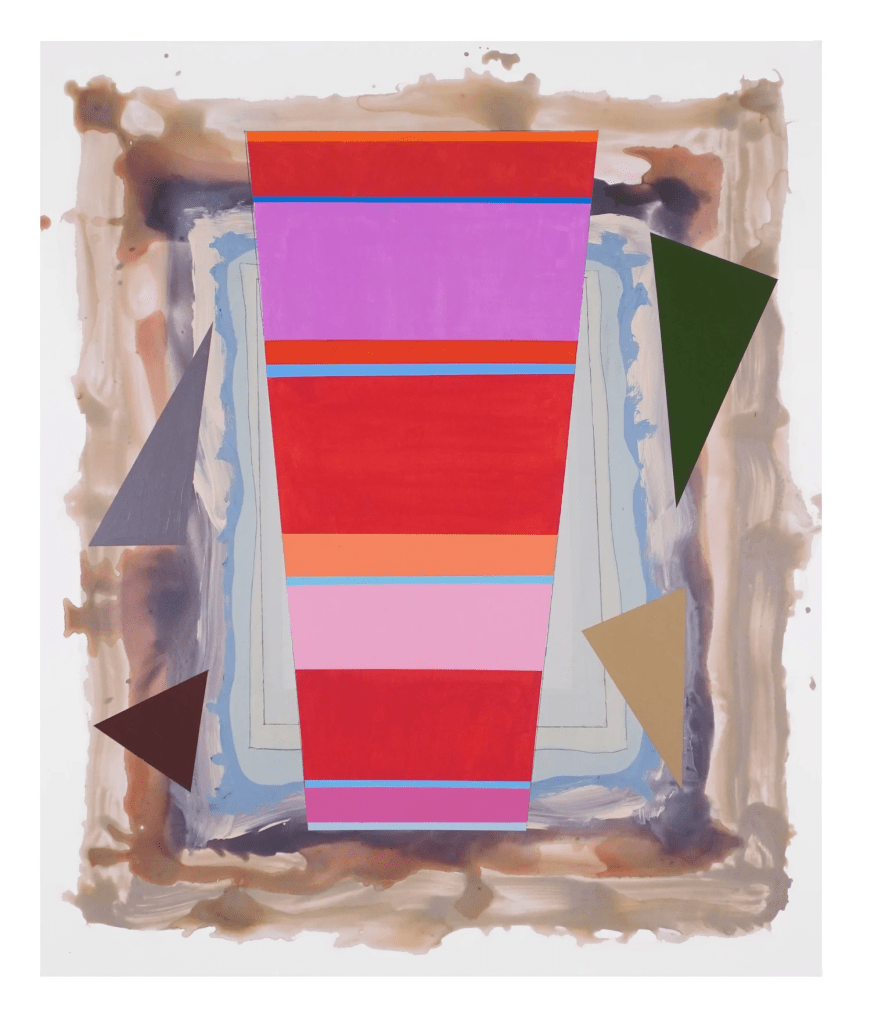
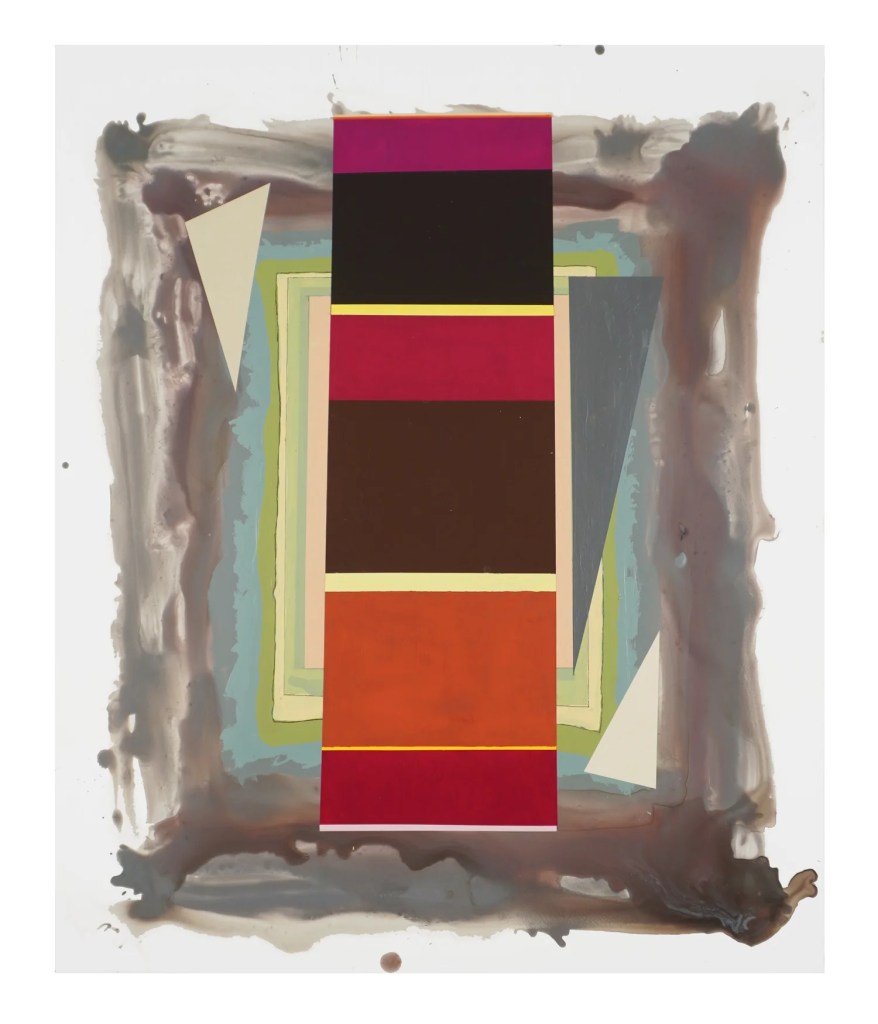
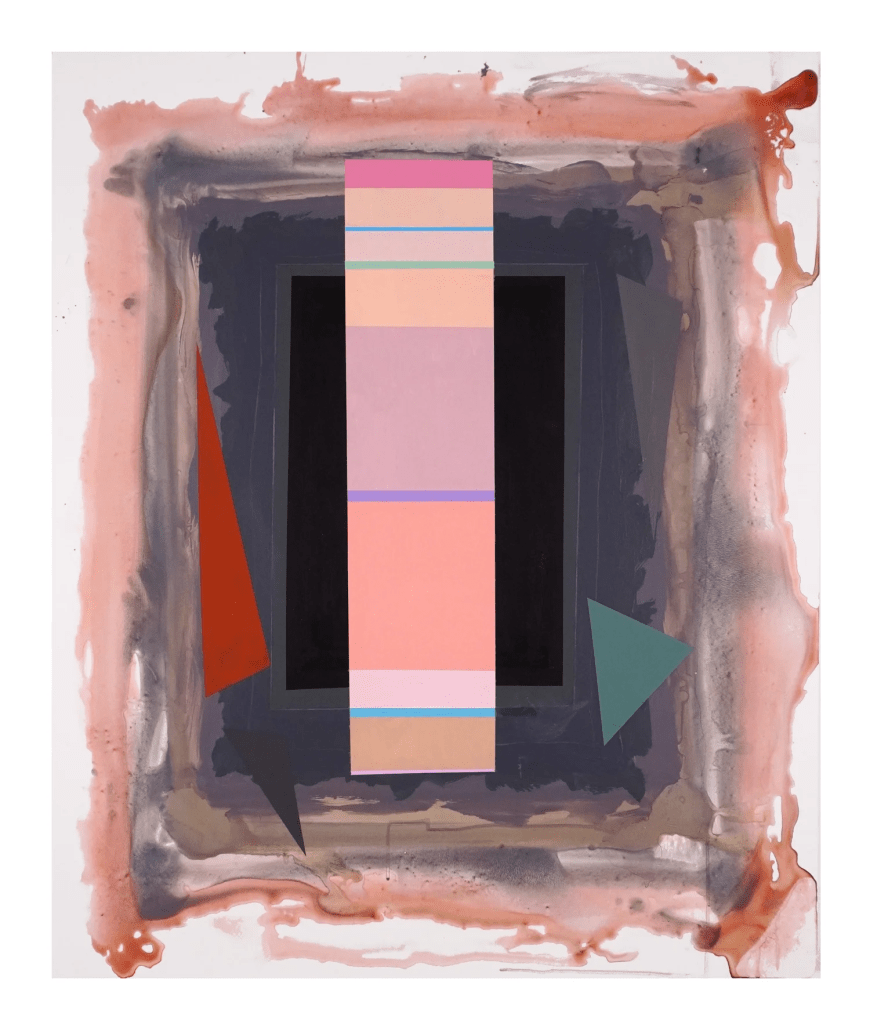
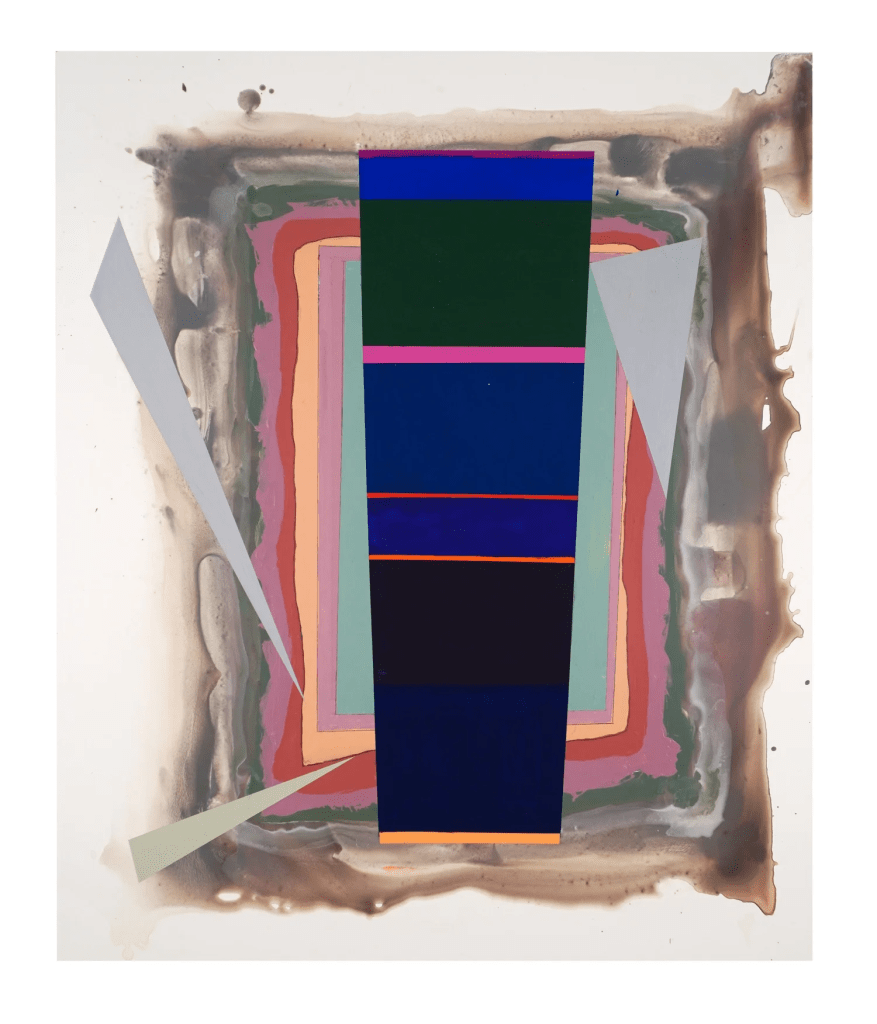
Though he is an esteemed art critic, an archly charming sagacity of age – he’s 85 – subdues pedantry or self-seriousness. The paintings are undeniably schematic, even formulaic, but the very obviousness of that characteristic largely neutralizes the observation as a criticism. And anyhow, thematic abstraction needs a gouge if viewers are to decipher it. Moreover, for an octogenarian painter to take on the impending unknown calls for vocational courage, and for him to do so free of palpable sanctimony or sentimentality takes formidable skill and wit. There are ways of swinging it with greater subtlety or more urgent passion. Gary Stephan’s new series of abstract paintings and Brice Marden’s final ones come respectively to mind. Plagens, for his part, demonstrates the virtue of the middle ground, distinguished by candid directness and a premium on catching the eye.
“Peter Plagens: New Paintings,” Nancy Hoffman Gallery, 520 West 27th Street, New York, NY. Through January 31, 2026.
About the author: Jonathan Stevenson is a New York-based policy analyst, editor, and writer, contributing to the New York Times, the New York Review of Books, and Politico, among other publications, and a regular contributor to Two Coats of Paint.