Author: Two Coats Staff

Ideas & Influences

Artist’s Notebook: Jim Condron

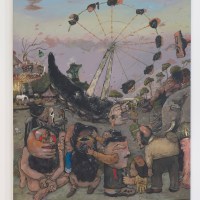
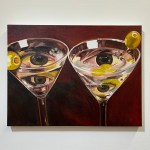
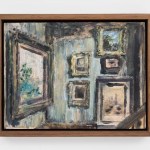
In addition to his regular practice of solitary drawing, painting, and sculpture, Jim Condron is working on a project that involves an array of other artists, writers, and thinkers. The pieces produced are on display in “Collected Things,” a solo exhibition at Art Cake, through June 17. On the occasion of this charming and poignant show, _Two Coats of Paint_ invited Condron to share some of the artists, objects, and ideas that inform his work. Here’s his list.

Solo Shows

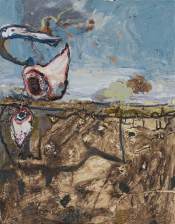
Seth Becker’s virtuoso weirdness

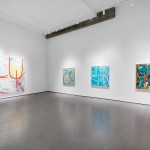
Contributed by Patrick Neal / There is a particular kind of thrill in trying to understand what is going on in Seth Becker’s paintings that involves separating what’s strange from what’s familiar. The subjects of his small oil paintings are peculiar, and so are the lenses through which he approaches a person, place, or thing. His solo show “Field Music” currently on view at Pamela Salisbury Gallery in Hudson, NY, occupying two floors and comprising around 40 small-scale oil paintings, embodies the painter’s slow-burn perversity.

Museum Exhibitions

Joan Brown: Endlessly inventive

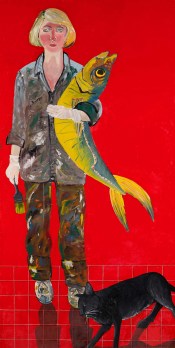
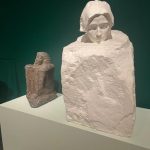
Contributed by David Carrier / Joan Brown’s retrospective at the Carnegie Museum of Art in Pittsburgh includes some 40 paintings, most of them large, and a couple of sculptures. The high, white-walled galleries on the top floor of the museum afford her paintings ample room to breathe.

Solo Shows

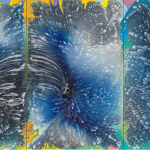
Tony Robbin: Art and the cosmos

Contributed by Chunbum Park / Tony Robbin – a scientist and computer programmer as well as an artist – has spent decades pursuing fundamental questions of the cosmos and human existence. His visually enchanting work, currently on view in his solo exhibition “HyperSpace: Line, Color, Form, Pattern” at David Richard Gallery, appears non-representational. But if reality is not merely what is commonly observed at human scale but also what is observable at the quantum and cosmological levels, the distinction between representational, abstract, and nonrepresentational art can get murky.

Solo Shows

Peter Halley: On the cusp

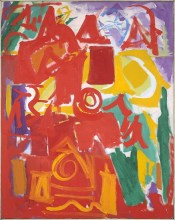
Contributed by Sharon Butler / Peter Halley’s catalogue raisonné needs to be updated. This month, a group of his paintings from 1980 and 1981 are on display in a gratifyingly revelatory two-gallery collaboration between Craig Starr on the Upper East Side and Karma in the East Village. Most of the paintings have rarely been shown, a few never, and I was delighted to see them, however belatedly.

Solo Shows

Chakaia Booker’s lyrical muscle

Contributed by Jonathan Stevenson / Making deeper sense of some abstract art past its initial visual impact can require extended consideration. Not so much Chakaia Booker’s sculpture, now on view in her solo show “Public Opinion” at David Nolan Gallery. Composed predominantly of exactingly configured pieces of black rubber tires along with wood and metal, the work immediately grips you like a confident advocate, calm and insistent. In Minimum Wage, a shovel entwined in flowing ribbons of rubber appears to struggle to do what it is supposed to do.
Solo Shows

Ethel Schwabacher: Canon-adjacent?

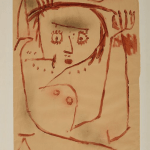
Contributed by David Carrier / Revisionist arguments about who should be counted among the artistic elite, whether they be old masters or modernists, provide essential stimulus in the art world. They proceed in an established manner. Some reasonably influential figure contends that a significant artist has been unjustly excluded from a particular art canon. Commentaries are published and shows organized making the case for supplementing it. The recent amendments to the predominantly white male Abstract Expressionist elite have proven especially tricky, as issues of gender and race enter the picture. Does Alma Thomas belong? Norman Lewis? What about Ethel Schwabacher? With “Woman in Nature (Paintings from the 1950s)”, Berry and Campbell argue energetically, though not entirely convincingly, that she deserves a place.

Solo Shows

Rita Ackermann’s alternative dimension

Contributed by Jeffrey Grunthaner / Currently on view at MASI Lugano in Lugano, Switzerland, Rita Ackermann’s solo show, “Hidden,” offers a rare melding of museum-oriented historicism with gallery-style directness. Occupying two cavernous rooms in the museum’s bottom floor, the exhibition comprises four bodies of work, ranging from early sketchbook collages prefiguring Ackermann’s iconic “nymph” paintings of the 1990s to more visceral canvases that explore erasure and disappearance. It culminates in three monumental paintings from Ackermann’s most recent series, War Drawings, which recall murals while also resembling magnified pages of an exploded notebook. 

Solo Shows

Ernst Caramelle: Look closely

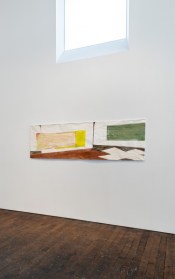
Contributed by Marjorie Welish / As faithful to his subject as he is charming in craft, Ernst Caramelle focuses his attention on the plane—the plane as protagonist undergoing trials, trials to test the caliber of its planarity. In his solo show of work on paper at Peter Freeman, Caramelle renders the plane within an architectural space intimate enough to suggest a room, yet generic enough also to indicate an artist’s studio as a site of theory.

Solo Shows

John Walker: Invisible dimensions

Contributed by Lisa Taliano / You need to be in front of a John Walker painting in order to get it. Its luminous qualities, the movement, scale, and touch of the brush carries us through the multiple layers and levels of reality shared and contained within and between us. The materiality of the paint works on our bodies directly. Seeing becomes feeling and sensing, understanding. Walker’s new work, now on view at Alexandre Gallery.

Group Shows

Bushwick: Cause-and-effect at M. David & Co.

Contributed by Jonathan Stevenson / Fifteen years ago, Jason Andrew was one of relatively few adventurous impresarios and gallerists who together established Bushwick as a New York art community and destination. For nearly five years, his project space Norte Maar was a steady source of the neighborhood’s sublime, funky buzz of possibility for aspiring, often young, artists. Andrew and Norte Maar have moved on, but he has not forgotten Bushwick. After a ten-year absence, he has returned to curate the relentlessly energetic and eclectic group show “Causality” at M. David & Co.

Solo Shows

Tom McGlynn: Meta-minimalist-abstraction

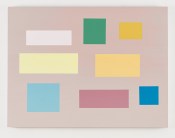
Contributed by Adam Simon / At first glance, Tom McGlynn’s paintings, on display at his solo show “What Gives” at Rick Wester Fine Art, seem to be examples of minimalist abstraction, free of narrative, subject, or anything associative. His arrangements of rectangles of solid color on a monochromatic field evoke modernism’s utopian origins: Mondrian, Van Doesburg, De Stijl, Neo-plasticism, painting purged of anything that could be thought extraneous. For contemporary abstract painters, however, these basic shapes are historically weighted signifiers, no longer free of association. One cannot now make a geometric abstract painting without it also being a depiction of a geometric abstract painting. McGlynn is fully aware of this doubling. For him, it isn’t a quandary as much as a defining characteristic of his work. What is remarkable is that, out of such seemingly depleted soil, he can conjure such visual richness.