and pastel on cradled wood panel, 36 x 24 inches
Contributed by Bill Arning / The recent tsunami of tributes to David Hockney across social media reminded us of a not-so-distant moment when the critical establishment viewed figurative art as an anti-modernist, retrograde tendency, embraced largely by gay male curators and dealers for suspect reasons. Depictions of attractive men inhabiting beautiful environments seemed worlds away from the philosophically rigorous provocations that defined avant-garde art. Alongside earlier painters such as Paul Cadmus and George Tooker, however, Hockney sustained and expanded a devoted audience that never especially cared whether his work was critically defensible. In the long tides of art history, their advocates appear to be prevailing. We are in the midst of a decade-long boom in gay figurative painting. Artists such as Doron Langberg and Louis Fratino enjoy the support of major curators, critics, and collectors. Their success has become so pronounced that younger painters working in related modes have managed to build careers partly because some collectors can no longer afford Fratinos and instead seek out lesser-known artists whose work manifests a similar sensibility.
Yet the dominance of this style has also generated backlash. Much of it centers on the perception that only the affluent can access the lives depicted in the paintings. Comments at openings such as, “I just can’t look at another painting by a hot young artist showing off a dreamy life in Fire Island Pines” are all too familiar – “hot” referring to both the bronzed, gym-sculpted bodies on display and the artists’ meteoric careers. The field has become crowded enough that it now seems nearly impossible for a young gay painter, even one emerging from a prestigious MFA program, to develop a genuinely distinctive visual language. That is why David Fix, Jr.’s first solo exhibition, “The Cusp of Magic” at The Fireplace Project, is such a welcome surprise. While his basic strategy – extracting imagery from family photographs and personal history – shares some ground with Langberg, Fratino, and others, his subject matter and materially inventive surfaces are quite novel.
on cradled wood panel, 18 x 24 inches
on cradled wood panel, 30 x 24 inches
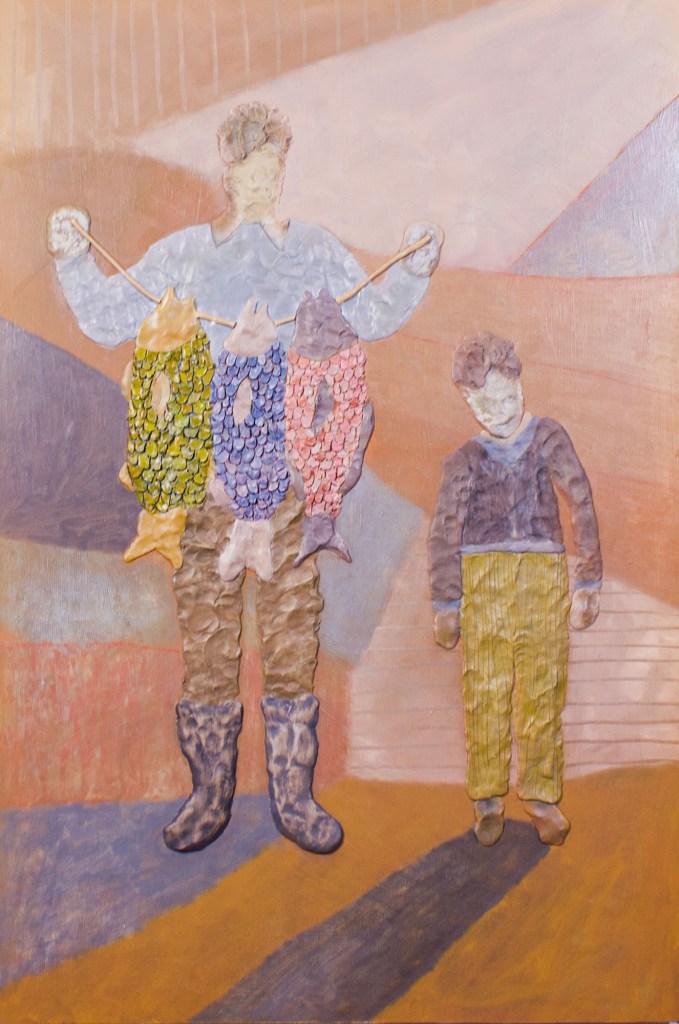
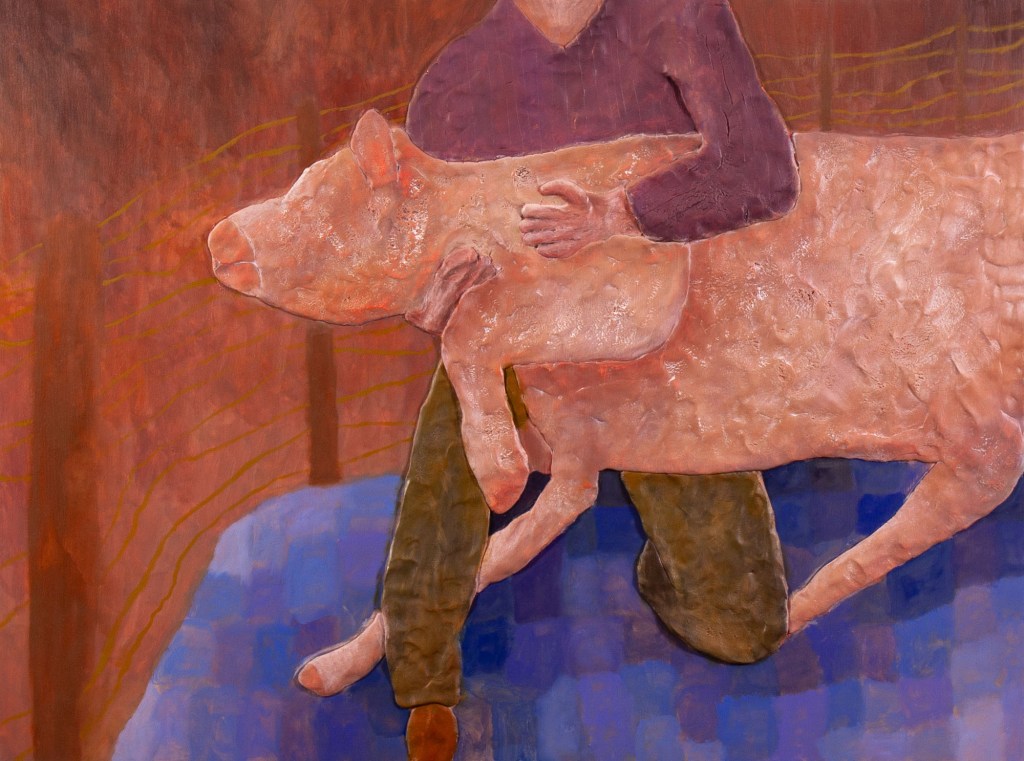
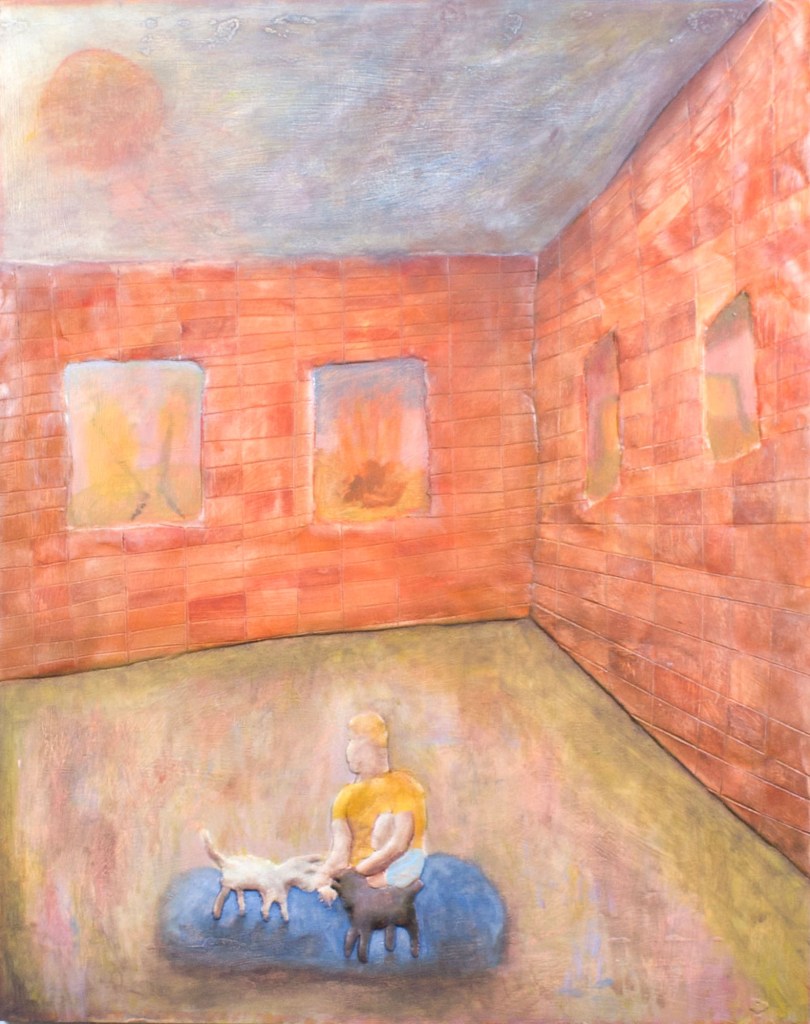
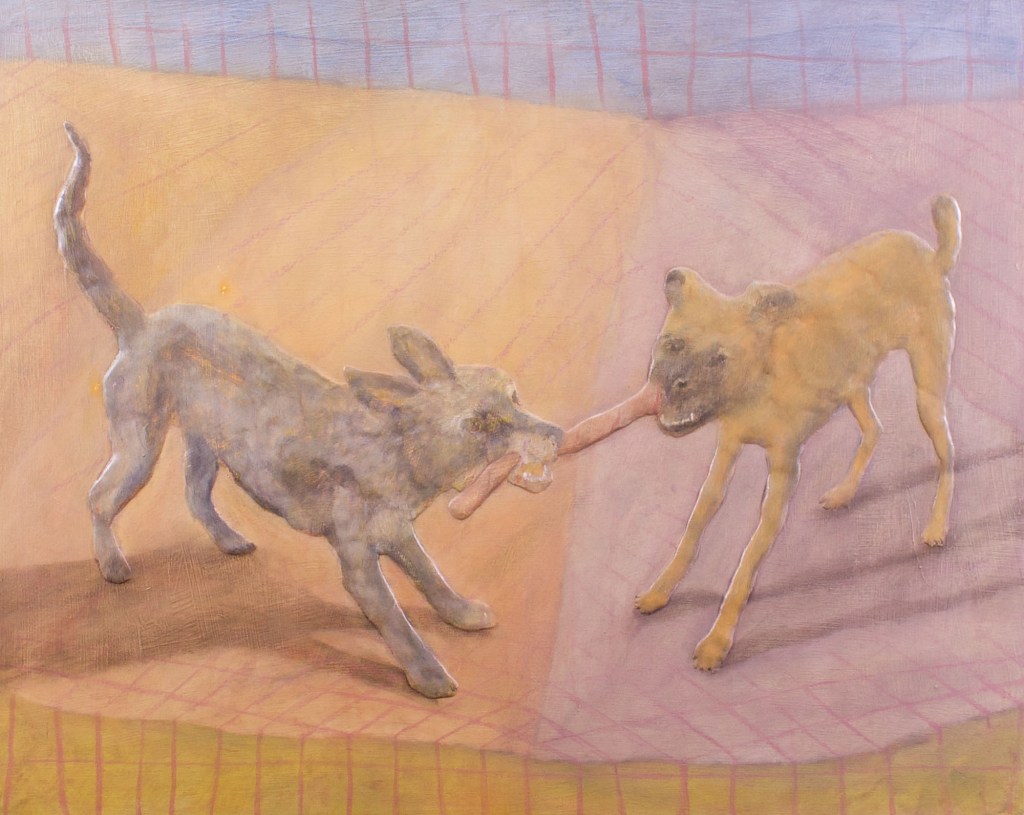
Fix’s image world is decidedly anti-fabulous. Rather than feasting on cosmopolitan glamour, the artist, now 27, returned home to help on his family’s multigenerational peach and apple farm. Though not geographically far from Hudson, where celebrities and cultural tastemakers stroll Warren Street, the farm feels conceptually distant. Each painting seems to contain the seed of a short story. Many derive from a family photo album he found back home. The children pictured belong to his grandparents’ generation, but the work is more about reintegration than nostalgia. The figures become surrogates through which the artist explores what it means to return to a family and a place after years away. In August Waders, an adult proudly displays three fish strung on a line while a boy stands beside him, partially eclipsed by the older man’s prowess. The fish are rendered at an exaggerated scale, their surfaces glittering like jewels. This might be the moment the child realizes he will never match the adult and begins imagining another life elsewhere. In Breaking Stable, a man cradles a calf with pronounced tenderness. Fix appears to be reacquainting himself with the rhythms of farm life and the intimate responsibilities that come with it. Animals populate nearly every painting and demand to be understood on their own terms.
on cradled wood panel, 16 x 20 inches
on cradled wood panel, 20 x 16 inches
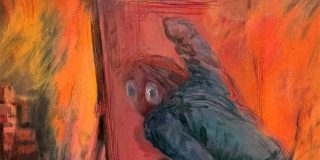
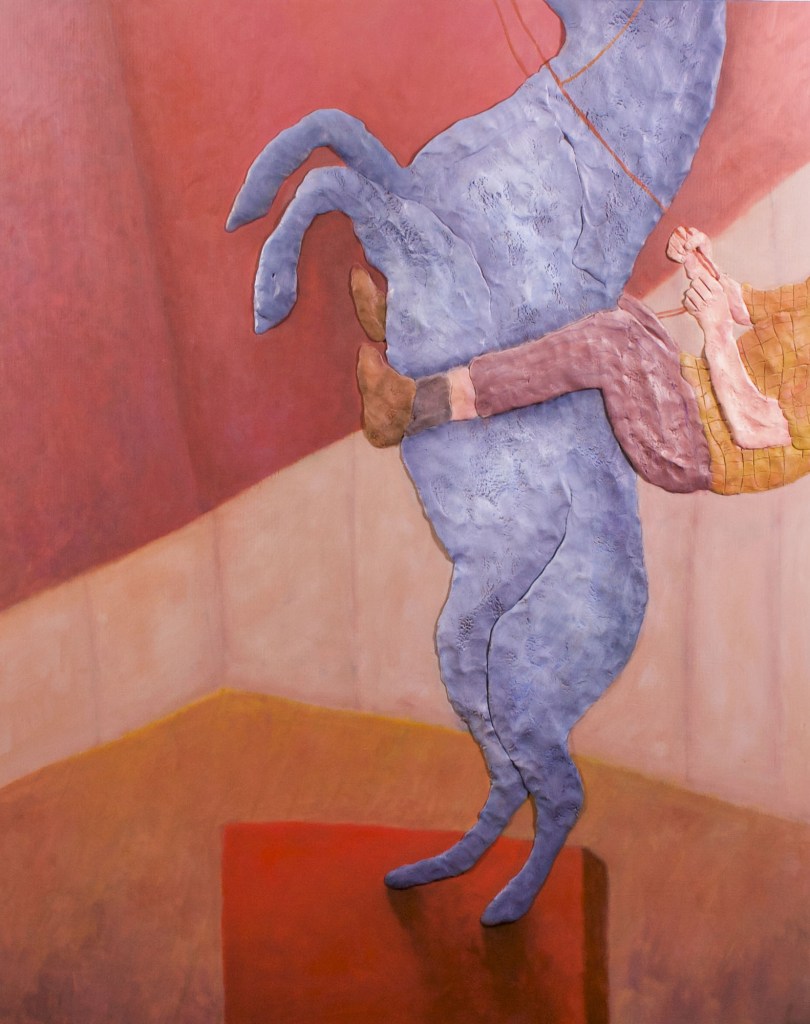
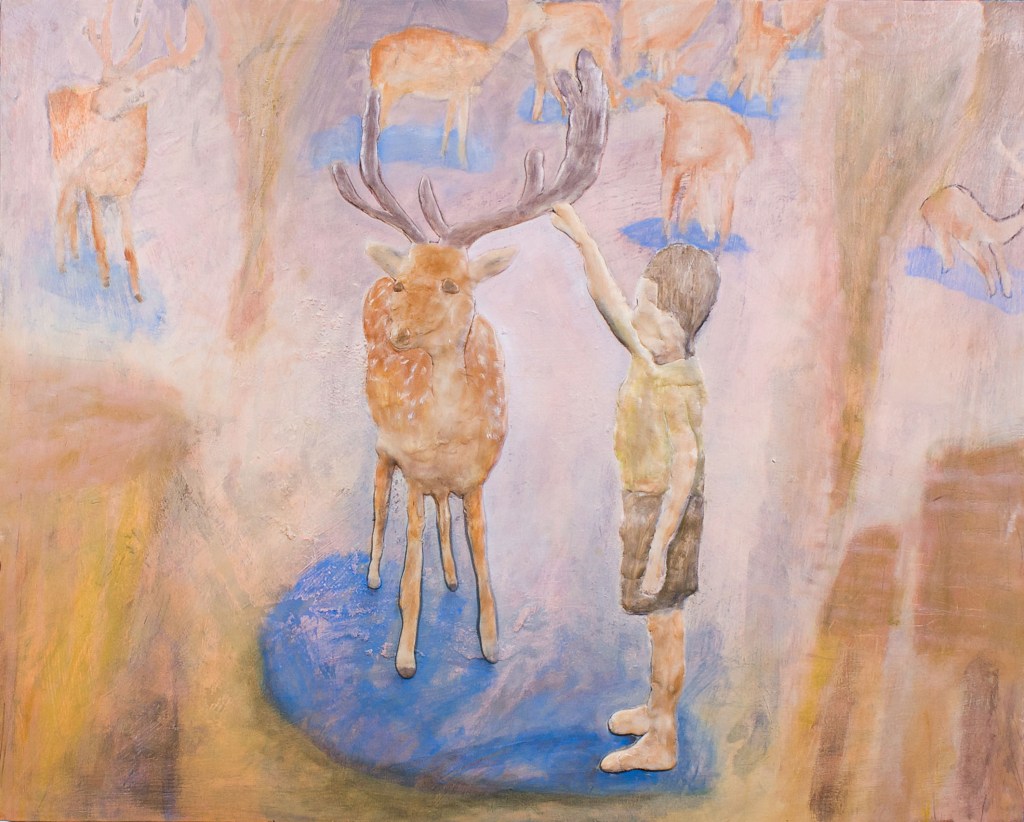
Fix relishes compositional awkwardness. In Ancestry of a Feeling, a child appears to be tumbling from a horse, yet neither rider nor animal shows any sign of distress. Instead, both seem suspended in a peculiar equilibrium atop a bright red form resembling a circus pedestal. Is the fall real, or merely a trick of perspective? Because the child’s face is hidden, we have no way of knowing. A child protagonist also inhabits Truce, where he cautiously approaches a small reindeer. Reaching to its fuzzy antlers, he seems uncertain whether a connection has been established. The encounter is tentative, almost ceremonial, embodying the uncertainty that accompanies all acts of approach – towards animals, family members, or one’s own past.
The exhibition’s title refers to the cusp between Gemini and Cancer, around June 19 through June 23. Those born in that span are said to combine Gemini’s intellectual curiosity with Cancer’s emotional sensitivity. Astrology aside, the phrase captures something essential about these paintings. They are observant and analytical yet also suffused with feeling and intuition. The exhibition opened during the long, luminous days surrounding the summer solstice, a period traditionally associated with abundance and possibility. Yet beneath the sunlit surfaces runs a current of unease. In literature and film, returning home often arises from disappointment, loss, or uncertainty, which hover here. At the same time, Fix’s embrace of farm life encapsulates a broader cultural shift. Increasing numbers of young people are turning towards pastoral pursuits, seeking forms of meaning grounded in land, labor, and family continuity. For Fix, returning to the farm is not a retreat from creativity but a means of personal reconnection.
on cradled wood panel, 24 x 30 inches
“David Fix, Jr.: The Cusp of Magic,” The Fireplace Project, 435 Warren Street, Hudson NY. Through July 12, 2026.
About the author: Bill Arning is a curator, critic, advisor, writer, and itinerant maker of pop-up shows based in Old Chatham, New York.