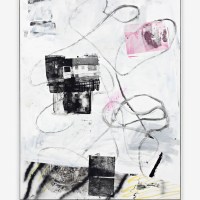
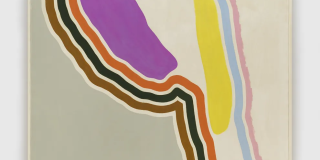
Contributed by Becky Brown / Living through a changing zeitgeist is a trip. Now into my forties, I see that conditions, styles and ideas that loomed as colossal in one moment can fade into obscurity in the next. My parents are octogenarians in the art world, and they’ve told me artistic and theoretical trends are always cycling; now I’m seeing it happen. When the essays on “Provisional Painting,” “New Casualism,” and “Zombie Formalism” emerged, I was in the throes and early aftermath of a graduate degree in painting from Hunter College. Like many, I thought they articulated something I was seeing and feeling but hadn’t yet named. I did not imagine that within a few years, abstraction would be on the margins of contemporary painting, with figuration taking center stage. Was this backlash related to those critiques or just part of a natural cycle?
Tag: Jerry Saltz
How the term “zombie formalism” killed the next generation
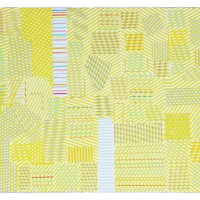
Contributed by Sharon Butler / In 2014, a single phrase reshaped the trajectory of contemporary abstract painting. When the late Walter Robinson – painter, critic, and veteran of the Pictures Generation – coined the derogatory term “zombie formalism” in an essay for Artspace, he set off a chain reaction that would stigmatize a generation of young abstract artists and cast a long shadow over abstraction in general. More than a decade later, the story of zombie formalism reads as a pungent example of aesthetic cynicism and jadedness – a case study in how criticism, commerce, and cultural anxiety can converge to distort and ultimately damage an entire movement.
palladium/Athena Project: Democratizing art
Contributed by Mary Shah / Greg Lindquist and Theresa Dadezzio, co-founders of palladium/Athena Project, just opened their inaugural show, “Works on Paper,” featuring an impressive 175+ artists at their new curatorial space in Greenpoint, Brooklyn. I sat down and talked with Theresa and Greg about the project.
Who’s afraid of the big bad idiot?
Contributed by Jacob Patrick Brooks / In “The Art Critics Who Don’t Want Good Art,” Anna Gregor describes a cultural hospice. The caretakers are a set of bad actors. They’re online critics who have replaced the labor of criticism with the catharsis of complaint, trading in “likes and clicks” for a smooth, sugary candy that requires only passivity and attention from its audience while it rots their teeth. This feedback loop, she argues, drowns true engagement and criticism in a “deluge of mediocre art.” It is a compelling diagnosis, but one delivered from the one place a critic cannot afford to be: behind a veil. Gregor deals exclusively in archetypes and generalizations while allowing the reader to “fill in the picture.” The playboi, the intellectualist, the yelper, and so on. She’s built a perfect haunted house and populated it with ghosts of her own making.
Jerry Saltz’s special request
In 1991 I was the only woman in my graduate school class, so I have an inkling of what Mia Westerlund Roosen must have felt […]
Holiday shopping guide: Buy art for everyone, even small children
In New York, facebooking Jerry Saltz reports that the last time money left the art world, intrepid types maxed out their credit cards and opened […]
The art world’s downmarket retreat
Last year, my first article published in The Brooklyn Rail examined how an impending art market “correction” might affect artists. “In a fairly typical scenario, […]
Why doesn’t activist art reflect our complex reality?
In New York, Jerry Saltz suggests that activist artists like Martha Rosler should stop recycling the well-worn tropes from the 1960s, move beyond the simplistic […]
Wendy White: One more day
Tomorrow is the last day to see Wendy White’s show at Leo Koenig, Inc.–my apologies for not posting it sooner. White’s loud abstract language alludes […]
Shafrazi uses two coats of paint
I’d be a negligent blogger if I didn’t applaud Jerry Saltz’s fabulous article title in this week’s New York,”Two Coats of Painting.” Saltz writes that […]
Saltz your enthusiasm
On Monday, Cara Ober attended a Jerry Saltz lecture at MICA , and has posted the highlights at Bmoreart. “More like an episode of �Curb […]
“A No Paintings Biennial would’ve at least made everyone hysterical”
Jerry Saltz writes that the Whitney Biennial curators obviously have eyes for installation, sculpture, and video only. “There are 81 artists in this show, only […]
Saltz: Old is gold
In New York, Jerry Saltz writes that the art market bubble has enabled long-overlooked but hard-working artists to move a little closer to the limelight. […]
Saltz asks: What’s MoMA’s problem with women?
In New York Magazine, Jerry Saltz asks why there isn’t more women’s work hanging in MoMA’s recently reshuffled permanent collection. “Not to sound like a […]
Ofili shows us the long journey, the big picture
“Chris Ofili,” David Zwirner, New York, NY. Through November 3. This is Ofili’s first NY solo show since The Holy Virgin Mary came to the […]
Steve Parrino’s sex and death paintings
Steve Parrino, Gagosian Gallery, New York, NY. Through Nov. 3. Gagosian presents Steve Parrino’s paintings, drawings and sculpture. Parrino died in a New Year’s morning […]
Amy Sillman’s “Suitors & Strangers” in Houston
“Amy Sillman: Suitors & Strangers,” organized by Claudia Schmuckli. Blaffer Gallery, The Art Museum of the University of Houston, Houston, TX. Through Nov. 10. Ulrich […]
Last chance: “What is Painting?” at MOMA
“What Is Painting?” curated by Anne Umland. The Museum of Modern Art, New York, NY. Through September 17. Read updated excerpts and follow links to […]
The critics respond: What is painting?
‘What Is Painting?” curated by Anne Umland. The Museum of Modern Art, New York, NY. Through September 17 In New York Magazine Jerry Saltz writes […]
The superslick, super-flat, superexpensive paintings of Takashi Murakami
Jerry Saltz reviews the show in New York Magazine. “The main attractions of this exhibition are 50 little happy-faced flower paintings and six large portraits […]