
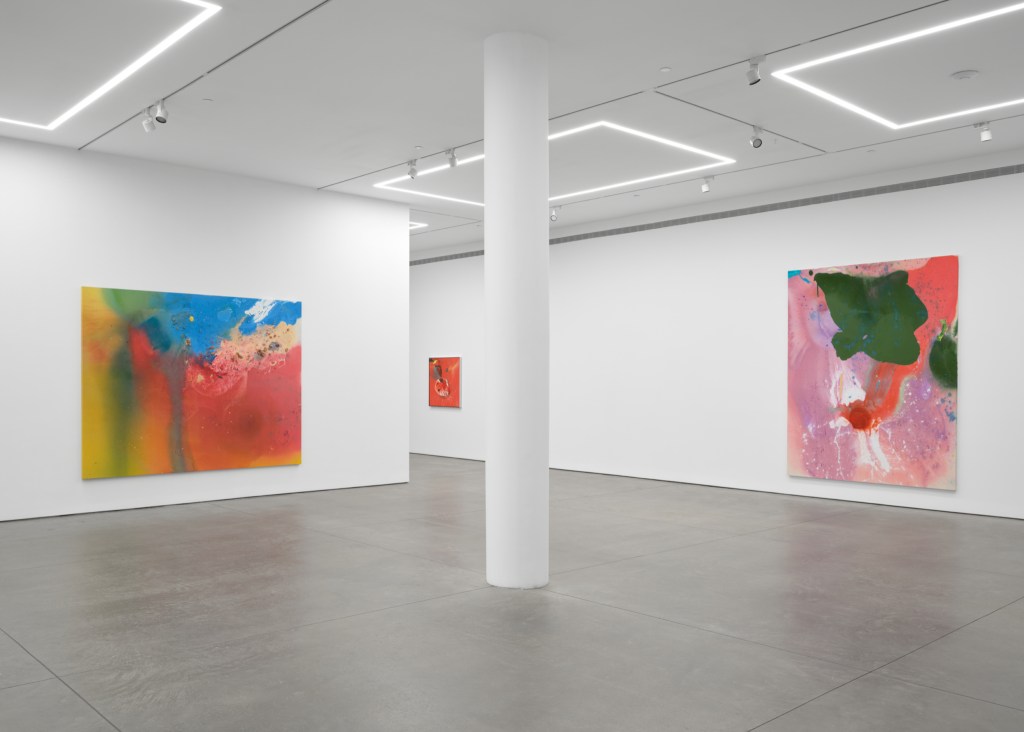
Contributed by David Rhodes / In Peter Bradley’s third solo exhibition with Karma, all the paintings are from the previous 12 months, ranging in size from 36 inches square to 104 x 82 inches. They feature a thrilling abundance of color and paint, reaching the senses of both sight and touch. The regularity of the dimensions and emphasis on the square to rectangle format sharpens the comparative extremes within each painting. Lean, empty areas sometimes transition slowly, sometimes abruptly. Anomalous space – that is, pictorial space played off against real surface, canvas and paint – is always synchronous and flowing.
Pouring, spraying, splattering, and pooling acrylic paint on canvas from a roll, laid out horizontally on the floor are by now familiar technical means of painting, and Bradley employs them. Yet his work remains extraordinary, uncanny, and surprising. He has a gift for finding a process that coincides precisely with his abilities and desires as a painter and a person, marshaling chance as well as remarkable virtuosity. The results are pleasure and provocation in roughly equal measure. Like Gerhard Richter, Bradley takes risks to evolve as an artist and to achieve beauty.

Bradley and Richter have noted the correspondence between music and color, listening to Miles Davis or Bach as they paint. In Bye Bye Blackbird, of the same title as a famous Davis tune, a typically unpredictable facture circulates and punctuates both the physical canvas and the picture plane, in and around this surface. This affords the canvas itself a modest but active role in achieving the painting’s visual effect, as in the work of Matisse and Picasso. From the white pour, reabsorbed by rivulets that repeat the red of the ground color and the cadmium yellow fragment in the top left quadrant, the eye moves like a hand, encountering smoothness and grit alike.
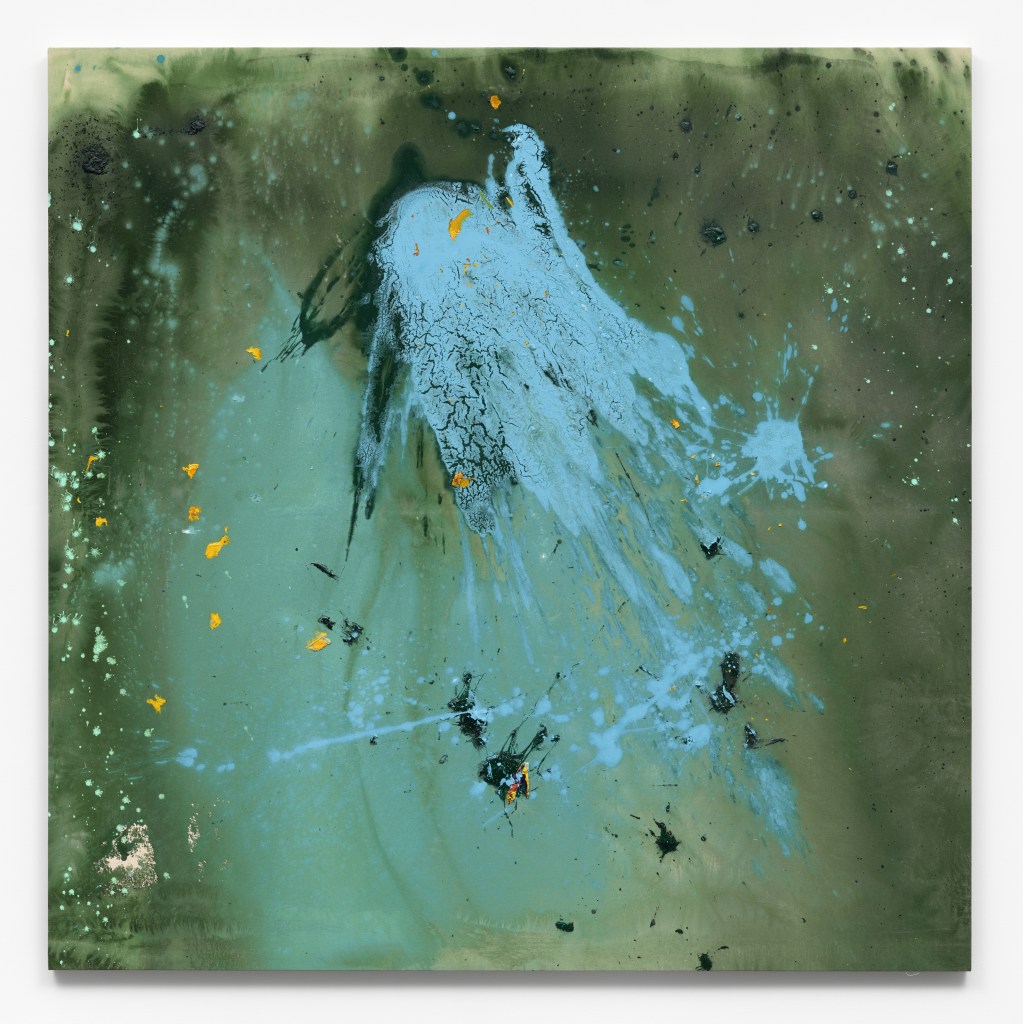
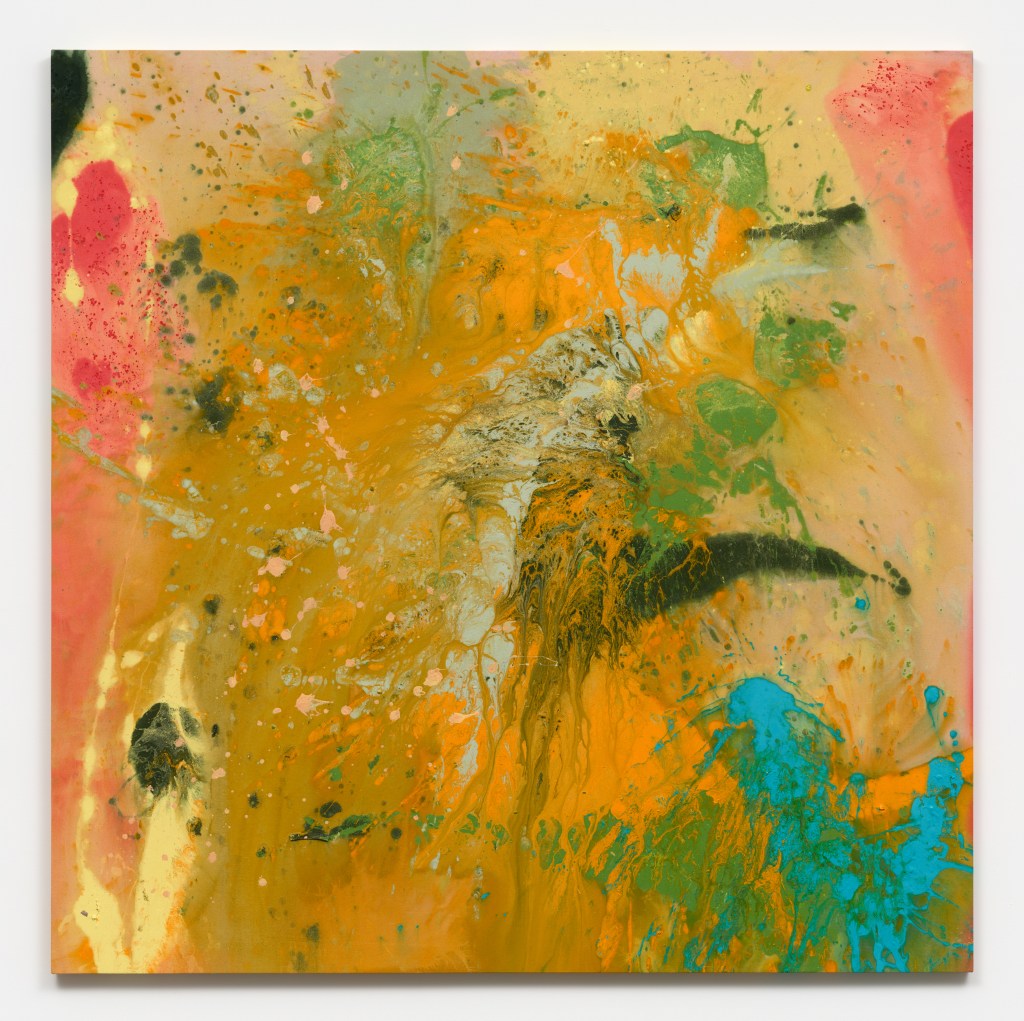
In Callisto, almost twice as large, acrylic and pumice are combined in a field of intense, stained, and thrown reds, yellows, turquoise, and green. In Greek mythology, Callisto is an arcadian nymph and follower of the goddess Artemis, renowned for her beauty. The painting harnesses variable tactility and enveloping color to convey mercurial characteristics, dramatic contrasts, and celestial beauty from a distance or close up.
Translating an art work’s affect into language has preoccupied philosophers and critics from Aristotle’s time to the present. The endeavor continues – I would say, at least with respect to abstract painting, largely in vain. Like music, paintings such as Bradley’s return us to a direct experience of the color, rhythm, and surface of the world.
“Peter Bradley: Burning On,” Karma, 549 West 26th Street, New York, NY. Through August 28, 2026.
About the author: David Rhodes is an artist and writer living and working in New York City.








I was glad to encounter this beautiful work and show. Agree that Bradley fully knows how to parlay his gifts. Agree too that familiar means were nonetheless used to create work that is “extraordinary, uncanny, and surprising”.