Contributed by Bill Arning / Philadelphia is having a moment as a city where artists can still afford to live and work. In an essay for the journal October, conceptual sculptor Josh Kline argued exhaustively that anyone hoping to sustain a creative life should give up on paying New York rents and move to Philly. It was a provocative suggestion. Philadelphia is close enough to Tribeca to spend an evening at an opening there and still be home in time to walk the dog, and the city offers teaching jobs and a far lower cost of living. The online debate was revealing: many commentators preferred the romance of sharing an apartment in Ridgewood to easy access to the Liberty Bell, Marcel Duchamp, and cheesesteaks.
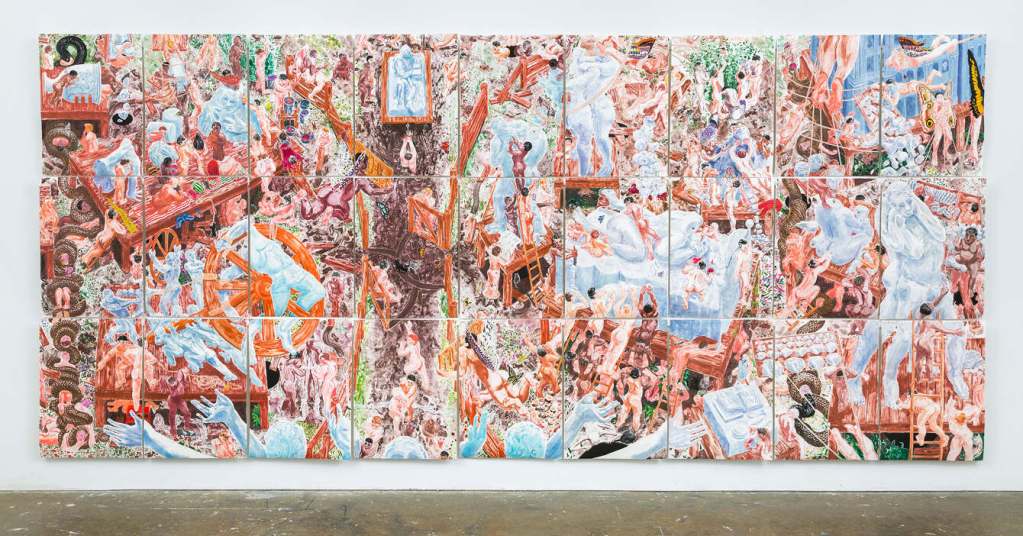
This year’s NADA New York featured guest curator Anthony Elms, whose years at Philadelphia’s Institute of Contemporary Art informed a presentation of some of the city’s strongest artists. One standout was Todd Stong, by way of his ambitious installation for Big Ramp, an artist-run space. Stong constructed a 22-foot-long, 10-foot-high wraparound painting from modular monoprints on paper, titling the piece The Johann Winckelmann Sculpture Park, based on research that focused on the eponymous figure, a gay archeologist and pioneer of art history, conducted during a year in Rome sponsored by Philadelphia’s Tyler School of Art.
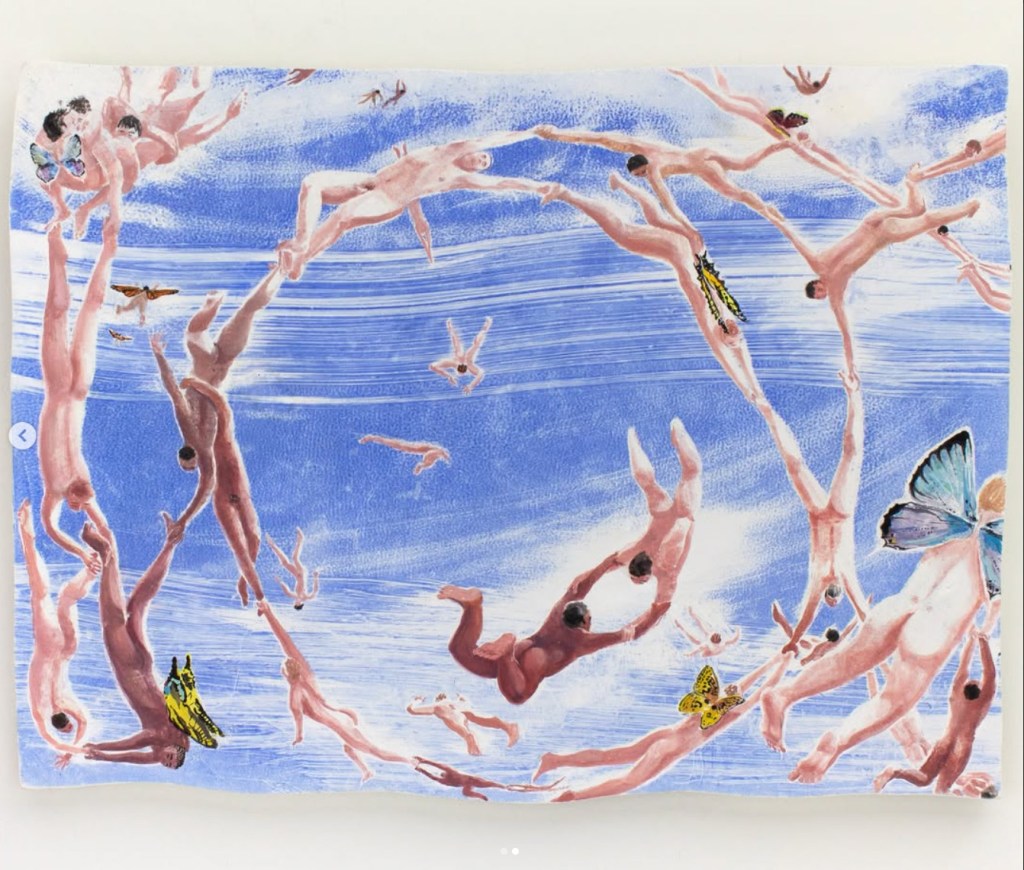
on plaster reinforced with burlap, 7.5 x 10.25 inches
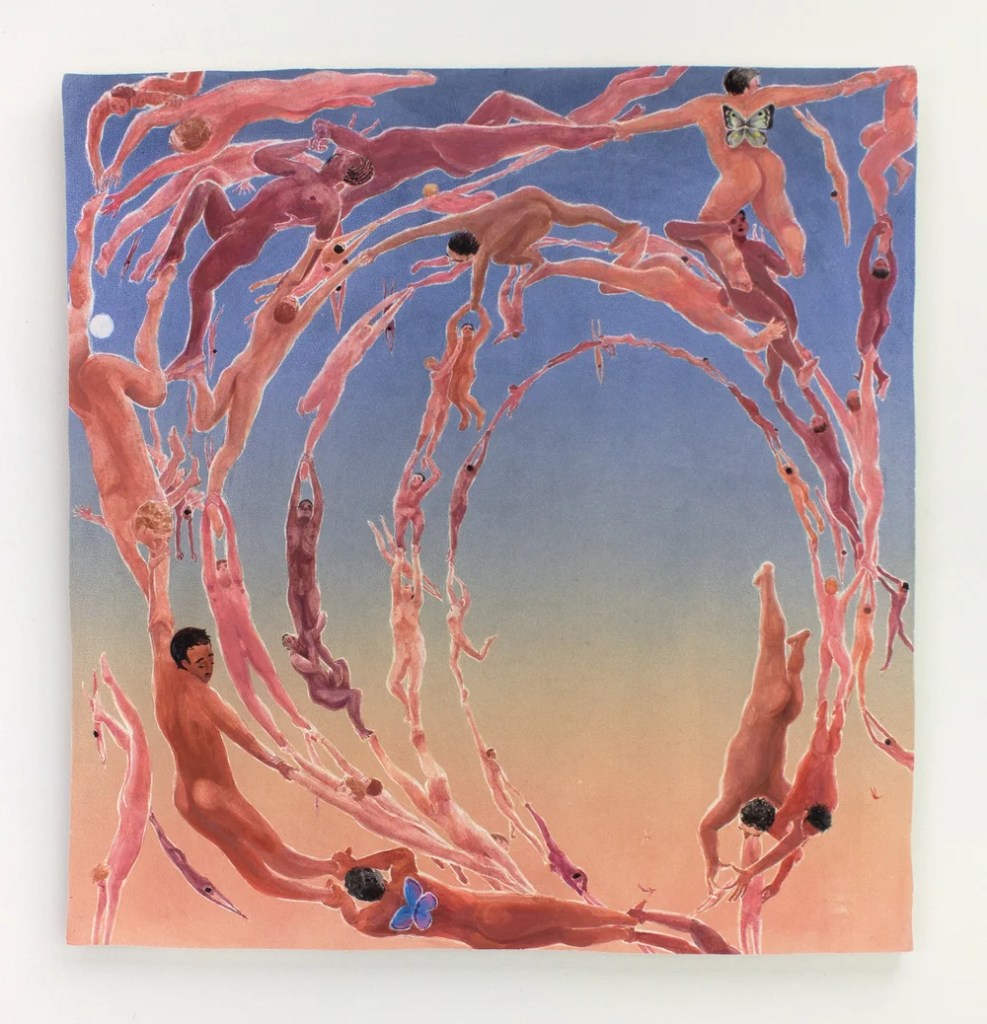
on plaster reinforced with burlap, 11.365 x 10.75 inches
The work was at first glance highly sensual, featuring dozens of entwined nude male bodies. Any eroticism quickly gave way to horror, as Stong centered the installation on two murders. Winckelmann was killed by his Italian lover, who assumed he would escape justice because his victim was a man of humble origins and “no importance.” At the opposite end of the social hierarchy, Frederick the Great’s young male lover was executed for sodomy by Frederick’s father, who forced his son to witness the beheading. Strong wove together eroticism, violence, class, and the uneasy protection that education and culture sometimes afforded privileged gay men.
The NADA installation left many wondering where they could see more of Stong’s work. Headstone Gallery in Kingston now provides the answer with his knockout follow-up solo show “This World May Never Change.” While the NADA piece was museum-scaled, these smaller works are no less ambitious. A dozen intimate reliefs, made with etching ink and gouache on burlap-reinforced plaster, resemble fragments of ancient frescoes, their playful homoerotic reveries suggesting the kind of archaeological evidence Winckelmann himself would have treasured. Stong also paints on ceramic vessels, turning scholarly obsessions into intriguing objects.
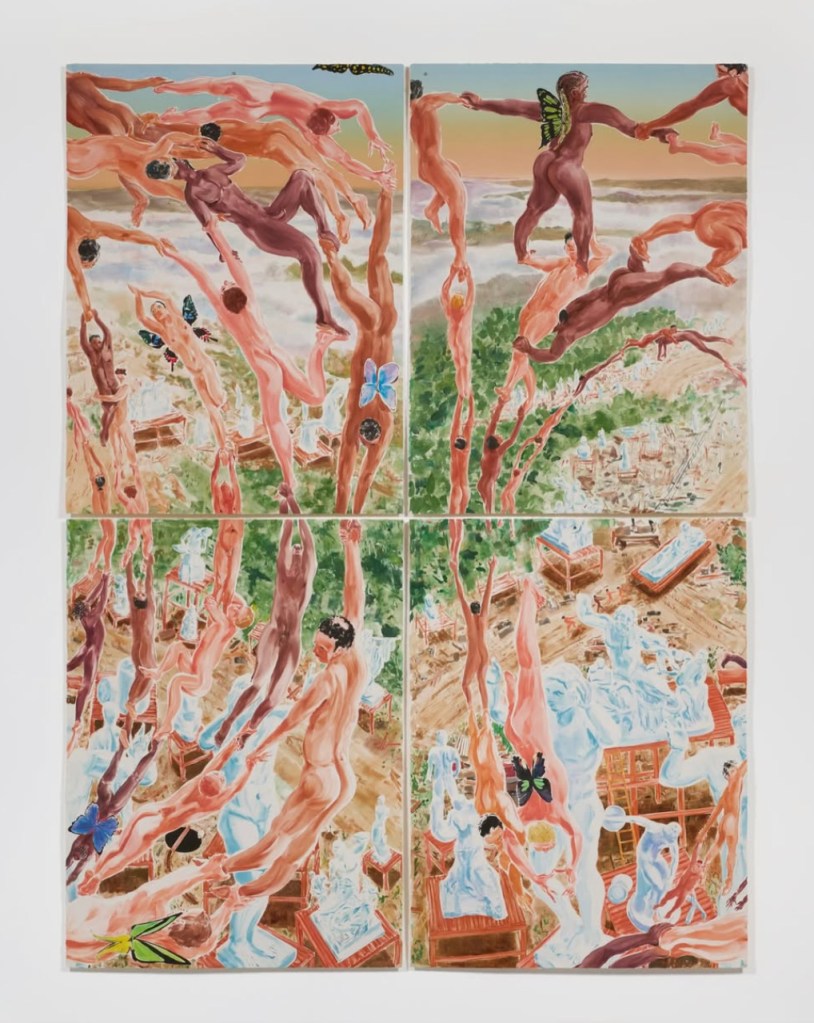
The show’s most compelling works are four-panel monoprints through which Stong revels in the strangeness of art history. In Airborne, he juxtaposes the Baroque illusion of saints bursting through painted ceilings with the gleaming antique sculptures Winckelmann revered, including the Laocoön. Another polyptych, There Am I (Pantheon), revisits the Renaissance tradition of meditating on skeletons – memento mori – to appreciate mortality. A skeleton kneels between an ant colony below and a spider above, both accompanied by reversed inscriptions that reveal the mechanics of the printmaking process.
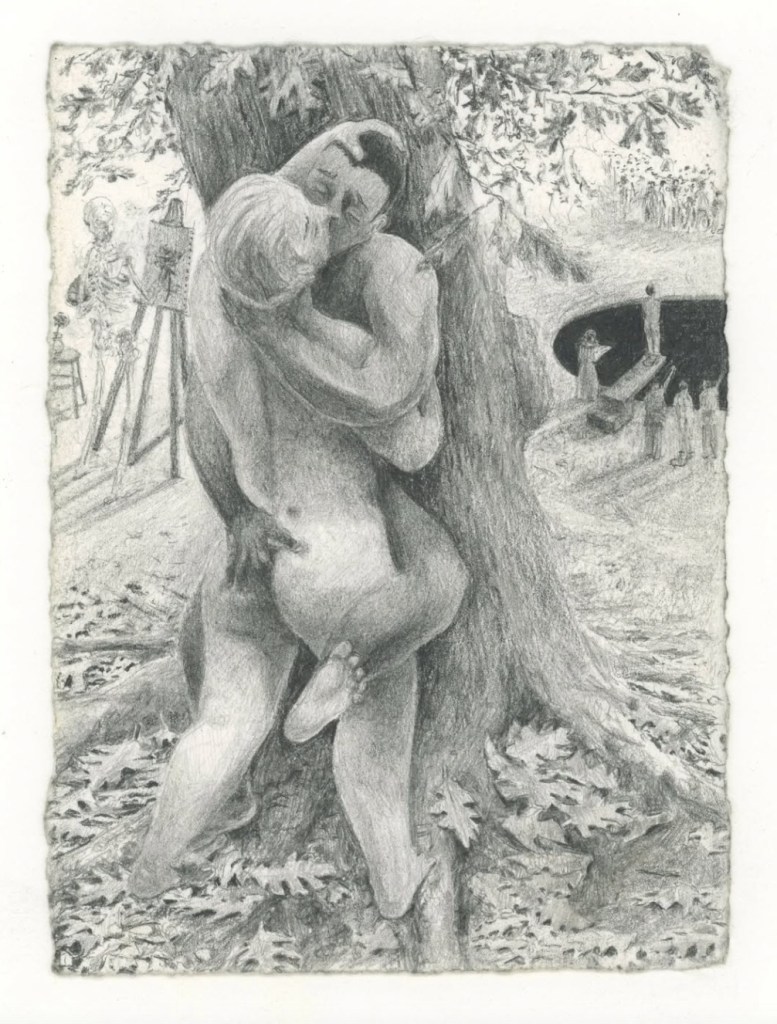
pencil on paper, 6 x 4.375 inches

monotype with etching ink, casein, acrylic, flashe,
and graphite on paper, 84 x 58 inches
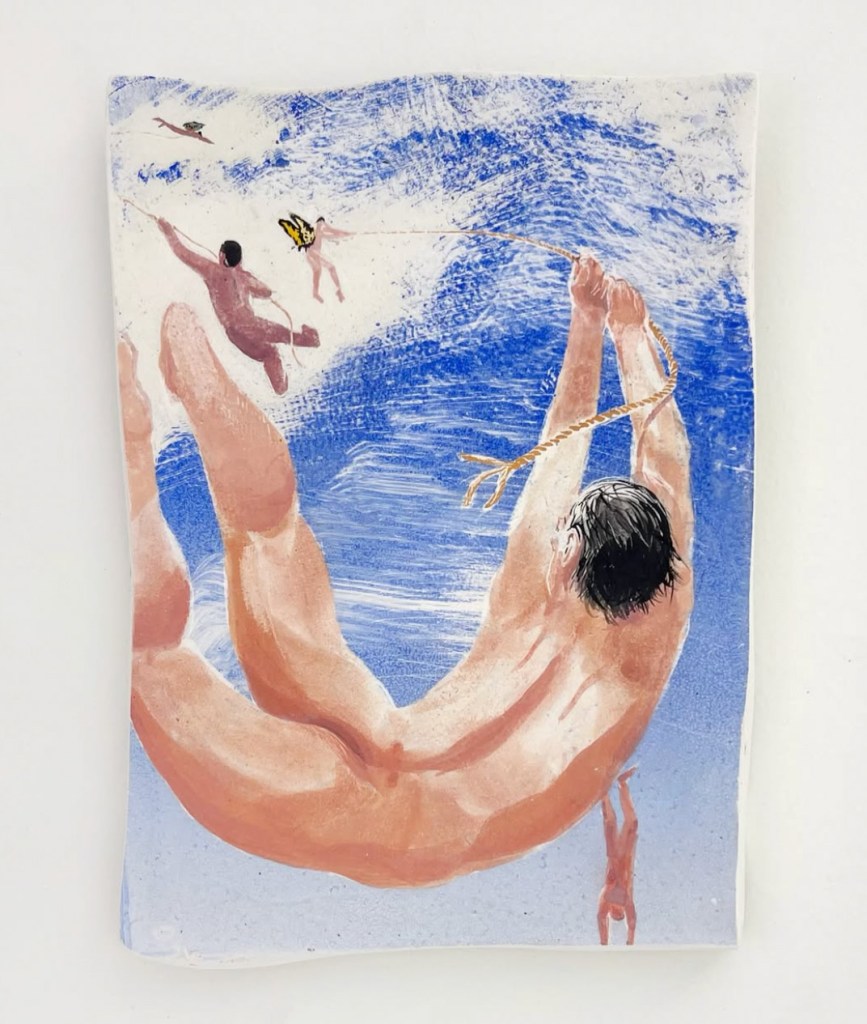
on plaster reinforced with burlap, 5.625 x 4 inches
The exhibition culminates in a series of small graphite drawings with the immediacy of love letters. Two depict classrooms where a young boy – presumably, the artist’s doppelgänger – studies Winckelmann, Frederick the Great, and their artist contemporaries William Hogarth and Raphael Mengs. The marvelous Homemade Pasta shows a gaggle of skeletons preparing a feast while, in the background, two young men steal a kiss. Stong reminds us that before the internet, a young man discovering his sexuality might have had to imagine himself in Plato’s Symposium or the idealized bodies of Greek sculpture before he could name his own desire. Stong inventively seeks to understand himself and others in this broad historical context.
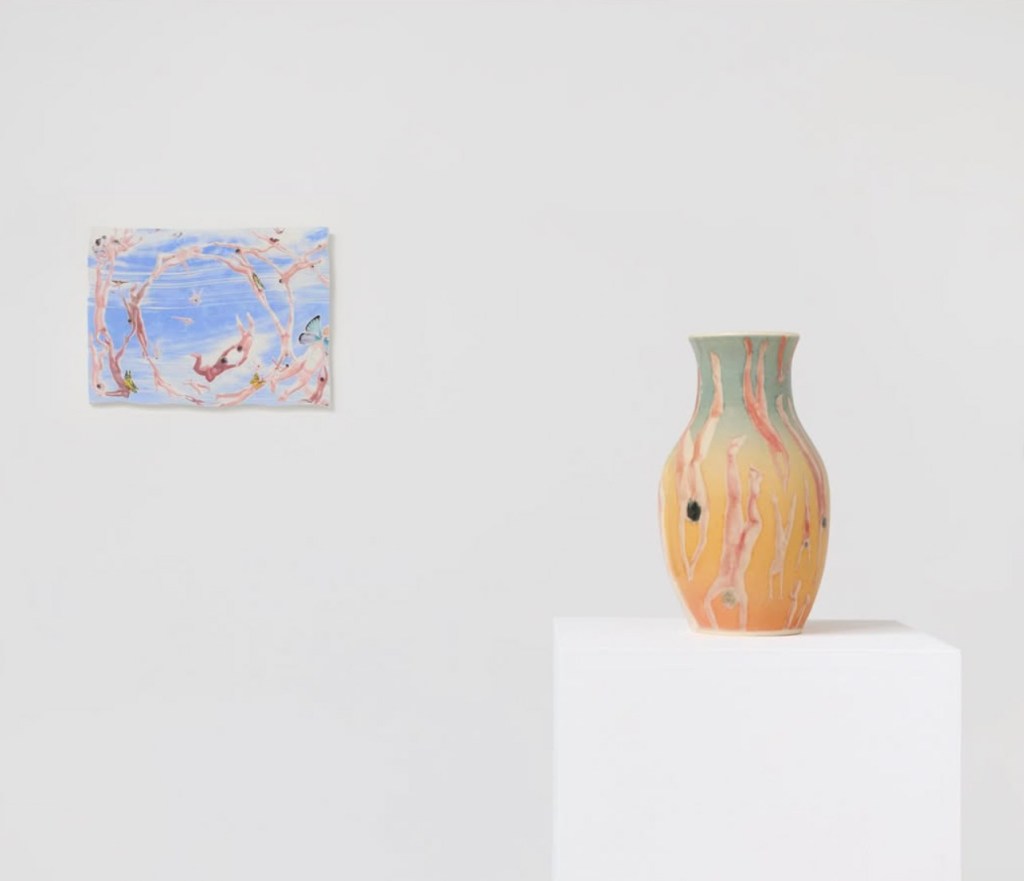
“Todd Stong: This World May Never Change,” Headstone Gallery, 28 Hurley Avenue, Kingston NY. Through August 30, 2026.
About the author: Bill Arning is a curator, critic, advisor, writer, and itinerant maker of pop-up shows based in Old Chatham, New York.