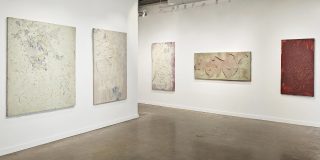
Contributed by Bill Arning / Years before Hudson became an international art destination, there was Time & Space Limited, a cavernous space on Columbia Street, a block from the main gallery drag of Warren Street. For four decades, TSL has been a crucial gathering place for the arts community, featuring a glorious combination of galleries with visually sumptuous unpainted wood walls, café, multiple screening rooms, and a sophisticated and affordable used bookstore. TSL draws from the considerable pool of established artists who have relocated to the Hudson Valley. It performs a genuine service by offering these artists the run of its sprawling spaces with minimal curatorial interference. Artists with formidable résumés, including Cary Leibowitz, Roberto Juarez, and Donna Moylan, have enjoyed an all-too-rare opportunity to present their practices entirely on their own terms, invariably with enlightening results. Now 96-year-old Chatham-based painter Lois Dickson has her chance to shine with an expansive selection of stormy abstract landscapes and nature studies in “Forty Years of Painting.”
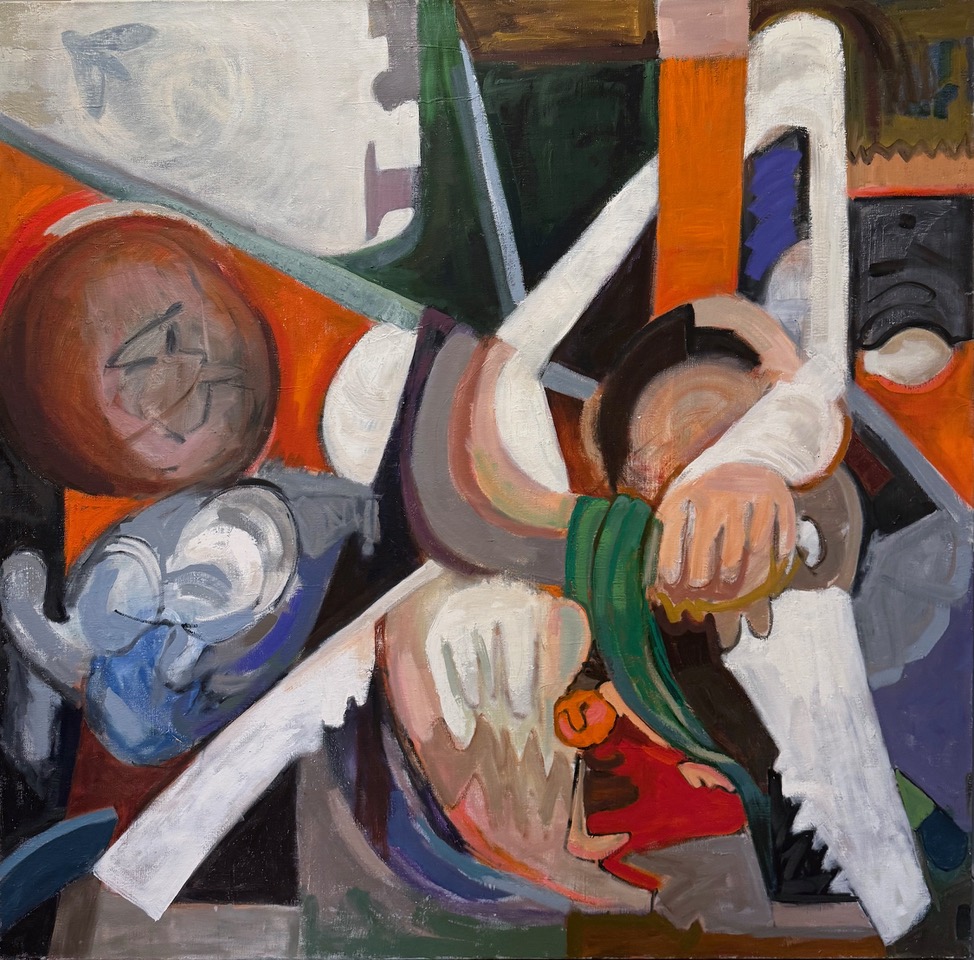
Dickson clearly revels in showcasing decades of bravura paint handling, installing works in every nook and cranny of TSL’s multiple rooms, hanging a few high on the walls, and even squeezing one beside the bathroom sign behind the café. Her guiding principle seems to be more. For most artists, the abundance might prove deadening, but in an exhibition reaching back four decades, one feels grateful that she has held so little back, refusing to subordinate her desire to be fully seen in all her creativity. Marilyn Minter, the great champion of feminist painting, has observed that the art world “loves young men and old women.” The reasons for this remain open to debate, but the expanding critical reputations of older female painters such as Lois Dodd, Betty Tompkins, Judy Glantzman, Katherine Bradford, the late Mary Heilmann, and Minter herself suggest that the observation has some truth. And Dickson may be ready for her own star turn. Indeed, paintings she completed within the last two years are among the most exciting here, and she continues to paint daily despite recent hospitalization and rehabilitation.
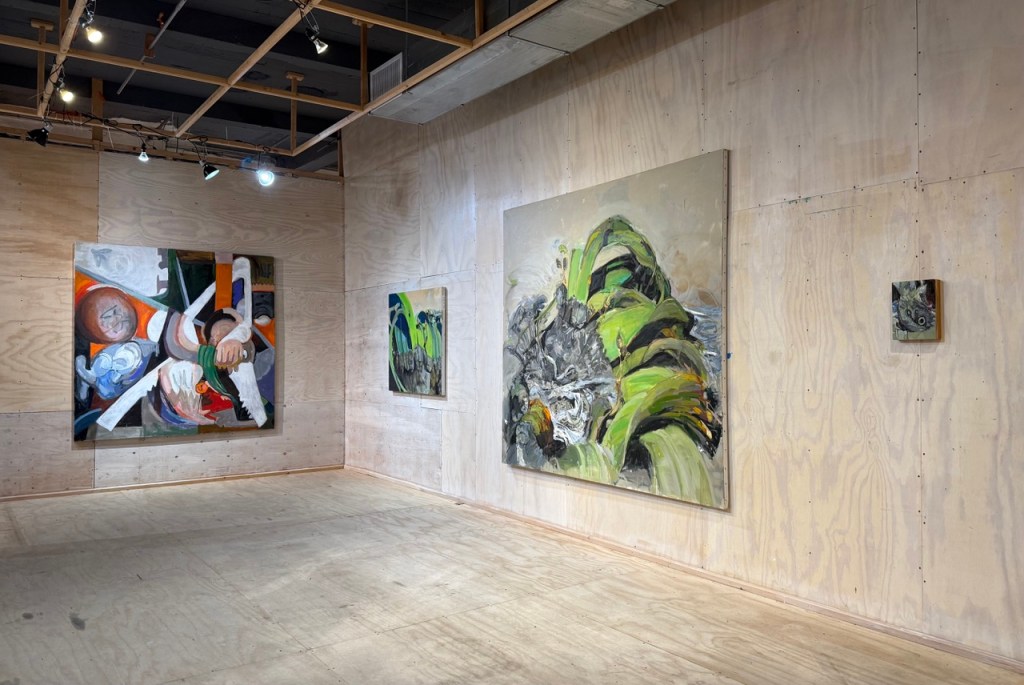
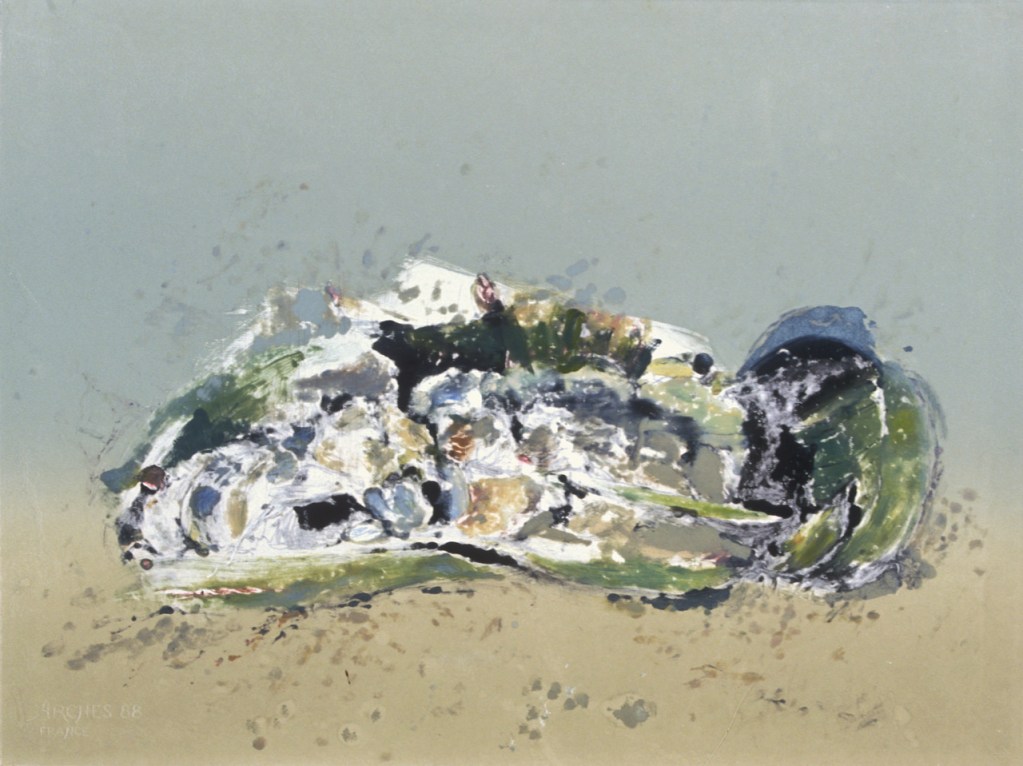
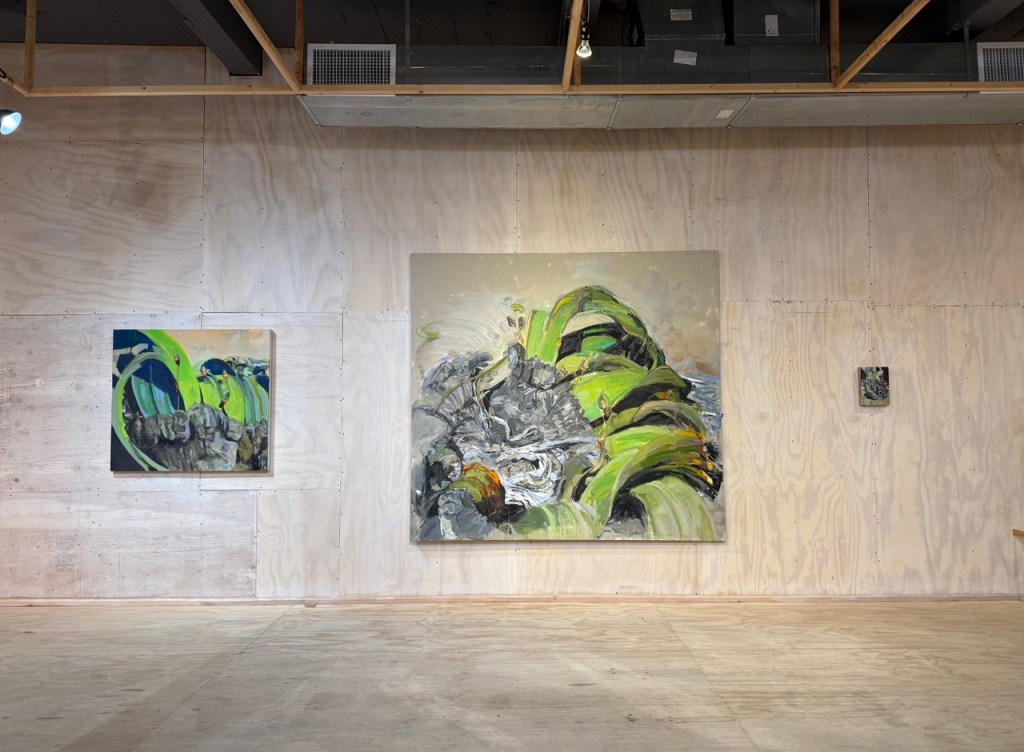
Dickson worked as a buyer and manager for corporate collections before devoting herself full-time to studio practice at age 60. Although she had always painted privately as a pastime, she began studying at the New York Studio School and the School of Figurative Art (now the New York Academy of Art) with such established painters’ painters as Graham Nickson and Joseph Santore. Figuration never claimed the lion’s share of her attention, but the exhibition includes one compelling example of what that path might have looked like, a tantalizing signpost of a road not taken. Rock Goddess, a roughly five-by-six-foot study of light falling across a faceted boulder, is visually ravishing, imposing solidity only slightly softened by surrounding vegetation. Dominated by greens and browns, the painting derives its considerable visual weight from scores of meticulously observed moments, each recording an instance of nature’s uncontrollable proliferation of detail.
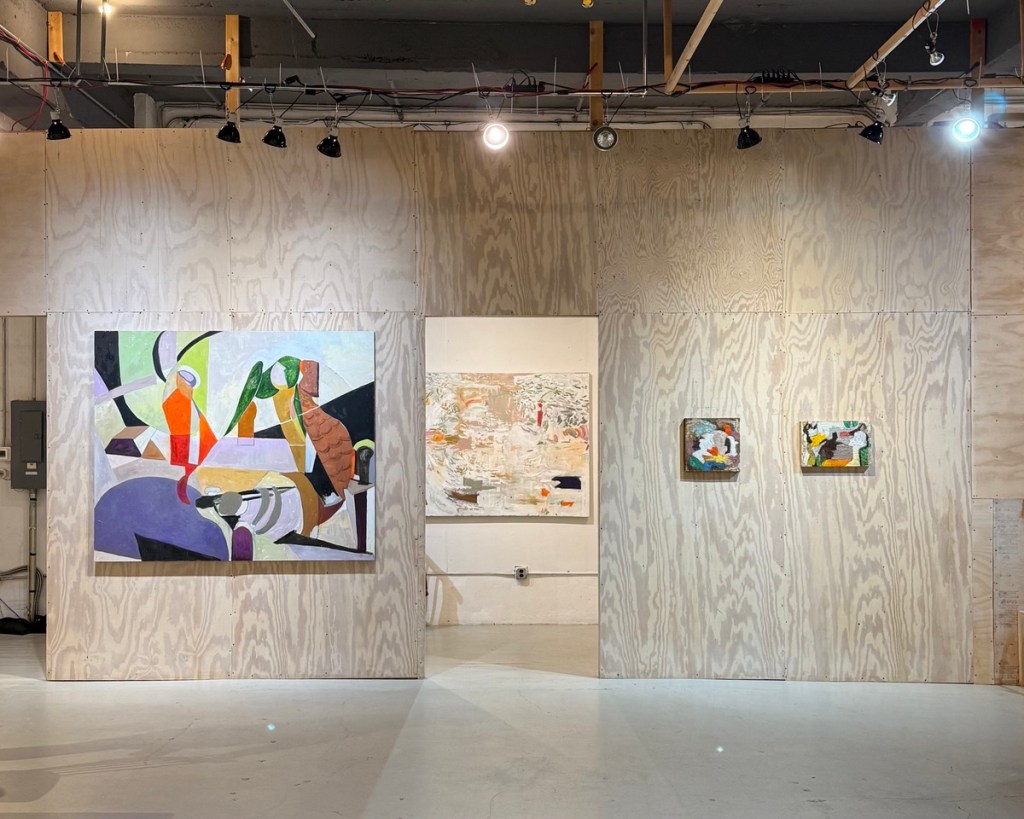
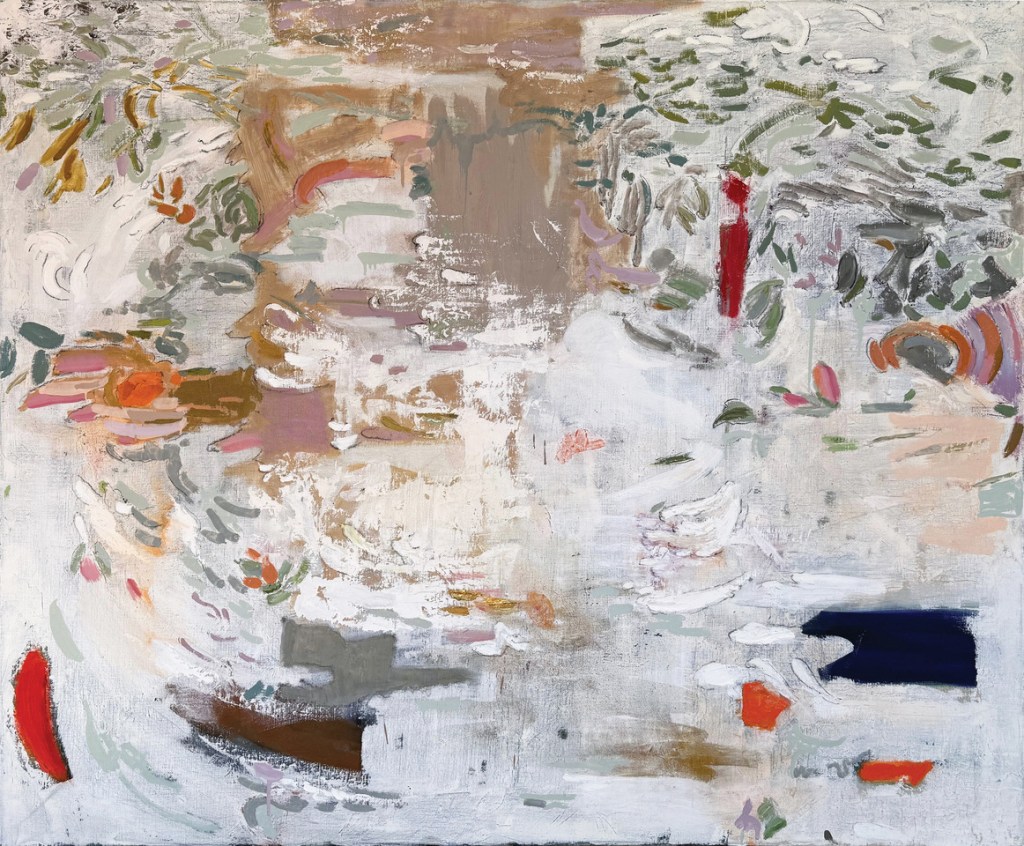
Dickson has been an inveterate traveler, carrying art supplies to record landscapes as far afield as Patagonia. She still delights in pointing out exotic botanical and geological forms she has encountered in distant places. Her formal devices are tried and true: grids and photographic references that help translate direct optical experience into paint. Several works bear scientific botanical titles, including Welwitschia Mirabilis, sending non-specialists scrambling for Wikipedia. This particular desert plant grows in Namibia. Covering 40 years inevitably presents challenges of chronology and coherence. Dickson and her team routinely juxtapose works made 25 years apart, often with dramatically different painterly effects that can produce jarring disjunctions. These collisions reveal just how constructively restless and relentless her practice has remained. At Sea is all subdued atmospherics, its floating, discontinuous brushstrokes evoking an elusive and shifting visual field. Other paintings are chunkier, more muscular examples of old-school abstraction. Tough Guy, for instance, manifests the painterly confidence of Lee Krasner and Grace Hartigan. Remarkably, Hartigan was only eight years older than Dickson, making her a younger artistic and cultural cousin of the Ninth Street Women.
Despite her relatively late commitment to full-time painting, Dickson began exhibiting with John Davis, one of Hudson’s pioneer gallerists, in 2004, also showing at his New York City space. Her exhibition at TSL would be especially valuable to share with art students, for whom the prospect of maintaining a studio practice for 40 years, much less continuing to paint at 96, might seem daunting. TSL’s generosity towards artists like Dickson with long, sustained practices reflects the appreciation of something increasingly rare in an art world addicted to novelty: wisdom accumulated through tenacity, curiosity, and persistence. Rather than lament the art world’s relentless promotion of successive waves of young men, Dickson has joined the august company of older women who have embraced the discovery of countless small revelations through a daily immersion in painting.
“Lois Dickson: Forty Years of Painting,” Time Space Limited, 434 Columbia Street, Hudson, NY. Through November 8, 2026.
About the author: Bill Arning is a curator, critic, advisor, writer, and itinerant maker of pop-up shows based in Old Chatham, New York.