
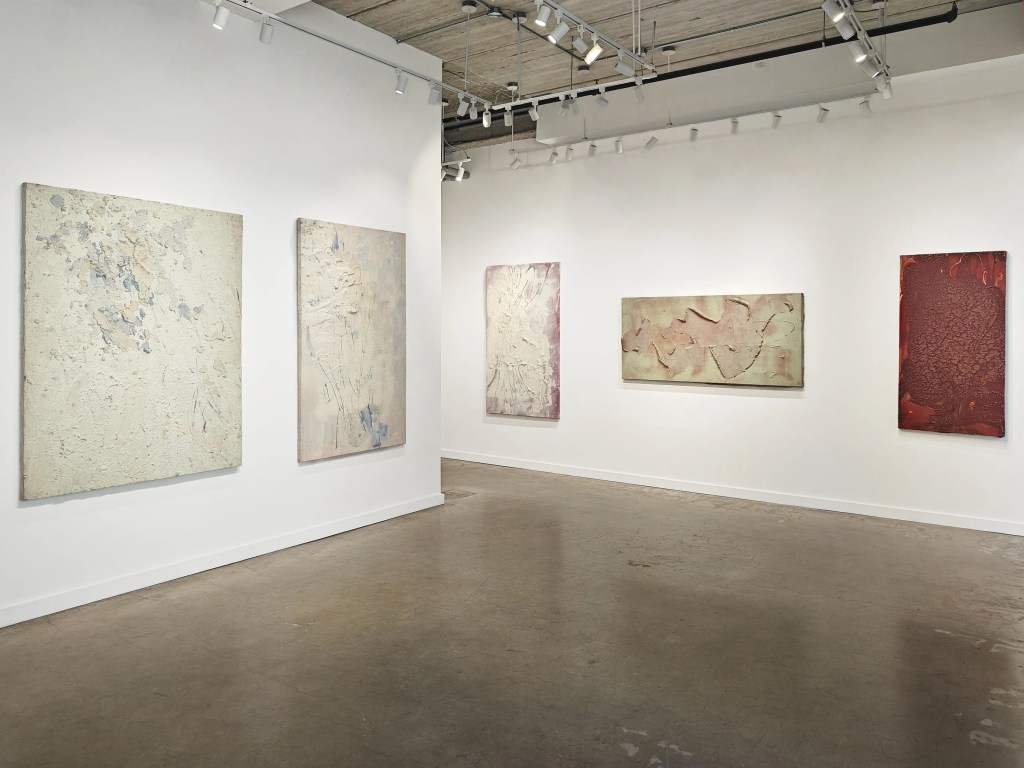
Contributed by Alex Grimley / One of the main currents of abstract painting in the 1970s – much discussed then, not so much now – was the resurgence of painterliness that followed the 1960s trend of hard-edge, geometric abstraction. The subject of the 1971 Art News Annual, for instance, was “Painterly Painting,” while the following year, art historian John Elderfield published an expansive two-part article in Art International titled “Painterliness Redefined,” which traced the emergent tendency primarily through the work and influence of Jules Olitski. At the end of the decade, exhibitions like the Brockton Art Museum’s “Aspects of the 70’s: Painterly Abstraction” offered a retrospective view of this development. “Sherron Francis: Beyond the Stain,” currently at Lincoln Glenn, brings this strain of post-Minimalist abstraction into focus through a particularly assured body of work from the late 1970s and early 1980s.
The painterliness of Francis’s work is unlike that of her Abstract Expressionist antecedents. In contrast to the agitated, existential gestures characteristic of that style, the marks that circulate and sweep through her paintings bring to mind natural phenomena like waves and waterfalls and abstract sensations like speed, compression, and expansion. The looping lines in Zelda’s Veldt – which look squeezed from the tube, amplifying their propulsive feel – explode from the central pool of off-white impasto and surge toward the upper and lower margins of the painting. The visual sensation of the picture recalls rushing rapids, a deluge of foamy paint cascading down the surface. Though the surfaces of the horizontal paintings Thundergull 0A9 and Untitled (1983) are similarly plaster-like, the rippling flow of color across them is slow and languid, evoking contemporaneous paintings by Darryl Hughto and Walter Darby Bannard.


mixed media on canvas, 67 x 38 1/4 inches
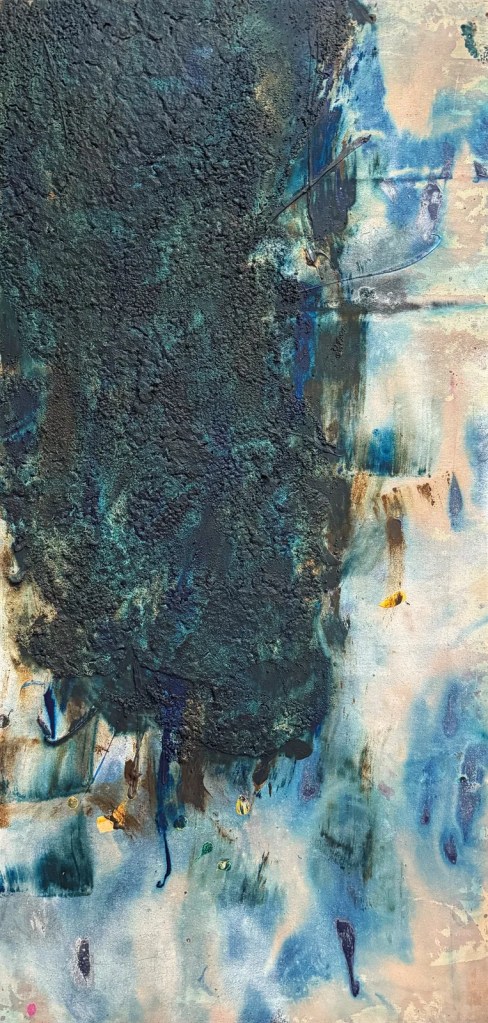
Francis’s palette throughout these works tends towards pale mid-tones, not unlike those in Olitski’s paintings from the same period. In most of the paintings, broad areas of beige, cream, and off-white predominate and are woven through muted, atmospheric hues. When she ventures into more saturated or higher-keyed colors, the results are mixed, as in Untitled (1979) in the gallery’s alcove, which features a densely textured zone of dark verdigris and slate teal. The contrast between this area and the thinly painted, brightly colored channel beside it is stark and leaves the painting feeling unresolved. More successful is the maroon and crimson Untitled (1977) on the west wall. In this picture, the red has a roiling, molten quality that gives the painting an intense material immediacy.
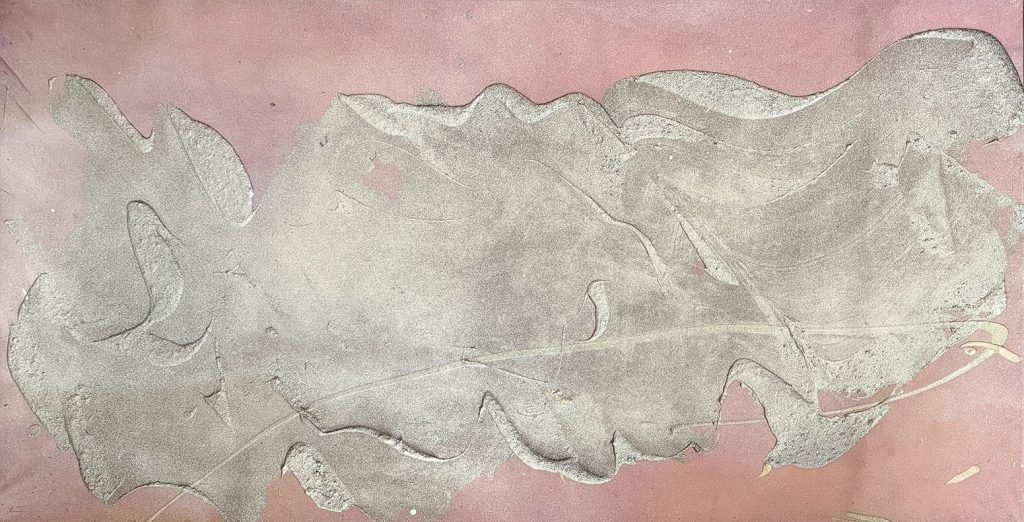
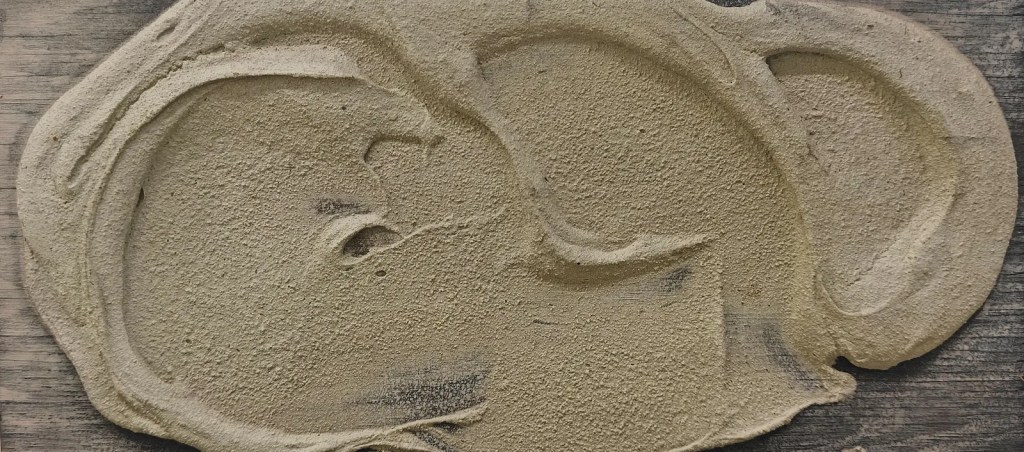
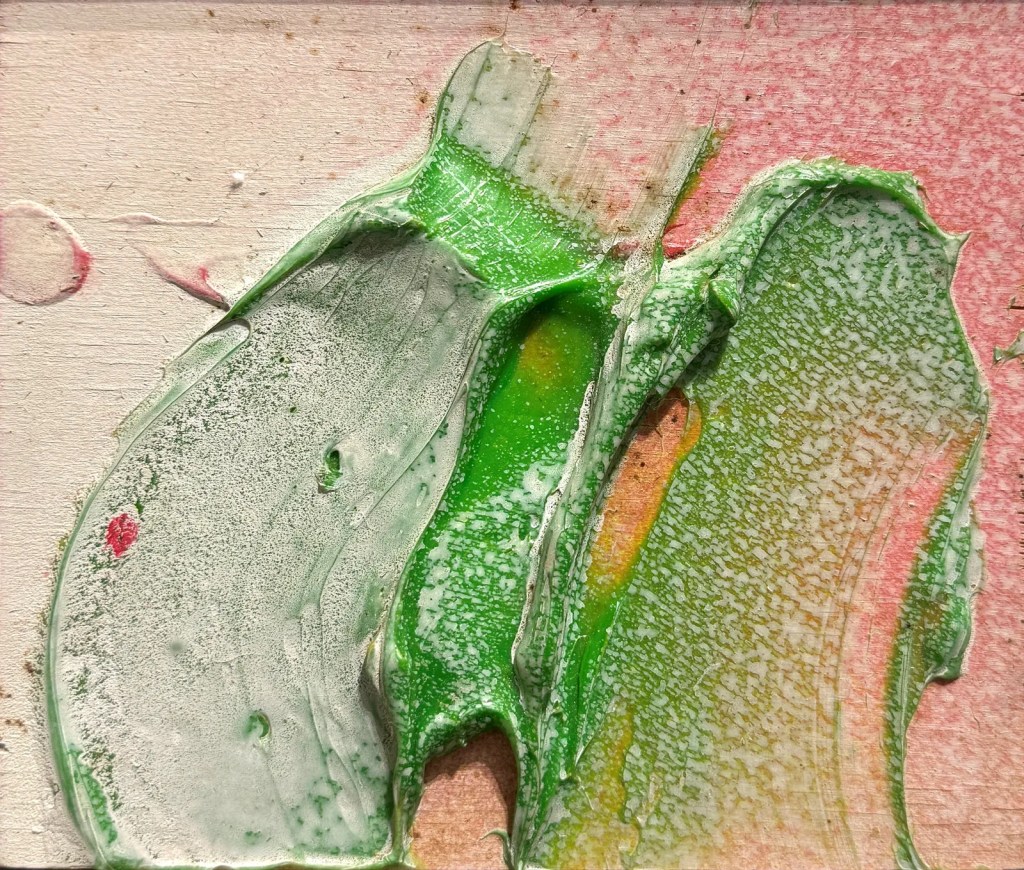
The show’s most surprising works are the cluster of 13 small-scale paintings on panel, all untitled and each dating (with one exception) from 1983. By calibrating her painterly gestures to the dimensions of the support, Francis imparts to these pictures a sense of scale that transcends their diminutive size. Warmly toned, soft, and languorous, the sensuality of these paintings is matched only by the outstanding Doubling, in which a glimmering wave of sandy gray billows across the muted mauve and pale pink ground. The colors and textures suffuse the surface, softly dissolving into one another; the result is an especially vivid example, both lyrical and luxuriant, of that characteristic sensuality. Between 1977 and 1983, Francis produced a body of work remarkable for its subtlety and assurance. “Beyond the Stain” frames this achievement by illuminating the tension between delicacy and force that animates her work.
“Sherron Francis: Beyond the Stain,” Lincoln Glenn Gallery, 542 West 24th Street, New York, NY. Through October 24, 2026.
About the author: Alex Grimley is an art historian specializing in postwar and contemporary art, particularly Color Field painting. His writing addresses intersections of visual art, criticism, and experimental music.











Glad to read about her painting and learn about the show. I look forward to seeing it!