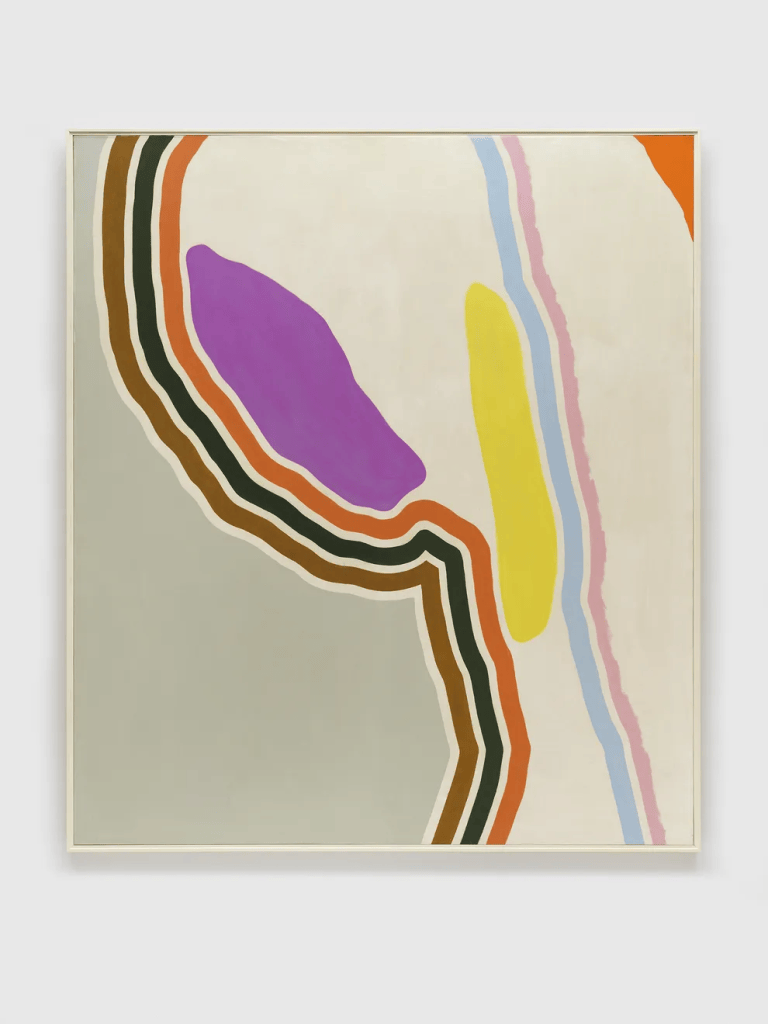
Contributed by Amanda Church / Who else had never heard of Herman Cherry (1909–1992) until images of his spare and radiant paintings suddenly started appearing all over social media? With two NYC gallery shows up, at Sebastian Gladstone in Tribeca and Shamnoski uptown, plus one at Sebastian Gladstone in Los Angeles in 2025, his work is deservedly in the spotlight after almost 20 years.
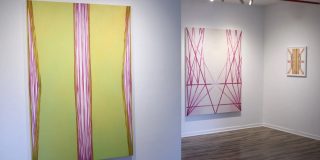
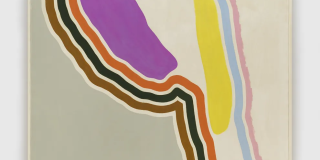
Focusing on airy, reductive landscape-derived paintings, the Tribeca show features eight large-scale oil paintings from the River and Summer series and 10 smaller watercolors on paper, all from 1970 and all conveying the light and color of the East End of Long Island, where Cherry lived and worked at the time. Like Diebenkorn’s Ocean Park series, the artist’s environs emerge abstractly, in Cherry’s case with luminous ribbons of liquid color traversing the canvas, referencing water, land masses, and shafts of light from an aerial perspective. Regina Cherry, his widow and fellow painter, spoke of the topographies seen out the window on his frequent airplane trips across the United States as having significant influence on his work. If Clyfford Still apprehended the “vertical necessity of life,” Cherry saw its aerial imperative.
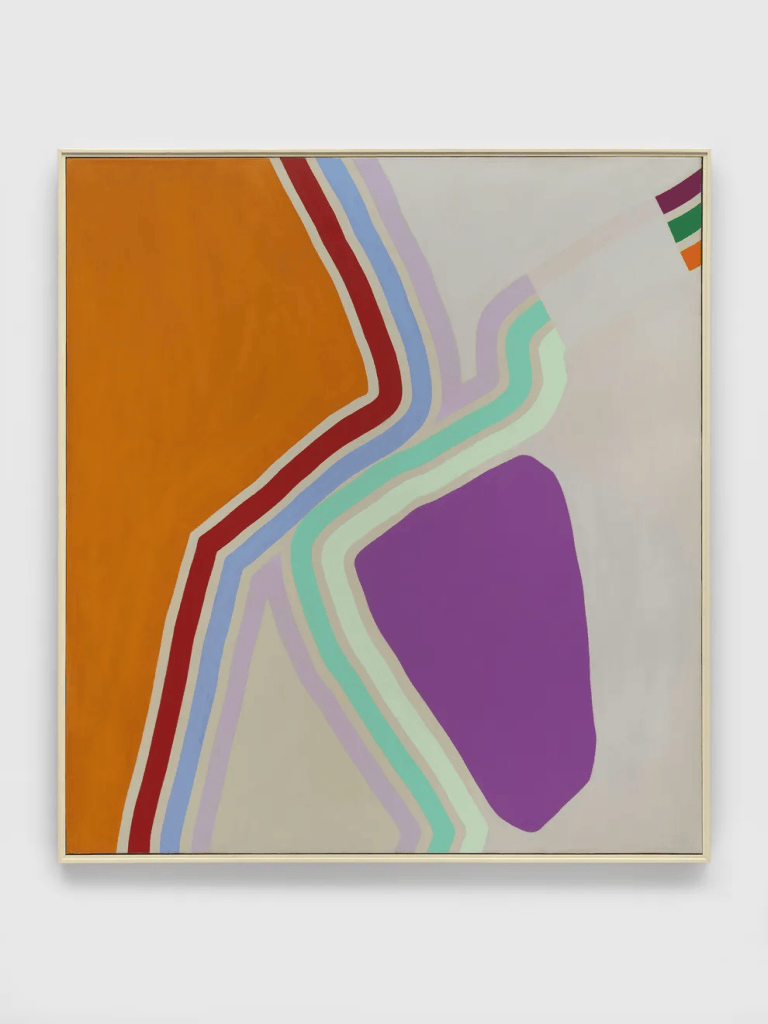
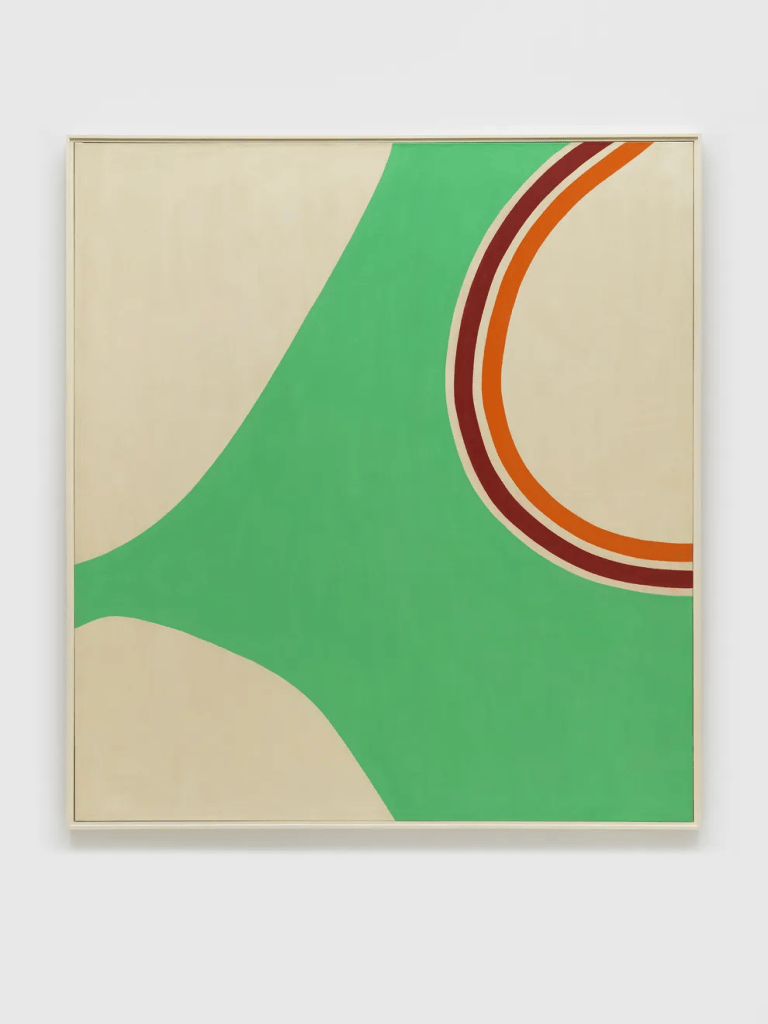
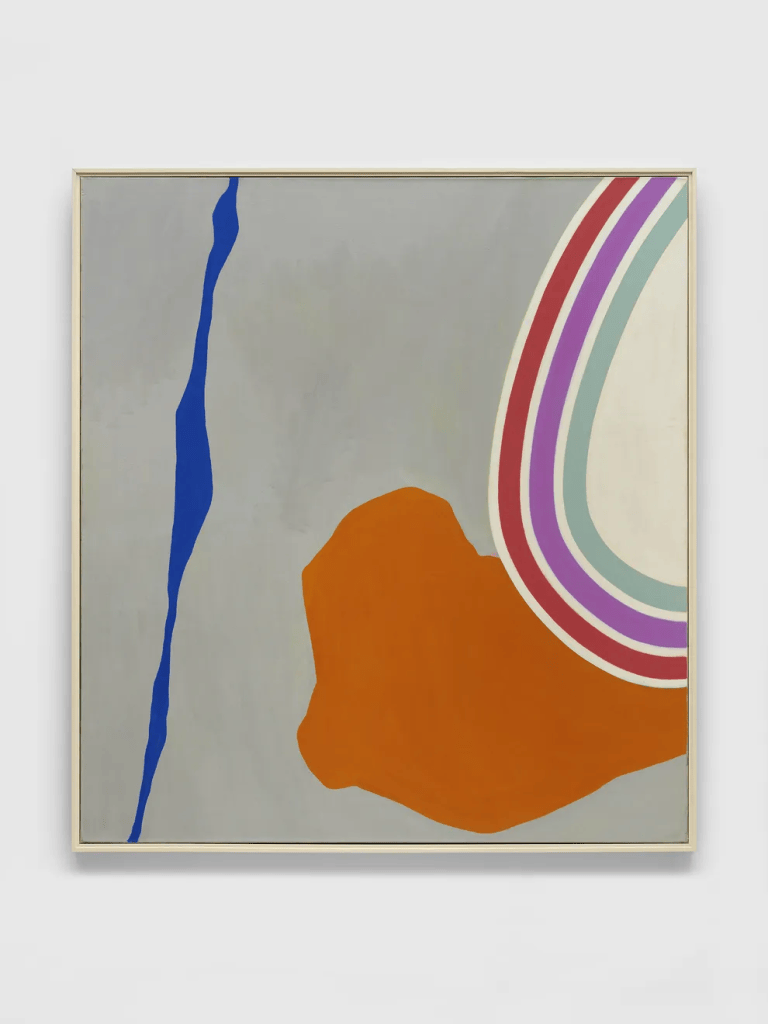
Cherry’s paintings share some qualities with those of certain 1960s Color Field artists who used soft, luminous shapes such as Jules Olitski, Friedel Dzubas, and Morris Louis. They are particularly evident in Louis’s 1960 piece Alpha Beta, with its green and yellow diagonals bordering either side of the canvas, leaving a large blank expanse in between. Cherry seemed to exalt empty space, as if to allow each piece ample breathing room. Although clearly connected to landscape, his paintings seem at times to reference the human form as well, maybe an inadvertent harking back to his earlier figurative work. The central tangerine form in Summer Series No. 9 looks like a female torso outlined by two bands of color at the neckline and on her right side. Untitled (E.H.), the E.H. standing for East Hampton, suggests a psychedelic outline of a human head in the vein of Milton Glaser’s 1966 Bob Dylan poster.
These paintings go with the proverbial flow. They are both compositionally taut and as fluid as moving water, conveying summer’s warm glow and sense of expansiveness and possibility that may be reinforced by a proximity to the ocean. In an art season with a substantial focus on under-the-radar artists, seeing Cherry’s paintings for the first time is pure pleasure. The transition from canvases rolled up in a basement to stretched paintings displayed on the pristine walls of a top-tier gallery is a dramatic one and, with luck, a harbinger of comparably revelatory shows to come.
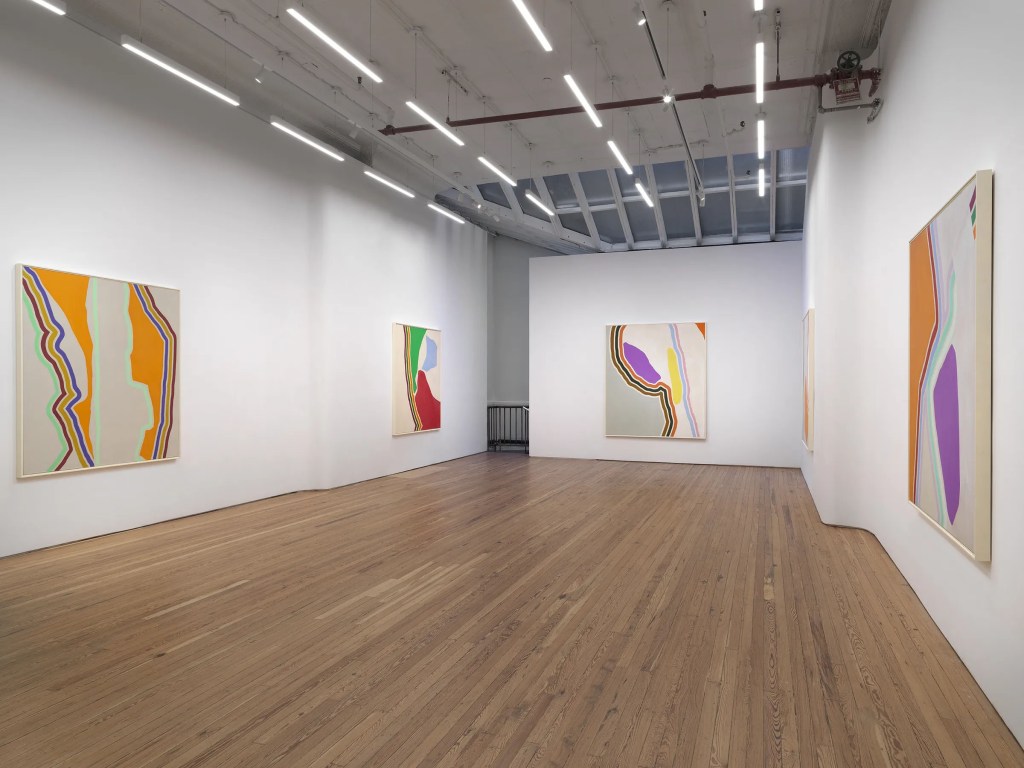
“Herman Cherry: Rivers from 30,000 Feet,” Sebastian Gladstone Gallery, 36 White Street, New York, NY. Through October 24, 2026.
About the author: Amanda Church is an artist and occasional writer living and working in New York City. Her work is currently included in “The Pursuit of Happiness” at Oakland University Art Gallery in Rochester, Michigan.