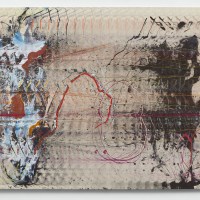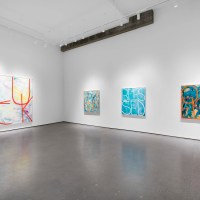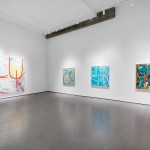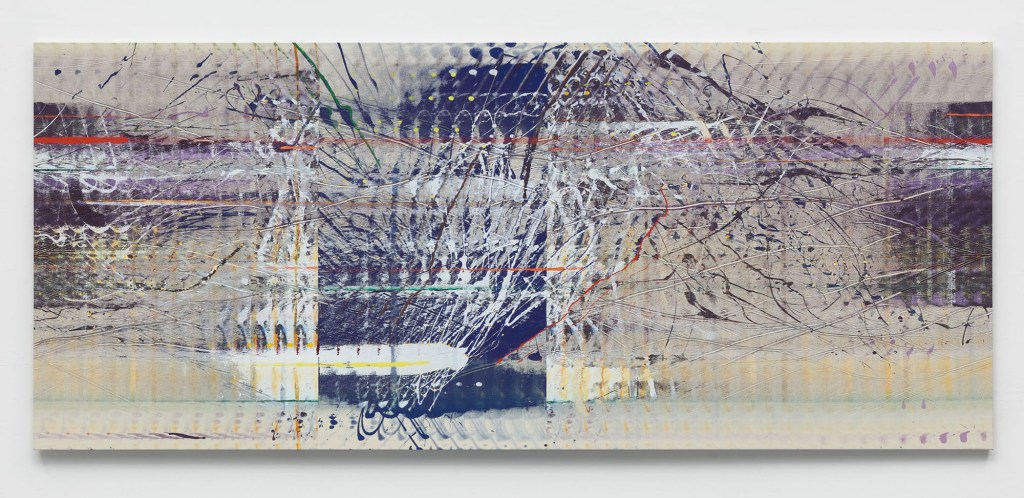
Contributed by Tena Saw / Emily Kraus’s paintings are stuttering fields of glitches and agitation that shake and swagger like a Warhol Elvis. Her debut New York solo exhibition at Luhring Augustine Tribeca arrives with a kind of procedural mythology already attached. The artist works inside a self-designed apparatus, feeding raw canvas through rollers, painting in collaboration with the machine. The paintings come into being from pressure, friction, and chance.
To make large work against the constraints of the 8 x 8-foot MFA studio she used during lockdown in 2020, Kraus constructed a giant box frame of steel with rollers affixed to the frame bars. Raw canvas is wrapped around the structure and sewn together to form a loop. She sits or lies inside the box and paints on the interior of the loop, then runs it around the rollers with a motor to produce copies of the original gestures across the canvas. Videos of her solitary act of painting make it clear that it is nonetheless performative. They also show that her machine is not a precision instrument but more like a lurching jalopy. It functions as a constraint that produces an eccentric visual intelligence. Initially hard and sharp painted marks naturally soften as they are printed over and over. Kraus then intervenes with simple hand-painted gestures to refine the composition.

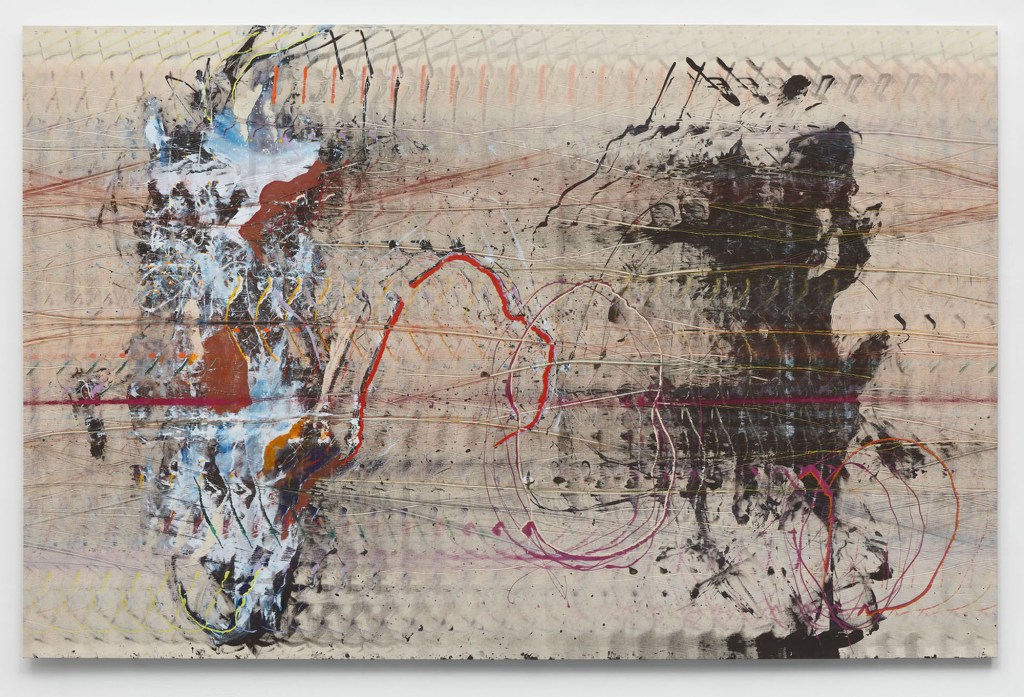
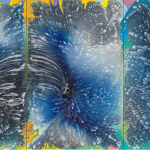
The outcome is neither Op Art nor purely gestural but something hybrid. The paintings incorporate movement and instability and behave like a dragged, folded, and compressed record of events. They are not composed as such. Rather, they arise out of a negotiation between system and improvisation. The resulting abstraction feels contingent, unstable, and alive. There are echoes of Color Field painting in the expansiveness of the canvases, but they are devoid of the genre’s usual calm. They are effortlessly huge. This is partly due to process, but also a product of Kraus’s tremendous confidence. They strain the gallery’s physical limits, extending to the edges of walls and wrapping around a corner. While her earlier work resembled repeating Eadweard Muybridge frames, these paintings emulate grand cinematic landscapes.
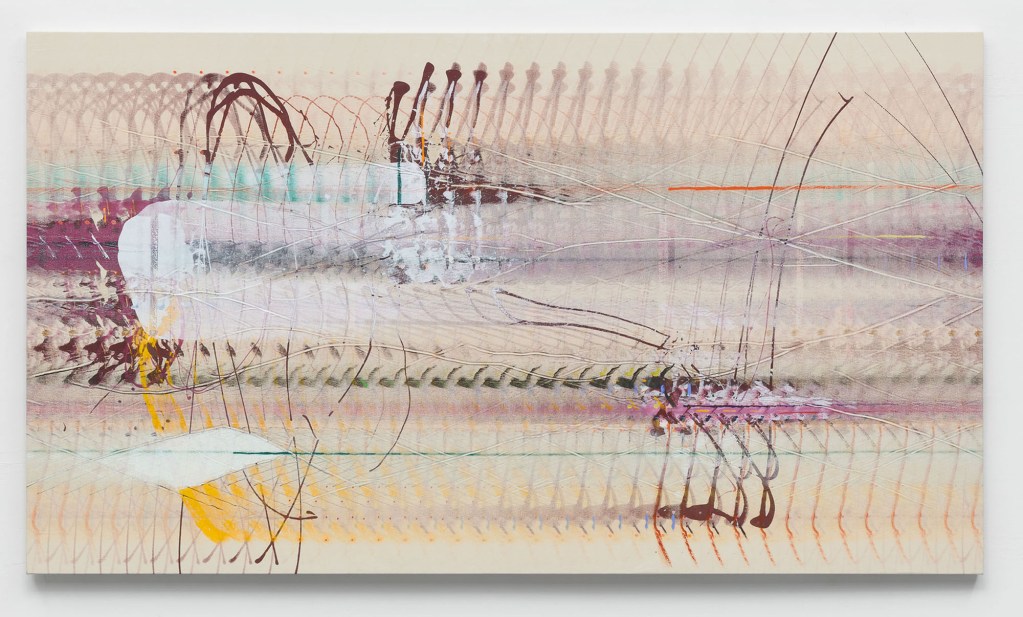
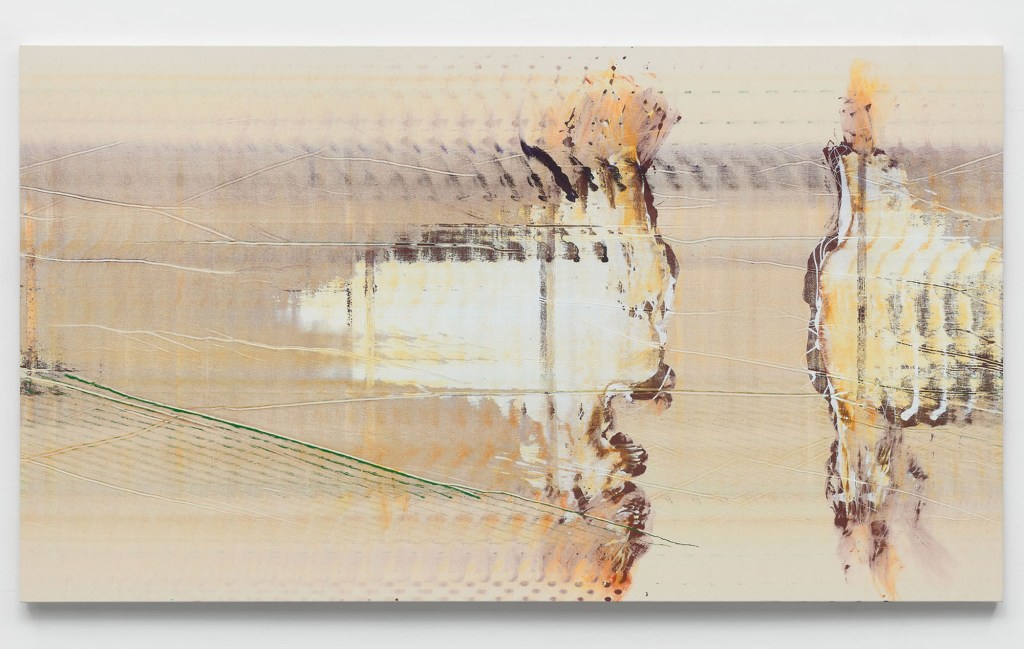
The surprising success of these works resides in the silence they inspire in a viewer standing in front of them, and how all the noise of their making falls away. What lingers is a rhythmic sensation of pattern and disruption. Although Kraus has spoken of being attuned to natural cycles like breath, waves, and repetitions in nature, the paintings refuse to settle into harmony or repose. They hover in a constructive imbalance, where control and surrender are co-conspirators.

“Emily Kraus: In Relation,” Luhring Augustine Tribeca, 17 White Street, New York, NY. Through June 13, 2026.
About the author: Tena Saw was born in Houston, Texas, and lives and works in New York. In 2025, Saw had a solo show at Osmos.