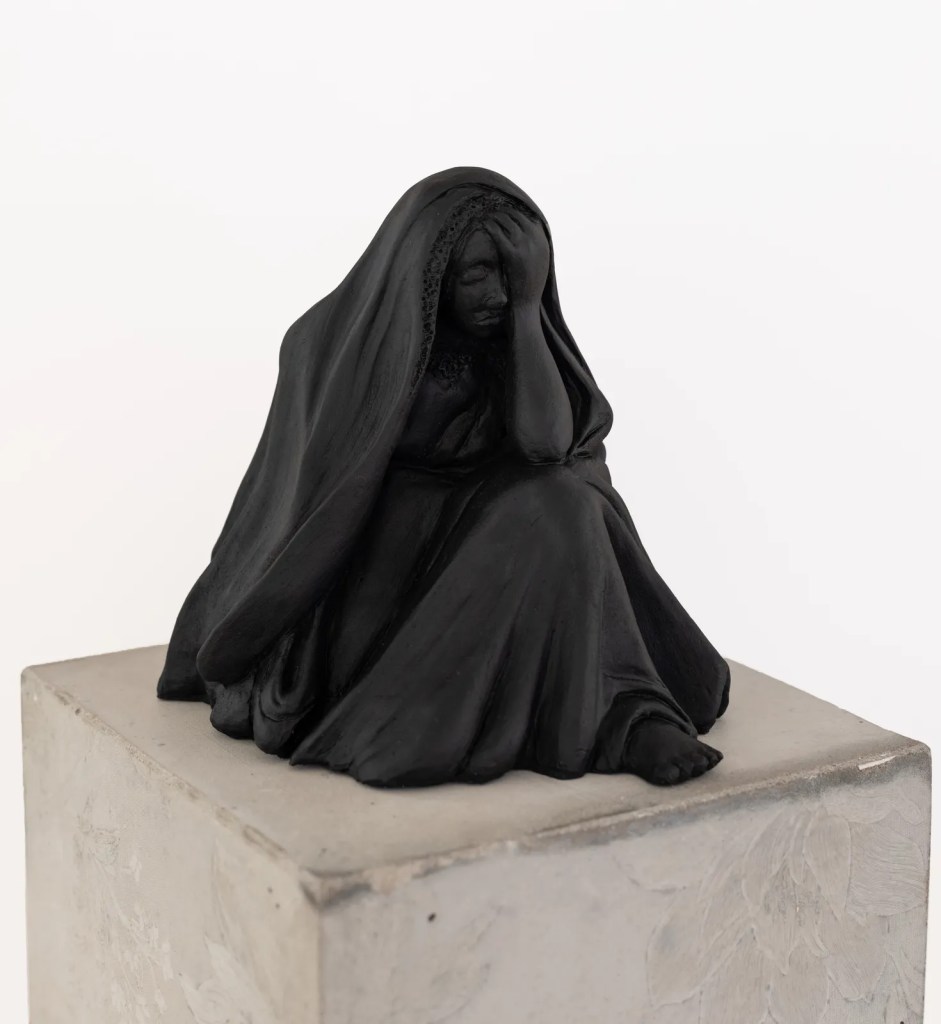
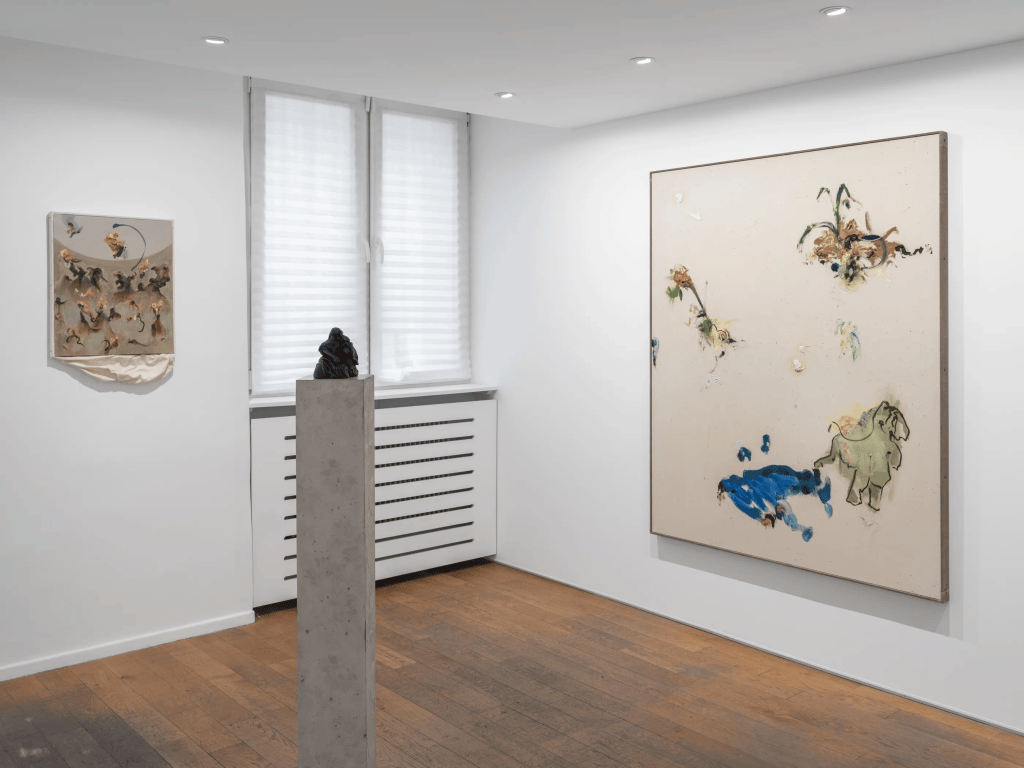
single-edition acrylic-coated ceramic sculpture on cast
concrete pedestal, 52 3/4 x 7 1/8 x 7 1/8 inches
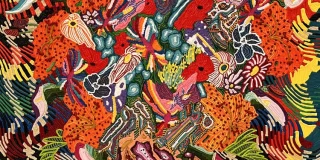
Contributed by Sharon Butler / Two artists I know are both showing at Brigitte Mulholland in Paris this month: Dublin-based Damien Flood, whom I knew from our days showing together at Theodore, and Atlanta-based Craig Drennen, a former Two Coats of Paint Resident Artist. I had questions.…
Two Coats of Paint: One of you lives in Atlanta and the other lives in Dublin. The show is in Paris. Does your work speak to a French audience? Does it speak to each other?
Damien Flood: It’s always hard to know if your work speaks to an audience. I don’t make my work with a definite audience in mind, but it has become more important to me over the years. For a period, my work was becoming more closed off and difficult to enter, particularly with the show The Figure in the Carpet in 2018. Since then, I have had the desire to make more generous paintings, to give the viewer more opportunities to enter the work. I think this is partly where the ceramics came from. They are a definite thing in each exhibition. The ceramics also allow me to spend time with the paintings without them realising they are being observed. But about my work and a French audience, I hope the work connects with the viewers. There is a real visual culture in France, which is refreshing compared to Ireland. We have a strong art scene, but visual art is still low on the radar. It is still a country of writing, music and theatre, which leads to audiences tending to gravitate towards more digestible work.
My work for this show is inspired by my ongoing interest in Père Lachaise Cemetery in Paris. I first visited the cemetery in 2001 during a post-college holiday, and I have been captivated by it ever since. In 2018, while on residency at the Centre Culturel Irlandais, I spent a lot of time there. Although I didn’t create any work directly inspired by the cemetery at that time, I can trace certain motifs and elements in my work back to this place.
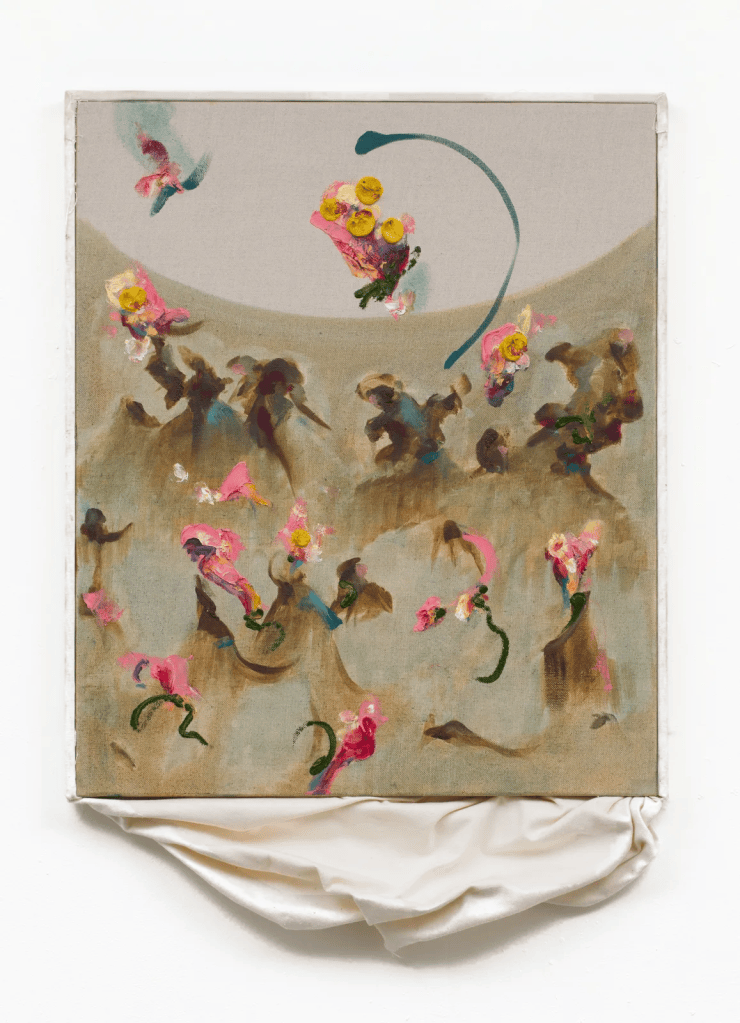
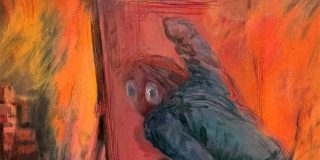
artist’s canvas frame. 26 x 18 3/4 inches
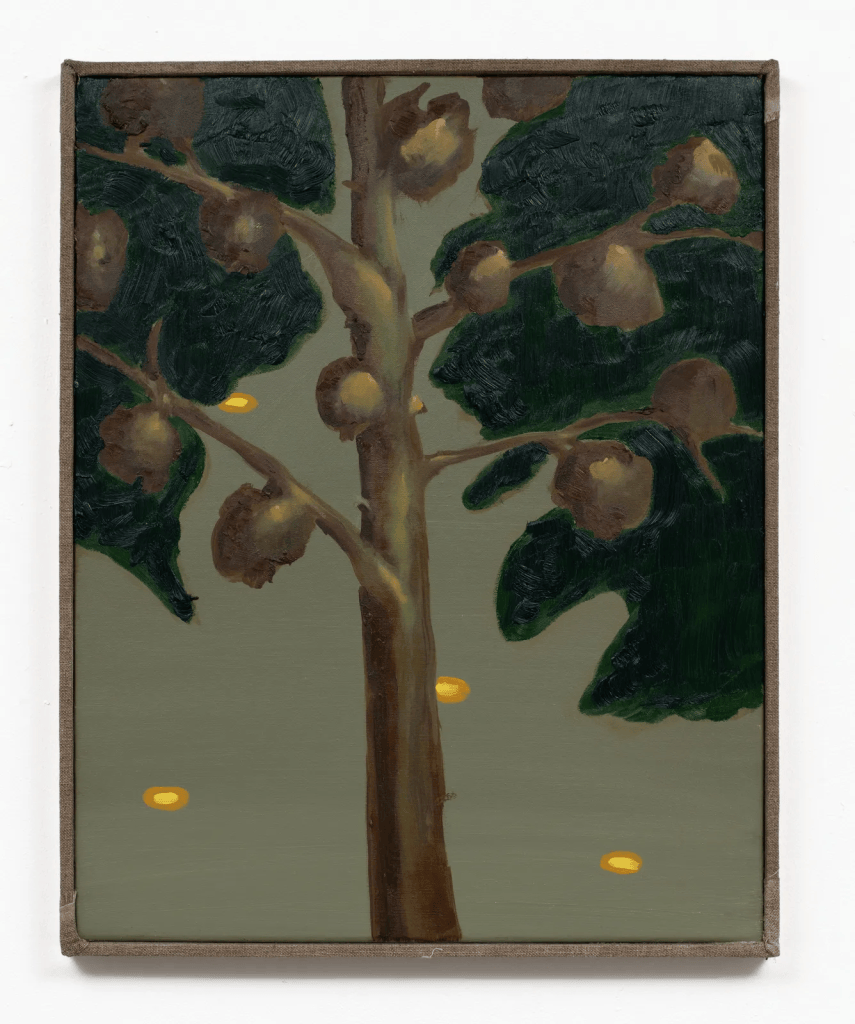
linen frame, 20 1/4 x 16 3/8 inches
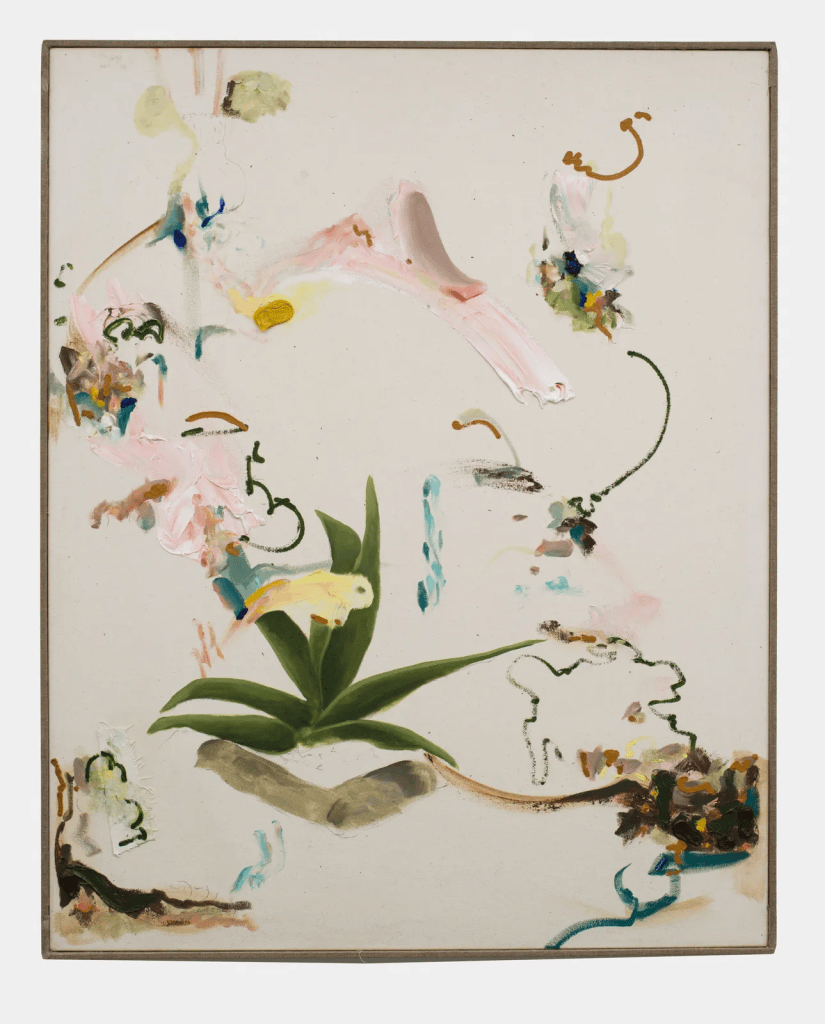
with artist’s linen frame, 41 x 33 1/8 inches
In January of this year, I participated in a group show at Brigitte Mulholland in Paris, and while I was there, I took my partner to see the cemetery. As we walked around, I noticed forlorn female figures draped over tombs and graves. Later, when I reviewed the photographs and quick sketches I made of the figures and the slowly eroding cemetery, I felt that there was something significant there.
When I research new ideas, I look for a headspace to work in that allows my paintings to change, mutate and allow other ideas to infiltrate. I prefer not to have anything too definitive in my studio, so I avoid using images. Instead, I typically seek out a mood or tone to guide the beginning of a new series of works.
The ceramic figures in my show are inspired by the forlorn figures I saw throughout the cemetery. Upon returning from my visit, I discovered that these figures are called Mournful Muses. They seem to be a perfect complement to the paintings, as they touch on the inherent melancholy I believe is present in painting. They mourn the loss of the painted world, while my paintings echo the mood and temporal qualities of Père Lachaise and pull on the slow erosion of its grandeur.
I believe the two shows are quite different, coming from distinct areas within painting, particularly regarding a material approach. However, I see this as a strength. On the surface, there is no pretence that the works are in an obvious dialogue, but I think we both share an interest in what occurs when something familiar is made strange, unstable, or newly reconfigured.
From my perspective, we both question cultural authority. Craig does this more directly in works like Timon of Athens, while I recontextualize historical visual languages with contemporary materials and concerns. It appears that we both treat the history of art in a similar manner, exploring what history can become if we interfere with it.
Craig sometimes adopts characters to approach his work, whereas I tend to work through distinct approaches or long-spanning series of works that could be considered as characters, personalities or modes of working. Additionally, I believe there is a connection between us when it comes to music. We both use music as a way of accessing something personal, embodied, and outside the official history of art. While music may not be as explicitly interwoven within my work, it plays a significant role in its creation when I’m in the studio. In 2022, for a solo show, I produced a three-track lathe cut vinyl to accompany the exhibit that brought music more central stage. The music was created in parallel with the paintings and sculptures and released under the moniker GUT.
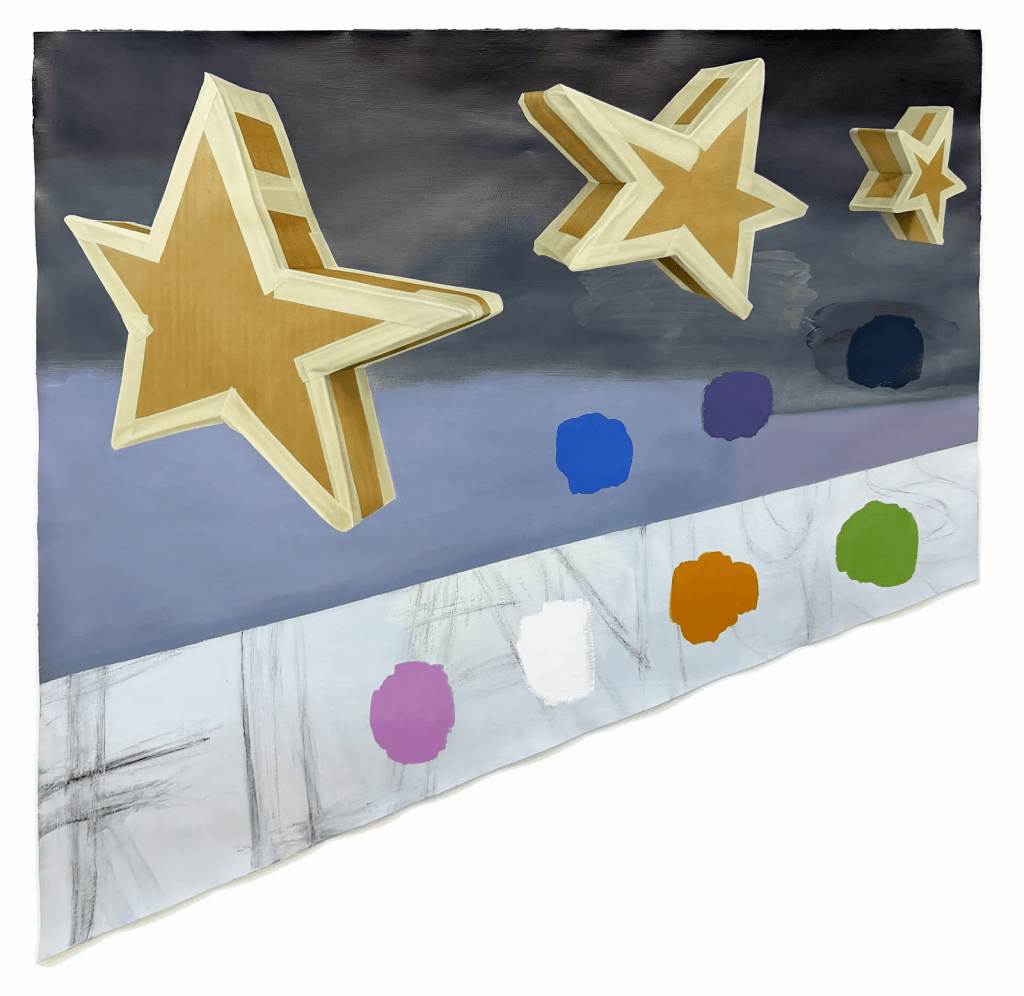
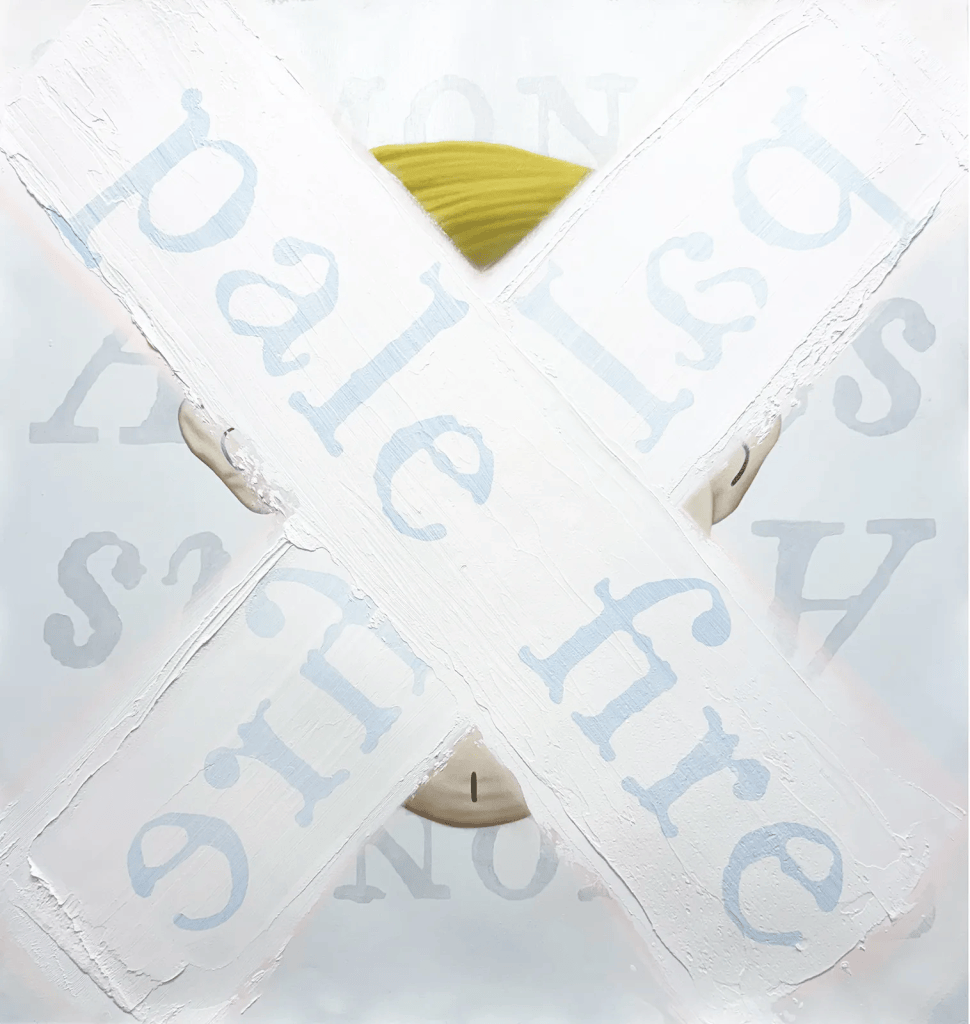
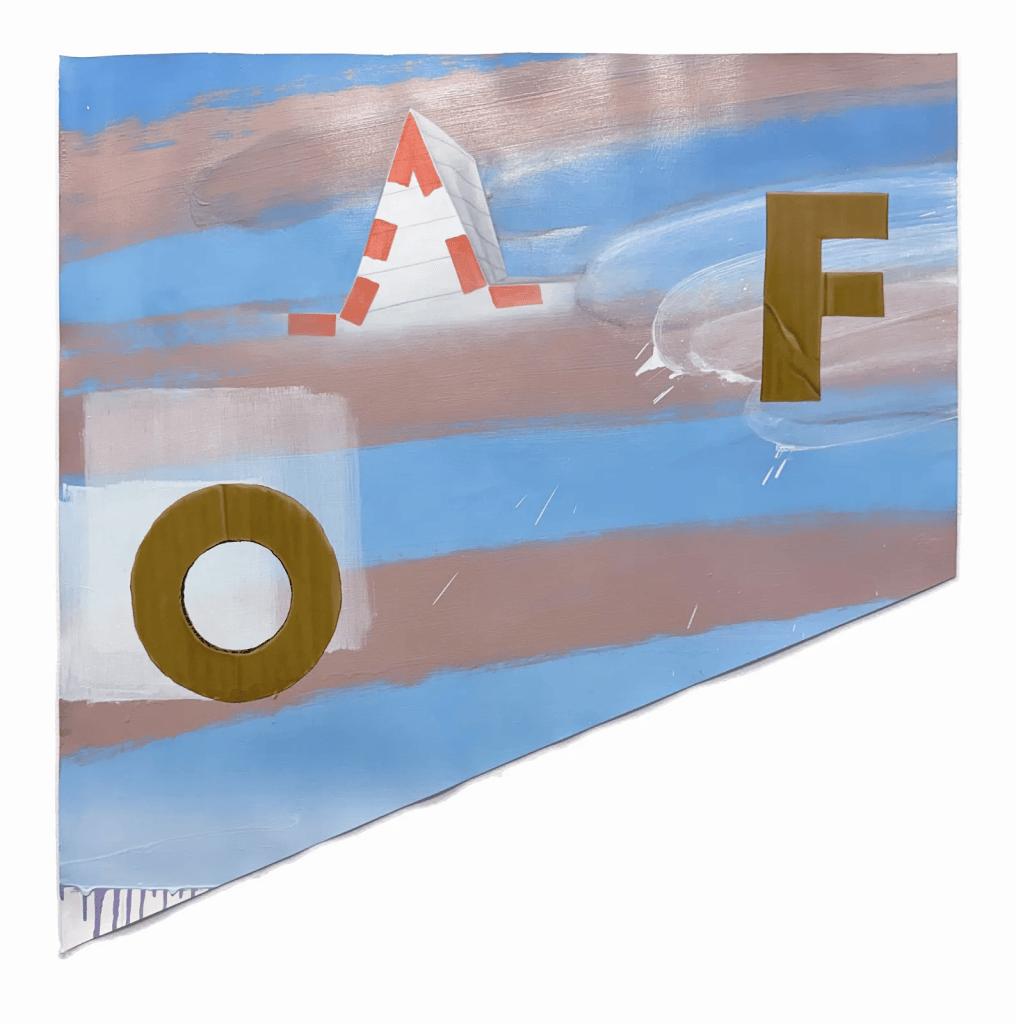
Craig Drennen: Well said, and yes, I think both of us have a suspicion of cultural authority in our artistic DNA. Since 2008, I’ve organized my studio practice in response to Shakespeare’s arguably worst play, Timon of Athens. In the first few years of the project, I really did see it as a slow-moving intervention into the Western canon, a term I always found suspect. After 18 years making work for each character in the dramatis personae, I’ve come to see the play as more as a psychological prosthetic device. It became an armature onto which I could graft my own subjectivity, which somehow gave me permission to let the work be more autobiographical. In the first sentence of The White Album, Joan Didion says, “We tell ourselves stories in order to live.” I’ve always loved that line, and in my case, I borrowed a neglected and forgotten play as the method to tell my story. I can’t speak for Damien, but for me I really do paint as if I’m acting. I try to work past whatever inherited scripts we’ve received as painters, to try to make something genuine happen. That’s why I love watching live theatre, because it proves our brains can handle disparate truths simultaneously. When the actors first walk onstage, we know they are actors, but within the first minute we can also believe the character they portray. Last fall I saw Alex Winter and Keanu Reeves in Waiting for Godot at the Hudson Theatre. Even then, the actors’ celebrity status melted away as my absorption in the characters took over. The same happens with painting. We know it’s just a flat surface with materials added, but at the same time we can totally believe in the pictorial space, or any other useful illusions, being portrayed. Brigitte Mulholland has a real eye for exhibition design, so it was great to have her direct the action.
The times when I feel the best about finished paintings are when they feel perfectly performed. The times the paintings disappoint me is when they feel over performed.
I am very happy to have my work in front of a French audience for the first time, and I hope it’s not my last (laughs). They know a lot about painting there, so the level of discourse is high.
TCOP: Why, after all these years, are you still painting? What appeals to you about applying paint to canvas?
DF: This question denotes a choice and sometimes I genuinely question if I do have a choice. From the age of 6 people around me in school and in my family would refer to me as ‘the artist’. The positive reinforcement meant that I never questioned this. When I was graduating from school I remember being surprised that my close friends didn’t know what they wanted to do after school. For me it was painting, that’s all I wanted to do. But I do remember being in my studio in my mid to late twenties when the realisation hit me that I don’t remember at any point choosing to do this. I’m not saying I was chosen to become an artist but being a painter became my identity and gave me a feeling of purpose.
In saying that I have at times wondered would I continue, a bad show or series of rejections can bring that into stark focus. But I think the clear answer for me is I’m still addicted to painting. I get high from it; I still get a rush when I enter the studio and smell the oil paint. When I am making new work the lowest lows when things aren’t going right just make me hungrier for that high when something clicks or a new avenue opens in your work. I think there is also the gamble of a new show that is addictive. There is always something I am chasing in a new exhibition. I don’t think it’s something an exhibition can necessarily give me so the low after can be severe but a week or so later, I’ll be straight back at it.
With regards applying paint to canvas, oil paint for me is still slowly giving up it secrets. I’m constantly surprised that after thirties years of working in the medium, I’m still in awe of it. I remember being in the studio in 2021 working towards a show and having the feeling of finally getting somewhere with painting. I felt I had finally hit on something I had been chasing since 2007.
CD: There’s something about painting’s simplicity that appeals to me. It has such primitive tools, like brushes. They are still just a stick with hair on one end. Yet maybe because of its simple operating system, painting has been able to learn from every new media that was supposed to kill it. Each new generation since the invention of photography has produced “threats” to painting—Dada, minimalism, conceptual art, and so on–but painting just recalibrated itself and came back a little stronger. Painting is like the flu virus; it just keeps coming back. I think Douglas Fogle might even have said that back in the early 2000’s. To be honest, I’ve always thought of painting as the first semi-conductor, a flat surface where material and information are managed. I approach painting with that in mind.
TCOP: Are you making the best work of your lives?
DF: I think I’m more excited about the work I’m making now than at any other time in my career. I hope this means it’s the best, but I am too close to it to rationally make this judgment call. Even as I’m typing this, I can feel my ego claiming otherwise. As an artist, I’ve always been led by my instinct. My core concerns have continued to be pushing my work and the medium of oil paint forward. Looking back over my career, there have been some missteps, but these have always built towards something greater. That’s the thing about making art: you never know if something is going to work until you make it. Even then, it can take some time to know if it has merit. You’re lucky when you know straight away something isn’t working. The best artists I know aren’t afraid to scrap something if they know it’s good enough. I remember being told in college that there are no great artists, only artists who make great work sometimes. I think this is true. It’s important to fail.
CD: If you type Timon of Athens into a search engine and my name comes up before Shakespeare’s, you will know that I’ve made the best work of my life.
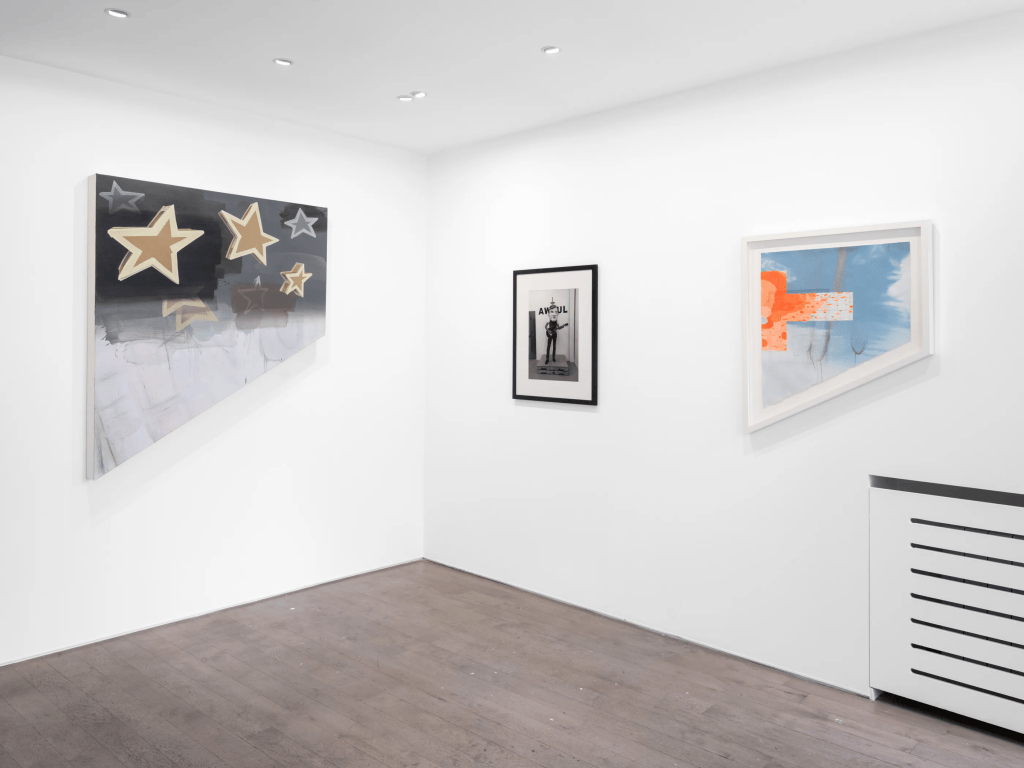
“Craig Drennen: Pale Fire,” Brigitte Mulholland, 81 rue de Turenne, 75003 Paris. Through October 10, 2026.
“Damien Flood: A Place to Disappear,” Brigitte Mulholland, 81 rue de Turenne, 75003 Paris. Through October 10, 2026.
About the author: Sharon Butler is a painter and the publisher of Two Coats of Paint.