Tag: Metropolitan Museum of Art

Obituary

Obituary: John Adams Griefen

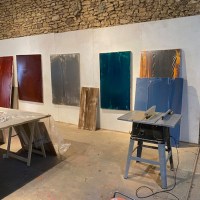
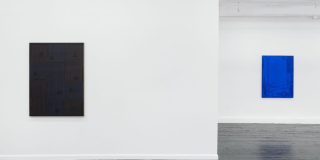
John Adams Griefen (b. Worcester, MA, 1942; d. Bergerac, France 2025) was an American artist and early Color Field painter who made important contributions to abstract art in the United States and in Europe. In his successful career as a painter he had seventeen solo exhibitions in New York City, the first at age 27. Foremost, Griefen is known for the essence of color in his paintings, and for many years, he made large, often monumental, acrylic paintings on canvas. 

Solo Shows

Spencer Finch’s inventive visual translations

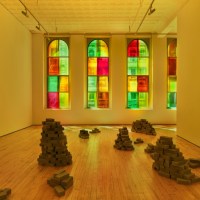
Contributed by David Carrier / Spencer Finch is fascinated by Japan, which he first visited some 50 years ago, when he was a teenager. “One Hundred Famous Views of New York City (After Hiroshige),” his current exhibition at James Cohan Gallery, includes four installations grounded in that experience. Fourteen Stones, inspired by a Japanese Zen garden and made with ordinary concrete bricks, encompasses simulacra of fifteenth-century garden stones. Even these banal objects, Finch suggests, warrant contemplation. For Moonlight (Reflected in a Pond), he has installed stained glass to evoke Japanese moon-viewing. Four LED sculptures present images that recast traditional Japanese haikus through lit color schemes. And Finch’s 42 watercolors reference Utagawa Hiroshige’s renowned One Hundred Famous Views of Edo, made in 1856–58, through present-day New York. 

Museum Exhibitions

The new Frick: A somewhat sentimental reaction

Contributed by David Carrier / Rebuilding seems to be a cyclical occurrence for older art museums. The collection expands, styles of display change, more capacious restaurants and shops may be needed. Older museums have to construct new galleries. To the original European galleries, entered atop the stairs at the entrance, the Metropolitan Museum of Art added space for Islamic art, contemporary work, and Asian paintings. Alternatively, a wealthy museum can rebuild almost from scratch, as MoMA has repeatedly done. Yet, for most of the time I have been going to art museums, New York’s Frick Collection has been basically unchanged, an island of stability. I remember once being shocked that one of its masterworks – Rembrandt’s The Polish Rider – was away on loan. No other major New York art institution has remained basically the same over such a lengthy period, celebrating idiosyncratic displays that mix sacred and secular works in a luxurious setting. Henry Clay Frick had a great eye.