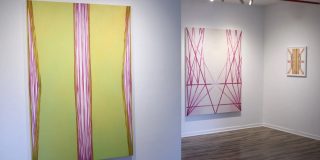
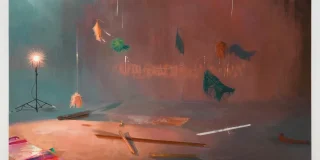
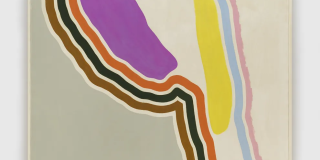
Contributed by Anna Gregor / It is a relief when the curator of a group show doesn’t tell viewers how to understand the work selected […]

 Award-winning NYC blogazine with a focus on painting
Friday, October 2, 2026
Award-winning NYC blogazine with a focus on painting
Friday, October 2, 2026
Contributed by Anna Gregor / It is a relief when the curator of a group show doesn’t tell viewers how to understand the work selected […]

Contributed by Jacob Patrick Brooks / In “The Art Critics Who Don’t Want Good Art,” Anna Gregor describes a cultural hospice. The caretakers are a set of bad actors. They’re online critics who have replaced the labor of criticism with the catharsis of complaint, trading in “likes and clicks” for a smooth, sugary candy that requires only passivity and attention from its audience while it rots their teeth. This feedback loop, she argues, drowns true engagement and criticism in a “deluge of mediocre art.” It is a compelling diagnosis, but one delivered from the one place a critic cannot afford to be: behind a veil. Gregor deals exclusively in archetypes and generalizations while allowing the reader to “fill in the picture.” The playboi, the intellectualist, the yelper, and so on. She’s built a perfect haunted house and populated it with ghosts of her own making.
Contributed by Anna Gregor / If yesteryear the call for negative art criticism rang clear and true, today complaints about the state of art blur into an inarticulate whine. Be they artist or critic, Marxist or capitalist, academic or anti-intellectual: everyone is dissatisfied. Or so it seems. Despite their complaints, however, one starts to suspect that few of the YouTubers, Substackers, or Instagrammers who presume the title of critic want the circumstances they complain about to change, so lacking are they in convincing diagnoses of present problems and convinced visions of alternatives, not to mention actual critical engagement with artworks.

Contributed by Anna Gregor / The anxiety of being unable to distinguish artifice from nature has haunted art since the Ancient Greeks. No one wants to be the prisoner who mistakes the shadow on the cave wall for Truth, or, more embarrassingly, the bird who tries to eat the grapes in Zeuxis’s trompe l’oeil still life. But today, as human-made technology permeates all aspects of life, the difference between what is artificial and what is real is not so clear. This ambiguity is most apparent in the city, where nature manifests itself as a force of decomposition and aggregation that acts on all objects indiscriminately, whether “natural” or human-made. Here, art and nature are indistinguishable. This relation of artifice and nature in the city is the driving force behind “Aggregate,” now up at Studio 9D.

Contributed by Anna Gregor / Ian Myers’ paintings blur the lines between art, nature, and miracle, asking what painting’s vocation is at a moment when anything can be art, nature is under threat, and miracles are unfathomable. His five paintings, on view in his solo show “immortal flub” at New Collectors Gallery, are obviously art. Rectangles do not occur in nature, nor do the white gallery walls on which his rectangular paintings hang. But these rectangles don’t act like windows that allow us to enter an illusionistic space, as we expect from mimetic paintings. Nor do they reveal the human hand or thought processes that we assume to be involved in making abstract work. They eschew the exhibitionist gesture of Abstract Expressionism, the clarity of hard-edge abstraction, and the planned step-by-step process of much contemporary abstraction.

Contributed by Anna Gregor / Tess Wei’s black paintings and graphite works on paper are simultaneously material and apparitional, objective and spectral. Darkly painted wood panels hanging starkly against white walls, they are resolutely present as physical objects while at the same time too slippery to grasp visually as static images or compositions.