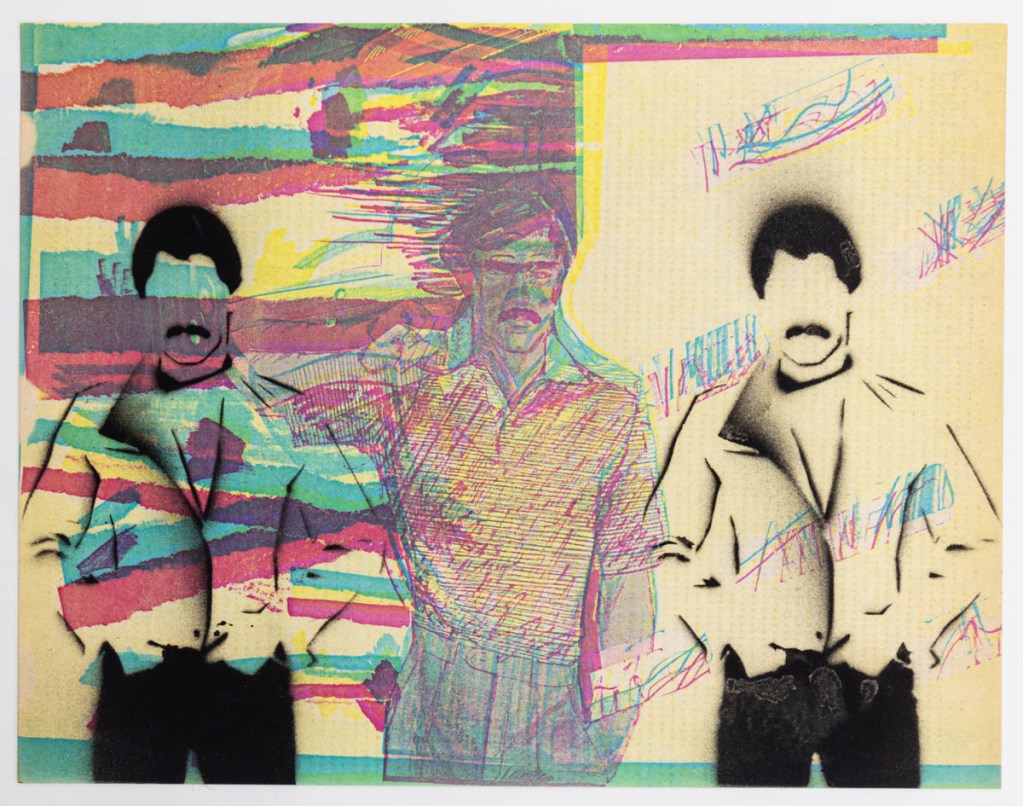
with spray paint, 8 1/2 x 11 inches
Contributed by Bill Arning / Museum exhibitions imply a certain gravitas: objects on museum walls are understood as serious artifacts of our species’ highest impulses. Yet, for many curators, those that don’t look like high art have become a rich field of study. The Brooklyn Museum’s stupendous 2023 exhibition “Copy Machine Manifestos,” the first major museum survey of punk zines and flyers, demonstrated that a humble Xerox flyer incorporating content that looked unserious, teenage, or deliberately rebellious was a meaningful form of cultural production. Teddy Sandoval, a gay Mexican American artist who died of AIDS in 1995, made such art copiously. “Teddy Sandoval and the Butch Gardens School of Art” at El Museo Del Barrio offers mostly small-scale Xerox punk zines, erotic magazine illustrations, album covers, decorative ceramics, and minuscule works on paper. It is an outstanding show. Its overflowing curatorial style, bringing in a dozen kindred artists, is a poignant reminder that artists’ trajectories are inseparable from their economic and social contexts. First brought to broad public attention in 2017 in the touring group show “Axis Mundo: Queer Networks in Chicano L.A.,” Sandoval’s rediscovery here reinforces his individual importance.
In a self-consciously grandiose provocation, Sandoval named himself and his collaborators the Butch Gardens School of Art after a beloved leather bar in Los Angeles’s Silver Lake neighborhood. They mounted a kind of institutional critique, challenging the dry conceptualism of John Baldessari, the rough swagger of Ed and Nancy Kienholz’s installations, and the buoyant mystical experiences of the Light and Space artists such as Robert Irwin that dominated the LA art scene. Sandoval was far from uninformed about those movements, which were re-centering painting, installation, and sculpture. His practice, though, was in dialogue with Mail Art and Fluxus, as well as Marcel Duchamp, Frieda Kahlo, Mexican popular culture such as telenovelas, and placas, the traditional Chicano graffiti signatures used to claim public space. The simultaneous survey of Fluxus artist Alison Knowles at NYU’s Grey Art Museum makes a nice generational window on a time when artists deliberately made anti-art-market gestures. Well before “identity politics” entered the critical lexicon, Sandoval played with identity markers and the discomfort of being an out gay man in a Mexican cultural world that prized masculinity, reducing his male ideals to free-floating macho mustaches with no eyes or mouths, as though glimpsed across a dark bar.
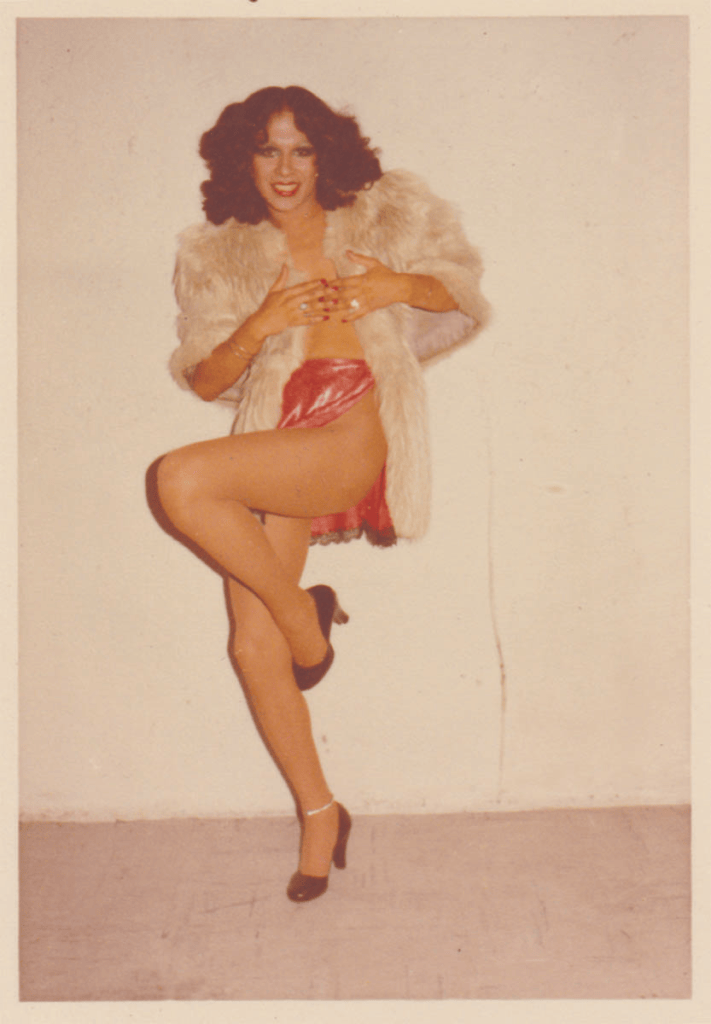
de Terry Holiday, 1979, C-print, 3 5/8 x 2 9/16 inches
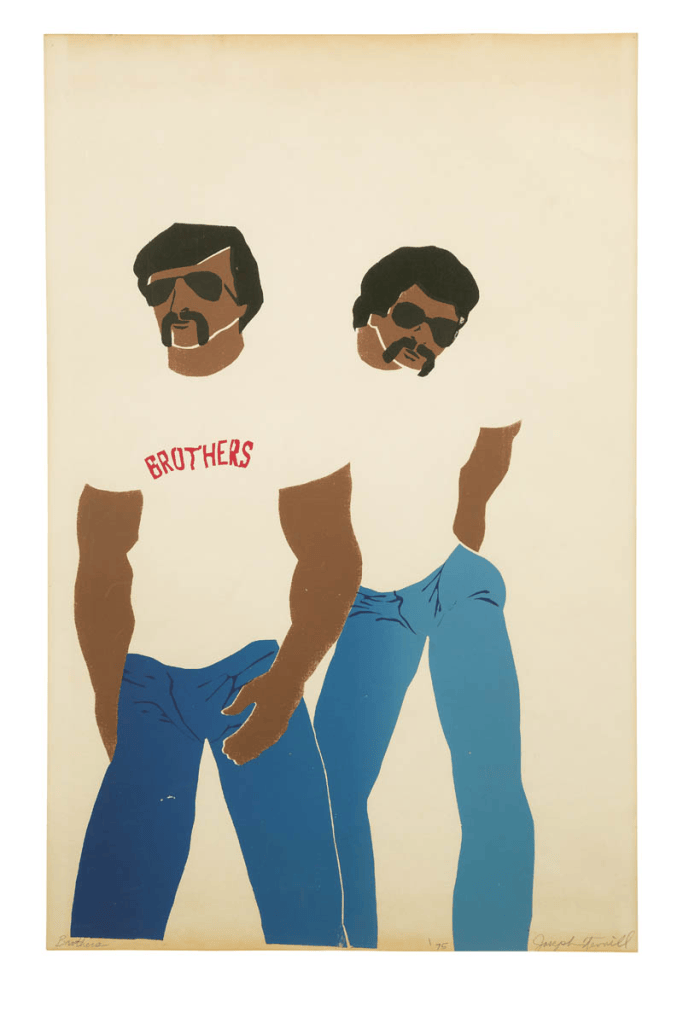
Sandoval’s ambitions and creative leaps are startling. Among his extraordinary strange objects is a tiny ceramic mobile with floating underwear hovering around a naked man. He was also part of the creative team at Moby Dick Records, providing visuals for its early disco releases. Based in San Francisco, the label was crucial to the history of dance music; seven of its ten founders were early victims of AIDS, which put an end to its era. The mix of machismo and drag in Chicano gay life affords Sandoval’s work resonant contradictions. Nodding to Duchamp’s female alter ego Rrose Sélavy, Sandoval created his own in Rosa de la Montaña, who, in drag, sports an anachronistic veil that does nothing to obscure his signature mustache. While his practice of signing works simply “Teddy” in large font across the front may seem flamboyantly amateurish or juvenile, the well-researched catalogue points out that established gay erotic artists like Tom of Finland and refined hyper-masculine pornographers such as Etienne and Rex also used single names, prominently rendered. Sandoval’s signature was cultural tribute.
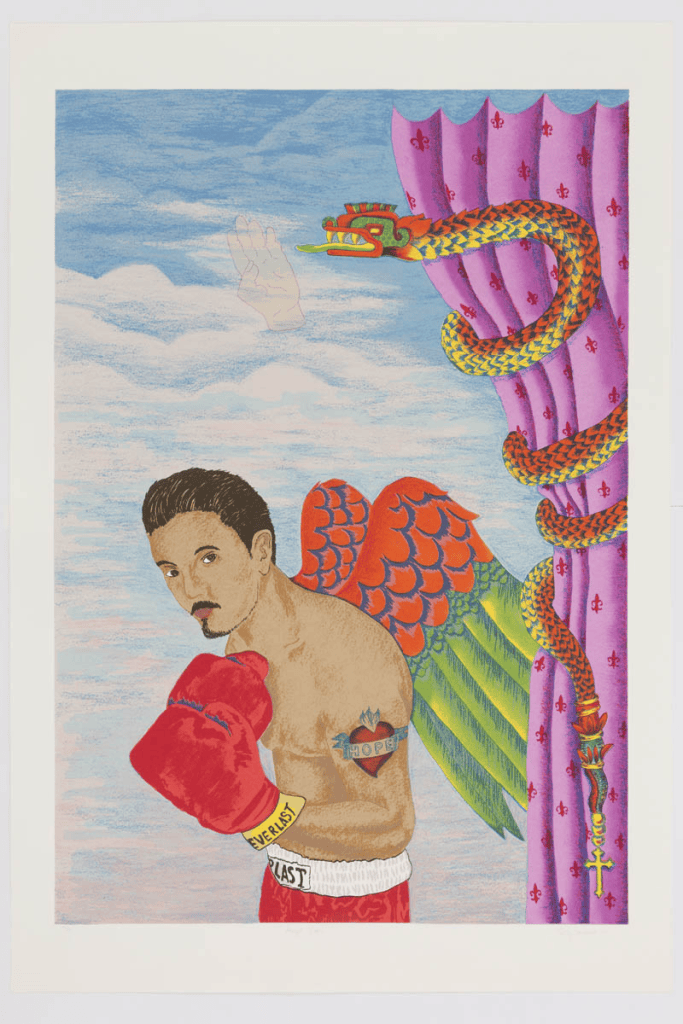
Curatorially, the show is occasionally a bit too expansive. As a founding member of VIVA ARTS, a quarterly magazine for gay Latin artists, Sandoval participated in an unusually broad dialogue. But the inclusion of female and non-binary artists, beginning in the first room with Ginger Brooks Takahashi, risks confusing casual visitors. Still, the strategy has its rewards: Ever Astudillo, from Bogotá, is a new discovery for many North American audiences. Sandoval’s engagement with identity can be funny, but often in ways younger artists might find inappropriate, such as his use of the hot chili pepper as a signifier of Mexicanness. Nevertheless, the Mesoamerican artworks his other alter ego Macho Mayan inhabits are irresistible and charming. The show ends with a large print based on an earlier painting of a boxer with angel wings, a tattoo reading “hope,” and a Mayan snake pulling back the curtain on his mortality. The word “Everlast” – the famous brand name etched on the fighter’s glove – takes on a new meaning when an angel is presented by an artist who knew he was dying. That this show, first exhibited at the Vincent Price Art Museum in 2023, has finally made its way to New York is cause for celebration.
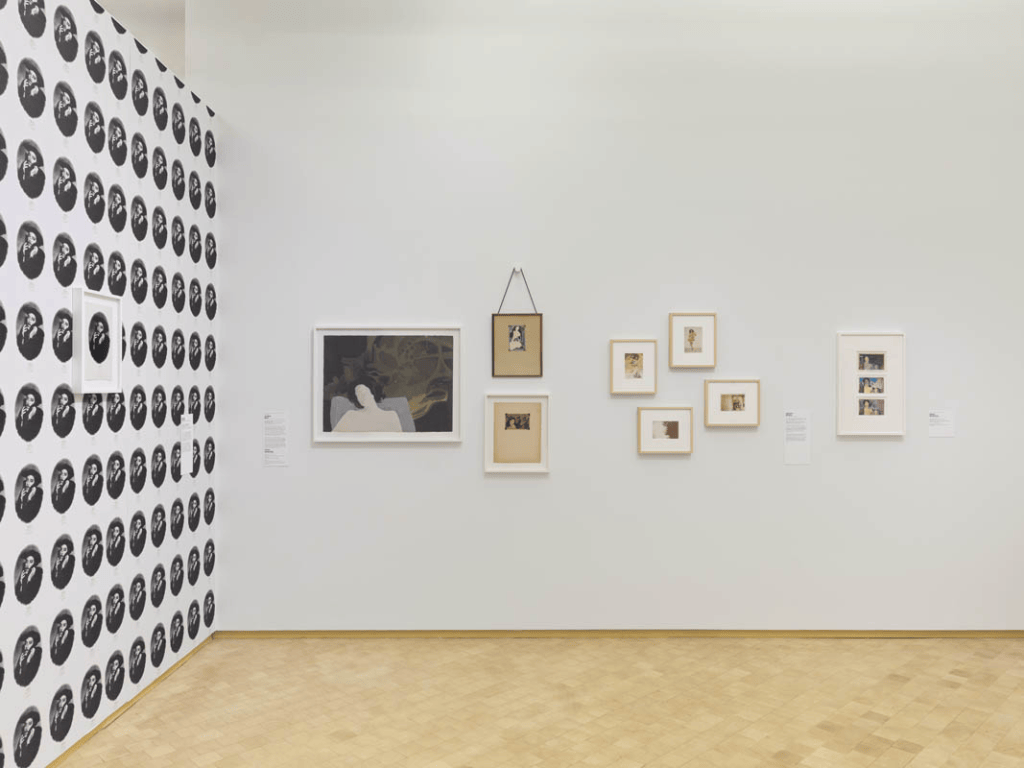
2026, installation view
“Teddy Sandoval and the Butch Gardens School of Art,” El Museo Del Barrio, 1230 Fifth Avenue, New York, NY. Through January 10, 2027.
About the author: Bill Arning is a curator, critic, advisor, writer, and itinerant maker of pop-up shows based in Old Chatham, New York.