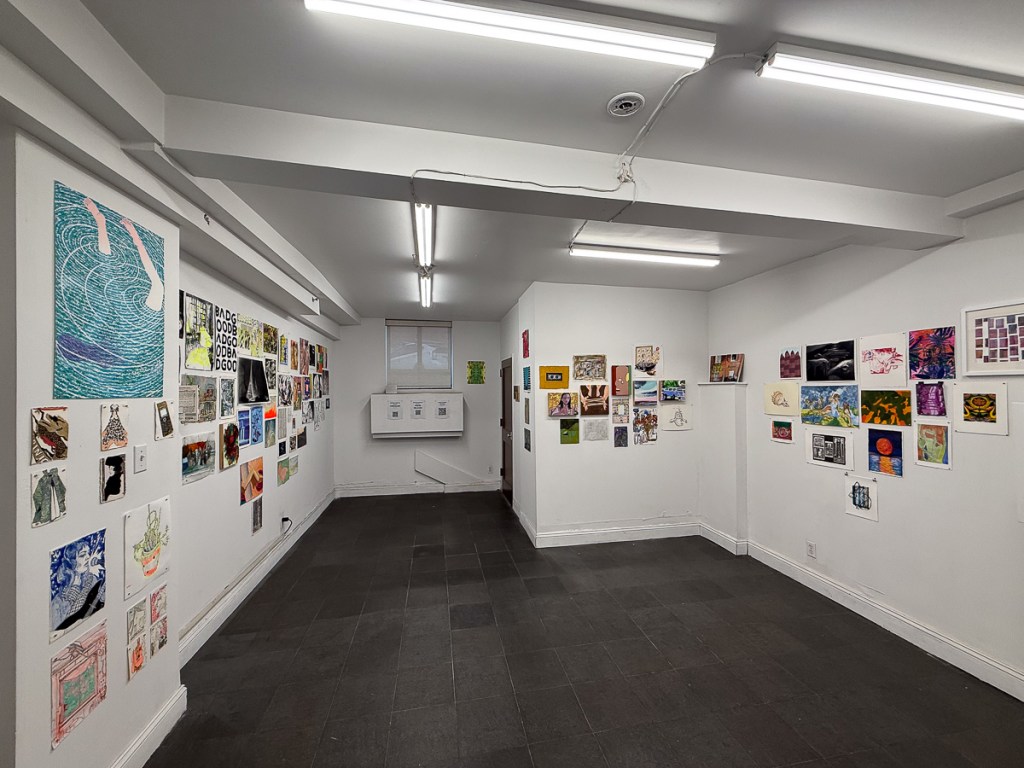
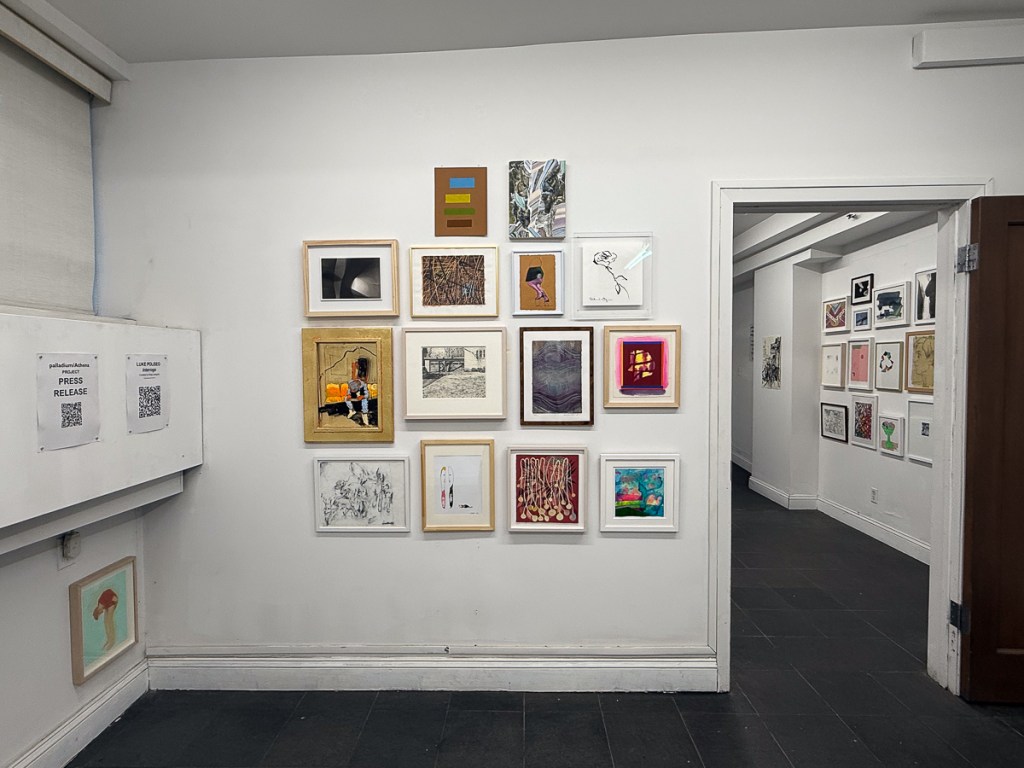
Contributed by Mary Shah / Greg Lindquist and Theresa Dadezzio, co-founders of palladium/Athena Project, just opened their inaugural show, “Works on Paper,” featuring an impressive 175+ artists at their new curatorial space in Greenpoint, Brooklyn. They stipulated that the work be 12 × 18 inches or smaller, on paper, for $1,000 or under, yielding a range of works by such established artists as Rackstraw Downes, Erika Ranee, Ann Craven, Benjamin Degen, Hope Gangloff, Robert Smithson, Loren Munk, and wunderkind Sophie Lindquist. I sat down and talked with Theresa and Greg about the project.
Mary Shah (MS): Greg and Theresa, you’re both seasoned artists with considerable exhibition histories at galleries and museums, as well as college professors. With such busy dance cards, what was the impetus for this curatorial project?
Theresa Daddezio (TD): For a few years now, Greg and I have discussed wanting to curate a show together, and this idea kind of solidified after a drawing practices event hosted by Benjamin Degen in November 2023. Beyond that, both Greg and I had been discussing the current state of the economy, how much people are struggling right now — SNAP benefit cuts, and for artists’ galleries closing, making enough sales — and we wanted to do something that could support our peers while also raising money for those in dire need. It seemed like the right moment, and everything moved quickly from there.
Please click here to contribute to the Two Coats of Paint year-end fund drive
Greg Lindquist (GL): I’ll add to it that we had done various one-off projects under this name, such as the preview for an exhibition that I did in Los Angeles last year. And also, I think part of the push that I needed was when Seren Morey from Guerra Paint approached me. I had been talking to her for a while about doing this project. She needed a slot filled at their gallery at their new location in Maspeth and asked if I would curate something. The first person I thought about was my friend Luke Poliseo, who was my student when he was 18, and I’ve watched his work develop into something powerfully poetic and materially arresting. It was the right time to do that show. When I was thinking about that show, I realized – as my aunt would say – “Hell’s Bells, let’s do palladium/Athena for real.” And we pulled this whole thing together in about three weeks. We didn’t know if we would get 30 artists involved, much less 186. I think the number of submissions – over 250 – has shown that there is a dire need for more spaces in which artists can exhibit as our country becomes more and more entrenched in cultural division and public funding is rescinded. I tell my students it’s the 1980s culture wars all over again, except on steroids and even more crass.
As Theresa said, I think it was shameful that the current administration has been playing political football with people’s SNAP benefits, basically starving the structurally dispossessed. So we made the show a fundraiser – 10% of sales goes to Meals on Wheels, which feeds local people in need, 70% then to the artist. We declined co-consigning work through galleries; it felt silly as the pie was small to begin with. The generosity of very established artists has been heartwarming. We had artists who said, “Take this work. We don’t want any of the proceeds. Donate all of it to charity.” That was extremely moving; it brought me to tears when collecting the work from their studio. And we had artists from Berlin, Tbilisi, the Midwest, California. And the diversity of practices across the world was fascinating. We learned about so many new artists. It was hard work, but immensely pleasurable and exciting.
MS: Can you talk about the name “palladium/Athena”?
TD: The name was conceived while we were on a flight back from a trip to Montana, Wyoming, and Utah. We were experiencing the vastness of the landscape, the sky, and also the industry of mining – thinking about material and chemical elements that were desirable within the landscape. Palladium came to mind as a rare-earth metal rooted in antiquity.
GL: Etymologically rooted –
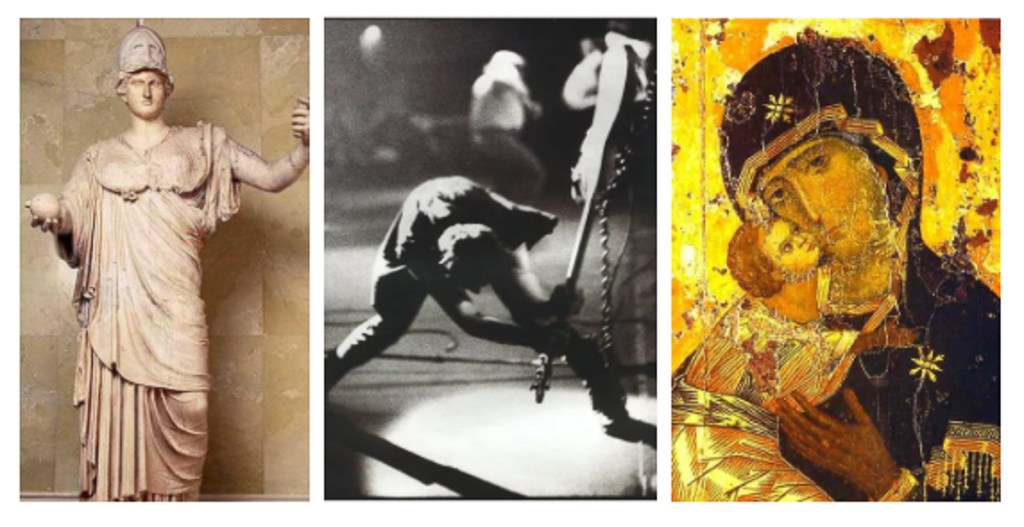
TD: Yes – it’s named after an epithet for the Greek goddess Athena when she slew Pallas. So Athena becomes the counterpoint to palladium – the celestial goddess contrasted with the earthen mineral. We were thinking a lot about that pull between the earth and the sky – as a kind of visual orientation. The name also reflects ideas that interest us both in painting: the alchemical effects of a mineral, and how it can become transcendent through context.
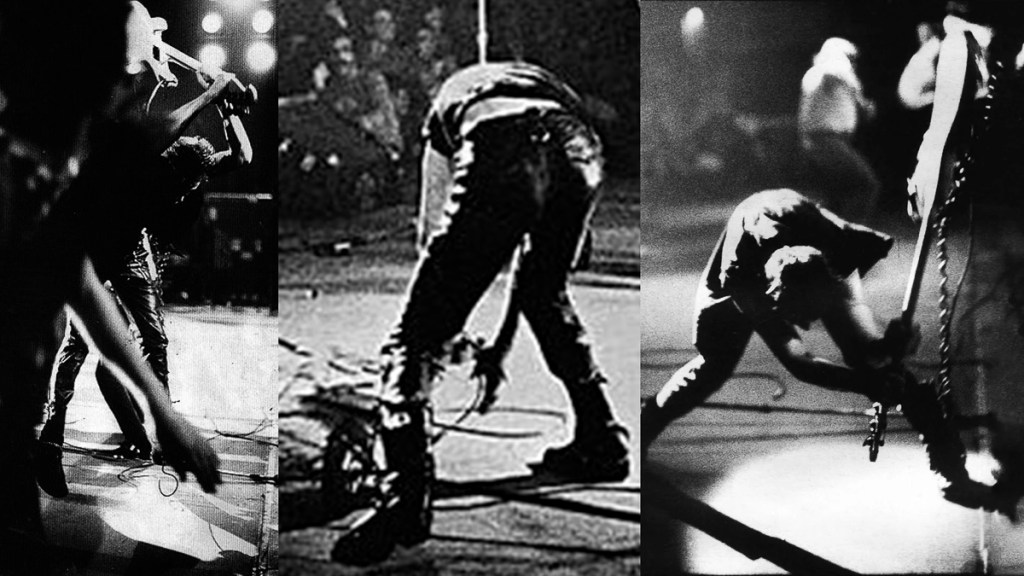
GL: And it’s fascinating. Benjamin Degen looked at what we were doing and said, “This is so punk.” Ben meant the do-it-yourself aspect of the counter-hegemonic project, taking the means of distribution into your own hands by making our own “gallery.” The enthusiasm was contagious: Ben had come to install work of he and his wife Hope Gangloff on the day of opening and ended up helping finish the checklist! Palladium, of course, is also the name of the old Manhattan entertainment venue – originally called the Academy of Music – a movie theater, concert hall, and nightclub on East 14th Street. The Clash famously played there in September 1979. The iconic photo of Paul Simonon smashing his bass – which became the London Calling cover – was taken at there. Norm Paris is working on a geode hydrocal cast facsimile of that smashed bass for a future palladium/Athena show. The name connects the esotericism of Athena, the earthiness of palladium, and our love for playing music, a kind of trifecta. Theresa plays drums, I play guitar; we play in a band called CATS (the band) with our friend Jason, who brings the third heat. Theresa and I did karaoke for nights on end during the pandemic before we got sick of each other’s go-to songs!

Many artist-musicians are in the show: Bobby Burg (Love of Everything, Joan of Arc); Ray Borchers (AITIS BAND); Harrison Haynes (Les Savvy Fav); Al Burian (Milemarker). The work by Ray actually was just used for a tour poster for Midwest “emo” cult legends’ Cap’n Jazz + Rainer Maria. It’s also cool to reunite Al and Harrison, who are childhood friends and played together in Hellbender, one of the first punk bands I saw live when I was 16! Bobby had the brilliant idea of trying to get Blake Schwarzenbach (Jawbreaker) to show some of his electrifying drawings he has been posting on Instagram, but Blake seemed perfectly fine dancing by himself, as Billy Idol says.
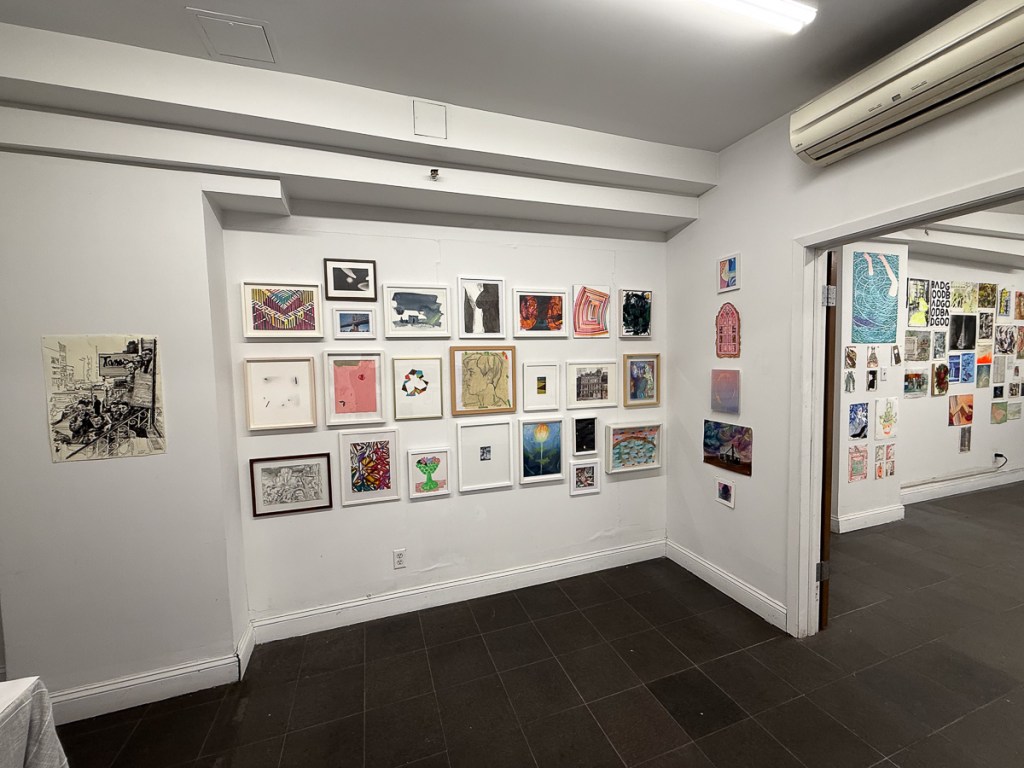
palladium/Athena contains hidden meanings stitched together through etymological associations with language – which mirrors how we think about installing shows. We also took inspiration from Jennifer Bartlett’s Rhapsody, which uses the grid as a glue pulling together varied forms of mark-making. Similarly, we use the grid to stitch together different images that become a sort of palladia of people’s drawing, painting, and art practices.

MS: Fascinating to hear about all the threads weaving through this project, a true tapestry of your interests and connections – a community that, by nature, just keeps growing and extending, symbiotically. I also appreciate the undertones of musical connections flowing through it. Beyond that, I often think about how art schools churn out hundreds of hopeful artists every year into a gallery system that cannot support even a fraction of them. Galleries struggle to support mid-career artists as well. How do you think this curatorial project space fills a gap or a need in the current landscape?
TD: I don’t think art schools churn out artists. People go to art school because they want to share their voice, their perspective. These young people have a vision they’re eager to share with the world. Art schools can foster and help them realize that vision, but they come into school with it. These people will always exist.
GL: Many people go to art school trying to become artists and leave with other ambitions and callings. Art schools are great at educating people to think visually. But to the question – we’ve already spoken to part of this – galleries are folding left and right, moving online, avoiding brick-and-mortar models, or becoming nomadic across global art fairs. We’re interested in giving a platform that is inclusive and grounded in interesting projects we’re passionate about. We’re not doing it for money or fame. This whole project is about giving people platforms and making art more democratic or populist, removing snobbery from the equation. You have artists with extensive histories of museum shows and collections—MacArthur Genius grantees showing next to artists with little visibility. That gesture itself is generous and as we said the need for community was palpable. Artists were trying to give us work the day we were opening. They are flat-footed, and I say that lovingly. But it showed the hunger for this kind of opportunity.
TD: And the real beauty we found – especially at the opening, which drew about 400 people – is that once the work is on the wall, the name is removed. The work stands for itself, regardless of who made it.

MS: Perhaps “churn” wasn’t quite the right word. As a gallery director for over 15 years, I got used to letting down artists daily, from college-age to well into their 70s. The fact is, as we’ve established, the current brick-and-mortar system is not democratic and cannot sustain the number of talented people with something to say. How do you, with that in mind, see this project evolving?
GL: We have several programming ideas for “Works on Paper,” a way to bring new people to the show. We have a list of ideas for shows. Naturally smaller shows are less of a lift. These three weeks took a lot out of us – we got very little sleep. But it also was very propelling. We had a team of seven receiving work, installing, and running the opening, and it was a wonderful group. Luke and I stayed up until midnight the night before installing; deliriously, we agreed in the morning to revisit our choices made at the end of the night. The next day we both were in agreement, standing by our choices! Theresa served as both sales director and installation manager. She is truly a force to be reckoned with. We have ideas for two- and three-person shows exploring certain concepts. We don’t necessarily see this project as having a fixed physical space. It could be nomadic, partnered with other spaces or galleries. We don’t share the address except when necessary; we want it to have a certain mystique, like an illicit speakeasy. The exhibition lives both physically and online — through platforms, linked documents, and social media.
TD: To add to that, we would love to expand our curatorial practice by inviting other curators to propose exhibitions that fit our ethos. We also want to continue working multigenerationally – with artists who have been around for a long time but maybe never had the luck of showing their work, as well as with emerging artists right out of and still in school.
GL: Yes – intergenerational. Another discovery: while researching submissions, I went down a rabbit hole and learned one of the artists, Robin Tewes, (according to her Wikipedia entry) was a Guerrilla Girl who has had solo shows at the Whitney, PS1, and MoMA. Great artist. I already loved her submission from a cold read, so that felt doubly special. It shows the humility and excitement people had to be part of the show. Another special work is the drawing by Loren Munk, a lifelong student of art history, capturing the moment when young Abstract Expressionists lined up outside with their paintings on the steps of Tanager Gallery on East 10th Street in 1956, waiting to submit to an invitational show juried by Lois Dodd and Irving Sandler. Rich with the spirit of that era, Loren evokes a contemporary echo in our show of those early DIY gatherings and the ongoing impulse to build community through art.
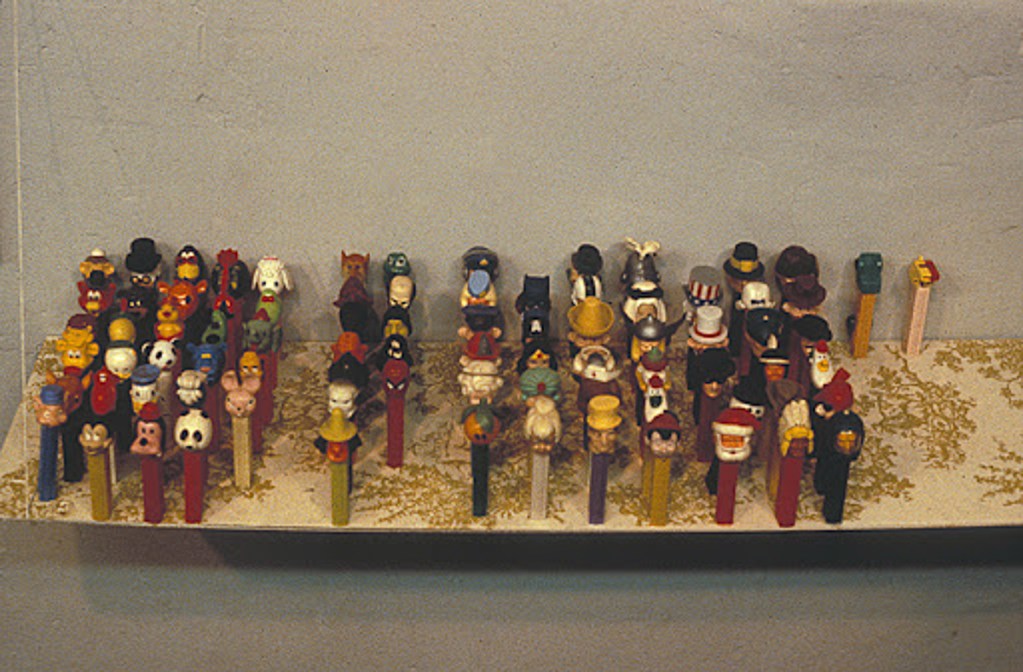
Mary, your question mentions a democratic approach. I always think of Group Material – primarily Doug Ashford, Julie Ault, Felix Gonzalez-Torres – and how they did “The People’s Choice” in 1981 in the East Village. I also feel a special kinship with Doug, who has moved fluidly between painting and social practice. Group Material knocked on doors asking residents to contribute personal artifacts to their storefront gallery like Pez dispensers, votive candles, family portraits, images of Christ – things that truly flipped the high/low hierarchy without becoming so easily commodified as in Pop. The most shocking object in that show was the infamous Robert Morris S&M poster; I guess the analog in our show was what we call “the Bermuda Triangle of Pornography.” We didn’t want to censor difficult work and you’ll just have to see it to understand. So the installation style of Group Material – merging museological and salon hanging – influenced us. The phenomenological relationship of work in space is an antidote to the virtual selling of art by JPEG during the pandemic. We want to bring the physical experience back. We want art to be accessible, and for artists to own each other’s work. That has already happened. As the mantra goes, “make marriages, not sales.”

TD: What comes to mind is the Bushwick art scene when I left undergrad – artist-run spaces, DIY energy. That felt like what the art world was. I didn’t know how ephemeral it would be. Many artists from that era became more established; many spaces closed; new ones opened in more expensive neighborhoods; the bubble inflated. Now the bubble feels like it’s starting to deflate, and there is a real need for artists to show other artists again – to reinvigorate the energy of being a maker. I hope this space inspires others to do similar things, to create more neighborhoods of art communities.
GL: I’m still in awe that you ran Associated Gallery with Jen Hitchings and Julian Jimarez-Howard, in your early 20s. That space was the site of some wild shows: self-cannibalizing leeches, Hot Mammas (artists who were mothers), all kinds of plants in You Are My Sunshine, which drew a New York Magazine review from Jerry Saltz, who said it showed how alive Bushwick was. I hope we can do the we-are-in-our 30s-and-40s version of some feral shows like that soon!

MS: No shortage of ideas here! I’m very excited to see what’s next for palladium/Athena Project.
“Works on Paper,” palladium/Athena Project, 100 Jewel Street, Brooklyn, NY. Through January 9, 2026. Open Saturdays and Sundays, 1–6 PM and by appointment. Visit @palladium.athena.project on Instagram for more information.
About the artist-gallerists: Theresa Dadezzio is a New York painter. She has exhibited work at Nathalie Karg Gallery, Hesse Flatow, DC Moore Gallery, the New York Studio School, and Transmitter Gallery in New York, Pentimenti Gallery in Philadelphia, the University of Hawaii at Mānoa, and Studio Kura in Itoshima, Japan. Her work was featured in New American Paintings. Greg Lindquist is an artist, writer, and curator whose exhibitions examine the intersections of art, ecology, and landscape through projects such as Social Ecologies at Rail Curatorial Projects in Brooklyn. His work has been exhibited at Cameron Art Museum, Dimin Gallery, DC Moore, The Landing, Lennon Weinberg, the Brooklyn Academy of Music, the University of Arizona Museum of Art, the Weatherspoon Art Museum, and the North Carolina Museum of Art.
About the author: Mary Shah is a Brooklyn-based painter, independent curator, and consultant. She is represented by Rick Wester Fine Art in New York.
Please click here to contribute to the Two Coats of Paint year-end fund drive