Contributed by Bill Arning / In the recently concluded, beautiful, and highly informative history of Tarot at the Morgan Library, the opening galleries traced the cards’ transformation from a simple game into instruments of divination. The second half explored modern artists making their own decks. While many were delightful, some seemed merely to mine Tarot’s sexy image bank for pictures to recreate in their signature styles. A standout was Adam Putnam, whose cards fairly exuded a spiritual aura. Unsurprisingly, they had been produced as a limited-edition deck intended for actual practitioners.
Putnam understands Tarot’s interior logic: no card possesses a fixed meaning independent of its neighbors in a particular configuration, or “throw.” In isolation, each is but a cryptic fragment. A gifted reader considers which cards land together, which appear upside down, and the gaps and contradictions between them, intuitively weaving these enigmatic passages into a compelling narrative. Putnam’s artistic practice operates similarly, combining seemingly irreconcilable information into unexpectedly resonant meaning.
Putnam is exceptionally tall, and now that the six-foot-seven John Baldessari has departed, Putnam and Mark Bradford might be tallest celebrated living artists. His early architectural sculptures suggested a life spent ducking through ordinary doorways. His memorable 2023 exhibition “Holes,” also at P·P·O·W, included a massive tower punctuated by mysterious apertures, some emitting light. Its mythic atmosphere evoked the Tower card, signifying catastrophic disruption but also potential rebirth. During that exhibition, Putnam offered readings with his hand-printed deck. Word is that his divination skills were first-rate.
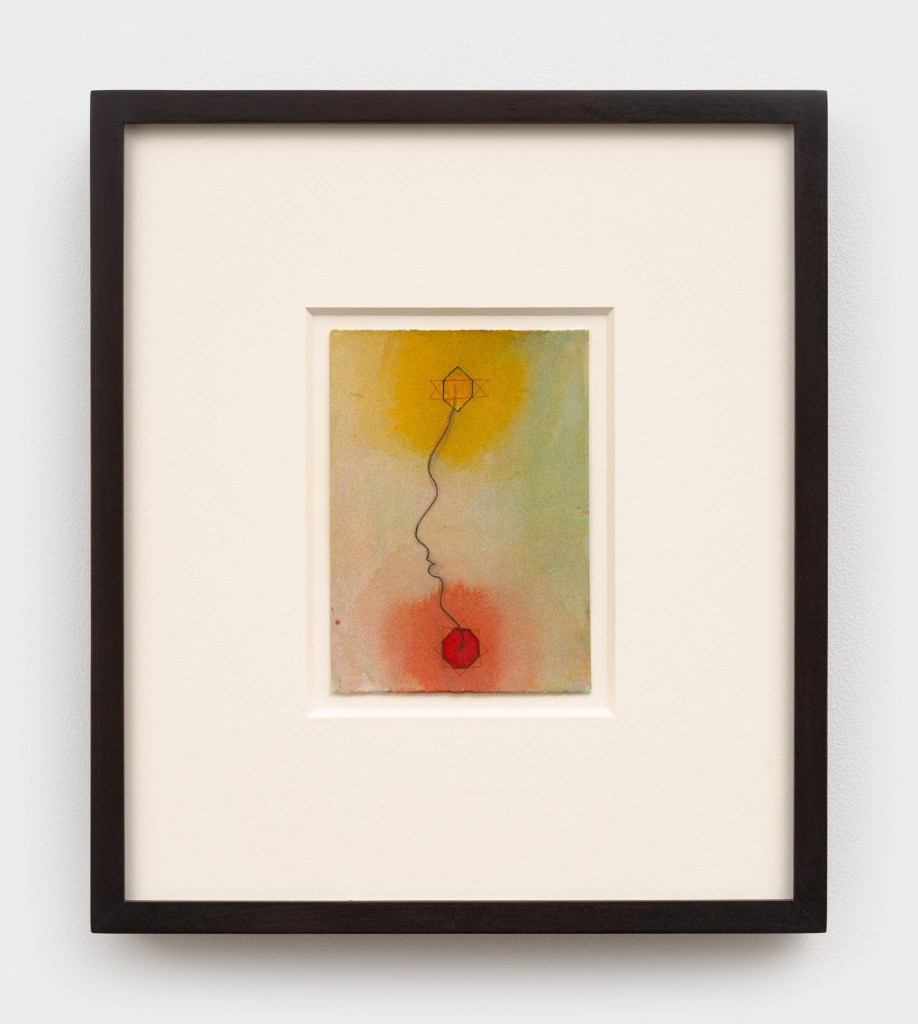
Frame: 12 3/4 x 11 1/4 x 1 1/2 inches
Courtesy of Adam Putnam and P·P·O·W, New York
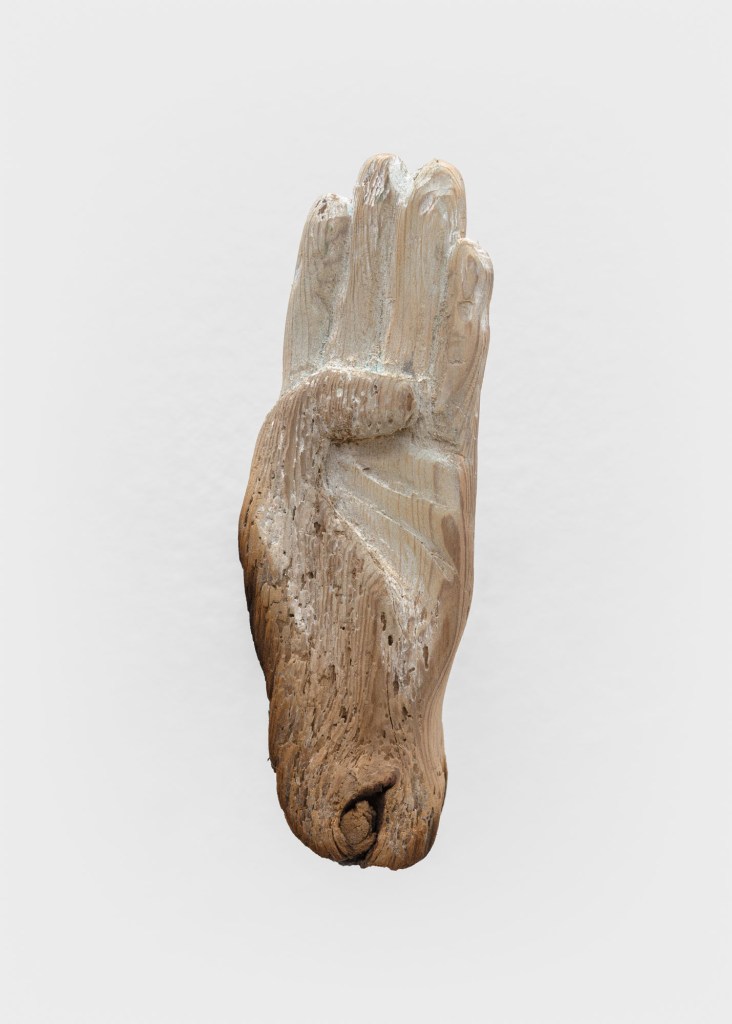
reclaimed wood, 4 1/4 x 1 3/8 x 7/8 inches
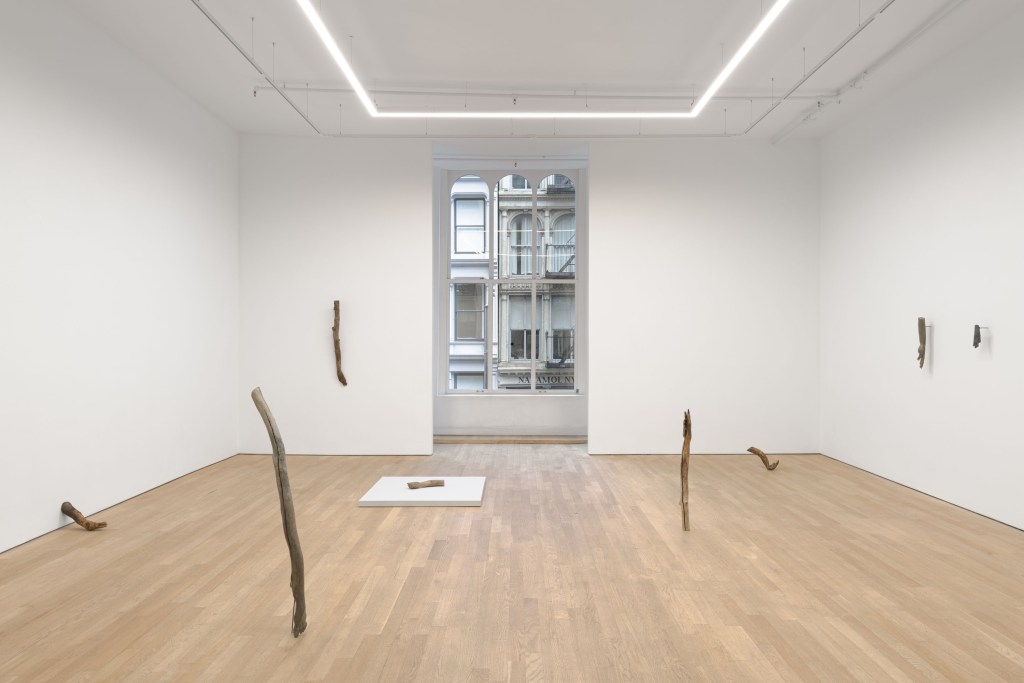
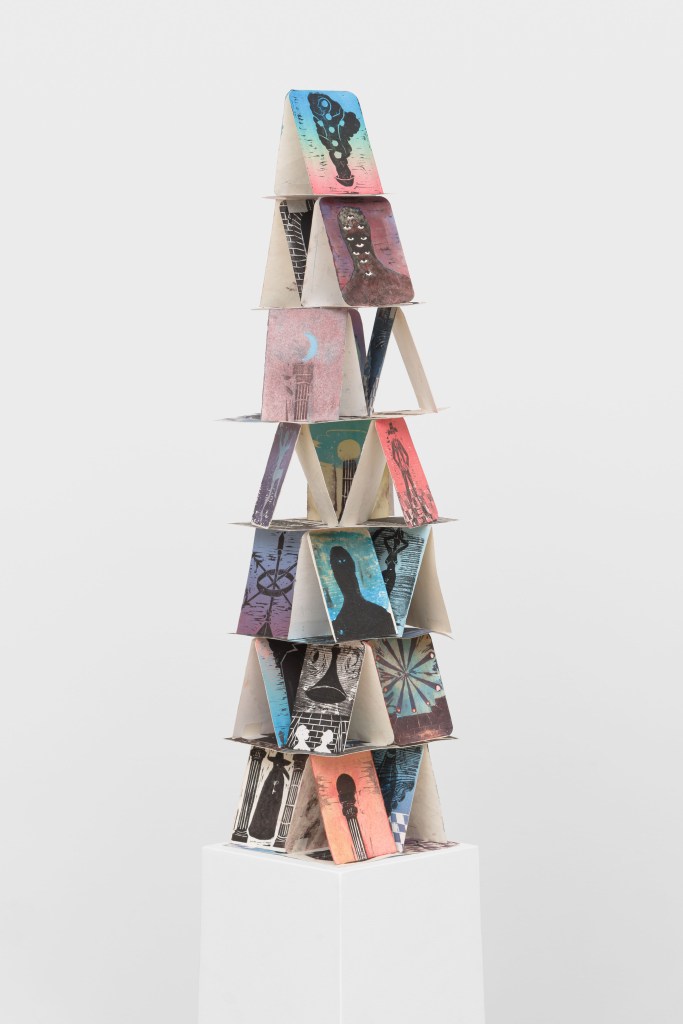
While previous exhibitions emphasized verticality and our bodily negotiations with the built environment, “Deity” is Putnam’s first devoted primarily to looking downward, towards nature and the earth rather than into architecture. He has been spending considerable time at his family cabin in Maine as well as in Iceland, whose rugged volcanic landscapes possess their own poetic charge. A smaller tower appears here – literally a house of Tarot cards offering an illusory entry into private systems of meaning. Tower (for Jodorowsky) honors the great filmmaker whose instructional book Putnam studied while teaching himself to read cards. But the exhibition’s real excitement gathers in the windowed front gallery, where a large grouping of reliquary-like sculptures occupies the floor. Evoking Christian, Buddhist, and Hindu devotional iconography alongside classical dance gestures, they transform pieces of fallen wood, which Putnam gathered during his wanderings, into carved arms and hands. Some, however, are considerably gnarlier, recalling the petrified monkey paws displayed in roadside freak shows.
The checklist records each fragment’s geographical origin, mostly around his family’s Maine property. One piece of charred wood came from an Icelandic island devastated by a volcanic eruption. Putnam speculates that it might be a remnant thereof – a humble fragment of wood carrying an entire geological mythology. Each limb suggests a gesture of supplication, blessing, or devotion. Several sport nail polish, a reminder that divinity requires both male and female aspects and that in serious theology the Godhead has always been non-binary. Putnam’s queering of the sacred feels neither polemical nor decorative; it emerges naturally from his understanding of spiritual transformation. A startlingly seductive photograph of the artist’s elegantly androgynous leg emerging from black fabric offers another bodily fragment, as mysterious and suggestive as the sculptures themselves.
The final room serves as a remarkably quiet respite. Mud from Maine has been cast into hexagonal bricks resembling an Islamic tiled temple floor. At the center, a small pool of shimmering water receives projected light, casting a glowing hexagon onto the far wall. Visitors approaching the pool interrupt the beam, unwitting agents of a temporary eclipse. Across cultures and centuries, eclipses have inspired apocalyptic dread. Here, another myth enters Putnam’s expanding constellation, with the viewer involuntarily complicit in its unfolding.
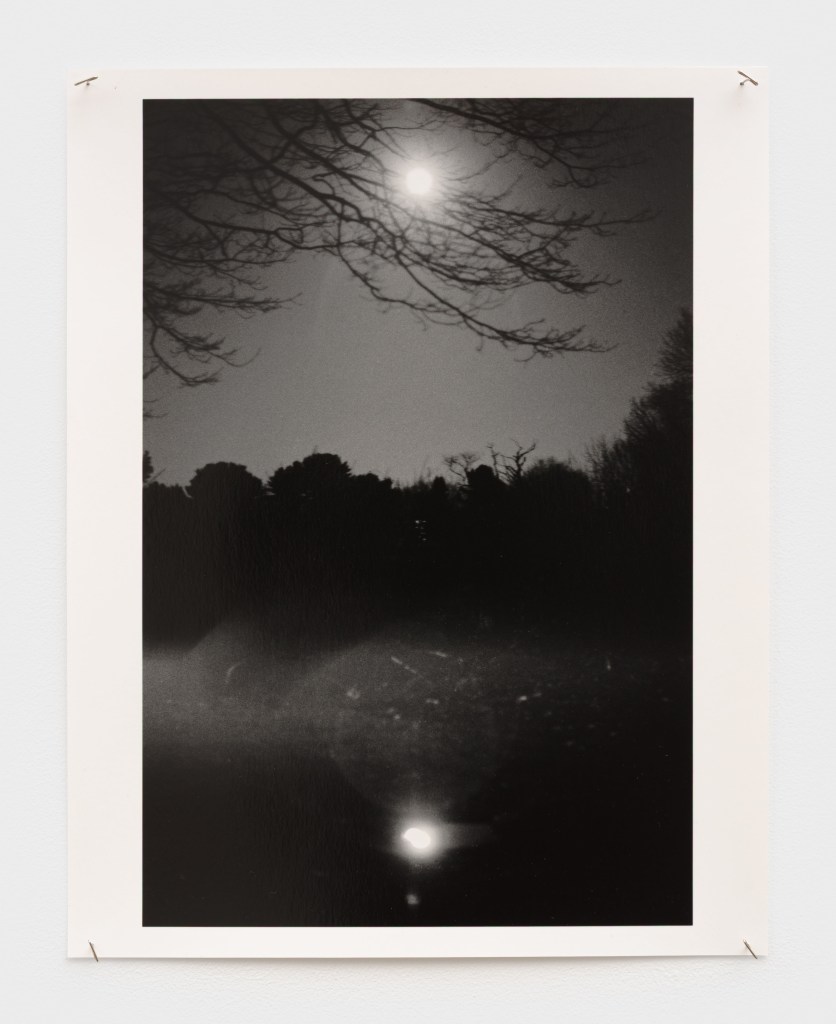
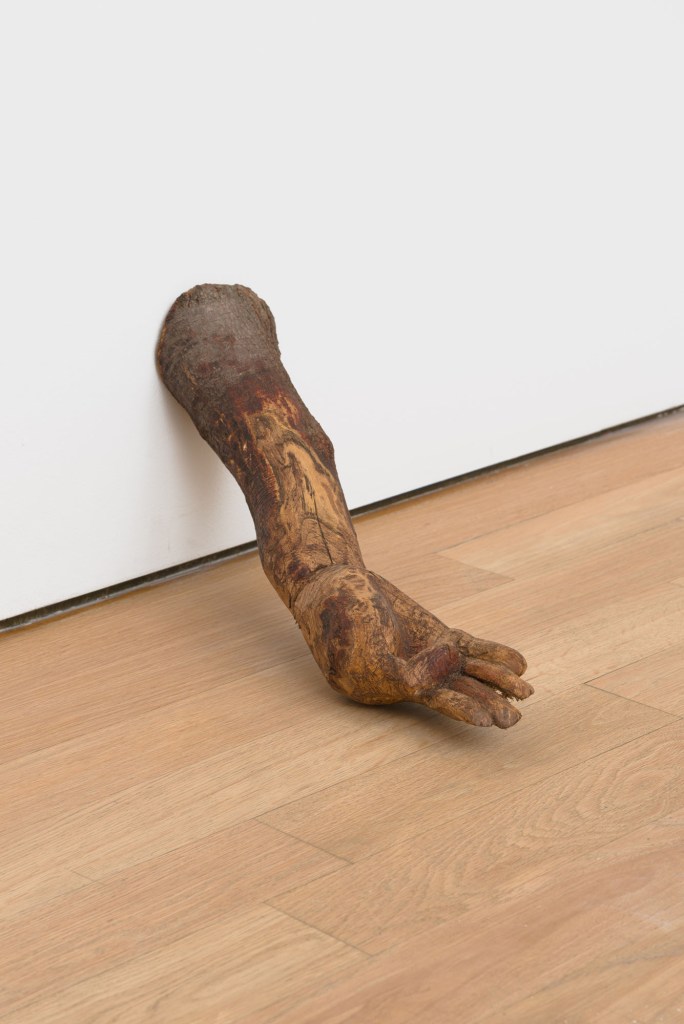
reclaimed wood, stain, 17 x 3 1/2 x 4 inches
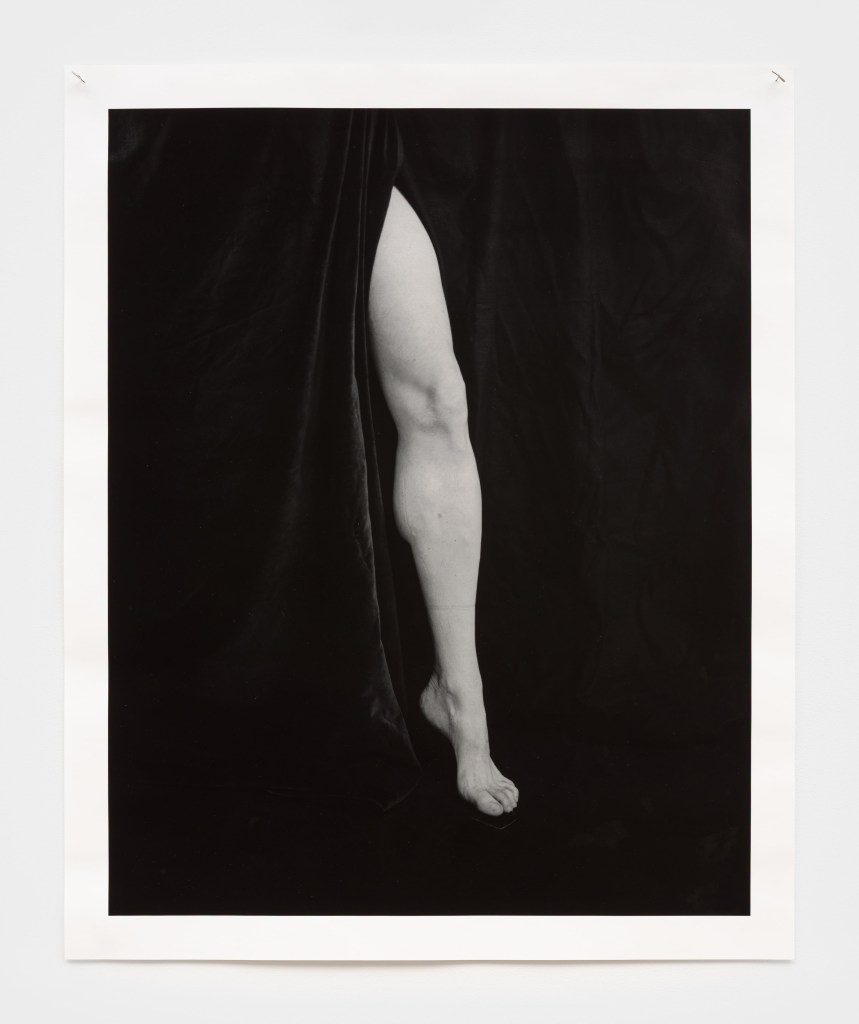
Courtesy of Adam Putnam and P·P·O·W, New York
I saw Putnam’s exhibition the same day I spent several joyful hours at MoMA’s majestic Brancusi retrospective. The museum’s curators insist that Brancusi’s individual sculptures, however beautiful, are best understood in conversation with other works, sometimes produced decades apart. Accordingly, they are grouped on islands based on arrangements documented in studio photographs. Putnam’s sculptural limbs likewise acquire resonance through precise installation, with subtly angled bases elegant counterparts to Brancusi’s rough-hewn supports. Another apt comparison is to Joan Jonas, also recently accorded MoMA’s sixth-floor showcase. In attempting to untangle the hidden connections in her work, one gleefully leaps from Native American snake dances to classical Greek art, with Icelandic mythology woven throughout. These connections are neither arbitrary nor reducible to a tidy explanation. Their power emerges through accumulation, juxtaposition, and the viewer’s willingness to interpret freely. Putnam too invites us to leap, among astronomy, volcanoes, Tarot, Hindu mudras, and Christian reliquaries.
The pleasures of “Deity” multiply when we surrender to its expansive internal logic. Putnam poses the exhilarating possibility that everything might be connected: his body, the moon, geometry, and the spiritual realm. Like a Tarot reader discovering unexpected relationships among scattered cards, we become active participants in generating meaning. Putnam gives us the cues, and we take a wild associative ride.
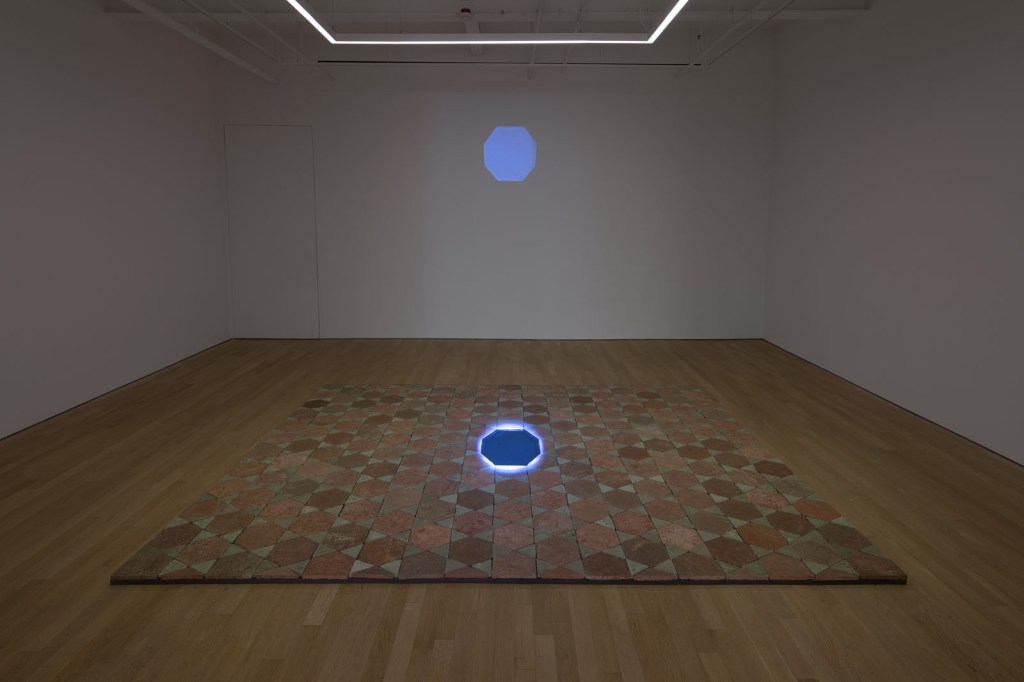
“Adam Putnam: Deity,” P·P·O·W, 392 Broadway, 2nd Floor, New York. NY. Through December 19, 2026.
“Brancusi: The Artist and His Studio,” MoMA, 11 West 53rd Street, New York, NY. Through February 27, 2027.
About the author: Bill Arning is a curator, critic, advisor, writer, and itinerant maker of pop-up shows based in Old Chatham, New York.