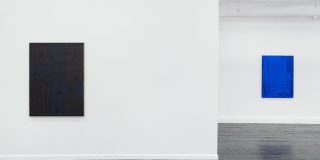
Contributed by Bill Arning / The human body, inhabited and depicted, is inherently interesting, complicated, and contradictory. I’d wager that almost everyone reading this review is doing so while embodied, despite the perverse desire of some to exist as purely visual intellects. Yet our historical moment seems to demand rapid and radical rewritings of these fleshy vessels. The New York Times recently reported that the widespread use of GLP-1 weight-loss drugs was transforming Provincetown’s annual gathering of bears – larger-bodied, hairy gay men. What had been a radical experiment in body positivity was running aground when weight loss became relatively effortless, for a price. Two decades ago, transgender and nonbinary identities occupied a comparatively quiet corner of queer culture. Today, gender nonconformity has become a favorite MAGA bludgeon, deployed to frighten suburban soccer moms. In successive exhibitions at the reliably bold New Discretions gallery, the current one titled “Bodyology,” master painter Clarity Haynes has depicted bodily realities in almost icy, glossy detail, on a scale where a single freckle can be the size of a human fist.
She first gained recognition for monumental torsos of feminist elders, rendered with alarming visual discernment; her name is Clarity for a reason. Tattoos, piercings, rolls of fat, and massive Earth Mama breasts became unforgettable declarations of radically lived lives. In a society that urges polite invisibility upon the older and heavier among us, depicting older bodies on a monumental scale could send sensitive souls running for the door, as Joan Semmel experienced. But embracing corpulence as a strategy made the paintings heroic to radical feminists. Haynes understood that older nude bodies make younger people uncomfortable, reminding them of mortality and the future aches and pains of embodiment. She followed with an arguably more confrontational exhibition of large tondos focused on crowning, the moment when a baby’s head emerges during delivery. Despite society’s progress in normalizing birth and death, the mechanics of yielding another human remained shocking, beautiful, and unforgettable. Recalling Judy Chicago’s investigations, Haynes conjured a spiritual realm of the sacred feminine.
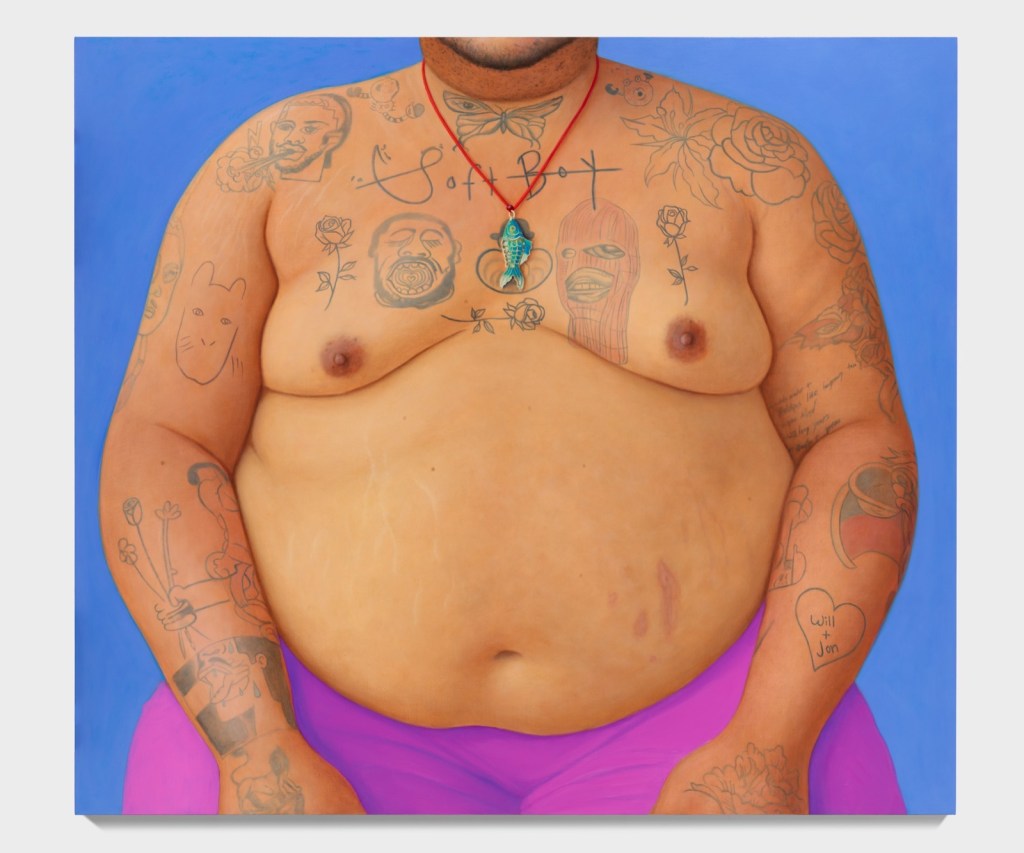

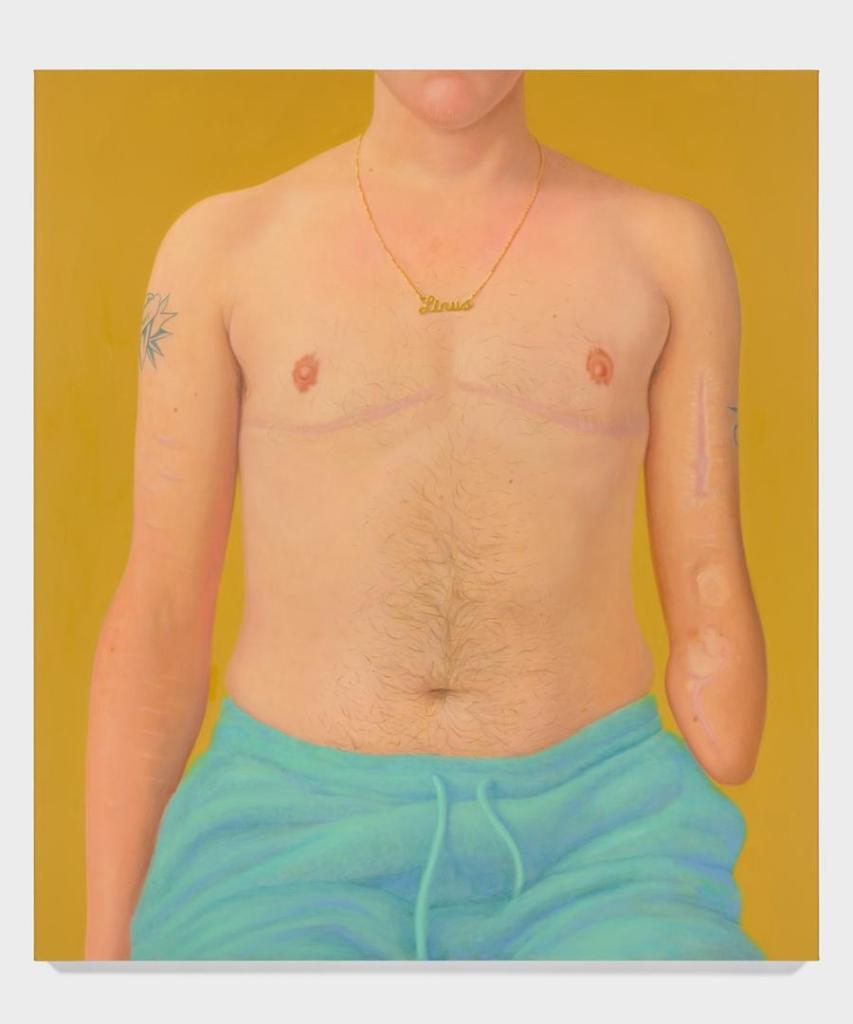
“Bodyology” finds her examining the bodies of artist friends. The small front gallery provides a grounding selection of other Haynes works, including a modestly scaled birth painting, a baby dyke altarpiece, and the saucy, kink-positive Dani II, depicting shibari, the intricate Japanese practice of rope bondage, which can be as creative and connective as it is erotic. Most of her models, who include Jonathan Lyndon Chase, Alannah Farrell, Wells Chandler, Matteline deVries-Dilling, and Linus Borgo, are transgender or nonbinary artists. Given the relentless cultural fixation on transgender lives, the exhibition inevitably reads as a decisive statement against erasure. Yet Haynes avoids the dead end of one-dimensional identity politics, in which generic group membership overwhelms individual biography. Instead, her crystalline, intensely specific portraits celebrate particular people authoring their own physical identities. The torsos appear against monochromatic fields of saturated color whose high-key vivacity emphasizes each subject’s own physical reality and self-presentation.
Haynes developed these paintings over several years, during which her models became collaborators in their own representation. Gender-affirming top surgeries, new tattoos, and other bodily changes are crucial elements of the evolving personages we encounter. For many transitioning individuals, testosterone therapy is an important part of this process. In Testo Junkie, Spanish trans writer and curator Paul B. Preciado describes the startling realization that so much of what feels fundamental to personal psychology and spirit can also be understood as the body’s chemical response to another chemical. The growth of body and facial hair becomes especially telling in several paintings. In Linus and Alannah, inhabiting masculine-presenting personae is marked by newly grown pelts of belly and chest hair. Most startling is the juxtaposition of beard and breast in Matteline. For these three subjects, hair, like the tattoos and postures of the other figures, narrates a personal journey lived fully and visibly.
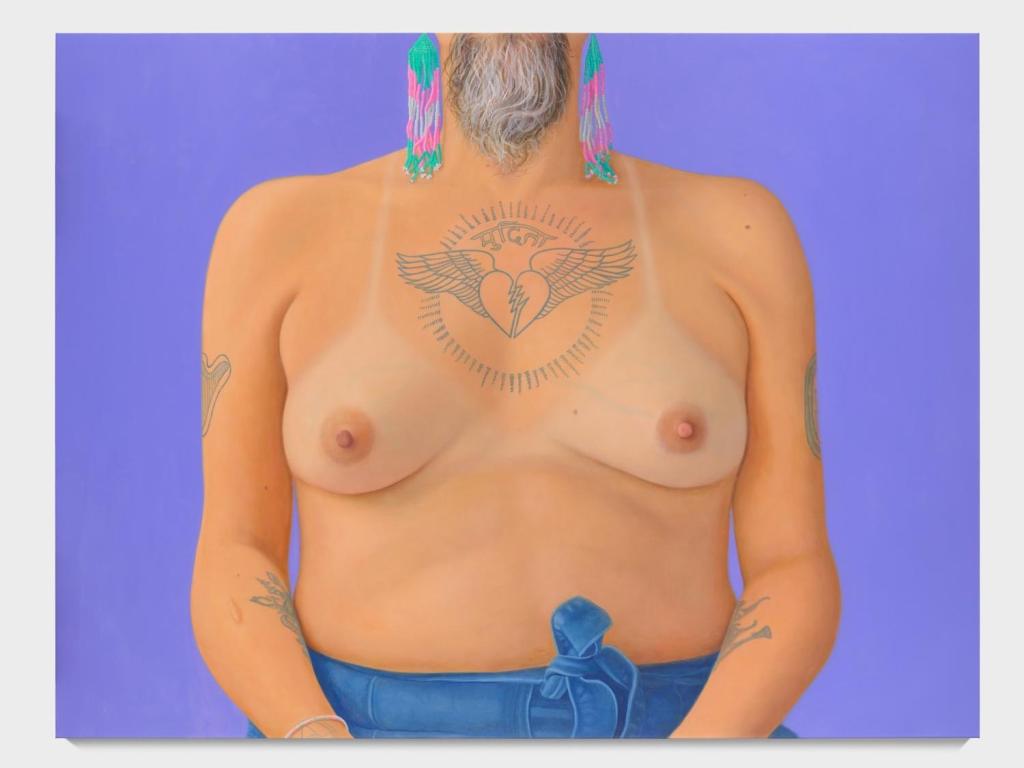
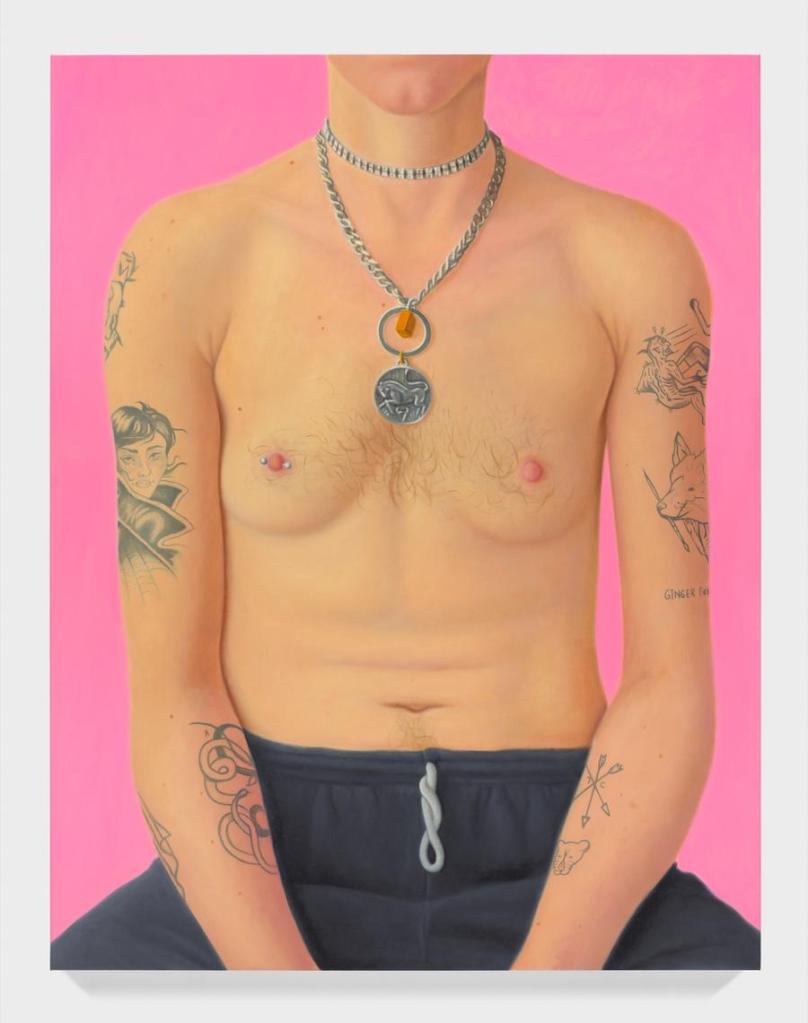
Haynes has immortalized her friends as brave explorers of what it means to inhabit a body in a politically charged moment. We can only hope that the current retrograde epoch, when these heroes’ lives, liberty, and pursuit of happiness have become political pawns, will soon end. For now, we can cheer their embrace of their own inimitable beauty.
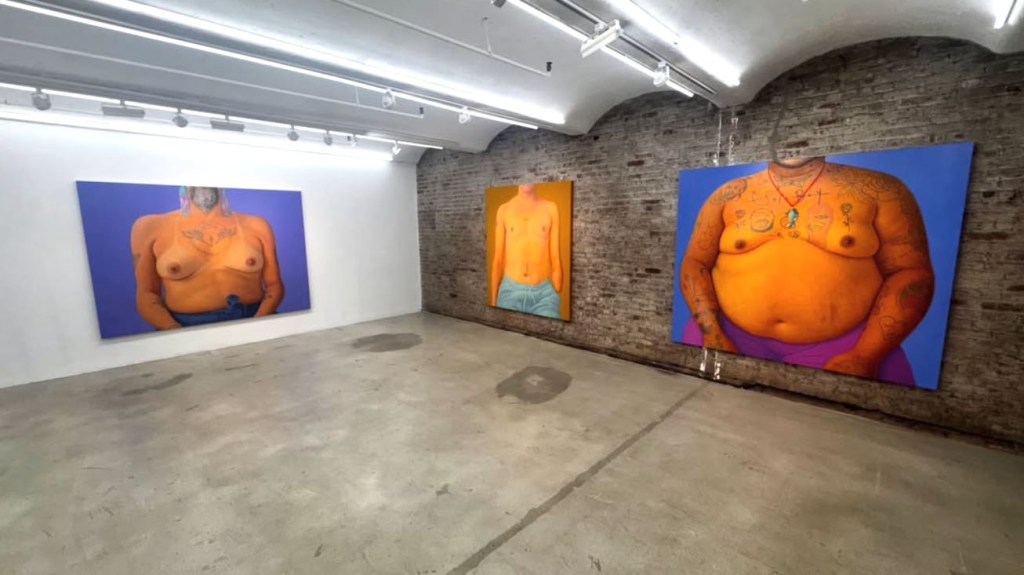
“Clarity Haynes: Bodyology,” New Discretions, 515 West 20th Street, 3rd Floor, New York, NY. Through November 28, 2026.
About the author: Bill Arning is a curator, critic, advisor, writer, and itinerant maker of pop-up shows based in Old Chatham, New York.