
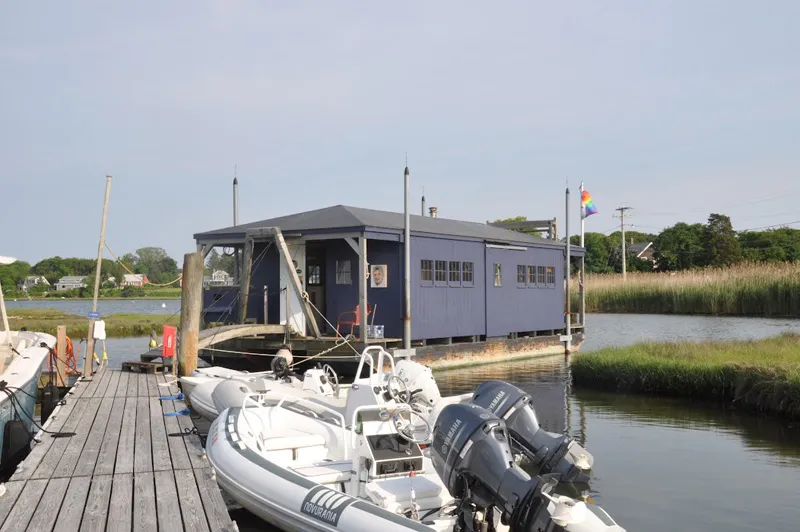
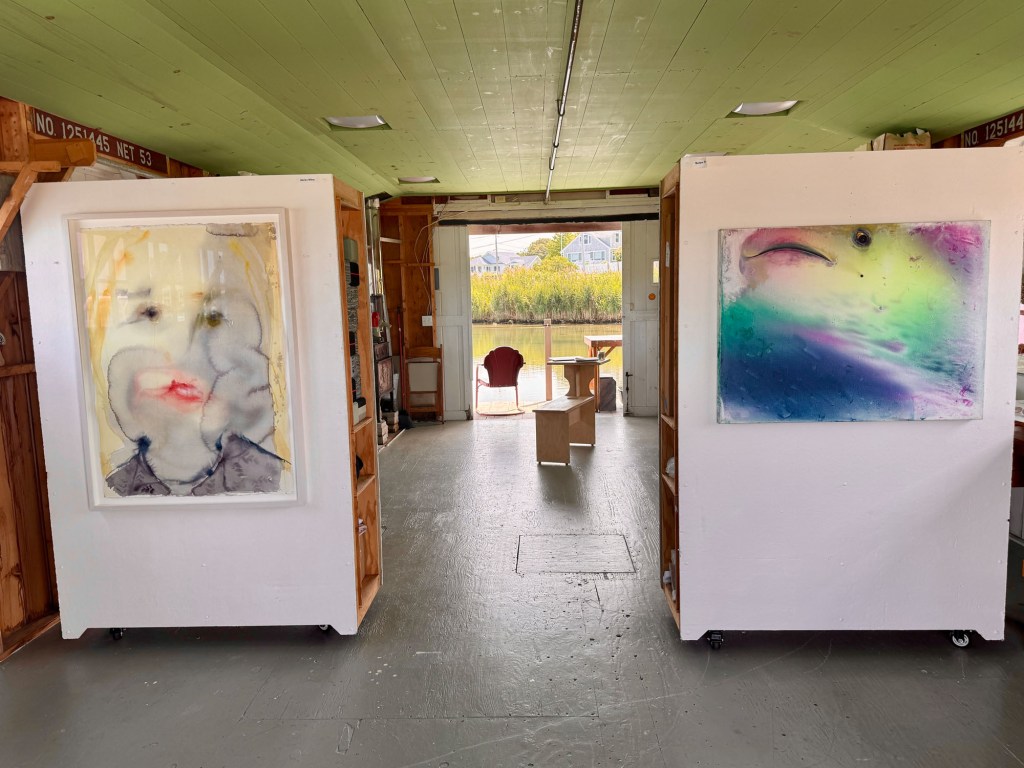
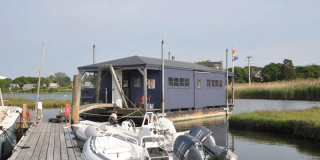
Contributed by Sharon Butler / On August 8, I visited Marion Wilson in Vineyard Haven at The Floating Gallery – a studio and gallery she created on a wooden boatbuilder’s mini-barge – to talk about the gallery project and the current show, “Catastrophe,’ on view through August 31. Louis Block, who has work in the show, joined us to talk about his painting.
Sharon Butler: Marion, you created a wonderful studio gallery on an old barge on Martha’s Vineyard. Tell me about how the project came about.
Marion Wilson: I bought this “old barge” from a retired master wooden boatbuilder five years ago, during COVID, after landing here from Manhattan. He had built it as his woodshop after being priced out on land. I knew nothing about this island, but fell in love with it off season and ended up staying for 19 months. By then I had twelve years of experience up-cycling mobile architectures — turning them into public platforms — and building community across borders.
SB: Tell me about some of the earlier projects.
MW: The first truly mobile project was a 1980 American Eagle RV re-purposed in 2008 into a project called MLAB, for “mobile literacy arts bus.” I was a professor at Syracuse University, and the chancellor wanted to get “off the hill” and engage with the city. With grants I purchased an RV and, with a class called New Directions in Social Sculpture – a group of art and architecture students, gutted and rebuilt it into a lab using Stickley wood. Faculty then used it to teach poetry, creative writing, and photography to kids in the city schools. MLAB would drive up, plug in, and the kids would come out. The chancellor who enabled was particularly visionary.
SB: Tell me about other mobile projects you’ve created.
MW: The first one, called This Store Too, was a mobile pushcart commissioned by the New Museum, in a public sculpture exhibition curated by Melanie Cohn called “Counterculture,” around the time the museum moved from the West Village to the Bowery. Six sculptors were invited to collaborate with a local institution. I partnered with the Bowery Mission and sculpted a pushcart – a countertop on a bicycle wheel with a cash register, really – and had three men living in The Mission run it with me. We made hair boutonnieres and t-shirts, stitched poetry into toilet paper rolls, whatever. I was raised in Manhattan with a father who was a politician; I grew up campaigning in the streets. I wanted to be on the street.
SB: You had deep knowledge of the community that you lived in.
MW: And I had some reservations about being a painter, about what its purpose was in a civic realm. I didn’t paint for 15 years – truly. It wasn’t until there was a gallery fire that burned the remnants of This Store Too that I re-discovered my oil paint box in my studio in 2009.
SB: Had painting felt a little self-indulgent, perhaps?
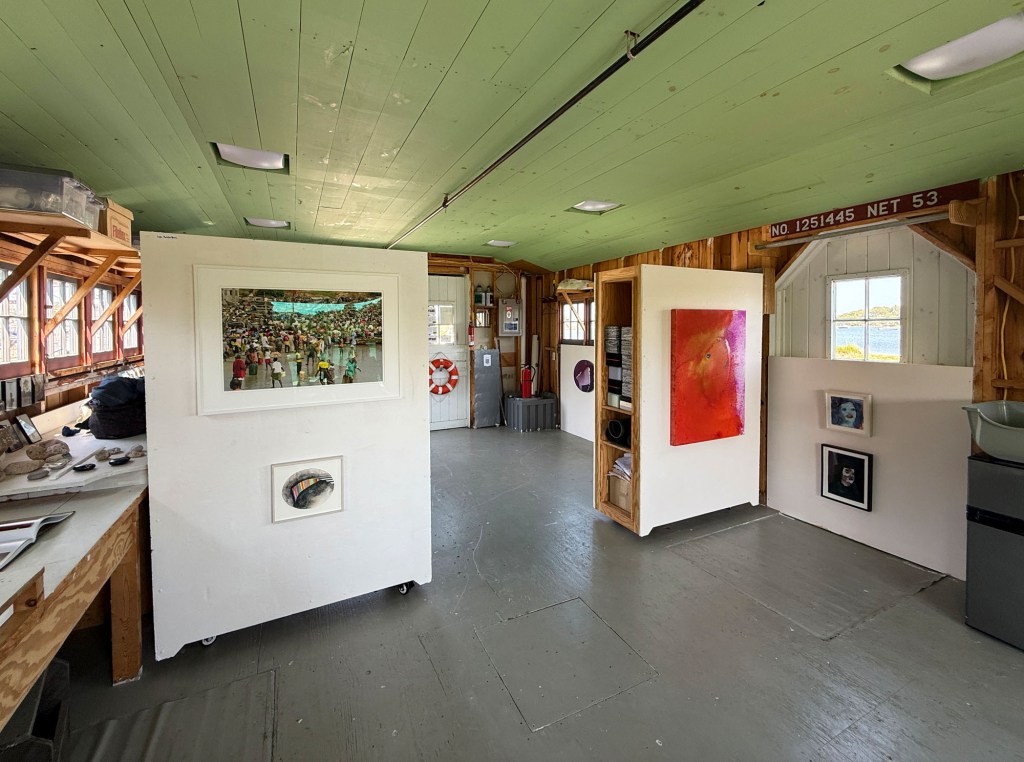
MW: I think I was curious about how to put language around the practice of painting, which led in part to this exhibition “Catastrophe” and brought us together. I have been forever curious about connecting the dots between painters and how they think – how is a painting made, what are its elements beyond the obvious – and how viewers can experience that mystery.
SB: So The Floating Gallery enables you to have the best of both worlds.
MW: Yeah. I really believe art is a generous platform for building community at its best. Martha’s Vineyard is diverse, yet so segregated – everyone stays in their lane. Natural experiences here are privatized and monetized. I wanted to create a platform that was more porous, that could bring people together from different towns. I have been here for five seasons now – and this year in particular I really feel its power and the uniqueness of the community we have created here.
SB: There’s nothing like a group show to bring different groups together — their community comes out for them.
MW: Right, it’s a big melting pot. The art world is also quite segregated in New York. Each show on the boat – I usually curate one to three a season — is something I’ve been thinking about.

Oil on linen, 16 1/2 x 20 inches
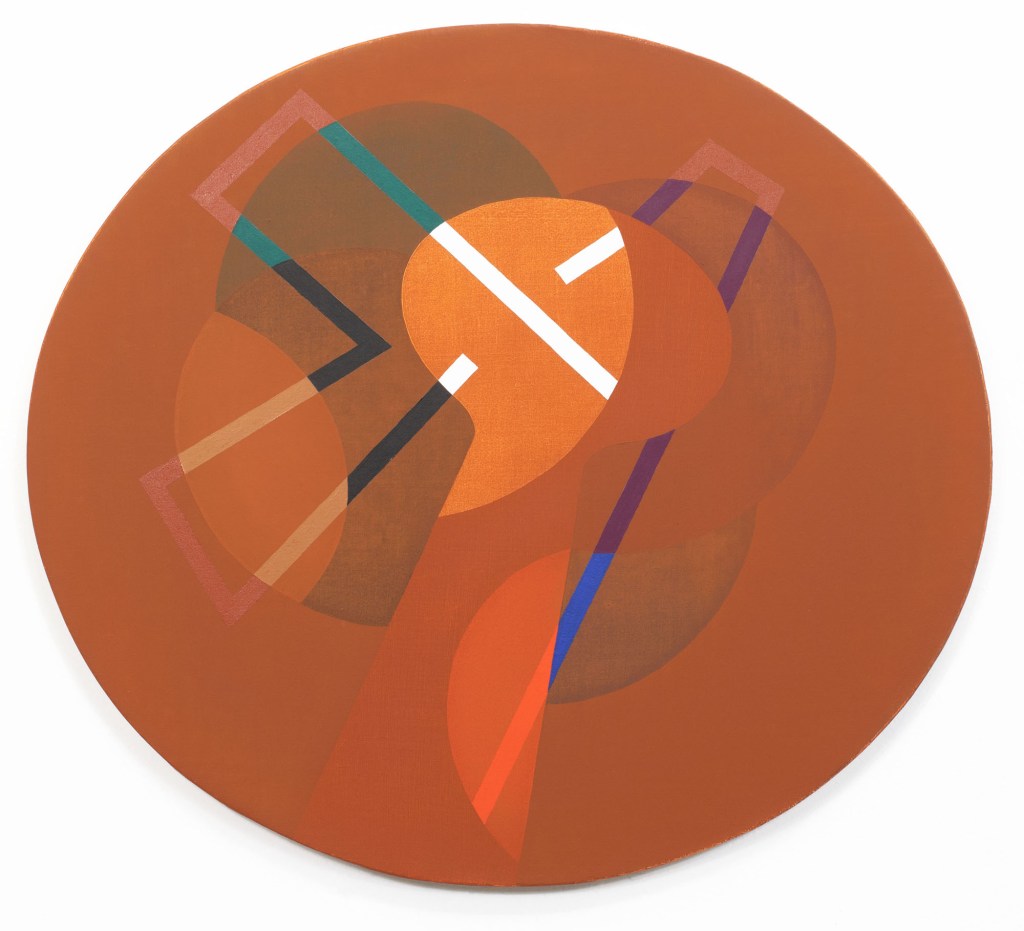
18 x 20 inches
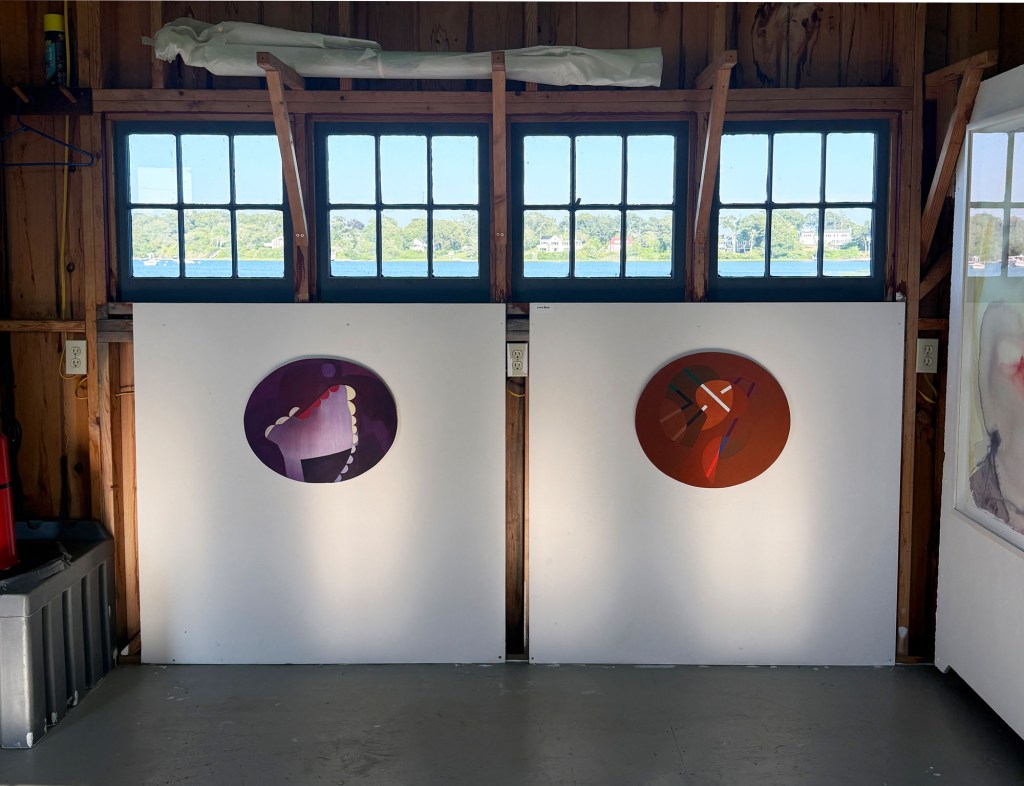
SB: Let’s talk about this show. The title “Catastrophe” is based on Gilles Deleuze’s recently translated 1981 lectures, published as On Painting. It predates the “painting is dead” discourse of the nineties, so he’s still seriously grappling with what painting might mean. You named the show after the first essay. Why that choice?
MW: Well, first, we are living in a catastrophe — it describes the world, for sure. I have also just had a year of complete personal upheaval. But the show emerged in the best of ways through a conversation between artworks with Barbara Friedman and me. I’d read about her work in an essay Louis Block wrote for The Brooklyn Rail coincidentally. Barbara and I work in a similar fashion – that is, from an impulse or a flooding gesture that begins the work of art, and which is totally material and seemingly random — a break that’s also a beginning. For me, that shows up in watercolor – a big mop on heavy paper, which creates puddles, and I come back in with a liner. I teach a class in Liquid Drawing at Sarah Lawrence College and took the class to meet Barbara and see her solo show at Five Myles.
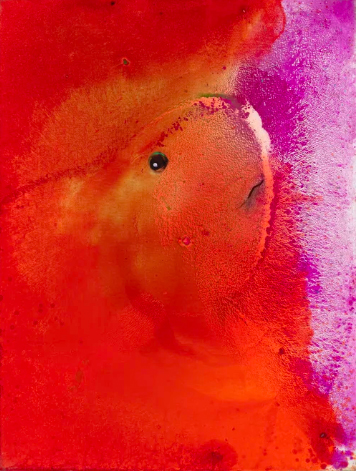
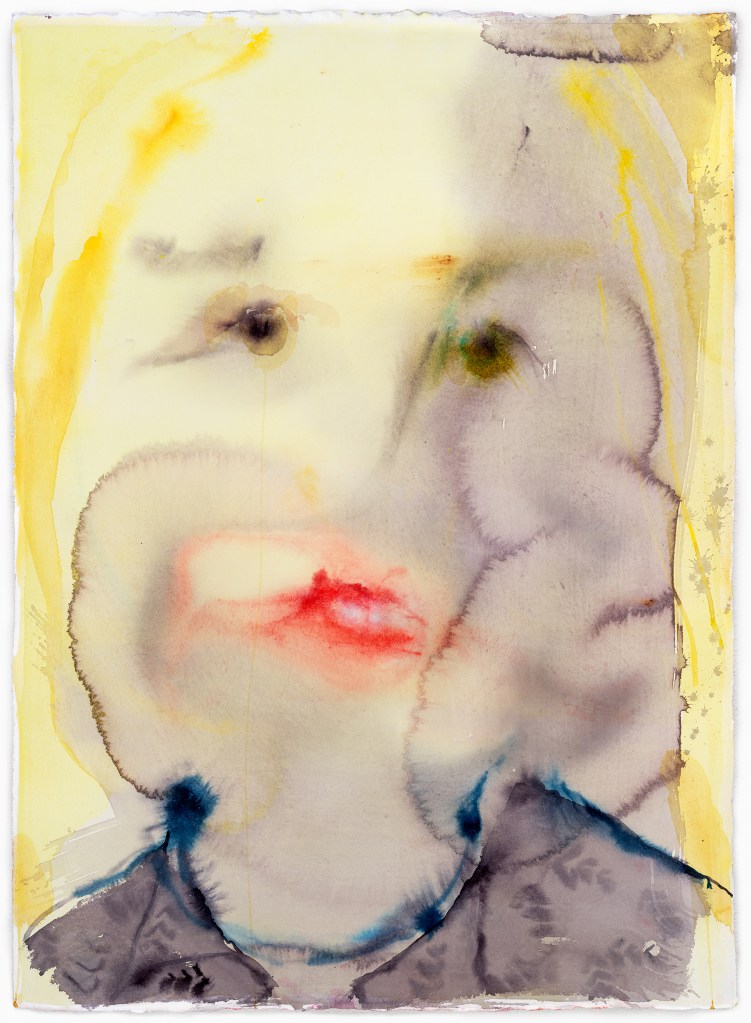
In her apartment in FiDi, Barbara would pour oil paint (and paint detritus) in beautiful streams – even less controlled than me, more random about finding the forms. I asked her, “Barbara, what books do you read?” I had a good sense – her husband’s a philosopher. She said, “’Catastrophe,’ the essay on unpainting — that’s the one you need to read.” So I read it, and here we are. Before that, I was going to call it “Flow.”
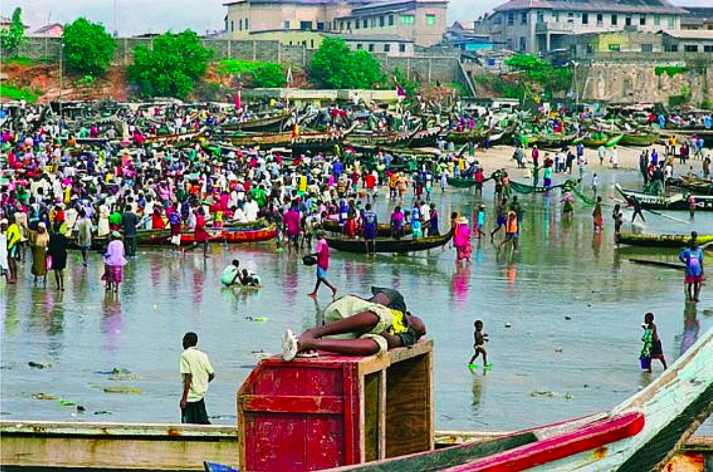
SB: Louis, do you sense that catastrophe is important to your work?
Louis Block: Well, I’ve talked with Marion about the necessary period in a painting where you have to cover up what initially seemed like the right path and make a change.
SB: Reading Deleuze’s essay, I kept wondering if “catastrophe” was translated properly — it seemed melodramatic. But it comes down to the impulse to make something — something affects you enough to put brush to canvas.
LB: You have to have a beginning vision that then has to be mediated with the real world somehow.
SB: Like Newton’s Law: a body at rest remains at rest unless acted on by an external force. That’s how I think of Deleuze’s catastrophe — a small synapse fires, and suddenly you have the impetus to start a painting.
LB: I’m curious, Marion – if you have paintings halfway done and leave them for a long time? Or do you always have to finish something before moving on to the next one?
MW: Oh my God, I’m a walking closet of unfinished work. Especially with watercolor, because it’s all impulse — it’s literally just a start. I’m also very self-critical, so as an exercise I’ll put things away and come back to them later; sometimes it was already done, sometimes I go back and get it right, and sometimes I ruin it, overwork it. In that essay, I relate most to Francis Bacon, who paints a portrait and then rubs it away, leaving one part intact and smearing away the rest.
SB: The catastrophe is what gets Bacon to make the painting in the first place. Then he reaches a point where his voice — and what Deleuze calls the diagram is really the artist’s voice — starts to assert itself. Once that comes into play, he knows what direction to go in.
MW: “Diagram” is a weird word for me, but yes he later talks about it as the artist’s voice, or style. I don’t remember if the term comes from Klee or from Bacon himself.
SB: Yes, it’s Klee — the “gray-over-gray” diagram. Deleuze also talks about Van Gogh’s commas raising the same question: the discovery of something beyond cliché, which becomes your own particular voice, later your style.
LB: This brown was stuck for a while — the move that freed it up was when I decided the ratio of height to width was slightly wrong, so I unstretched it, cut a new panel, took away about half an inch on one side and another inch on the other, then re-stretched it, cracking the paint layer very carefully around the curve.
SB: I think that’s related to the idea of the diagram — nobody else would have seen it that way, but it didn’t conform to what you intuitively understand as your own. That’s yours alone — no other artist could say it.
MW: As I was curating the show, I saw Louis as connected to Cézanne — a lot about color, but also composition. He often starts with a form and reworks it, and reworks it, across different drawings, until it dissolves and becomes something new.
LB: This keyhole shape — I’d seen a picture of a weather device from northern Italy, with a curved shape and a thin rod indicating humidity. It was a fixed shape, and I had to take away some lateral edges. I just read this line in Clarice Lispector’s 1943 novel Near to the Wild Heart: “Circles were the work of man, finished before death, and not even God could finish them better. While straight, fine, freestanding lines were like thoughts.”
MW: That would be perfect. I love that description of cutting it away — Cézanne, painting that mountain over and over, is always slightly off-kilter, as if interested in the ground underneath the image. I feel like that’s true of Louis’s work too — always a little on edge, asymmetrical.
SB: When you go back to the beginning, the idea of catastrophe also might explain why we became artists in the first place. Do you want to talk a little bit about that?
MW: I was a painter at Wesleyan and painted all through grad school, but I became more interested in the units of paint — liquid, solid, smear, translucency — and started using other organic materials, like cow blood, wax, and gels, instead of oil paint. Eventually I decided painting wasn’t for me, and didn’t paint for 15 years — I did sculpture instead, public art, social practice. I was raised in a political family, and even at Wesleyan my political friends challenged me saying “What the hell are you doing as a painter? That serves no purpose.”
I think I swallowed that. Privately though I always was painting – I painted these miniatures on repurposed photography glass all the while doing these large architectural projects.
SB: So clearly there was something. Painting was serving some need.
MW: It wasn’t expressive for me in that context. That’s why I like this show — how do we give a language to the process of painting – similar to Two Coats of Paint? What is painting, what does painting teach philosophy, as opposed to what philosophy teaches painters?

SB: Louis, when did you start painting?
LB: I was a drawer before a painter, as a kid — precise pen-and-ink drawings. I started painting in high school, then went to MICA. For a while the paintings were water-based, on unprimed, unstretched canvas, very large scale — I left my BFA making experiments between eight and 20 feet long. I tried to keep doing that in a tiny New York studio for a few years, then came to terms with making an image again on canvas.
MW: I started working with watercolor when I bought this boat. It got rid of that whole question of re-entering a painting, wondering if it’s finished — I liked the immediacy of it. I draw every morning, and it was when I got this boat that I really committed to watercolor as the medium.
LB: That makes sense. I switched back to oil from water-based mediums during the pandemic, for the round pieces, and didn’t touch watercolor for a few years. Now I’m doing both — you suddenly know when you need the other medium: “I need more saturated color,” or “I need the body of the paint.” With oil I put down about eight layers of gesso, so the paint sits on top. With watercolor I can get into the surface itself, and for the final layer I usually find myself taking away instead of adding — rubbing with water to lift the pigment out.
MW: All three of us have dual practices, too — I do this curatorial adventure, you’re a writer and publisher, and Louis is both a writer and a painter. Louis once said they’re completely separate practices, that they happen in silence from each other.
SB: I’m completely different — I keep the computer in the studio, moving between the two all day. When I started Two Coats of Paint, it was part of the practice itself; I rarely write about anything that isn’t connected to what I’m thinking about in the studio. It’s always easier to write about the things you’re thinking about through someone else’s work.

MW: I wanted to show you this piece called The Second Oldest— a watercolor on black paper. For a year, 2024, I only painted on black paper. I worked from black-and-white photographs of my childhood and my father’s political campaigns — he was a reporter and later a state senator, and he left us an archive of photos: him interviewing Dr. Spock at Martin Luther King’s funeral, him with Eleanor Roosevelt. I took fragments of those photos and painted from them, starting with black, trying to find color and light within it. I think of them as ghosts, in a way.
SB: Right. It’s a beautiful painting. And maybe that’s the clearest version of catastrophe we’ve circled all afternoon — not necessarily a disaster, but a rupture that brings forth something new.
“Catastrophe,” with Louis Block, Barbara Friedman, Lyle Ashton Harris, Ella Mahoney, Marion Wilson. The Floating Gallery, 100 Lagoon Pond, Vineyard Haven, MA. Through August 31, 2026.
About the author: Sharon Butler is a painter and the publisher of Two Coats of Paint.








So great!
Very good interview with an artist who’s doing something interesting. Beautiful gallery and work. TCOP always inspires. Thank you.