
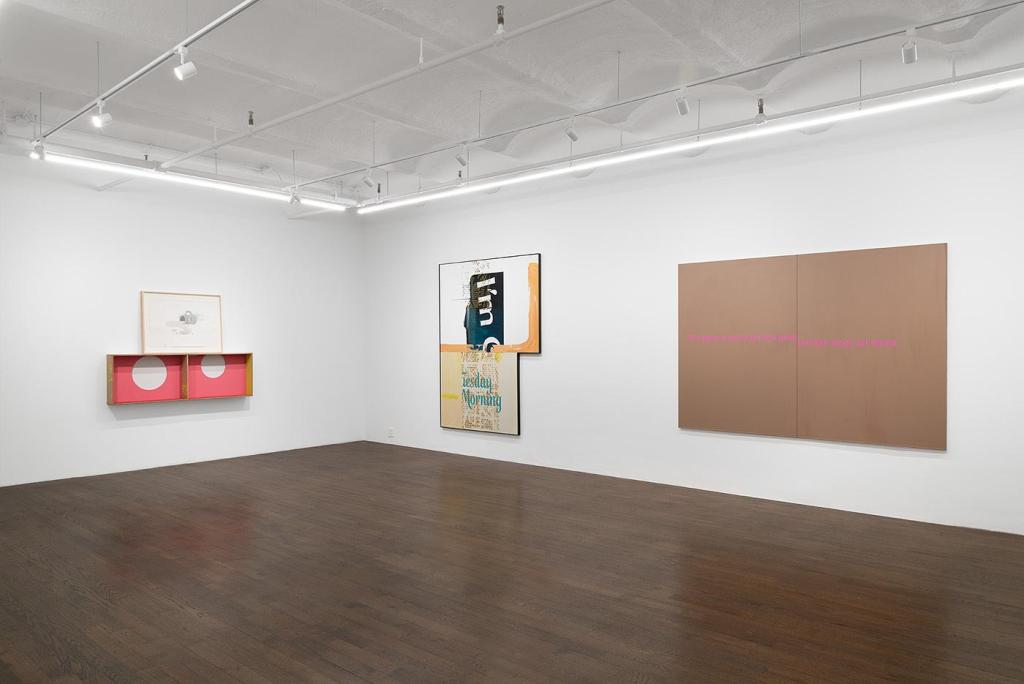
Contributed by Jonathan Stevenson / In Haskell Wexler’s iconic 1969 counterculture film Medium Cool, John Cassellis, a cold-eyed TV photojournalist played by the great Robert Forster, has internalized the notion of television as a “cool” medium in the McLuhan-esque sense of requiring viewers to search for context in order to understand what they are seeing. When covering the shockingly violent 1968 Democratic National Convention in Chicago, though, he finds it increasingly hard to stay objectively aloof. If Cassellis succumbs to passion, Andy Meerow finds a more nuanced solution in the realm of painting – also a relatively cool medium – manifested in his gratifyingly quizzical work in “Slanted Andy” at Derosia. Meerow doesn’t either opt out or surrender; he just takes a sidelong view.
Media of all kinds, of course, have become “hotter” as technology has advanced. The challenge now is not so much the sparsity of information as the surfeit of it. Artists inclined towards Minimalism – say, Jacqueline Humphries – resort to reductive filters and symbols. More expressionistic ones like Albert Oehlen have embraced the complexity, defying it to beat them. Other estimable examples on this score include Steve DiBenedetto, Chris Dorland, Steve Greene, and Carter Hodgkin. Meerow’s novel conceptual dispensation is to merge what an artwork is with what he says in or about it. This involves treating a painting as a kind of artfully maladroit trick – this quality undergirded by a Minimalist, DIY approach – and casting himself as a deliberately unreliable narrator whose arch deceptiveness, ambiguity, or cluelessness evokes something penetrating and often disturbing.
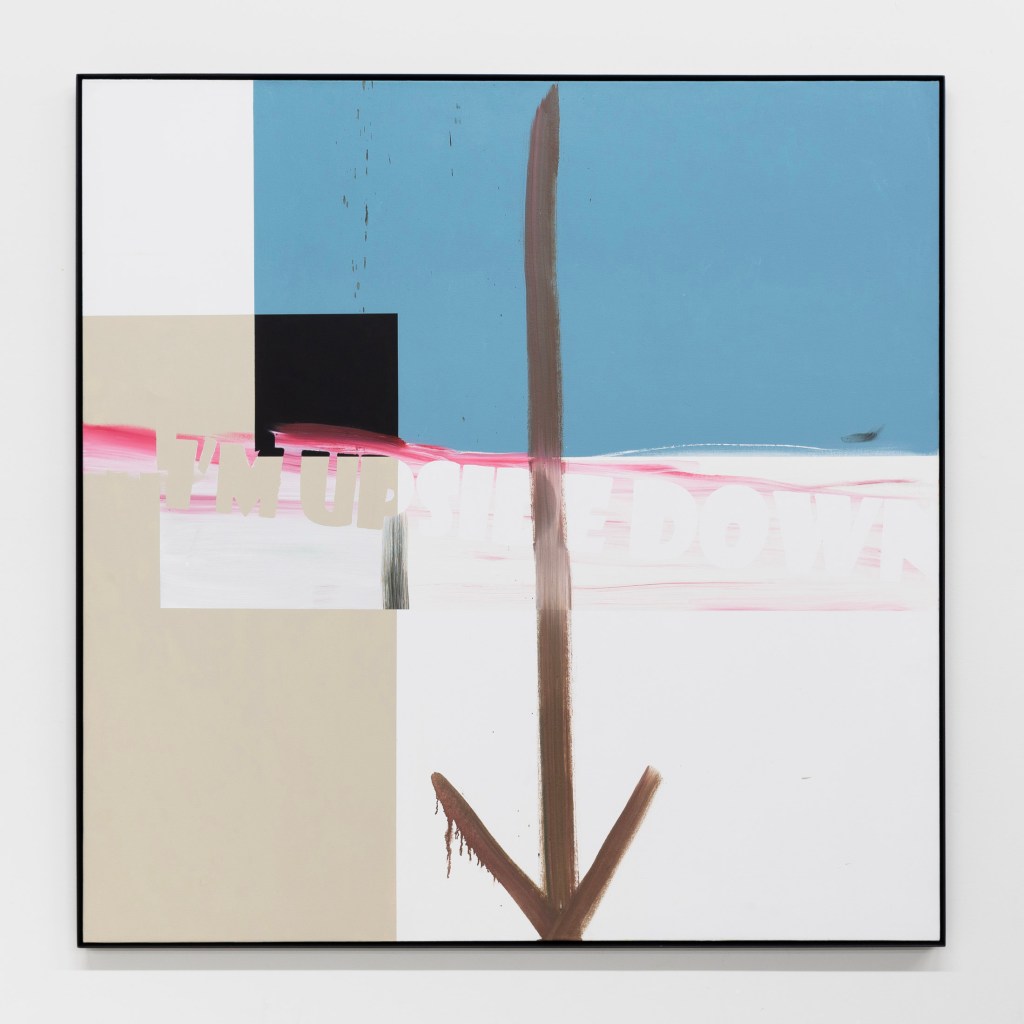
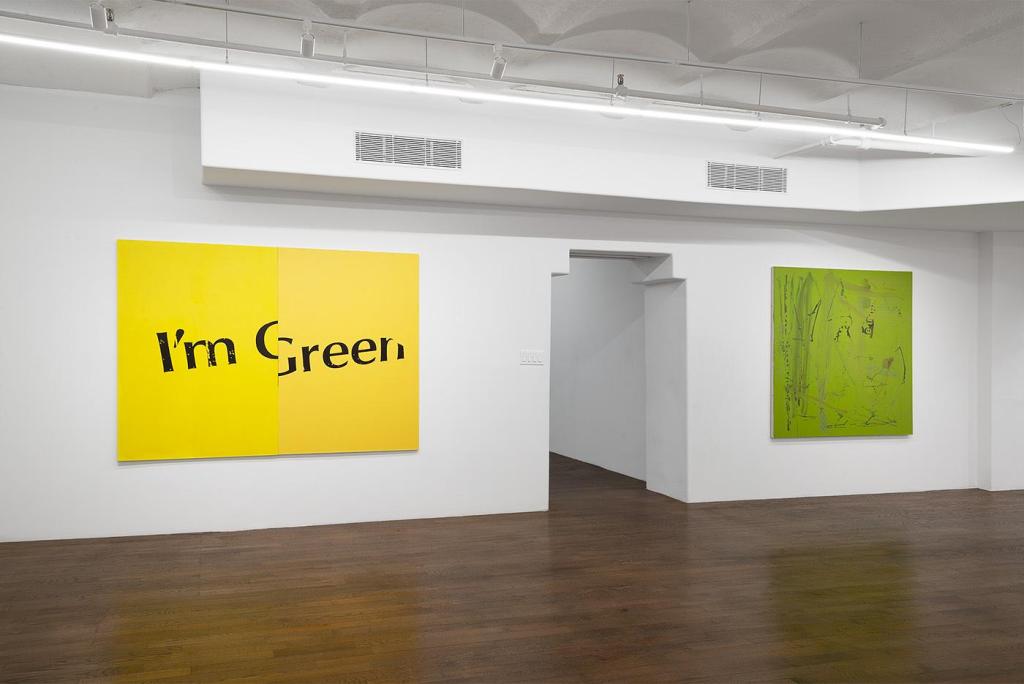
The sheer range of angst that Meerow covers in a mere eight works is impressive. The painting I’m Green, which unabashedly presents that lie in shambolic black typescript against an expansive yellow acrylic background, can’t help but conjure the insouciant disregard for truth facilitated by near-universal digital access. In counterpoint, 2020 is a nauseous green, but the apparent verbiage it contains is hopelessly fragmentary and obscured: what happened that year may be incomprehensible, but we know how it made us feel. Flip Me Over, depicting three intersecting hard-edge rectangles overlaid with the washily-stenciled phrase “I’M UPSIDE DOWN” and a clunky downward arrow, commands the viewer to avoid looking by means of an act not permitted in an art gallery, imparting the structural prevalence of exposure over privacy.

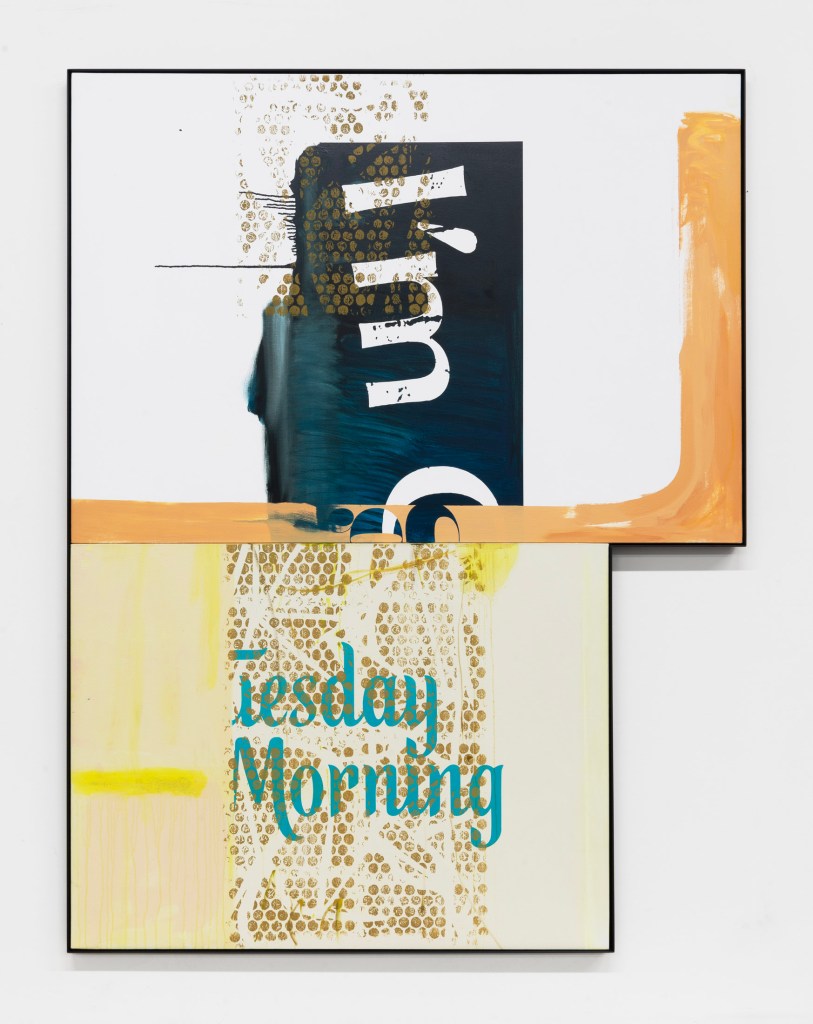
The work is not all about the zeitgeist, and some seems timeless. Rubbed On consists of two stacked panels of different sizes, the top one displaying a truncated personal declaration and the bottom one the clipped designation “Tuesday Morning” – perhaps the heading of a to-do list or a diary entry – visually connected by a repeating hexagonal pattern resembling snakeskin. The piece could be an exotically wayward iteration of Exquisite Corpse, reflecting a clash of existential priorities. Relatedly, two untitled works – one the profile of a woman whose mind is literally overflowing against an onslaught of intangible input, mounted on a found fiberboard pedestal, the other words of different values (apparently philosophical versus commercial) equally obscured by a dark ether – relay worldly confusion and dread.
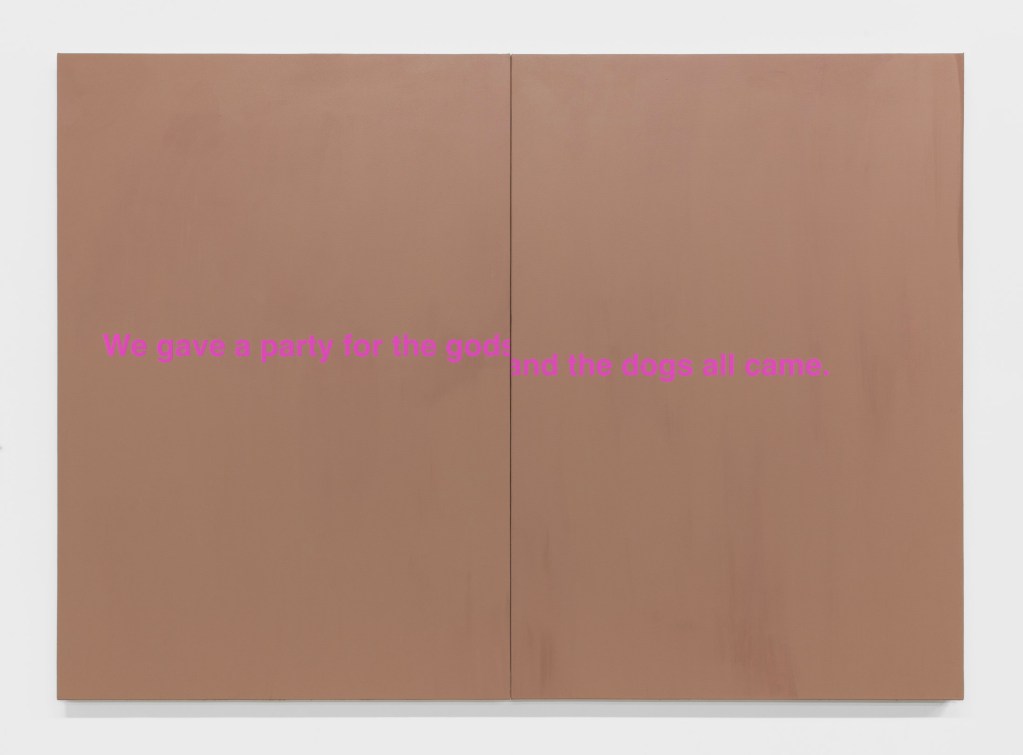
No doubt Meerow is hip to the grave urgency of the immediate situation, America’s national life having become one long-running B melodrama not unlike the 1968 Democratic National Convention writ large and the wider world roiling. But he also reflexively sees the potent irony in all the handwringing, sourced as it is in willful blindness, and here his provisional calibrations strike an apt chord. In a third untitled piece, nonchalantly composed on paper, a coffee mug featuring a petulantly smiling face reminiscent of Ernie the Muppet has tipped over, spilling its contents in an agreeably lyrical meander. Messes can be funny, even endearing, when they’re manageable. Less so, of course, when they’re not. In and all the dogs came, Meerow splays the line “We gave a party for the gods, and all the dogs came” across two panels in naively celebratory magenta against a fecal brown field, riffing on John Giorno’s poem by replacing “gods” with “dogs.” In that sardonic diptych, he captures the promise and disappointment of this century so far, essayed in an arresting exhibition, without losing his sense of humor.
“Andy Meerow: Slanted Andy,” Derosia, 197 Grand Street, 2nd Floor, New York, NY. Through February 10, 2024.
About the author: Jonathan Stevenson is a New York-based policy analyst, writer, and editor, contributing to the New York Times, the New York Review of Books, and Politico, among other publications. He is a regular contributor to Two Coats of Paint.



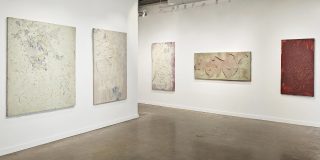
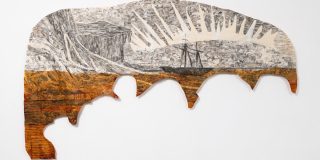
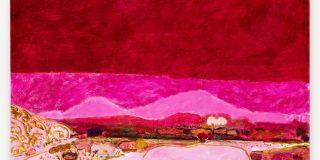
This works speak about the incongruence between technology and communication, through color among other things the artist conjures poignant ideas about our life behind simulations. It is so keen and uncanny how the pictures speak about particular concerns anyone encounters while using technology and fountains of transmission.