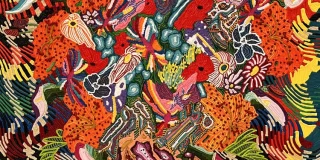
Contributed by John Goodrich / Is it possible for a painter to celebrate both the traditions of great painting and her own spontaneously observed surroundings? […]

 Award-winning NYC blogazine with a focus on painting
Friday, September 25, 2026
Award-winning NYC blogazine with a focus on painting
Friday, September 25, 2026
Contributed by John Goodrich / Is it possible for a painter to celebrate both the traditions of great painting and her own spontaneously observed surroundings? […]
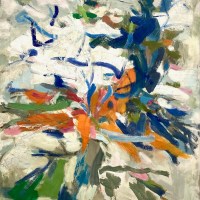
Contributed by Rebecca Allan / Just off rue de Jarente in the Marais, Galerie Pavec – which late last year presented “L’Esprit Français,” the first […]
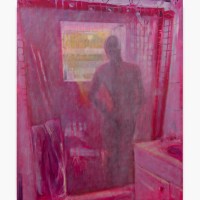
Contributed by Lucas Moran / In times of great political upheaval and unrest, art has held us and guided us towards compassion. Picasso’s Guernica set the most titanic example of this in 1937. As we slide closer to authoritarianism and watch the world grow less familiar, artists continue the noble task of showing us how to live through it. Sasha Gordon set a tone in her recent show at Zwirner, depicting herself sitting on a lawn clipping her nails while the world – seemingly all we know – erupted in a mushroom cloud behind her. Less sardonic but in a similar warp are Alexis Rockman’s melting icecaps and Richard Mosse’s documentation of Amazonian deforestation. “Towards the Sun,” Heather Drayzen’s compelling solo show at My Pet Ram, feels just as urgent. The question she asks, though, isn’t What’s happening to us? but rather, What still matters?

Contributed by Michael Brennan / Tappeto Volante Gallery in Gowanus is audaciously hosting a condensed retrospective spanning decades of Bascha Mon’s painting, selected and arranged by the artist herself. Her more recent work dominates the gallery’s anterior space, with paintings from the 1970s – which remain integral to her ongoing inquiry – populating the rear room….
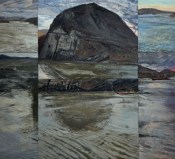
Contributed by Margaret McCann / Elizabeth Flood’s landscapes in “Lookout” at Storage Gallery included oil paintings that emphasize realism and expressionistic ink drawings. The latter express vigorous engagement with the outdoors. Gettysburg (Pickett’s Charge, October 9) channels the drama of that day. Stirring energy like that of George Nick’s alla prima work drives the eye deep into a field under a sensational sky. Conversely, mental distance accompanies Flood’s large polyptychs, whose combinations resemble photographic contact sheets, art website layouts, or bulletin board accruals. At their best, artifice is imbued with the existential doubt of Edwin Dickinson or Giacometti. Repetition and variance become metaphors for modern contingency and ambivalence. Multiple views rouse a mix of ennui, curiosity, taste, and choice, like that fueling our daily shuffle through cyberspace.

Contributed by David Carrier / Born in Japan, Maki Na Kamura was trained in Germany, where she now lives and works. In that light, it’s not too surprising that she describes her work as “Caspar David Friedrich plus Hokusai minus Romanticism minus Japonisme.” Identifying herself as both a traditional painter and a contemporary artist, she notes that she might, on the same canvas, use both tempera and oil paint– two materials traditionally used separately. Her paintings and charcoal-on-paper drawings are poised between figuration and abstraction. The paintings are often centered on figures, but it’s not usually clear what’s happening in the work on view at Michael Werner. It may be hard to tell just what we are looking at, but it is obvious that her central concern is visual pleasure.
Mario Naves says Bonnard (1867-1947) is an artist beloved by many, but not by all. “His luminous pictures of fruit baskets, breakfast tables and keening, […]
Roberta Smith on Pierre Bonnard at the Met: “Working simultaneously on several unstretched canvases tacked directly to the wall, he painted largely from memory with […]