Tag: Braque

Screens

Where I Learned to See: On Backrooms, class, Cubism, and the church basement

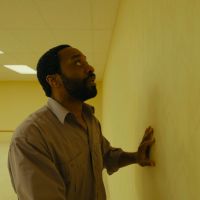
Contributed by Brenda Zlamany / A few days before I saw Backrooms, I attended Julian Schnabel’s In the Hand of Dante and stayed for the Q&A, with Laurie Anderson leading a conversation with Schnabel and a few of the actors on stage. I walked into that theater in a raw, hyper-specific state of mind, very much thinking about time and memory. David Hockney had died, and I was operating in a state of quiet shock. I had spent that morning writing a remembrance for The Observer about my last painting of Hockney as Whistler’s Mother, realizing it had unexpectedly become a final goodbye, a sort of time and meaning shift. To sit in the dark grieving one great artist while watching another’s film about beauty, consciousness, and the survival of the imagination was overwhelming.
Museum Exhibitions

Call it Orphism

Contributed by Adam Simon / At a Four Walls event in Brooklyn in the early 1990s, Erik Oppenheim, at that time a young artist, stood up and said, “I’m starting an art movement. Anyone who wants to join, meet me in the back after the show.” It was a hilarious and audacious gesture, in part because no one joins an art movement on a whim, like a list-serve or an exercise class, but also because there hadn’t been any artist-initiated movements for a very long time. They proliferated in the late nineteenth and early twentieth century with the advent of Impressionism, Surrealism, Futurism, and Dada, and enjoyed something of a resurgence in the 1960s with Fluxus in the United States, Supports/Surfaces and Zero in Europe, and the Gutai Group in Japan. Most of what we consider movements were proclaimed by an outside observer, usually a critic or curator, looking to group artists who had similar concerns and made work that fit the designation. For the artists themselves to rally around a specific cause, even an aesthetic one, was not required.