Contributed by David Carrier / The Guggenheim has frequently presented the work of Wassily Kandinsky (1866–1944). Now, finally, the museum has provided the opportunity to celebrate Gabriele Münter (1877–1962), Kandinsky’s domestic partner of ten years and a fellow founder of the Blue Rider Group – the Munish-based network of artists that pioneered German Expressionism just before the First World War.
Museum Exhibitions
Peter Doig’s tropical opera
Contributed by David Carrier / Upon entering Peter Doig’s show at Serpentine South Gallery in London, you see Painting for Wall Painters (Prosperity P.o.S.), a vibrant depiction of a half-finished mural he photographed in the Port-of-Spain, Trinidad and Tobago’s capital city. If Henri Rousseau had actually gone to the tropics, and they had inspired him to intensify his pigments, he might have painted something like Doig’s three large-scale works, which feature sensuous, saturated colors depicting the Lion of Judah, a Rastafarian symbol, freed in the streets of the city.
Ben Shahn’s vigilance
Contributed by Margaret McCann / Ben Shahn’s lifelong advocacy against poverty, racism, and fascism is showcased in his solo exhibition “Ben Shahn and Nonconformity,” now up at the Jewish Museum. With engaging documentation, an array of global topics are addressed in printmaking, photography, commercial art, and calligraphy – and some excellent paintings.
The new Frick: A somewhat sentimental reaction
Contributed by David Carrier / Rebuilding seems to be a cyclical occurrence for older art museums. The collection expands, styles of display change, more capacious restaurants and shops may be needed. Older museums have to construct new galleries. To the original European galleries, entered atop the stairs at the entrance, the Metropolitan Museum of Art added space for Islamic art, contemporary work, and Asian paintings. Alternatively, a wealthy museum can rebuild almost from scratch, as MoMA has repeatedly done. Yet, for most of the time I have been going to art museums, New York’s Frick Collection has been basically unchanged, an island of stability. I remember once being shocked that one of its masterworks – Rembrandt’s The Polish Rider – was away on loan. No other major New York art institution has remained basically the same over such a lengthy period, celebrating idiosyncratic displays that mix sacred and secular works in a luxurious setting. Henry Clay Frick had a great eye.

Amy Sherald’s American dreams
Contributed by Margaret McCann /Amy Sherald’s paintings of mostly ordinary and upright African Americans, in “American Sublime” at the Whitney Museum, transcend portraiture, vaulting to socio-political metaphor. Their evocative titles – drawn from Emily Dickinson, Zora Neale Hurston, Toni Morrison, and other cultural figures – suggest an array of personalities or experiences. But the exhibition title, from Elizabeth Alexander’s poem of the same title, unsettles our understanding of what both figures and viewers behold.
Rachel Ruysch: Late bloomer
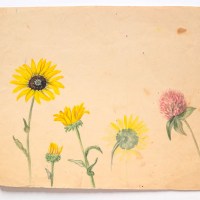
Contributed by David Carrier / Significant twentieth-century artists occasionally depicted flowers. Andy Warhol was one, Ellsworth Kelly another. But it’s hard to think of any major painter today who focuses predominantly on them. Rachel Ruysch (1664–1750) lived in a very different world. Thanks to the bountiful worldwide empire of Golden Age Holland, even this stay-at-home painter could obtain an amazing variety of imported flowers. The Toledo Museum of Art’s “Nature into Art,” drawn from her 150 surviving works, is, improbably, the first major exhibition devoted to her. Botany thrived in Ruysch’s time due in part to Dutch imperialism. Flower painting became a major artistic genre, and she and her rivals enjoyed access to an enormous variety of exotic flowers (and insects). Critics rightfully consider her pre-eminent. “At her best,” the catalogue says, “Ruysch painted like a novelist, creating scenes within a framework at large.“ Indeed, her intricately crafted, remarkably varied paintings convey the story of Dutch capitalism.
Art versus politics
Contributed by Laurie Fendrich / “Modern Art and Politics in Germany 1910-1945” an exhibition of more than 70 paintings and sculptures on loan from the Neue Nationalgalerie, Berlin to the Kimbell Museum in Fort Worth, runs on three tracks. The first carries the art, two-thirds of which has never before been seen in the United States. The second, via informative and well-written wall texts, follows political developments in Germany during three-and-a-half fraught decades. The third consists of the imaginations of museumgoers who, like me, can’t help but see similarities between Weimar Germany in the years leading up to Hitler’s rule and America during Trump’s rise and authoritarian presidency.
J.M.W. Turner at 250: Presciently modern
Contributed by Laurie Fendrich / Some 250 years after the birth of the English Romantic painter J.M.W. Turner (1775–1851), the Yale Center for British Art has re-opened its renovated Brutalist building with a perfectly scaled, carefully curated exhibition of 77 Turner prints, watercolors, and oil paintings from its collection of his works, the largest outside Britain.
Jack Whitten at MoMA: Indelible
Contributed by Jonathan Stevenson / “The Messenger,” Jack Whitten’s momentous and flawlessly curated exhibition at the Museum of Modern Art, is a signal event not just in American art history but, arguably, in American history simpliciter. To be sure, it showcases an art polymath who broke and cultivated important ground across a broad swath of artistic endeavor. But its timing as a socio-political statement seems perhaps singularly important.
Friedrich’s contemplative sublime
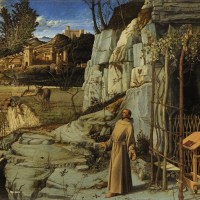
Contributed by Margaret McCann / “The Soul of Nature”at the Metropolitan Museum of Art is one of many exhibitions dedicated to German Romantic painter Caspar David Friedrich (1774–1840) on the 250th anniversary of his death. Some of his finest are absent – the epic Sea of Ice’s vision of an arctic shipwreck, The Great Enclosure’s resonant view of a Dresden field Napoleon amassed his troops on, or Ruine Eldena, one of Friedrich’s many depictions of the remnants of the powerful Catholic monastery his hometown Griefswald formed around. But there are numerous studies displaying his keen observation of nature, research he used for paintings creatively orchestrated in the studio.
The mysterious Gertrude Abercrombie
Contributed by David Carrier / Gertrude Abercrombie (1909–1977) was a Chicago-based painter. Basically self-taught, she was inspired by Rene Magritte or perhaps Paul Delvaux to create small, highly distinctive Surrealist paintings. She was a great friend of jazz musicians and much written about by Chicago writers. She had real success in the local art market. Though gone for almost 50 years now, she has recently gained wider attention. In a deft exercise in revisionist taste, Pittsburgh’s Carnegie Museum of Art has mounted a substantial and intriguing display of her work.
Hope and heaviness at the Havana Biennial
Contributed by Katarina Wong / The recent 15th Havana Biennial, organized around the aspirational theme of “Shared Horizons,” unfolded across the city in November 2024 and ran through February 2025. It involved about 400 artists, curators, and art historians among 80 listed venues throughout Havana, several discussed here. Like its predecessors, the exhibition showcased art from Latin America, the Caribbean, Africa, Asia, and the Middle East – art of the global majority often not seen in American or European galleries or museums.
“Project A Black Planet” – Enshrining a promised land
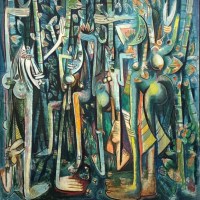
Contributed by David Carrier / Few human developments have been more consequential, in terms of both art history and broader cultural expansion, than the movement of Africans within and out of their own continent. The mammoth exhibition “Project A Black Planet: The Art and Culture of Panafrica,” now at the Art Institute of Chicago in twelve high-ceilinged contemporary galleries, includes more than 350 drawings, paintings, photographs, sculptures, installations, watercolors and prints, but also books, magazines, posters, and record albums, made from the 1920s onward. It’s a lot, but never too much.
Berthe Weill: The gallerist who loved art too well
Contributed by John Goodrich / Hindsight, of course, is 20/20. Looking back at the early decades of modernism, we may sense something inevitable about the ascent of Picasso and Matisse. Weren’t both driven, gifted artists poised to take advantage of their cultural moment? And wasn’t the time ripe for Matisse’s upending of expectations of color, and Picasso’s overturning of pictorial structures? Of course, life is not so tidy and linear for the artists operating in the moment. As the luminous exhibition “Make Way for Berthe Weill: Art Dealer of the Parisian Avant-Garde” at NYU’s Grey Art Museum demonstrates, none of the early modernists had a monopoly on talent or a singularly dominant vision of what painting had to be.
Call it Orphism
Contributed by Adam Simon / At a Four Walls event in Brooklyn in the early 1990s, Erik Oppenheim, at that time a young artist, stood up and said, “I’m starting an art movement. Anyone who wants to join, meet me in the back after the show.” It was a hilarious and audacious gesture, in part because no one joins an art movement on a whim, like a list-serve or an exercise class, but also because there hadn’t been any artist-initiated movements for a very long time. They proliferated in the late nineteenth and early twentieth century with the advent of Impressionism, Surrealism, Futurism, and Dada, and enjoyed something of a resurgence in the 1960s with Fluxus in the United States, Supports/Surfaces and Zero in Europe, and the Gutai Group in Japan. Most of what we consider movements were proclaimed by an outside observer, usually a critic or curator, looking to group artists who had similar concerns and made work that fit the designation. For the artists themselves to rally around a specific cause, even an aesthetic one, was not required.