Contributed by David Carrier / Rebuilding seems to be a cyclical occurrence for older art museums. The collection expands, styles of display change, more capacious restaurants and shops may be needed. Older museums have to construct new galleries. To the original European galleries, entered atop the stairs at the entrance, the Metropolitan Museum of Art added space for Islamic art, contemporary work, and Asian paintings. Alternatively, a wealthy museum can rebuild almost from scratch, as MoMA has repeatedly done. Yet, for most of the time I have been going to art museums, New York’s Frick Collection has been basically unchanged, an island of stability. I remember once being shocked that one of its masterworks – Rembrandt’s The Polish Rider – was away on loan. No other major New York art institution has remained basically the same over such a lengthy period, celebrating idiosyncratic displays that mix sacred and secular works in a luxurious setting. Henry Clay Frick had a great eye.
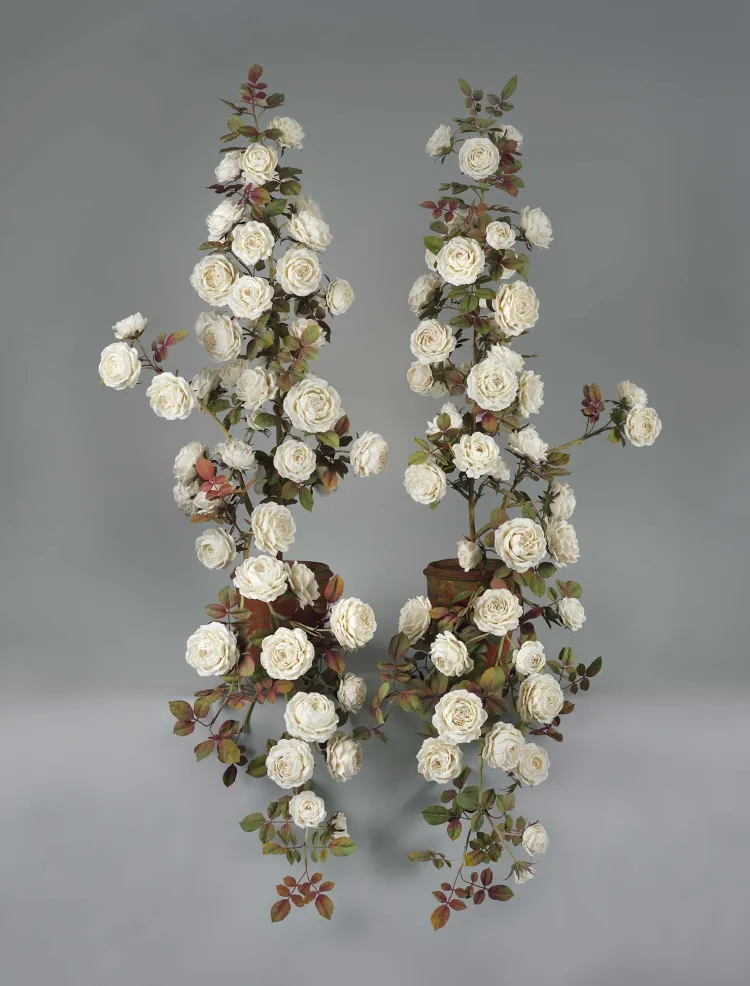
Eventually, however, it was the Frick’s turn for an overhaul. In the enlarged entry hall you buy your ticket, then walk upstairs to the shop, the new café, and the temporary exhibition galleries. Until August 31, you can see three paintings there, two of them loans, in “Vermeer’s Love Letters.” Then you can visit several small galleries displaying the permanent collection on either side of the long hallway on the second floor. Originally the Frick family rooms, they were museum offices. Finally, downstairs, you reach the familiar older rooms. On both floors there is a delightful temporary addition: contemporary artist Vladimir Kanevsky’s porcelain flowers, tromp l’oeil versions of the live bouquets that used to be in the museum.

Because the Frick is a familiar, much-loved venue, Selldorf Architects’ task was tricky. I do regret that the two small basement galleries – perfect sites for small exhibitions – have disappeared. Overall, though, designing in a contemporary style within a relatively small building, they successfully and unobtrusively complemented the old galleries, harmonizing diverse structures. The new galleries are functional but not opulent, as if to remind us that we are only upstairs in a house. Empty, they would function as blank canvases on which curators could compose interpretations of the collection. “Vermeer’s Love Letters” is installed with one wall devoted to a long wall label, the Vermeers isolated separately, as minimalist sculptures might be. Later shows will surely use the space more gracefully.

The new second-floor galleries are surprisingly small, probably because the architects were barred from modifying the long, wide hallway. While I was pleased to see the Frick’s Piero della Francescas in a room of their own, other spaces showed relatively minor work, such as Constable’s cloud studies, Renaissance medals, and Barbizon landscapes. The Frick does acquire new works, but most are small. Expanding its display spaces and adding the café may have been optional, revenue-raising moves. Fair enough. The new auditorium, the café, and the library are bonuses. What matters is that the glorious, densely hung permanent collection has been preserved.
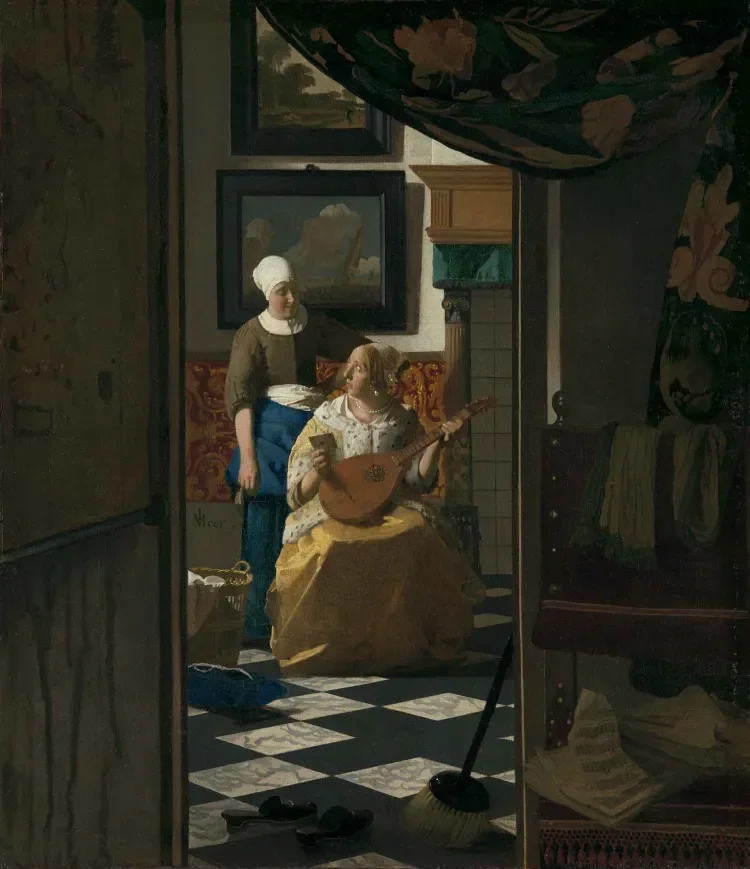
“Vermeer’s Love Letters,” The Frick Collection, 1 East 70th Street, New York, NY. Through August 31, 2025.
About the author: David Carrier is a former Carnegie Mellon University professor, Getty Scholar, and Clark Fellow. He has published art criticism in Apollo, artcritical, Artforum, Artus, and Burlington Magazine, and has been a guest editor for The Brooklyn Rail. He is a regular contributor to Two Coats of Paint.