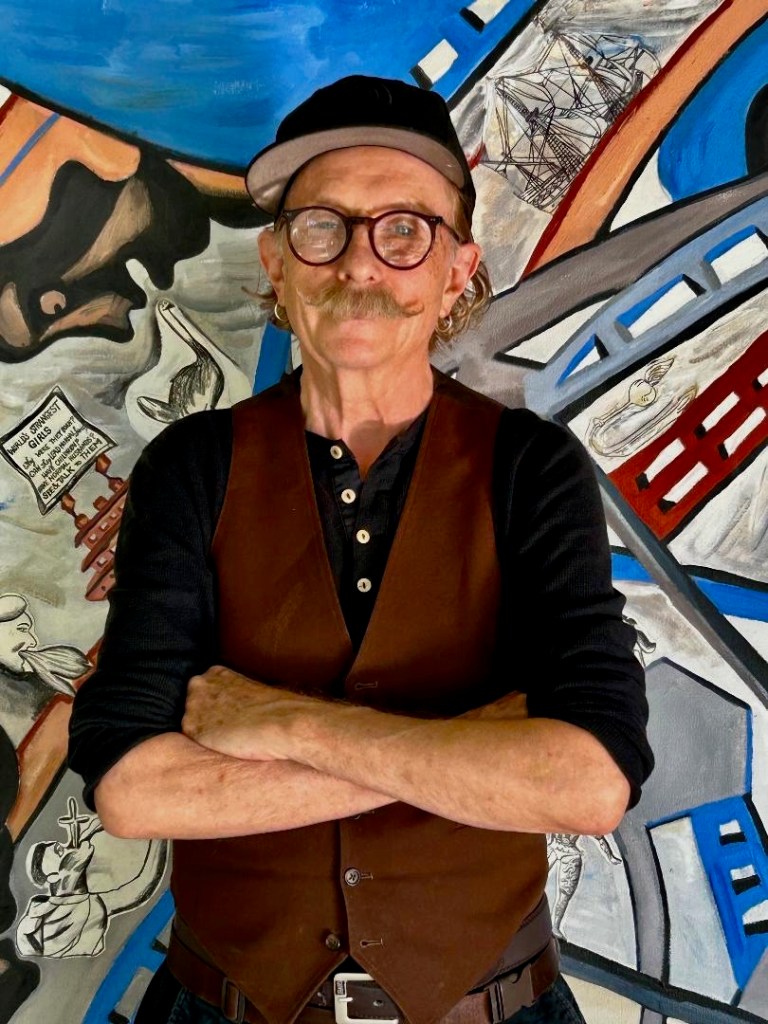
Contributed by Alice Zinnes / Garry Ewen Nichols, painter, dowser, boxer, and beloved member of the New York art community, died suddenly on Thursday, September 22, at age 77. With his passing we lose a passionately independent painter determined to forge connections between his beloved native Tasmania, Australia’s checkered colonial history, his deep concern about the environment, and his complicated family history with his boundless artistic imagination. In his own words:
“From my native Tasmania, I completely absorb in my work the ebb and flow of native animals, the effect of human interference, the displaced native people, and the experience of transported convicts. I describe cherished retrieved objects, found in this landscape, from toy ship models and scattered bones to ancient paths – all visual memories… I endeavor to get this story told and ultimately help preserve the Ross Bridge, the carved stone masterpiece which I believe is an icon of Tasmanian and Australian history.“
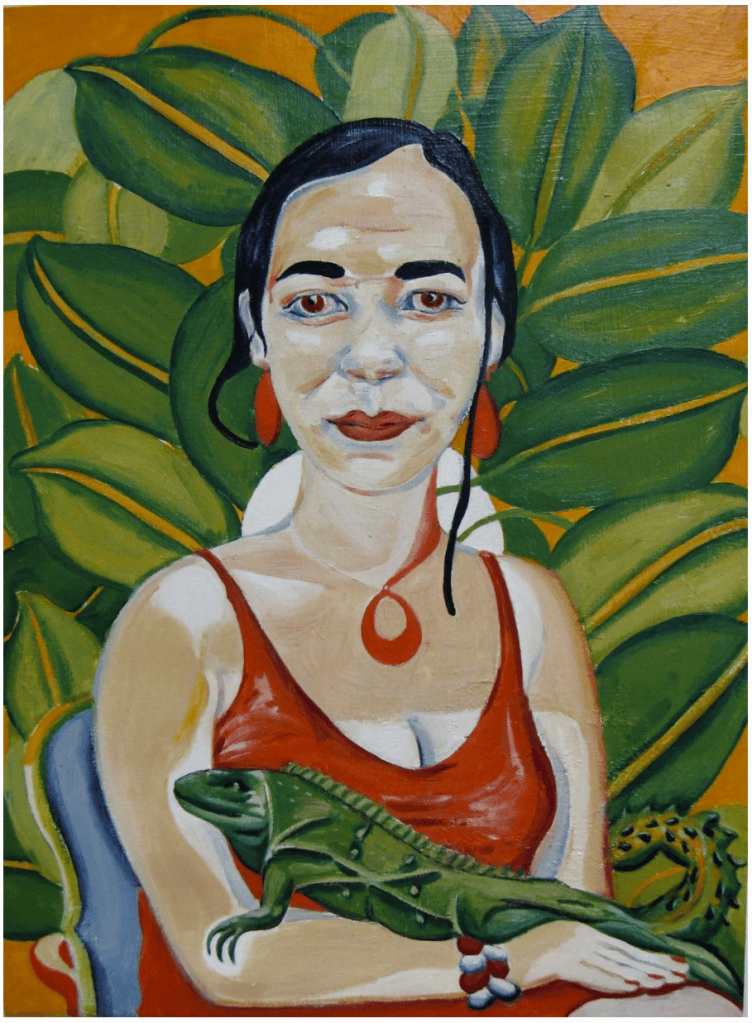
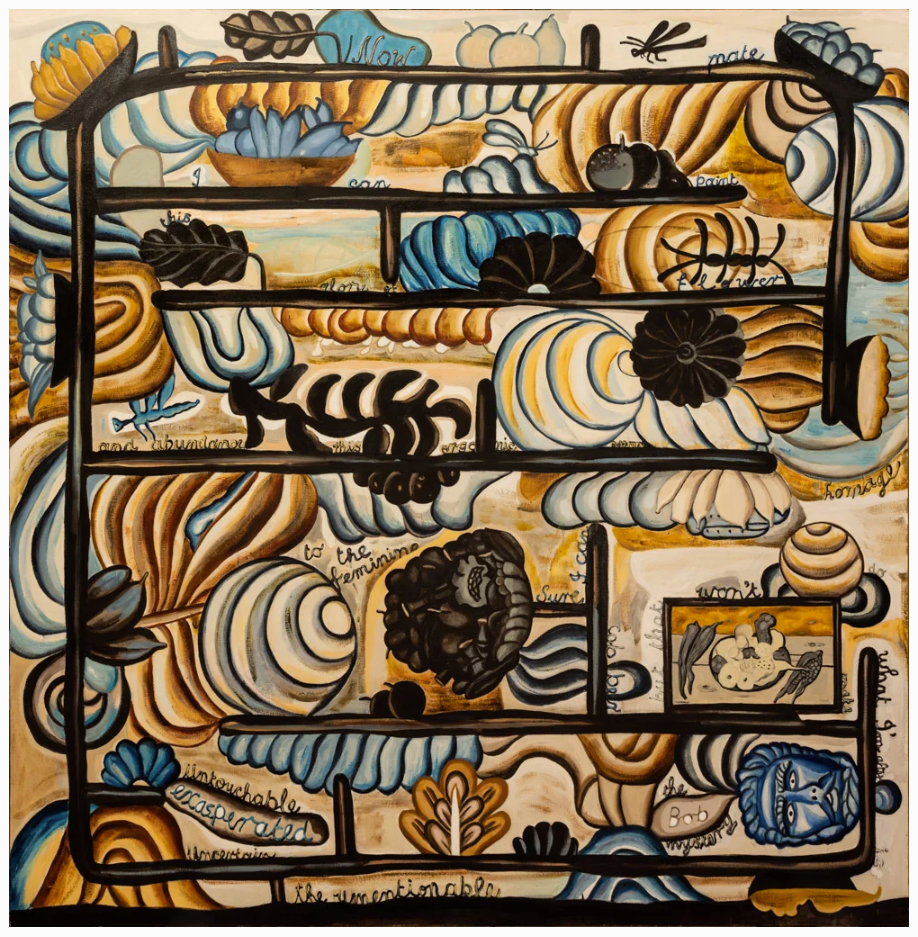
Not only did Garry appear to know everyone in his art world, but they in turn were inspired by his powerful art, generosity, individuality, knowledge, and integrity. Social media outpourings of grief and respect over his passing have been abundant. Here is a brief sampling:
- A lovely guy and a really great painter. The commitment and energy in those paintings deserves that they get wider attention. Walking into that amazing studio with wall to wall work is a representation of a genuine artist. (Tom Burckhardt)
- One of the last painter/raconteurs. (William Eckhardt Kohler)
- Great artist and truly enlightened soul. Always full of life and fun and positive energy. (David Brody)
- Garry was a gentle and kind spirit, authentic, a beautiful, devoted, strong artist and supportive friend. (Glenn Goldberg)
- Garry made such a profound mark upon the world. There is an extra dose of kindness now in the afterworld. (Kurt Steger)
- What a generous, lovely soul, and what a remarkable, original, and beautiful artist!! I will continue to be stunned by and grateful for his incredible paintings!! (Ruth Miller)
- Such a vital person and fantastic painter. The world is less vivid for his loss… A wonderful painter and vibrant spirit, forever. (Elisabeth Condon)
- Echoing everyone’s sad praise. Yes, Garry was a terrific painter and talker, a person of special charm. (Alexi Worth)
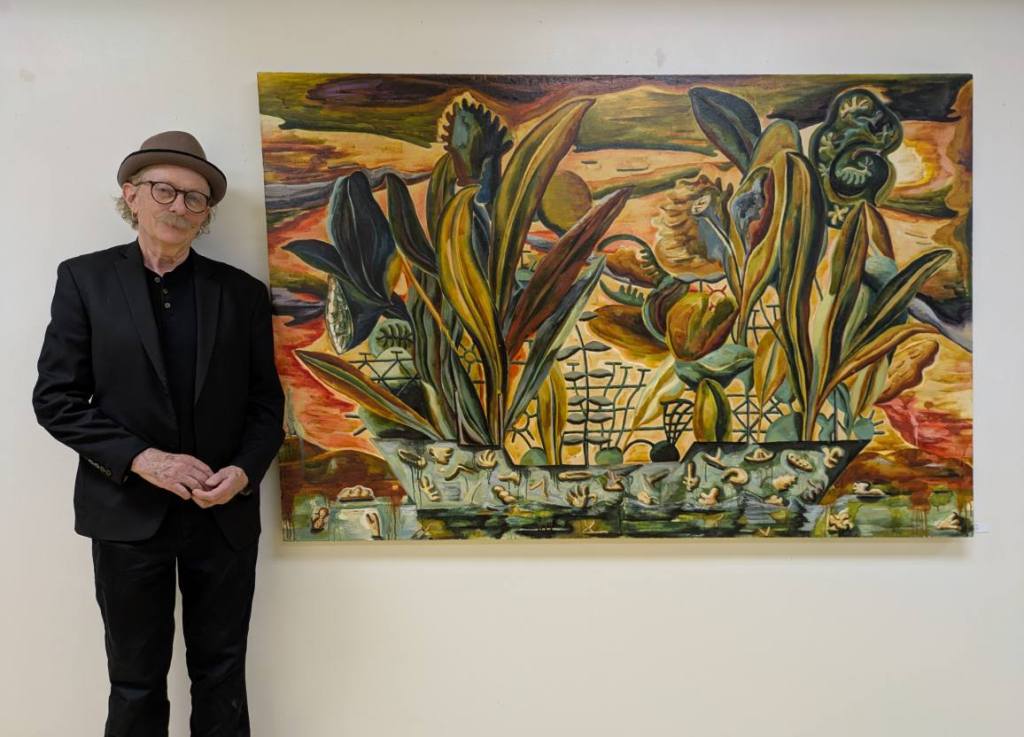
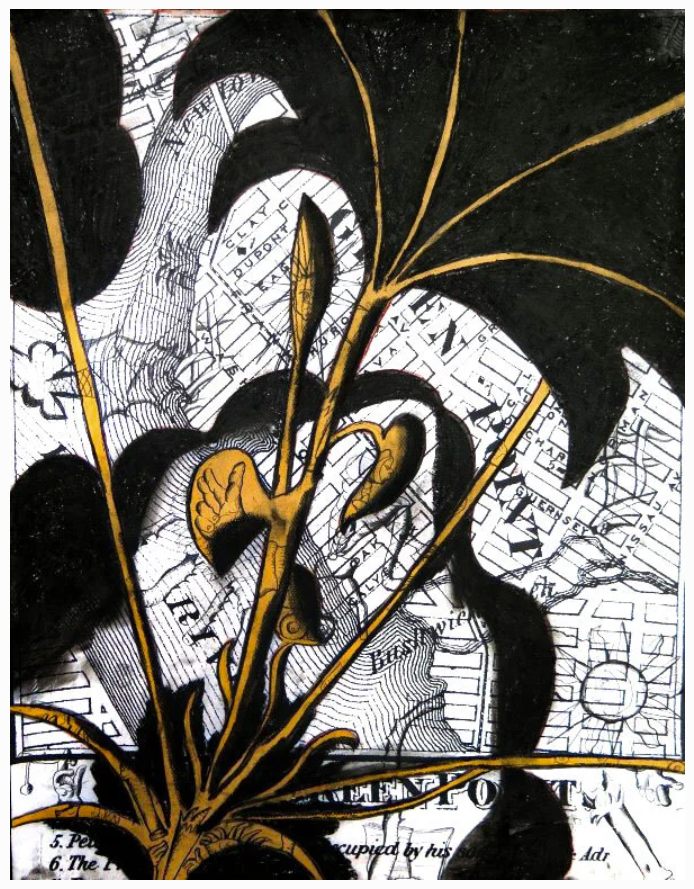
Bill Page wrote:
Garry was the spirit of an artist. He brought a lot with him. Always working and optimistic, he gave us all a lot of hope within ourselves. His paintings were magnificent with a renewed clarity in each new one. I always thought of him as a brave person. Moving halfway around the world so to be in a place to make art. I always looked to Garry as a model when things seemed to get tough and hard in this art world as he strove to keep above it all to make his art. Immersed in the art world, reporting back what he saw and always grateful for it. The world just got smaller.
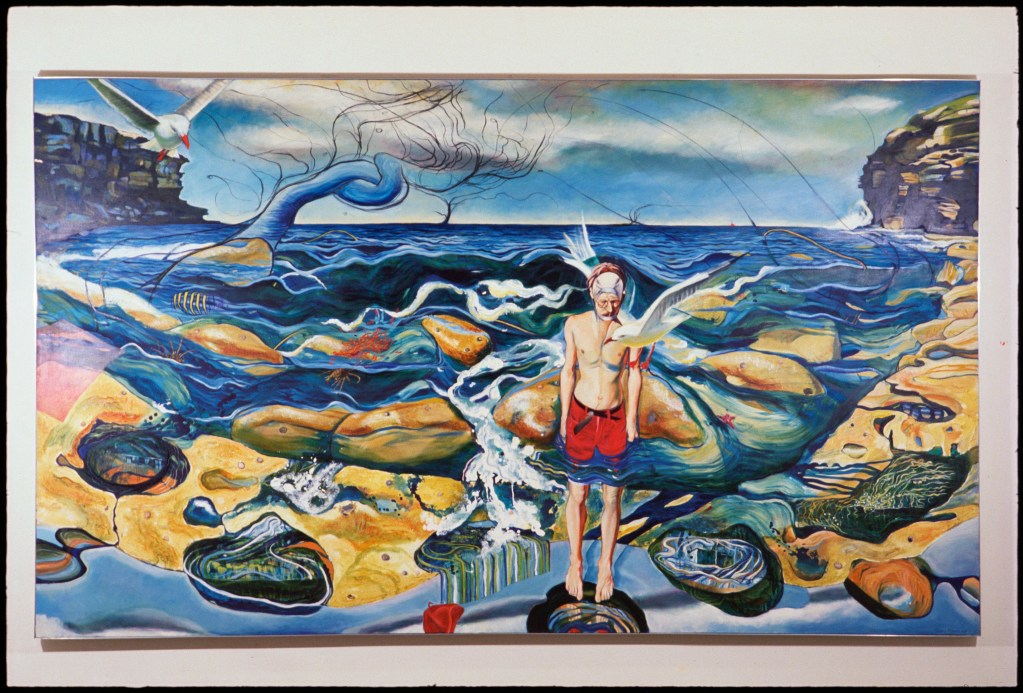
Born in Hobart, Tasmania, to parents who scorned art, Garry rejected his family’s provincialism and went to art school, first attending the Alexander Mackie College in Sydney, then East Sidney Tech, and later the prestigious National Art School of Sidney. Even at this early age, his talents were quickly recognized, yielding exhibitions at numerous galleries in Sydney and scholarships for further study. It was from a show at Gallery A that the National Museum of New South Wales bought Dobroyd Point, a huge, mural-size painting telegraphing Garry’s wild imagination, somewhat surrealistic leanings, and intricate compositional structures. A figure, seemingly the artist himself, stands shirtless and tentative on the beach surrounded by an organic array of rocks that morph into fish, jellyfish with buildings – perhaps his various homes – emerging in glistening reflections, what looks like a mermaid’s tail ascending from the water to become a tree, a strange octopus capping his head, a seagull about to attack his chest, and another one flying swooping onto the scene, while ropes intertwine in the sky above.
On leaving the National Art School, Garry received the prestigious Marten Bequest Traveling Art Prize, which enabled him to travel through Europe for a year to study the masters. Not surprisingly, this was a transformative trip. While in Europe he was awarded a scholarship to study at the New York Studio School, and in 1978 began life in New York City. Garry said he learned how to see at the Studio School, studying with Nick Carone, Peter Agostini, Mercedes Matter, George McNeil, Sidney Geist, Ruth Miller, Chuck O’Conner, and William Wright. Just as importantly, he devoured the art in New York’s museums and galleries and discovered pictorial space, nourishing an enduring fascination with the ambiguities between mass and two-dimensionality and the tensions between surface realism and that of the inner mind and memory.
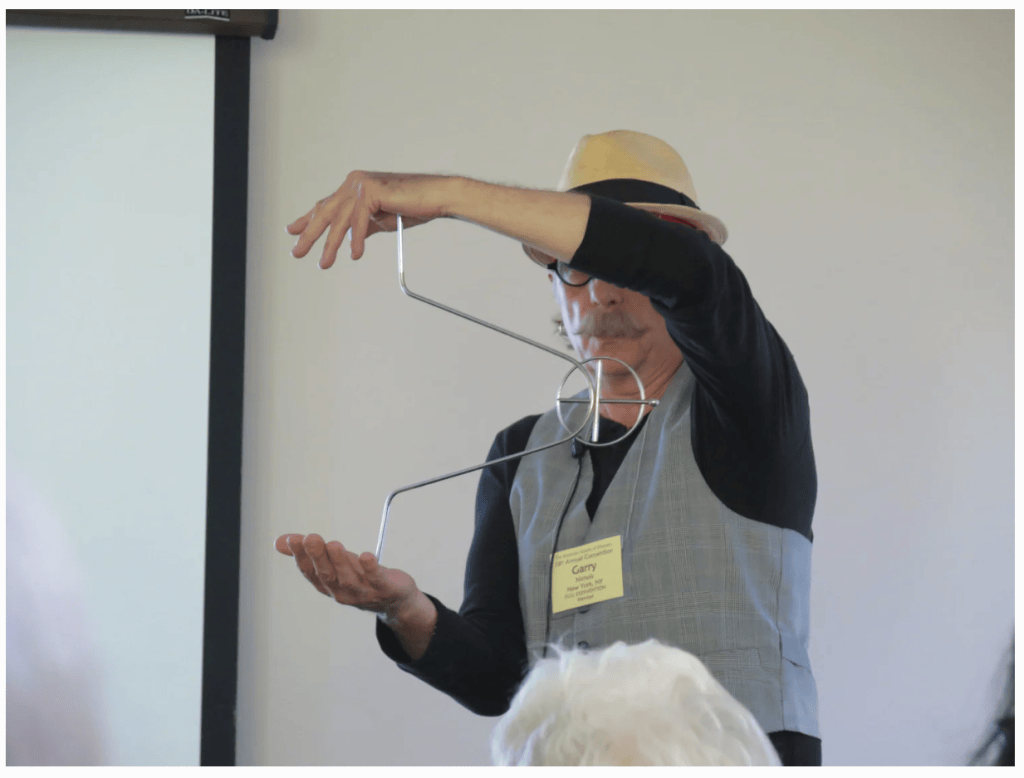
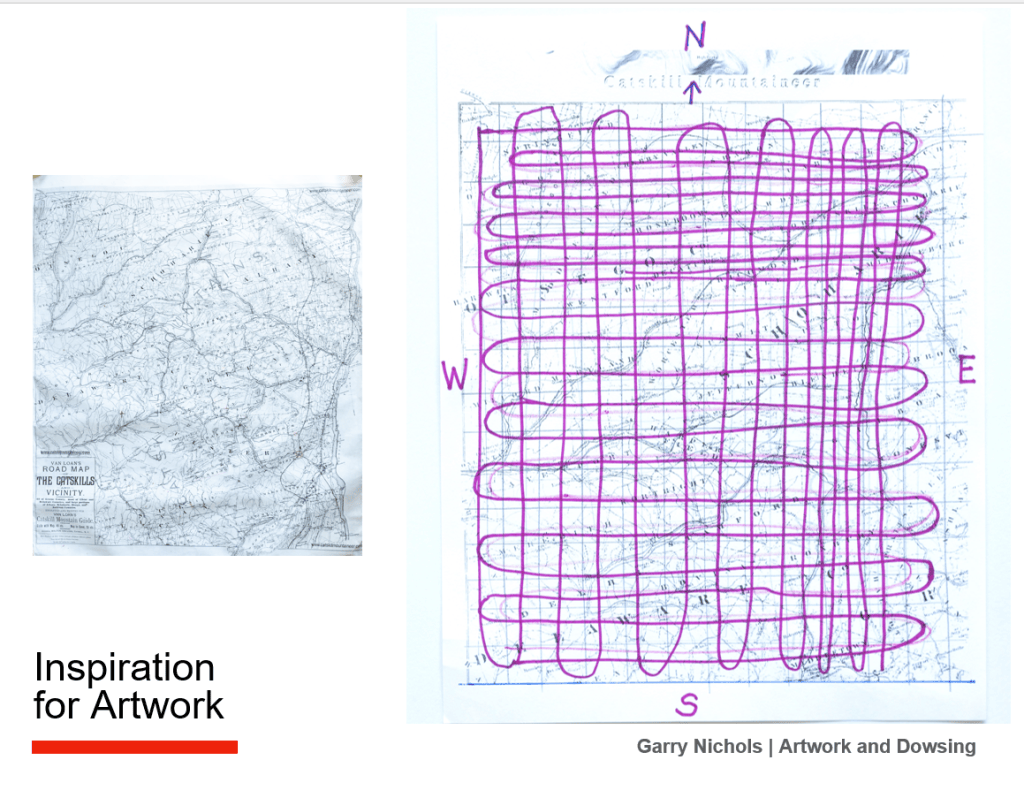
Garry remained at the NY Studio School for seven years, from 1978 to 1985, ostensibly as a student, but more as a resident artist and art sponge. After his initial scholarship ended, he went stayed on as a kind of night watchman and handyman at the school. He soon began working for Mercedes Matter, who was the founder of the Studio School, the photographer Steven Sloman, and eventually as an art handler at major galleries and museums. He encountered the likes of de Kooning and Rauschenberg, becoming the latter’s assistant for several years and presenting a talk about him at the Studio School. In 1982, Garry met Deborah Kaufmann. They married two years later. Her father, Ted Kaufmann, was a renowned dowser, and introduced his son-in-law to the methods of dowsing. Garry became hooked, helping people – many in the art world – find missing objects, missing people, and underground water veins. Dowsing became an important tool in the construction of his complex compositions. A large-scale Nichols painting often began with a separate dowsing project, which entailed using a dowsing rod or a pendulum to generate mapping lines. These often became complex armatures, sometimes manifested as plumbing pipes or doubling as mazes akin to his young son’s puzzles.
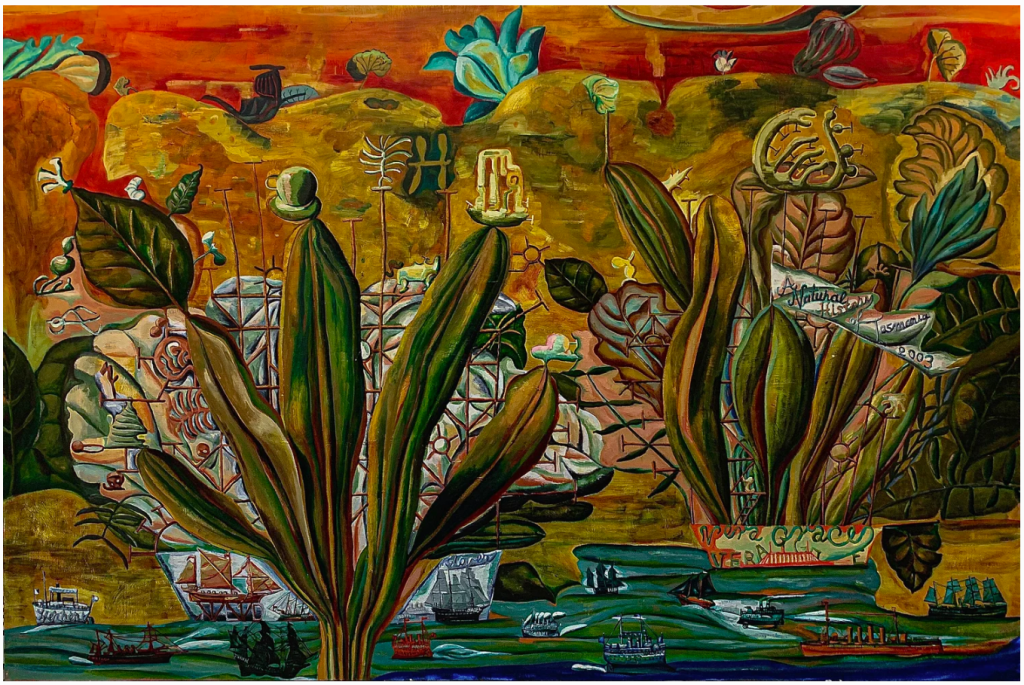
The land and history of Garry’s native Tasmania never left him. In the late 1980s, on a trip back the island, his aunt, Hazel Laird, gave him the book Ross Bridge: The Sculpture of Daniel Herbert by his uncle, Norman Laird. It became Garry’s personal Tasmanian bible. Between 1833 and 1836, the convict Daniel Herbert bargained for his freedom from a chain gang by decorating the bridge with 186 Celtic-inspired relief portrait sculptures of actual convicts. Images of these portraits pepper Garry’s later work.
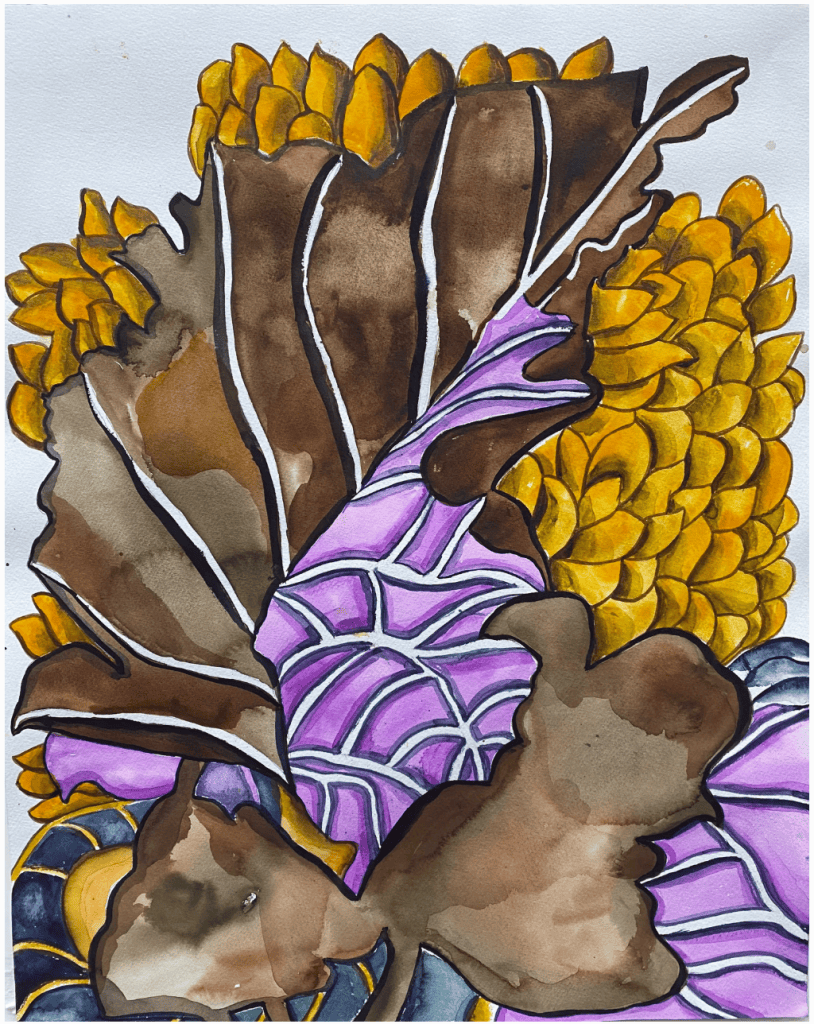
Norman Laird was an artist, photographer, writer, environmentalist, and adventurer – saving the black swans living in the Outback and traveling to Antarctica – whom Garry’s parents, fearing a “corrupting influence,” forbid him to see. To Garry, that only increased his uncle’s allure, and he remained a compelling presence, distant but powerfully real. Floating through and between Garry’s painted lattices is his personal imagery: heads from the Ross Bridge carvings, bulbous foliage recalling Tasmania’s, sailing frigates suggesting convict boats as well as Sebastian Brant’s sixteenth-century woodcut The Ship of Fools, and always the ochres, greens, and yellows of the Tasmanian rainforest and the blacks, reds and whites of its dry heat. For Garry, Australia’s exploitative convict history was a metaphor for the plight of humanity itself, and Herbert’s experience evidence that art could win freedom. Like many Australians, his first Australian ancestor was a British convict, Sarah Nichols, whose 1826 death sentence for stealing clothing at age 14 in London was commuted to deportation. Her convoluted life fascinated Garry, making its way into many paintings.
In 2014, Garry began AA and a wondrous path to sobriety. Soon after, he began boxing at Gleason’s, Brooklyn’s legendary boxing gym, training with boxer-poet David Lawrence. Though he’d always been a passionate, dedicated, and disciplined artist, during his last 12 years he summoned extraordinary artistic power and a determination to make up for lost time. Garry’s prodigious production included paintings across the full range of scales, drawings, and painted shoes and weathervanes. He will be missed for his unique artistic language, ubiquitous presence at galleries and artists’ studios, insatiable curiosity, and generosity of spirit, time, and help – be it to artists, fellow travelers in recovery, or simply someone met on the street – and his robust conversational skills and fascinating stories of the art world.
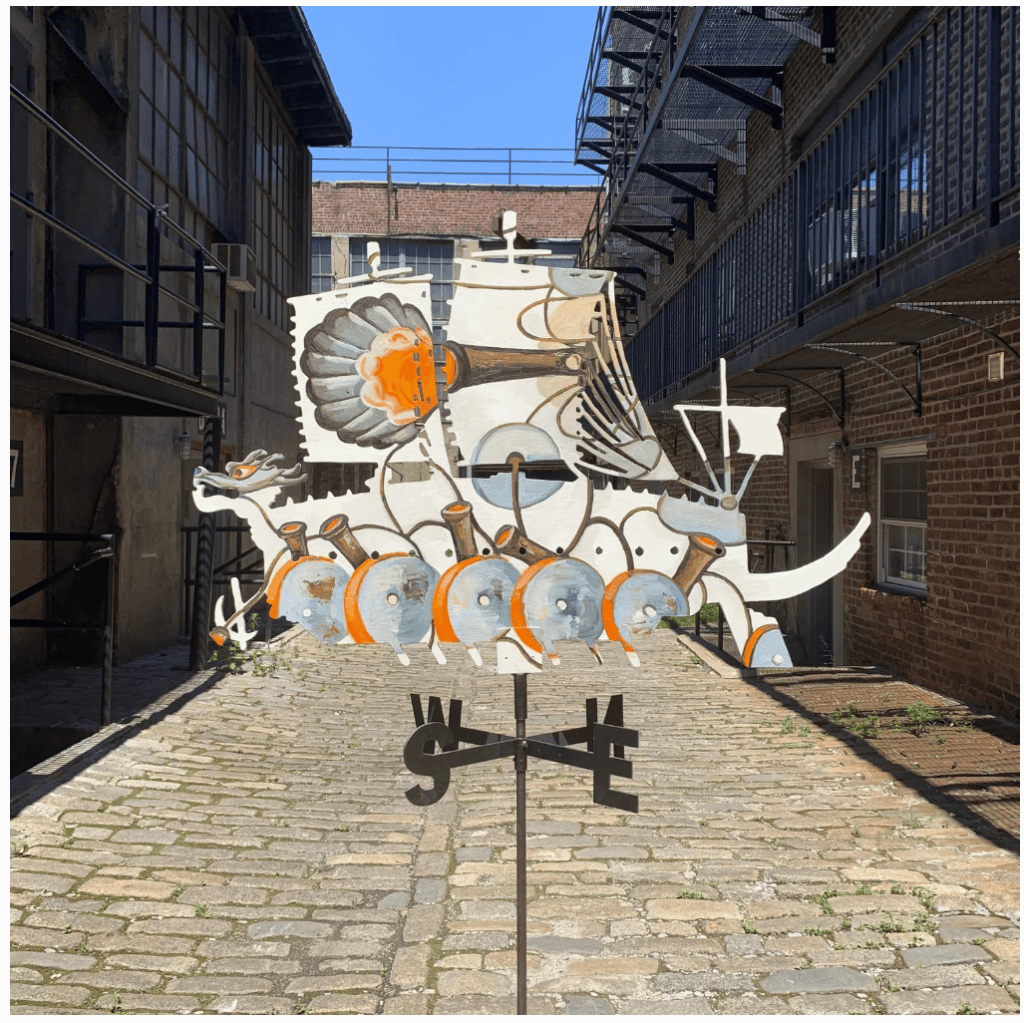
Garry’s work was exhibited extensively in New York and Australia, including at the Brooklyn Museum, Leo Castelli Gallery, DC Moore Gallery, Monique Knowlton Gallery, White Columns, Pierogi Gallery, The Drawing Center, the Art Gallery of New South Wales, and the National Gallery of Victoria (Melbourne, Australia), and it can be found in museum, university, public and private collections in the United States, Australia, Japan, and beyond. His awards include a New York Foundation for the Arts Fellowship in Painting, an Elizabeth Foundation for the Arts Grant for Painting, a Gottlieb Foundation grant, and a Skowhegan Scholarship, among other honors. He was also a dedicated educator who taught painting and drawing at institutions including the Parsons School of Design, the National Academy of Design, and the University of Tasmania.
Garry is survived by his wife Deborah Kaufmann, his son Rafer Nichols and his wife Channing Miller Nichols, grandson Everett Nichols, brothers Rodney and Graeme Nichols, and sister Carol Randria. In lieu of flowers or gifts, please consider a donation to these organizations that meant so much to Garry: Greenpeace or Doctors Without Borders. If you are interested in scheduling a studio visit to purchase Garry’s art, fill out this form: https://bit.ly/4zsoNAJ or purchase a book paintings: https://bit.ly/4eqfjhH
“Personae and Alumni,” the New York Studio School’s 2026 Mercedes Matter Award and Benefit Exhibition will honor Garry with a large feature wall of his artwork. December 11, 2026 through January 10, 2027.