Tag: Studio visit

Remembrance Studio Visit

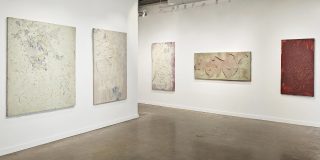
Walter Robinson’s big question: What do they want?

Contributed by Sharon Butler / Walter Robinson played an important role in the New York art scene for over five decades, and on Sunday, February 9, he passed away at his New York home. A piece in Artnet reported that the cause was liver cancer. Walter loved artists and the art world, and he believed that anyone could have a piece of it. You want to be a writer? Go ahead and write. You want to have a gallery? Open one. You want to be a painter? Paint. He was a hub of that world and never seemed to lose interest in the wild schemes…

Studio Visit

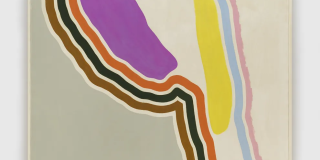
Gary Stephan’s steadfast modernism

Contributed by Jonathan Stevenson / Gary Stephan has been an abstract painter for over fifty years. His command of that vocation – touch, line, color, concept – is duly acknowledged. But he is far from content. Stephan came of age at what was arguably the extended peak of modernism, when creative people across the board presumed to tackle existential problems for the ages.

Studio Visit

Twofer: Patrick Neal and Zach Seeger

Contributed by Sharon Butler and Jonathan Stevenson / Last month we stopped by the LIC building where Patrick Neal and Zach Seeger, two formidable painters, have studios. Both write on occasion for Two Coats of Paint, and we hadn’t seen what they’d been up to since we saw their solo shows – Zach’s “Sports” at Gold Montclair and Patrick’s “Winter was Hard” at Platform Project Space in DUMBO.

Studio Visit

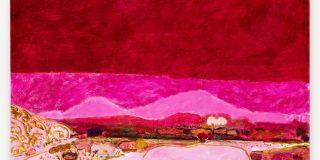
Elisabeth Condon: Beautiful complexity

Contributed by Sharon Butler / To understand Elisabeth Condon’s paintings, it seems important to know that she grew up in California in a highly decorated house where she spent hours staring at the wild patterns of the fabrics and wallpapers. The experience certainly informs her exuberant paintings, in which pattern, flower, landscape all co-exist, as she says in her artist statement, in living, breathing presence.

Studio Visit

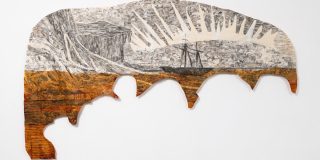
Lisa Hoke’s unconfined vision

Restricted to her studio during lockdown and cut off from large spaces in which to create site-specific work, Lisa Hoke felt the need to fashion pieces that were more portable and more presumptively permanent. What resulted is a scintillating revelation.