Tag: Minus Space

Conversation

Michael Brennan’s moving images

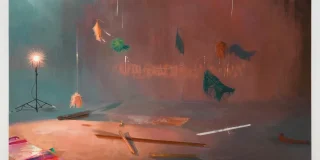
Two Coats of Paint invited painter Kim Uchiyama to sit down with Michael Brennan to discuss “Floating Weeds,” Brennan’s fourth solo show at Minus Space. In their wide-ranging conversation, they discuss Japanese film, Russell Lee’s photographs, Charles Olson’s poetry, Venetian lagoons, architect Carlo Scarpa, Homer, and more.

Solo Shows

Gabriele Evertz’s song cycle

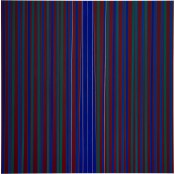
Contributed by Leslie Roberts / Gabriele Evertz’s new paintings are a song cycle in color. Some of her previous shows had singular emotional states as themes; “Rapture” and “Exaltation” are two. But in her new solo “Path” at Minus Space, six large square canvases extend the concept, forming a chromatic narrative – an emotional journey through the pandemic to the present. They start in despair and isolation, move through night with glints of hope, break sharply, and conclude, not with sadness but with strength in a belief in the urgency of color in life. Evertz, whom some might call quintessentially modernist, sees her new work as neo-Romantic.

Solo Shows

Russell Maltz: Radical thrift

Contributed by Adam Simon / One of Russell Maltz’s singular achievements is to demonstrate how easily utilitarian objects and materials can be transported, Cinderella-like, into the alchemical realm of fine art. This is partly a property of the materials themselves: the symmetry, weightiness, and economy of products meant for construction. “Russell Maltz: Painted/Stacked/Site” on view at Minus Space in Dumbo, through July 30, with an additional nearby storefront installation and a slide show depicting found sites of construction material.

Solo Shows

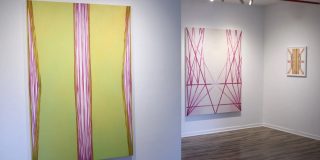
Erik Saxon’s rigor and play

Contributed by Sharon Butler / Matthew Deleget from Minus Space just sent a note that included these installation shots of Erik Saxon’s exhibition, which is up through June 11. Originally from San Francisco but based in NYC since 1968, Saxon was a core member of the Radical Painting Group active in NYC during the 1970s and 1980s. The RPG stressed a return to the core concerns of painting, focusing primarily on the monochrome.