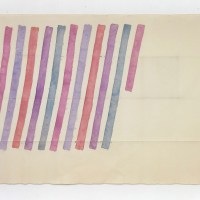
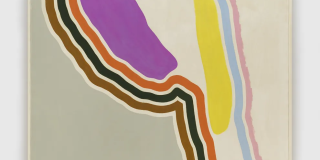
Contributed by Franklin Einspruch / If there’s a unifying characteristic of worldwide modernisms, it is the challenge they present to the necessity of certain elements of inherited pictorial and sculptural forms. Looking back on artists who produced their first mature works in the latter twentieth century, it’s illuminating to ask whether the artists lodging that challenge were accusatory or reverent. That seems to be a more salient distinction than whether they were modernist or post-modernist. The accusatory mode was reformist, premised on the conviction that received traditions were presumptive, limiting, or saddled with unsatisfactory politics. Practitioners of the reverent mode might have agreed, but they clung to the possibility of renewal from within the confines of art. The work of Giorgio Griffa is an exemplar of the latter.