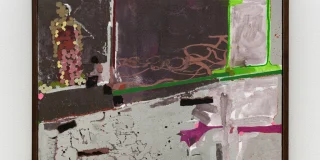
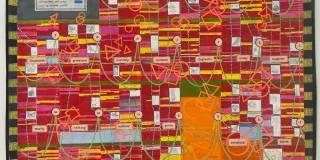
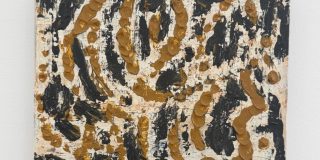
Contributed by David Carrier / Anyone old enough to remember Claude Levi-Strauss’s books on structural anthropology or Rosalind Krauss’ famed structuralist account of sculpture, all richly suggestive sources of art theory, will likely appreciate “Building Models: The Shape of Painting,” currently up at the The Milton Resnick and Pat Passolf Foundation and curated by Saul Ostrow. The central question he poses is how you construct a painting. In the 1960s and 1970s, when painting was beleaguered and political experimentation was a related concern, tribes of New York artists were consumed with answering that question.
Tag: Gwenaël Kerlidou
Carol Bruns’s aesthetic moralism
Contributed by Gwenaël Kerlidou / Heart of Darkness, Joseph Conrad’s 1899 novella, is one of the first fictionalized accounts of the ravages of European colonialism in Africa. Marlow, the narrator, while surveying the grounds of an ivory collecting station on the Congo River, catches sight of a row of shriveled heads mounted on stakes. The episode segues to a deeper exploration of the psyche of Kurtz, a terminally ill but very successful ivory harvester working for the king of Belgium. His cryptic last words – “the horror, the horror” – sum up the situation. The title and content of Conrad’s novella reverberates through Carol Bruns’s current exhibition at White Columns of mostly monochromatic frontal sculptures, in which the human figure is omnipresent, either as hieratic totems or as ritual masks. Scattered in the gallery space, an unruly mob of chimeras and other nightmarish characters seems to be stoically harboring the scars, wrinkles, creases, and other traces of immemorable sufferings.