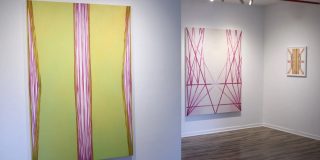
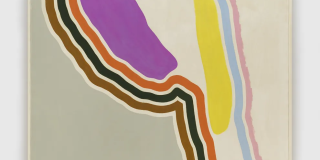
In The Swerve, a 2012 Pulitzer prize-winning work of non-fiction (subtitle: How the World Became Modern), author Stephen Goldblatt looks at one man’s decision 600 years ago to publish an ancient Roman philosophical epic, On the Nature of Things. The epic poem, the only known work by Roman poet and philosopher Lucretius, suggested that gods did not rule the universe, that religion wasn’t healthy, and that all matter was made of atoms. That the man — a Renaissance-era bibliophile and papal secretary named Poggio Bracciolini — found the last surviving copy in the library of a German monastery and chose to publish it planted ideas that changed the world. Galileo, Darwin, Freud, and Einstein, among others, admired the poem and were inspired by it. To kick off 2016, two independent artist curators, Lauren Frances Adams and Jennifer Coates, have organized a witty exhibition at Ortega Y Gasset named after Goldblatt’s book and rooted in Lucretius’s ideas about the behavior of atoms.


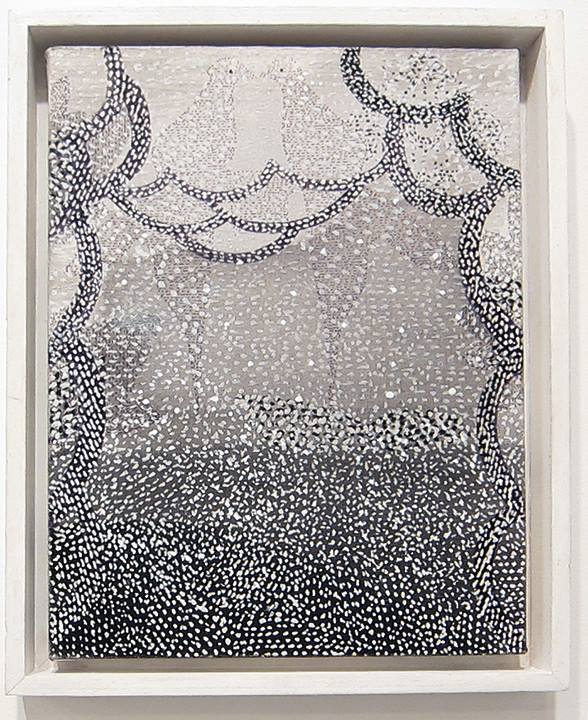


“The Swerve,” with works by Julia Bland, Caroline Wells Chandler, Glenn Goldberg, Bill Komoski, Joyce Kozloff, Bruce Pearson, Sarah Peters, James Siena, and Barbara Takenaga. Curated by Lauren Frances Adams and Jennifer Coates. Ortega y Gasset Projects, Gowanus, Brooklyn, NY. Through February 21, 2016. Also on view( in the gallery vestibule): Star Upon Star, a site-specific installation by Kirsten Hassenfeld.
——
Two Coats of Paint is licensed under a Creative Commons Attribution – Noncommercial-No Derivative Works 3.0 United States License. To use content beyond the scope of this license, permission is required.