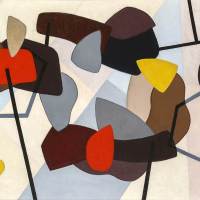
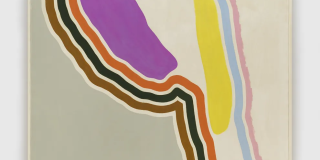
Contributed by Jacob Cartwright / In 1957, Clement Greenberg penned the essay “The Late Thirties in New York,” reflecting on years that were formative for both him and American art. He noted that during that decade “the big event, as I saw it, was the annual show of the American Abstract Artists group.” The artists who formed American Abstract Artists (AAA) first began meeting in 1936, in response to curators like MoMA director Alfred Barr, whose formulation of abstract art didn’t extend beyond the European continent. By 1937, AAA had begun organizing the regular New York City group shows that so impressed Greenberg.
Tag: Jacob Cartwright
AAA at 90: Keep on looking
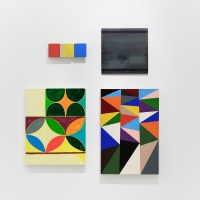
Contributed by Leslie Roberts / The exhibition “Abstract by Definition” at Art Cake celebrates the 90th anniversary of the American Abstract Artists (AAA). The show is subtitled “An Index,” but is not one in the usual sense – not, that is, an itemized set of categories, styles, intentions, or formal languages defining abstract art. Curator Saul Ostrow has instead organized groups of several works – usually four. This installation effectively highlights the particular qualities of each piece, and emphasizes the diversity of what we call contemporary abstraction.
Precision in play at Flinn Gallery
Contributed by Jacob Cartwright / True to its title, the group show “Precisely.” at Flinn Gallery is chockablock with precision-crafted paintings. There is an equal […]
Betsy Kaufman: The more you see
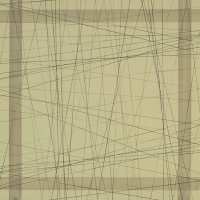
Contributed by Jacob Cartwright / At first blush, Betsy Kaufman’s self-titled show at Bookstein Projects, a concise survey of work made from 2008 to 2025, seems simply to present a handsomely cerebral group of paintings and drawings. In time, it becomes clear that the work smuggles in something more. Kaufman’s output is a kind of two-sided coin that can oscillate between her embrace of bold, saturated color and strategies of stark reduction.
Rob de Oude: See what happens
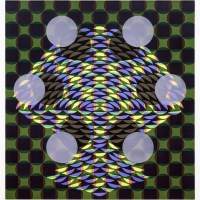
Contributed by Jacob Cartwright / It is no contradiction to observe that Rob de Oude paintings in his solo show “Rhyme and Repeat” at McKenzie Fine Art are created with an exceedingly sober methodology, yet achieve intoxicating outcomes. To make something and to see something are two different things, and revealing the interrelationship between them— as de Oude’s do— is one of the greatest pleasures that paintings can offer. While it may seem inapt to call such an exacting technician an experimental painter, the designation fits. De Oude conducts his investigations in the controlled environment of his studio, where variables are adjusted with one goal in mind: to see what happens.
Don Voisine: Twilight of the Modern
Contributed by Jacob Cartwright / Walking through an exhibition of Don Voisine’s paintings is like spending time with a laconic host who can still be relied upon for a gnomic phrase, or pithy observation. His reductive work has the forceful thrust of heraldic symbols or Russian icons, but the underlying quality is always one of intrigue, and he likes to throw in a few twists. In his current show at McKenzie Fine Art, he pushes this instinct further by tinkering thoughtfully within own lexicon, producing some of his strongest work in the last decade.
Paul Corio: Unapologetically vivid visual sensations
Contributed by Jacob Cartwright / The snappy color-driven works in Corio’s fourth solo at McKenzie Fine Art smartly develop the signature vein of geometric abstraction that he has presented with the gallery since 2016.