
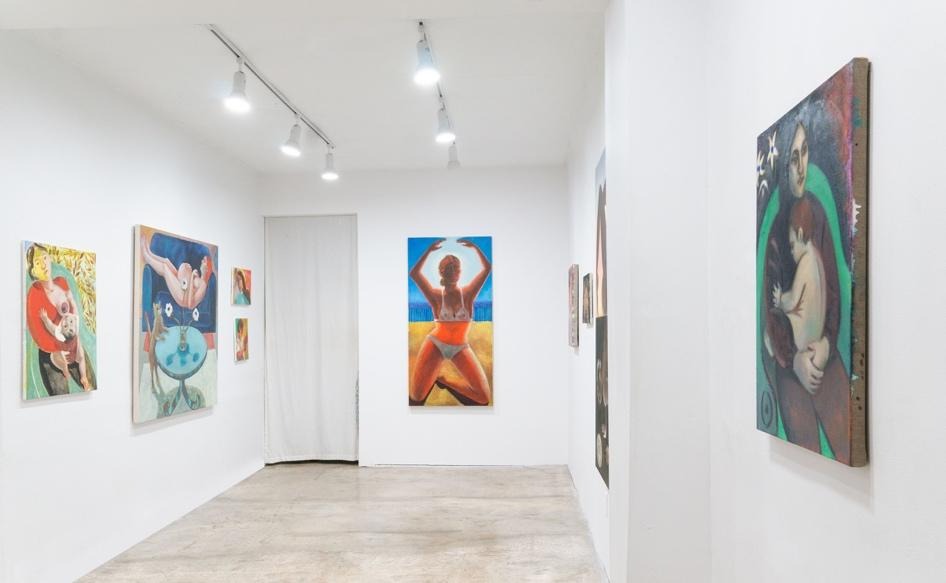
Contributed by Caroline Otis Heffron / Amelie Mancini’s debut solo exhibition at Massey Klein Gallery, offers poignant reflections on women, enticing viewers with harmonious colors and intricate patterns that initially convey a sense of contentment and balance. But her layering techniques, involving translucent paint, and repeating motifs – reminiscent of Vuillard, Matisse, and Modersohn-Becker – encourage closer study of gesture and expression. As the viewer moves in, archetypal faces emerge with expressions of longing and wonder, leaving ambivalence.
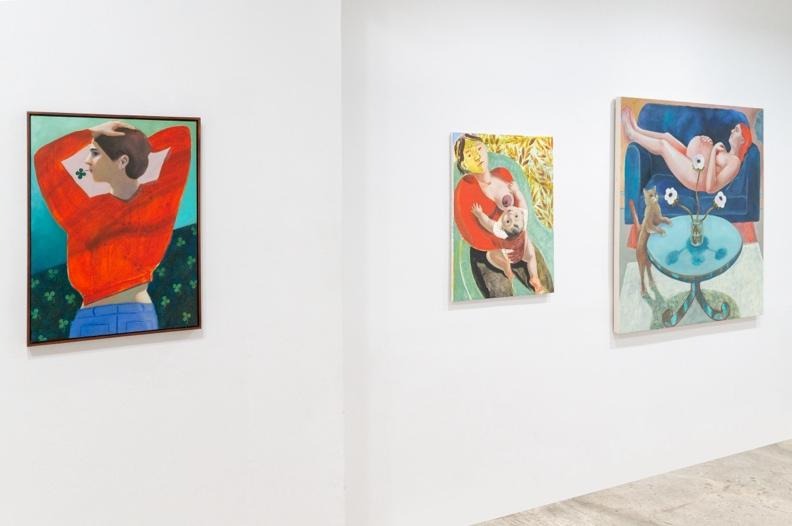
Mancini draws on the rich history of maternity and the female gaze, the slightly distorted figures aligning with those of contemporary artists such as Danielle Orchard, Julie Curtis, and Elizabeth Glaessner: dreamlike realities that transcend linear time and reflect subconscious desire and sensuality. Mancini resists particular interpretations of intimacy, nurturing, or self-actualization, instead embracing universal contradictions. Human-sized vertical canvases contrast with close-up portraits. At the far end of the gallery, Sun Catcher appears like an altar presenting a heavenly, monumental figure, an oracle or a sun goddess. The figure holds the light and faces us directly, embodying creativity and world-building in an iridescent, glowing body. Edges bleed, congeal, and disperse at uncanny moments while body parts touch, almost touch, meet, almost meet, implying opposing sensations of tension and release.
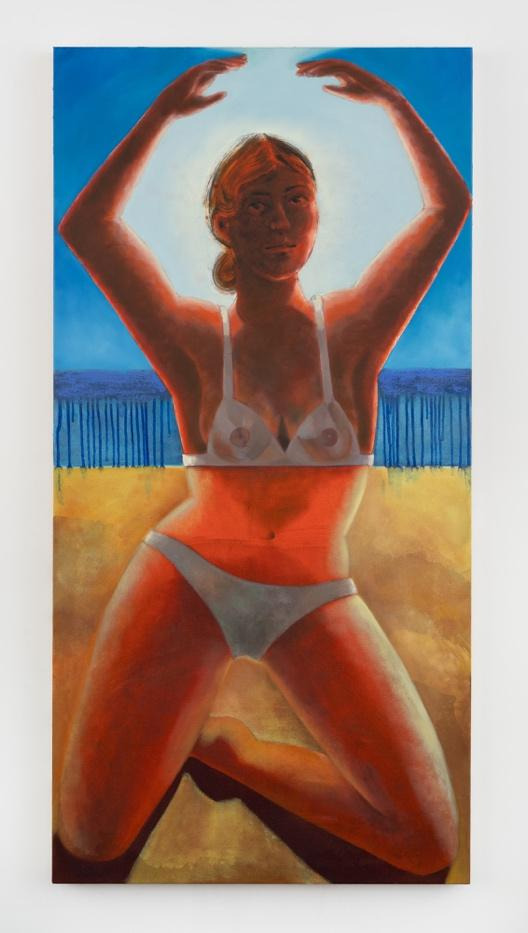

The tall, vertical figure in Moon Catcher is doing a headstand, demonstrating control and grace and bestowing confidence, a wry smile holding the audience’s gaze. At the same time, the composition incorporates dichotomies: celestial and terrestrial, gaze and reflection, strength, and vulnerability. Blue and white lines illuminate the stable upper body, while an atmospheric haze settles over the teetering lower body.
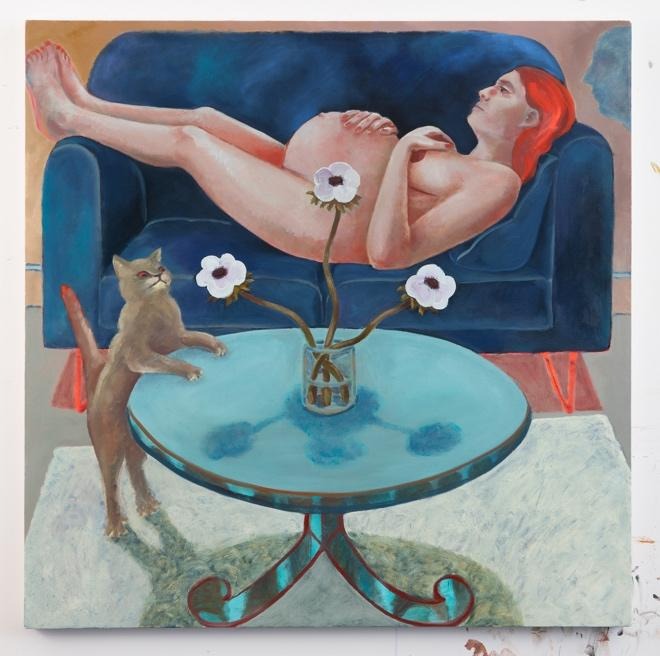
Anchoring the third wall, another large painting, Wait Time May Vary, conveys emotional anticipation through contrasting paint applications and colors. Cleverly appropriating the male gaze, Mancini depicts a woman about to give birth. Although the hands signal acceptance, the compressed sofa space, facial expression, and shadow convey discomfort and instability. Analogous colors and domestic comforts counterbalance neon eyes and a ready-to-pounce cat. The title underscores the irony and unpredictability in life-altering experiences.
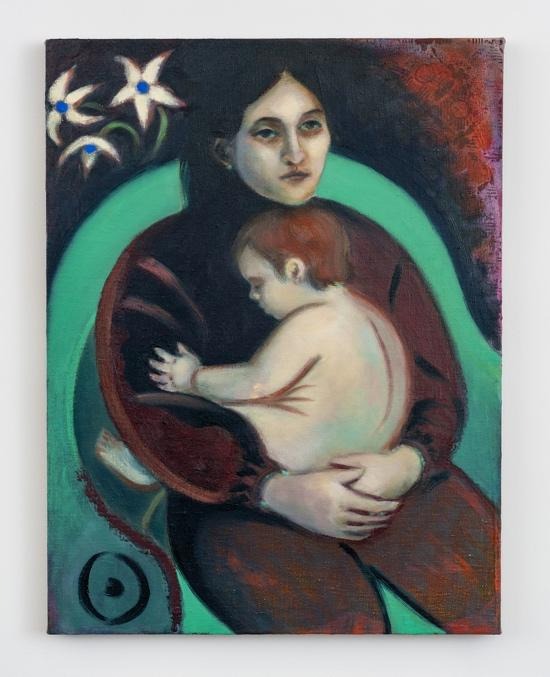
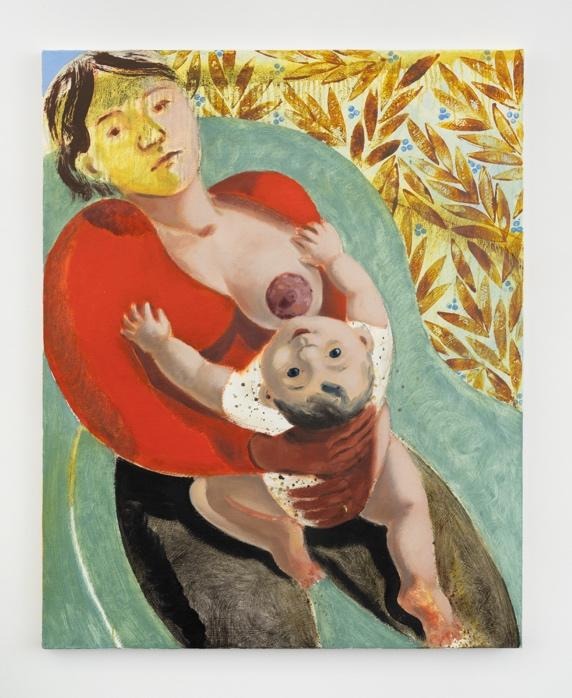
Mancini’s two versions of mothers nurturing children impart the complexity of caretaking relationships. At first glance, Night Shades seems to allude to Madonna and Child. Subverting this allusion are deep maroons and greens, exaggerated arms with flattened outlines, deadly flowers, and an exhausted expression, honoring the reality of a mother’s tender heartache, as seen in the Pietà, the work of Käthe Kollwitz, and that of Elizabeth Catlett. Still Nursing portrays a joyful baby as the mother recedingly looks aside. Patterns, drips, and colors surround a highly textured areola, the painting’s focal point. Here Mancini emphasizes the functionality of the female body as nourishment becomes labor and intimacy service, while capturing fleeting moments of idealized domesticity and mixed emotions with deft brushwork and compressed spaces.
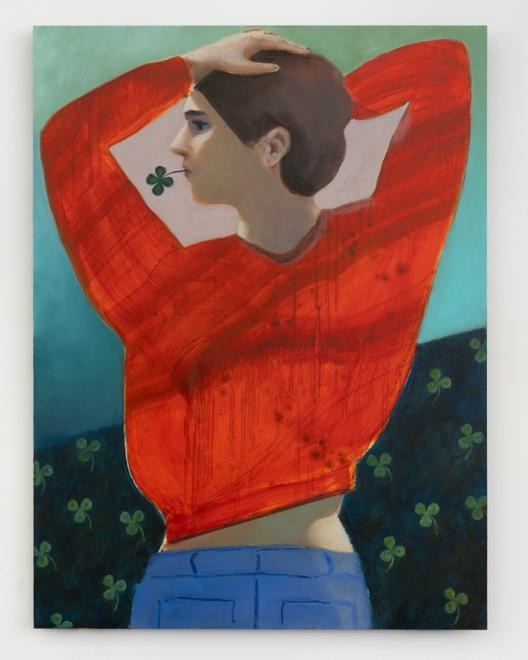
Overall, Mancini’s paintings explore the potential, ambition, and curiosity in women’s lives. Her structured space and wide range of bodies ask questions without dictating answers. Queen of Clubs – the closest painting to a self-portrait in the show – depicts the awkward positioning of the woman’s body as it twists into a statue-like pose and encounters a rare four-leaf clover. Through her explorations, Mancini helps reshape contemporary conversations about the power of the female experience.
“Amelie Mancini: My arms fit you like a sleeve,” Massey Klein Gallery, 124 Forsyth Street, New York, NY. Through April 18, 2026
About the author: Caroline Otis Heffron is an artist based in Brooklyn. She is currently in two exhibitions: Every Woman Biennial at Pen and Brush Gallery and “Occupying Space: 9 @ BAT at the Museum of Contemporary Art, Long Island.







Great to see this write up — I love Amelie’s work!