
Contributed by Michael Brennan / Until viewing the concurrent exhibitions up now – one at Mario Diacono Gallery in Boston, the other at Ghostmachine in New York – the last time saw I so many of Jodie Manasevit’s fine, fierce paintings was at the start of 2020, in a previous incarnation of artist-curator David Dixon’s Cathouse Proper project space in Carroll Gardens. Just as that show was gaining momentum, the entire world stood still, stalled by global pandemic. Manasevit has returned, strongly, in 2025 with a double exhibition.
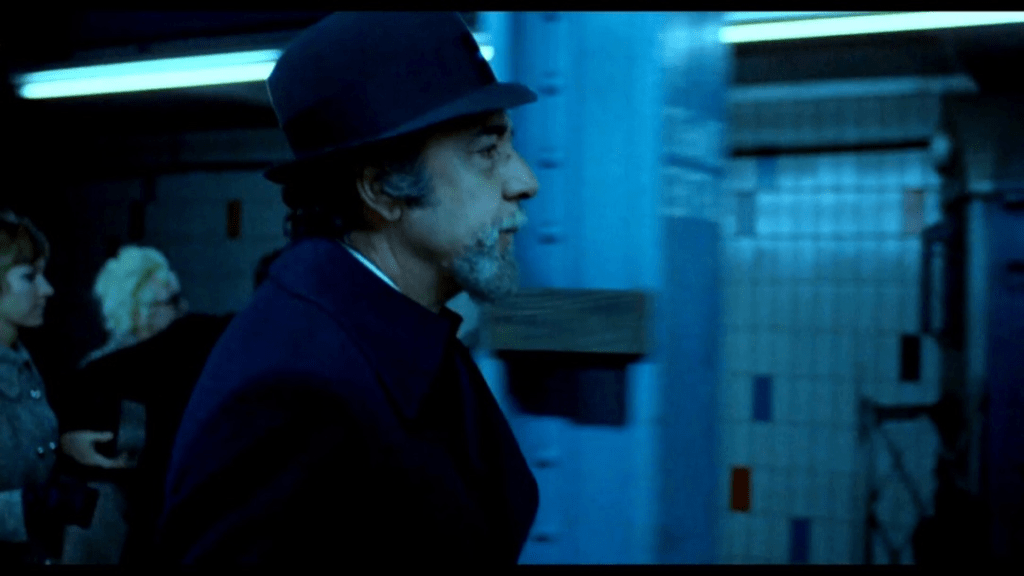
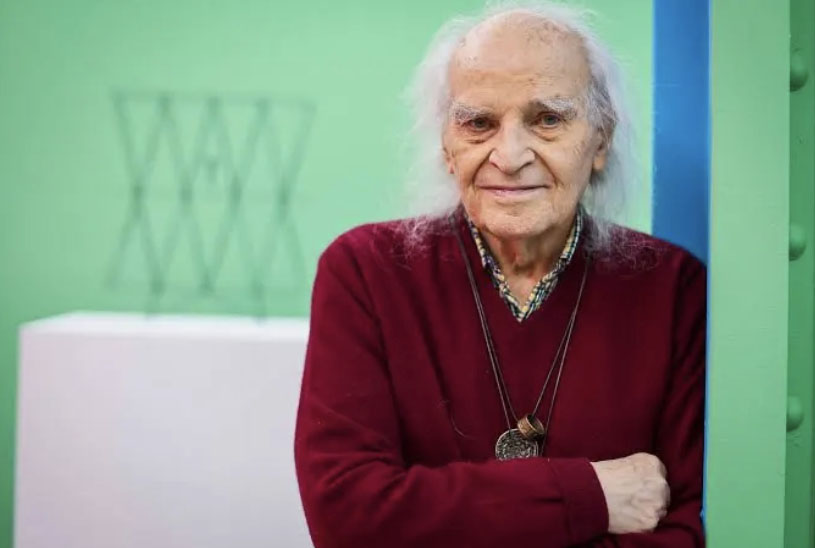
Each gallery has chosen to present her paintings against a competing schema. Mario Diacono Gallery has boldly colored walls, based on the lifelong interest that Diacono – who passed away in October at age 95 – had in the signification of earthly elements, and in alchemy. Mario was a singular figure, a gallerist famous for presenting new talent, and trusting his own particular taste. He launched many careers before the art world arrived at any consensus. He was deeply committed to art. I’m not overtly superstitious, nor am I a tin foil hat guy, but it should be noted, that as I write, the third interstellar object only ever known to have entered our solar system, 3I/Atlas, is emerging from its hidden orbit behind the sun, and there’s some genuine speculation amongst serious scientists as to whether this gargantuan plank of illuminated nickel is a comet defying known laws of physics, or that it’s a self-propelled alien spacecraft. 3I/Atlas will be more clearly observable in a few days. All will be revealed? I’m not one for hypotheticals, but I recommend that we all enjoy these two exhibitions sooner than later. The basement space is vertically split by a steel I-beam, its walls painted different colors, bringing to mind New York’s subway beautification project in the early 1970s. Abstract painter David Reed once lectured on the relationship between the subway’s freshly painted I-beams and the New York City paintings of Blinky Palermo at Dia Beacon. Manasevit’s abstract paintings, though quite distinct from Palermo’s, occupy the same category of intuitively driven minimalist abstraction.


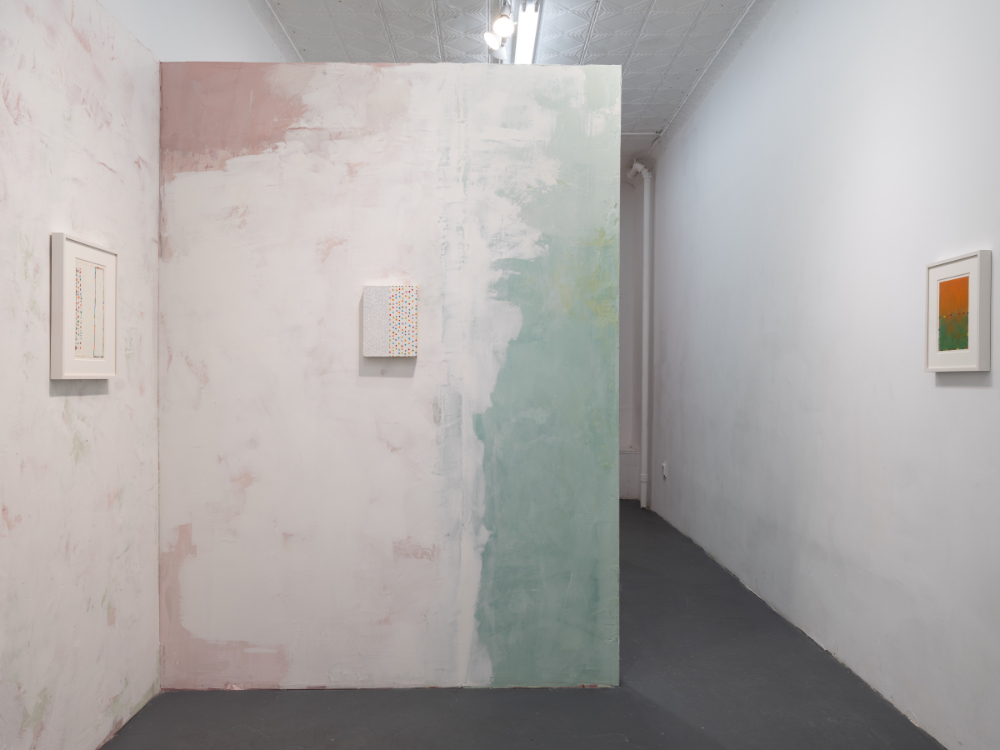
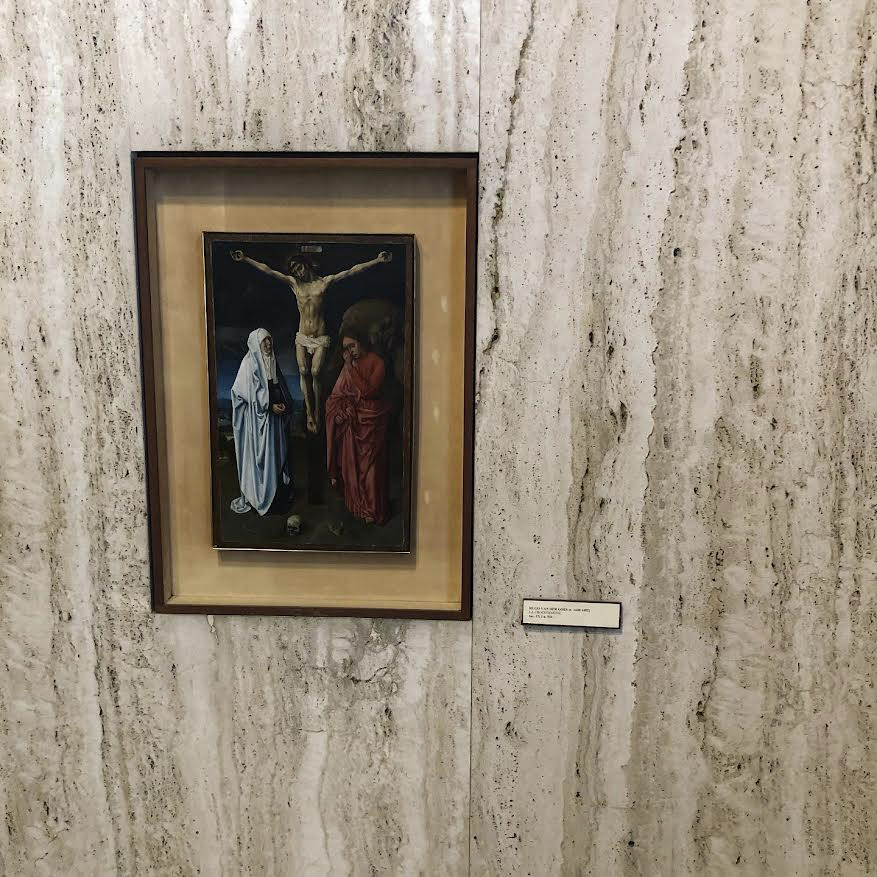
In curating the New York exhibition, David Dixon took a different direction, constructing hand plastered walls and countersinking Manasevit’s paintings within them. Dixon’s walls are rough and expressive, with some mottled color variation, but they remain supportive. His technique recalls Venetian Plaster, specifically architect Carlo Scarpa’s countersunk installation of early Dutch painting in the Antonello da Messina sala 34 of the Antonello da Messina. To my mind, this single room is one of the great painting installations, and I appreciate Dixon’s decision to resist the domination of the white cube and embed Manasevit’s paintings within atmospheric plaster for emphasis and counterpoint.


Sometimes, Dixon’s plaster walls recapitulate the aura of Manasevit’s paintings. Their architectural quality reminds me of Roman painting, particularly the floor-to-ceiling painted interiors in spaces like the Ixion Room in the House of the Vetii, where chambers and painting are illusionistically integrated – for example, in the faux scenery of Livia’s Villa.


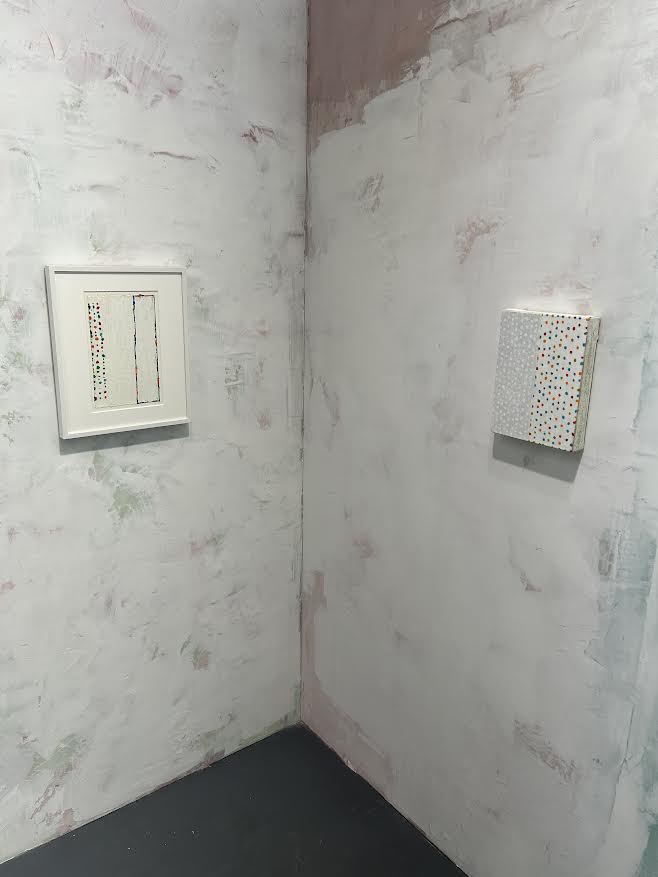
Right: Snowblind, 2024, oil on canvas, 11 x 8 inches
Both the framed work on paper to the left, untitled, and the boxier painting to the right, Snowblind, neither countersunk, seem to comment on the plaster presentation itself. Their internalized geometric parts are akin to the installation itself, particularly the roughly abraded profile of Snowblind. For a more conventional presentation, there’s a suite of fine works on paper hanging in the rear gallery of Ghostmachine.
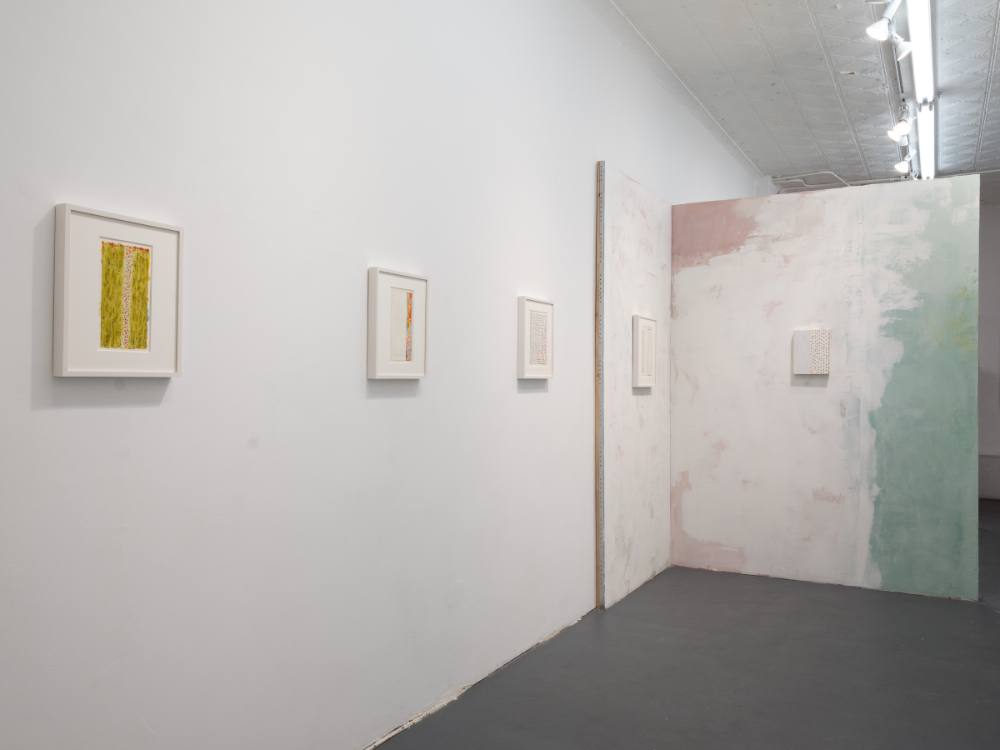
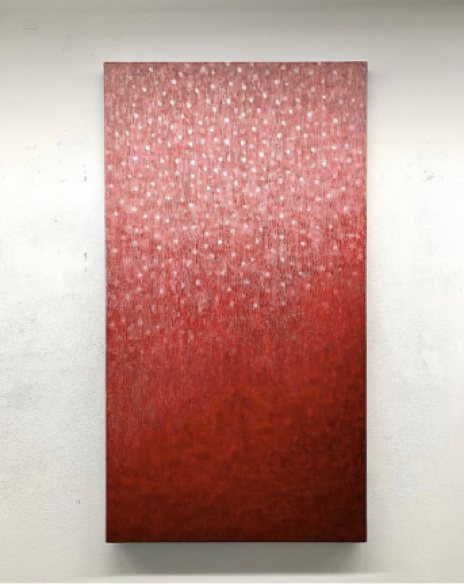
Manasevit often clearly defines the quadrants of her painting – a traditional hallmark of sound craft. She will also cluster tiny colored dots into marginal strands. These are like visual music, airy chains of notes suspended in some larger chorus, which could be End Times. Her small, poetic, abstract paintings are not overtly apocalyptic, but they are clearly cautionary. In crimson horror and glory, Snow and Red – a recent painting, related to but not included in either exhibition – is beautiful but also unsettling in its unnatural and ominous imagery, alien and upsetting like the bloody landscape in Steven Spielberg’s War of the Worlds.

The theme of the two shows is cathexis, a Freudian term meaning “the process of concentrating psychic or emotional energy on an object, idea, or person, making it significant to you.” Manasevit’s paintings are clearly products of that process: spare, yet intensely and specifically inhabited, each a finely cultivated and captured moment of portent. Graham Greene once wrote that eternity is not an extension of time but an absence of time. Manasevit’s paintings create an opportunity to step out of time.

“Jodie Manasevit: Cathected” (two concurrent solo painting exhibitions), Mario Diacono Gallery, 14 Beacon Street, Boston, MA (through November 22, 2025; and Ghostmachine, 23 Monroe Street, New York, NY (through November 23, 2025).
About the author: Michael Brennan is a Brooklyn-based painter who writes on art.










For a minute there I thought you were going to say that 3I/Atlas _was_ Mario Diacono…